“The sea was not a story, but a memory.”
— Describing the profound connection between the islanders and the ocean.

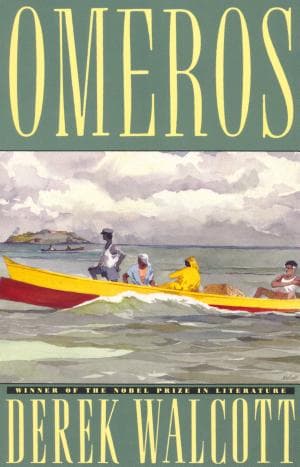
Sign in to track this book
Like a Caribbean *Odyssey*, *Omeros* shows the visible scars of colonialism and slavery alongside the invisible epic of individual exile and longing, mapping a sea of memory and identity.
The story begins on the Caribbean island of St. Lucia, introducing Achille and Hector, two Afro-Caribbean fishermen from Gros Islet. They are rivals in fishing and, more importantly, in their desire for the beautiful local woman, Helen. Their lives are shown through the hard work of launching their canoes, 'In God We Trust' and 'Pirogue,' into the dangerous sea. Walcott, as the narrator, watches their daily struggles and the timeless rhythm of island life, immediately comparing their modern lives to Homer's epic figures. The sea itself is a character, giving food but also showing the vast, uncaring forces that shape their futures. This opening scene sets up the main conflict and the epic scope of the poem, rooting the mythological in the daily reality of St. Lucian poverty and resilience.
Helen, a striking woman, works as a maid for Dennis Plunkett, a retired English major who runs a guesthouse on the island. Her relationship with Plunkett is one of financial need and subtle power dynamics, but also one where she finds some stability and comfort that neither Achille nor Hector can offer. Walcott explores Helen's inner thoughts, showing her not just as an object of desire but as a woman dealing with her identity, her wishes, and the limits of her situation. Plunkett, for his part, is a figure haunted by his colonial past and his own sense of displacement. Helen's allure is a constant source of tension among the fishermen, highlighting her role as a modern Helen of Troy, able to cause rivalry and conflict.
The narrator, Walcott, takes an important journey, both physical and spiritual, to Africa. This journey is prompted by Achille's dream, which takes him back to his homeland. Walcott's own experiences in Africa are mixed with Achille's vision, creating a strong exploration of slavery's legacy and the search for roots. He meets the wise blind seer, Seven Seas, who acts like Tiresias, offering guidance and historical context. This section is full of images of the African landscape, the suffering of the enslaved, and the lasting connection between the Caribbean present and the African past. It significantly broadens the poem's scope, moving beyond the island setting to include a wider historical and cultural story.
A fierce storm hits the island, and Hector, ambitious and reckless, takes his fishing boat into the rough waters. Sadly, he is caught in the storm and drowns. His death shocks the community, especially Achille, despite their rivalry. The scene is shown with stark realism, emphasizing the constant danger fishermen face and the unforgiving nature of the sea. Hector's death is a turning point, removing one of the main figures in the love triangle and forcing Achille to face his own death and life's fragility. It also deepens the poem's emotional content, moving from rivalry to shared sorrow and thoughts of fate.
After Hector's death, the community deals with grief and unease. Philomene, a respected local healer and obeah practitioner, offers comfort and spiritual guidance. She performs rituals and offers traditional remedies, trying to bring balance back to the community and to individuals like Achille, who is deeply affected by Hector's passing. Philomene represents the lasting strength of local traditions and spiritual beliefs against modern challenges and historical trauma. Her presence highlights the mix of Christian and African spiritual practices that mark St. Lucian culture, and her efforts show the communal aspect of healing and resilience.
In a vivid, dreamlike sequence, Achille goes on a journey to the underworld, a symbolic representation of his ancestral past. Guided by his father's spirit, who appears as a wise, ancient figure, Achille travels through a landscape filled with the ghosts of his enslaved ancestors. This journey is both a personal search for identity and a collective remembrance of the Middle Passage and the suffering of Africans brought to the Caribbean. He sees the horrors of the slave ships and the resilience of those who survived. This dream-like experience is a key moment of understanding for Achille, connecting him directly to his heritage and giving him a deeper understanding of his place in history. It is a strong exploration of memory, trauma, and the lasting spirit of a people.
Dennis Plunkett, the retired English major, often thinks about his time in World War II. These flashbacks are vivid and often upsetting, showing the psychological scars of combat and loss. He remembers the horrors of battle, the fellowship of his fellow soldiers, and the deep impact of seeing death. These personal memories are not just side notes; they parallel the historical traumas of the Caribbean people, suggesting that suffering and displacement are universal experiences. Plunkett's attempts to write a history of St. Lucia are also explored, highlighting the difficulties of creating a clear story from fragmented memories and different perspectives, both personal and collective.
Driven by a desire for a different life and perhaps more financial security, Helen leaves Achille for a time, seeking comfort or opportunity elsewhere. Her departure deeply hurts Achille, adding to his sense of loss and inadequacy. However, the story suggests that her absence is not permanent. Helen eventually returns to the village, a decision that shows her complex attachment to her community and to Achille, despite their difficulties. Her return signifies the lasting, if troubled, nature of their relationship and the pull of home. This pattern of leaving and returning reflects larger themes of migration, displacement, and the eventual return to one's origins, both personal and cultural.
Throughout the poem, the narrator, Walcott, adds his own thoughts on identity, language, and writing. As a poet of mixed heritage (African and European), he deals with the complexities of his background and the challenge of finding a voice that can include both his Caribbean reality and the classical traditions that inform his work. He thinks about history's weight, naming's power, and the ongoing struggle to create a unique Caribbean identity that is neither fully African nor fully European. These self-aware moments show the narrator's deep involvement with the themes he explores through his characters, making the poem a deeply personal as well as an epic effort.
Seven Seas, the blind African seer, is a central figure, a modern Tiresias. He provides historical context, detailing the struggles of the enslaved and their descendants' enduring spirit, and also prophetic insights into the lives of Achille, Helen, and the wider community. His blindness symbolizes an inner vision, a connection to a deeper, older truth that goes beyond surface appearances. Through his statements, the poem reinforces history's cyclical nature and myth's lasting power. Seven Seas' wisdom guides, reminding characters and readers of the deep connections between past, present, and future, and the timeless human struggles for love, identity, and belonging.
After his deep journey to the ancestral underworld and his thoughts, Achille gains a deeper understanding of himself and his heritage. He returns to his life as a fisherman with a renewed sense of purpose and quiet strength. While his external life may not have changed much, his inner world has. He is still a fisherman, still in love with Helen, but he now carries the weight and wisdom of his ancestors. This section emphasizes lasting strength in the face of trouble and the quiet heroism of everyday life. Achille's resolve embodies the spirit of the St. Lucian people, who continue to navigate life's challenges with dignity and perseverance.
Helen, having experienced both the appeal of comfort with Plunkett and the raw passion with Achille, eventually makes a choice that shows her complex identity and desires. While the story does not offer a simple 'happily ever after,' it suggests a kind of resolution to the main love triangle. Her choices are not about picking a 'better' man but about using her own agency within her world's limits. The lasting love between Helen and Achille, though difficult, remains a central part. The poem ends not with a final conclusion, but with a sense of continuation, where the cycles of love, loss, and renewal persist, reflecting the timeless rhythms of the sea and the island itself.
In the final sections, the narrator, Walcott, reflects on finishing his epic poem. He recognizes the huge task of mapping both visible history and his characters' inner lives, and the difficulties of giving voice to a people whose stories have often been silenced or ignored. He offers a sense of closure to his own journey while also seeing that the stories of St. Lucia and its people continue. The ending is sad, yet hopeful, affirming poetry's power to show truth and preserve memory. Walcott says goodbye to his characters and to the reader, leaving a rich mix of interwoven lives, histories, and myths, a lasting example of the Caribbean spirit.
The Protagonist
Achille evolves from a proud, somewhat naive fisherman to a man deeply connected to his ancestral past, gaining a profound understanding of his identity and the collective memory of his people.
The Supporting
Helen navigates societal expectations and her own desires, ultimately asserting her agency and finding a place that accommodates her complex identity, rather than being merely an object of desire.
The Supporting
Hector's arc is tragically cut short by his death at sea, serving as a catalyst for Achille's introspection and a stark reminder of the dangers of their livelihood.
The Supporting
Plunkett attempts to reconcile his past as a colonial figure and war veteran with his present life on St. Lucia, ultimately finding a degree of peace through his connection to the island and its people.
The Supporting
Maud Plunkett quietly adapts to her life on St. Lucia, providing a stable presence that contrasts with her husband's internal struggles.
The Supporting
Seven Seas remains a constant source of ancient wisdom and spiritual guidance, serving as a conduit for the collective memory and prophetic insights.
The Supporting
Philomene consistently serves as a source of healing and spiritual guidance, maintaining the island's traditional beliefs amidst modern challenges.
The Protagonist
The narrator undertakes a profound journey of self-discovery and artistic creation, ultimately finding his voice and fulfilling his ambition to write a Caribbean epic that honors his complex heritage.
The poem often deals with history's weight, especially the transatlantic slave trade and colonialism. Characters, particularly Achille and the narrator, are haunted by the past, trying to understand its effect on their present identities. Achille's dream-journey to Africa and his meeting with his ancestors clearly show the trauma of the Middle Passage and slavery's lasting scars. Plunkett's war memories and his attempts to write St. Lucia's history also highlight the European side of this historical entanglement. The theme suggests that history is not a fixed past but a living force that shapes individual and collective futures, requiring recognition and healing.
“This wound I have is the wrong history in the wrong tongue.”
A main theme is the search for identity, both personal and collective, in a post-colonial Caribbean setting. The title, 'Omeros,' reclaims a Greek name for a Caribbean epic, showing the tension and blend of cultures. Characters like Achille and Helen have names that echo classical mythology, forcing them to deal with inherited identities versus self-chosen ones. The narrator, Walcott, directly addresses the challenge of naming a 'new world' and finding a language that is truly Caribbean, free from colonial influences. This theme explores how names, language, and lineage contribute to or obscure a true sense of self and belonging.
“A name, when it is given, is a history.”
Walcott intentionally uses and reinterprets classical Greek myths, especially the Homeric epics, to elevate the struggles of ordinary Caribbean people to an epic scale. Achille and Hector become modern Achilles and Hector, Helen a contemporary Helen of Troy. This reimagining suggests that epic themes of love, war, exile, and heroism are universal and timeless, not limited to ancient Greece. By setting these myths in St. Lucia, Walcott asserts the epic potential of Caribbean life and history, challenging the Eurocentric view of literature and showing that new myths can come from the experiences of the marginalized. The poem itself becomes a new Caribbean epic.
“I sang of the sea, and the sea was a voice that answered me.”
The sea is perhaps the most widespread and powerful force in 'Omeros,' acting as both a literal and symbolic entity. For fishermen Achille and Hector, the sea is their livelihood, a source of food and danger, a battleground for their rivalry. It also represents history's vastness, the route of the Middle Passage, and the boundary between worlds. The sea is indifferent, powerful, and eternal, reflecting life, death, and renewal's cyclical nature. It embodies the Caribbean environment's beauty and harshness, constantly shaping the islanders' lives and futures and reminding them of their place in the natural order.
“The sea, that great greeter, that great goodbye.”
At the heart of the personal story is the lasting theme of love, particularly the complex and often painful love triangle between Achille, Hector, and Helen. This rivalry mirrors larger conflicts within the community and the human condition. The poem explores different aspects of love: passionate, possessive, enduring, and the grief that comes with loss, especially Hector's death. These personal dramas become epic, showing how deeply human emotions drive individual actions and shape collective memory. The theme highlights the cyclical nature of attachment and separation, of finding and losing love, and these experiences' deep impact on the characters' lives.
“What was love, if not a wound that never closed?”
Directly references and reinterprets characters and plot points from Homer's 'Iliad' and 'Odyssey'.
Walcott uses the Homeric epics as a foundational framework, explicitly renaming his characters (Achille, Hector, Helen, Philoctete) and drawing parallels to their classical counterparts. This device elevates the lives of ordinary St. Lucian fishermen and women to an epic, universal scale. It challenges Eurocentric literary traditions by asserting the epic potential of Caribbean history and experience, while also highlighting the timelessness of human struggles. The allusions are not mere imitation but a re-imagining, allowing Walcott to explore themes of colonialism, identity, and displacement through a familiar, yet entirely new, lens.
The narrator, Walcott himself, frequently comments on the act of writing the poem, his own role, and the challenges of creation.
The narrator is a character within the poem, openly reflecting on his mixed heritage, his creative process, and the difficulties of constructing an epic from Caribbean life. He discusses the choices he makes, the limitations of language, and his personal connection to the characters and themes. This device breaks the fourth wall, making the creation of the poem itself part of the narrative. It allows Walcott to explore themes of identity, post-colonialism, and the artist's responsibility in a direct, intellectual manner, adding layers of self-awareness and philosophical depth to the work.
Characters experience vivid dreams and hallucinatory visions that connect them to ancestral memories and spiritual realms.
Dream sequences, most notably Achille's journey to Africa, serve as powerful conduits for exploring ancestral history, collective memory, and spiritual awakening. These dreams are not mere escapism but profound experiences that offer characters access to truths beyond their waking lives. They allow Walcott to visually depict the trauma of the Middle Passage and the enduring connection to an African past, circumventing linear historical narration. This device blurs the line between reality and the subconscious, suggesting that spiritual and historical truths are often revealed through non-rational experiences.
The ocean acts as a multifaceted symbol representing livelihood, history, death, and the vastness of the unknown.
The sea is far more than a setting; it is a dynamic character and a potent symbol throughout 'Omeros.' It represents the fishermen's livelihood, the constant struggle for survival, and the source of their identity. Simultaneously, it embodies the historical route of the Middle Passage, connecting the Caribbean to Africa and carrying the weight of ancestral trauma. The sea is also a symbol of death and loss (as with Hector's drowning) but also of renewal and the cyclical nature of life. Its vastness and indifference underscore the smallness of human endeavors against epic forces, both natural and historical.
A Tiresias-like figure who provides ancient wisdom, historical context, and prophetic insight.
Seven Seas, the blind old African man, functions as a classical 'seer' figure, akin to Tiresias in Greek mythology. His physical blindness is contrasted with his profound inner vision, allowing him to perceive deeper truths about history, spirituality, and the fates of the characters. He serves as a living archive of oral tradition and ancestral memory, interpreting dreams and offering guidance. This device grounds the narrative in a spiritual and historical continuum, connecting the present-day struggles of St. Lucia to ancient African wisdom and the enduring power of prophecy and tradition.
“The sea was not a story, but a memory.”
— Describing the profound connection between the islanders and the ocean.
“Break a vase, and the love that reassembles the fragments is stronger than that love which at first kept them whole.”
— Achille reflecting on the nature of love and reconciliation.
“The light of the world is a white light. It is not the light of the sun, but the light of the moon.”
— A poetic description of the unique luminosity of the Caribbean nights.
“Either I'm nobody, or I'm a nation.”
— Achille grappling with his ancestral past and the collective identity of his people.
“The future is a net that holds the past.”
— A reflection on how past events and history shape the present and future.
“What is the life of a single man to the life of the sea?”
— Philoctete contemplating the insignificance of individual lives against the vastness of nature.
“There are things we live with, and things we die for.”
— A statement about the enduring struggles and sacrifices of life.
“The great curse of the New World is that it has no memory.”
— Walcott's commentary on the historical amnesia and loss of heritage in post-colonial societies.
“Every morning the world is created.”
— A simple yet profound observation on renewal and the cyclical nature of existence.
“The sea always makes a sound of lamentation.”
— Describing the melancholic and mournful sound of the ocean.
“To be born is to be shipwrecked.”
— A stark metaphor for the inherent struggles and challenges of human existence from birth.
“The true Achilles is not the warrior, but the wanderer.”
— A reinterpretation of the mythical hero, focusing on his journey and search for identity.
“The silence of the islands is not empty, but full of voices.”
— Suggesting that the apparent quietude of the Caribbean islands holds rich, untold histories and narratives.
“Poetry is the only prayer.”
— Walcott's assertion about the spiritual and redemptive power of poetry.
“You will lose yourself in the sea, but the sea will find you.”
— A poetic reflection on the overwhelming power of the ocean and its ultimate embrace.
Ready to see how well you understood this book? Take our interactive quiz with 10 questions.
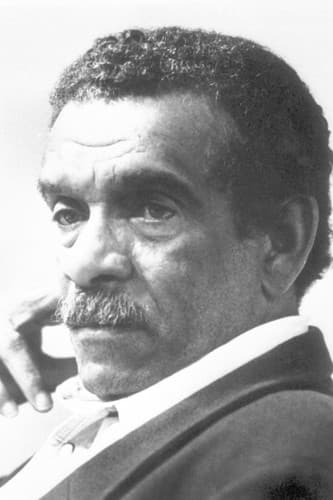
Sir Derek Alton Walcott was a Saint Lucian poet and playwright. He received the 1992 Nobel Prize in Literature. His works include the Homeric epic poem Omeros (1990), which many critics view "as Walcott's major achievement." In addition to winning the Nobel Prize, Walcott received many literary awards over the course of his career, including an Obie Award in 1971 for his play Dream on Monkey Mountain, a MacArthur Foundation "genius" award, a Royal Society of Literature Award, the Queen's Medal for Poetry, the inaugural OCM Bocas Prize for Caribbean Literature, the 2010 T. S. Eliot Prize for his book of poetry White Egrets and the Griffin Trust For Excellence in Poetry Lifetime Recognition Award in 2015.

Ashley Antoinette
4.6

Mark McDonald
4.4
Luo Guanzhong
4.4
Mia McKenzie
4.3
Dorothy Parker
4.3
Joaquim Maria Machado de Assis
4.3
James Thurber
4.2
Terry Kay
4.2