“The free soul is rare, but you know it when you see it—basically, because you feel good, very good, when you are near or with them.”
— A reflection on identifying truly free spirits amidst the mundane.

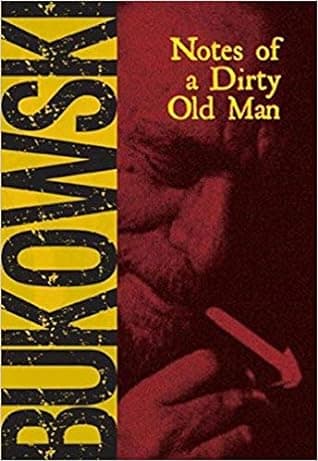
Charles Bukowski (1969)
Genre
Fiction
Reading Time
200 min
Key Themes
See below
Sign in to track this book
An aging, hard-drinking writer becomes a reluctant magnet for society's outcasts, madmen, and well-meaning strangers, all drawn to the raw honesty of his 'Dirty Old Man' columns.
The collection begins with the narrator, Henry Chinaski, dealing with the ordinary and often strange parts of his life as a struggling writer. He describes his small apartment, his constant money problems, and his reliance on alcohol. This section sets the tone, showing a raw look at a life on the edge of society. Chinaski often gets letters and visits from odd fans, would-be collaborators, and misguided do-gooders, whom he treats with amusement, contempt, and sometimes, grudging tolerance. He details his writing process, which often involves heavy drinking and late-night sessions at his typewriter, producing the 'Notes' that make up the book.
Chinaski's life has many strange encounters. A 'madman' from Vine Street in Hollywood, calling himself 'King Arthur,' wants to help him write his column, a suggestion Chinaski dismisses with his usual cynicism. A doctor, a former psychiatrist, offers to 'help' him after reading his column, but Chinaski sends him away. These interactions show Chinaski's isolation and his resistance to conventional help. He often finds himself in situations where others project their own desires or delusions onto him, strengthening his view of humanity's strangeness and his own outsider status. These stories show the bizarre characters in his Los Angeles life.
Throughout the stories, Chinaski's financial instability is a constant theme. He often describes trying to find enough money for rent, food, and, most importantly, alcohol. This often means taking on low-paying jobs or waiting for checks from his writing, which are rarely large or on time. He tells of pawning his things, borrowing money, and living paycheck to paycheck. This struggle is shown not as a tragedy, but as an unavoidable part of his chosen life. His lack of concern for material wealth, beyond basic survival, is clear, but the constant pressure of poverty shapes his daily decisions and interactions.
Chinaski's interactions with women are a central, though often chaotic, part of his life. He describes a series of short, intense, and often troubled relationships. These women include struggling artists, barflies, and more 'respectable' people drawn to his raw honesty. His relationships involve heavy drinking, passionate arguments, and a general lack of traditional romantic feeling. He often shows women as both a source of comfort and annoyance, reflecting his complicated views on intimacy and commitment. These encounters are rarely sentimental, instead offering a stark and often misogynistic portrayal of sexual and emotional dynamics.
Bars are a constant setting in Chinaski's world, both a refuge and a stage for his often-confrontational interactions. He spends hours drinking, watching, and talking with other patrons. These places are where many of his relationships begin and end, and where he often finds inspiration for his writing. The bar environment is a small version of society, full of lonely people, alcoholics, and dreamers. Chinaski often gets into fights, both verbal and physical, in these settings, showing his aggressive personality and his dislike for hypocrisy. The bar is where he feels most at home, yet also most exposed.
Amid the drinking, fighting, and general mess, Chinaski's dedication to writing stays constant. He sees writing not as a job but as an unavoidable drive, a way to process his experiences and understand the world. He often writes late at night, fueled by alcohol and cigarettes, producing his raw columns. He describes the struggle of finding his voice and the satisfaction of putting his thoughts on paper, even when he doubts their worth. This commitment to his art is perhaps the most stable part of his otherwise unstable life, serving as his main way of expressing himself and connecting to the world.
Horse racing is another important part of Chinaski's life, representing both a brief hope for money and another way to self-destruct. He spends much time and his little money studying racing forms and placing bets. While he sometimes wins small amounts, these are always temporary, and he inevitably loses his earnings, reinforcing his cycle of poverty. The racetrack is a place of both excitement and despair, mirroring the ups and downs of his own life. It is a futile pursuit, yet one he cannot give up, perhaps for the illusion of control it offers.
Throughout the collection, Chinaski mixes his personal stories with cynical and often harsh critiques of mainstream society, art, and the literary world. He shows contempt for pretense, fakery, and the selling of art. He often mocks academic critics and established writers, arguing that true art comes from lived experience and raw honesty, not intellectual posturing. His observations are often misanthropic, reflecting his belief that most people are deluded or hypocritical. These philosophical asides provide insight into his worldview and his role as an outsider artist.
The stories do not avoid showing the physical and mental cost of Chinaski's heavy drinking and chaotic life. He describes hangovers, illnesses, and the general wear and tear on his body. There are moments of despair and self-hatred, though he often quickly hides these with humor or more drinking. Despite the decline, there is an underlying resilience, a refusal to completely give in. This unflinching portrayal of decline adds realism and vulnerability to his tough exterior, hinting at the deeper costs of his chosen path.
Despite the widespread cynicism and bleakness, there are occasional glimpses of beauty or unexpected tenderness in Chinaski's world. These might come from a shared moment with a woman, a well-written line, or a brief appreciation of nature. These moments are rare and often quickly overshadowed by his usual routine, but they show the complexity of his character. They suggest that beneath the tough exterior, he still has a capacity for observation and appreciation, even if his life mainly consists of the opposite. These brief instances offer a contrast to the prevailing nihilism.
While not the main focus of 'Notes of a Dirty Old Man,' some stories or references in the collection mention Chinaski's past and occasional work at the post office, a recurring setting in Bukowski's larger work. He describes the mind-numbing routine, the oppressive bureaucracy, and the dehumanizing aspects of the job. These experiences contrast sharply with his life as a writer, highlighting the struggle between needing a steady income and his desire for artistic freedom. The post office represents a kind of purgatory, a necessary evil he endures to support his true calling.
Throughout the collection, Chinaski actively creates and strengthens his persona as the 'dirty old man.' He enjoys his outsider status, his crude language, and his refusal to follow societal norms. This persona is both a defense mechanism and a true reflection of his identity. He uses it to provoke, to entertain, and to create a distinct literary voice. The title itself acknowledges this self-aware embrace of his image, suggesting defiance against judgment and a celebration of his own unconventional wisdom, however rough it may be. He is both the observer and the observed, the subject and the author of his own myth.
The Protagonist
Chinaski remains largely static in his core personality and lifestyle, but his continuous writing and observation deepen his understanding of himself and the human condition.
The Supporting
They serve as foils or temporary companions for Chinaski, with their own arcs largely unexplored from his perspective.
The Mentioned
A static, minor character who appears briefly to illustrate the oddities of Chinaski's life.
The Mentioned
A static, minor character whose brief appearance highlights Chinaski's resistance to external intervention.
The Mentioned
A static, minor character whose actions reflect the varied responses to Chinaski's work.
The Supporting
Brief, static characters who contribute to a single vignette of Chinaski's life.
Chinaski consistently places himself outside mainstream society, rejecting conventional norms, jobs, and relationships. His art comes from this marginalization, offering an unfiltered view of life from the edges. He scorns academic literary circles and commercial success, believing true art comes from raw experience and honesty. This theme appears in his dismissal of the psychiatrist and 'King Arthur,' and his constant struggle against the expectation to conform, as seen in his refusal to hold a steady, 'respectable' job, preferring the uncertainty of a writer's life.
““I was a man who thrived on solitude; without it I was a half-dead thing, a mere shadow of myself.””
Alcohol is always present in Chinaski's life, acting as both a muse and a destructive force. It fuels his writing, numbs his pain, and helps his social interactions, but also adds to his poverty, health problems, and troubled relationships. The stories clearly show the physical and emotional cost of heavy drinking, but Chinaski rarely wants to change, seeing it as a key part of his identity and creative process. This is clear in his bar scenes and his rejection of the Newburgh operator's plea to stop drinking, showing his deep reliance.
““Drinking is an emotional thing. It's a lot of fun. It's a lot of fun when you're young and you're healthy and you're getting away with it. But as you get older, it's not so much fun anymore.””
Chinaski constantly seeks and values authenticity in himself and others, while despising pretense and hypocrisy. He removes social niceties to show the raw, often ugly, truth of human existence. His writing style is a direct expression of this search, avoiding elaborate prose for direct, visceral descriptions. This theme is clear in his disdain for 'respectable' society, his preference for other outcasts, and his brutal honesty in detailing his own flaws and struggles, rejecting any romanticized self-portrayal.
““The problem with the world is that the intelligent people are full of doubts, while the stupid ones are full of confidence.””
Chinaski's relationships with women are central, marked by intense passion, frequent conflict, and a general misogyny. He often objectifies women and shows them through a cynical, sometimes brutal, lens. Yet, there are also moments of vulnerability and a search for connection, however brief or troubled. These relationships are rarely romanticized, instead offering a stark and often uncomfortable look at the dynamics of sex and intimacy in a life without conventional sentiment, highlighting the raw, animalistic aspects of human connection.
““Some people never go crazy, what truly horrible lives they must lead.””
The stories are told directly through the raw, unfiltered perspective of Henry Chinaski.
This device is crucial to the collection's impact. By immersing the reader directly into Chinaski's mind, Bukowski creates an intimate, immediate, and often uncomfortable experience. The voice is characterized by its cynicism, profanity, dark humor, and brutal honesty. This narrative choice allows for subjective observations and personal anecdotes to dominate, shaping the reader's perception of events and characters exclusively through Chinaski's unique, often misanthropic, lens. It establishes a strong, distinctive authorial presence that is synonymous with the Bukowski style.
The book is a collection of loosely connected vignettes, columns, and short stories.
Rather than a single overarching plot, 'Notes of a Dirty Old Man' is comprised of numerous standalone pieces. This episodic structure mirrors the chaotic, unstructured nature of Chinaski's life, where events unfold without a clear trajectory or resolution. Each 'note' or story offers a glimpse into a particular moment, interaction, or reflection, allowing Bukowski to explore various themes and experiences without being constrained by a traditional narrative arc. This device emphasizes the cyclical and repetitive aspects of Chinaski's existence, rather than linear progression.
The stories blur the line between author Charles Bukowski's life and his fictional alter ego.
This device is fundamental to Bukowski's work. 'Notes of a Dirty Old Man' is deeply rooted in Bukowski's own experiences, with Henry Chinaski serving as a thinly veiled stand-in. This gives the collection a powerful sense of authenticity and rawness, as readers are led to believe they are getting an unvarnished look into the author's real life. The blending of fact and fiction lends credibility to the often extreme situations and cynical observations, making the 'notes' feel like genuine dispatches from a lived, rather than invented, reality, enhancing the confessional tone.
The narrative often reflects Chinaski's immediate thoughts and uses everyday, informal speech.
Bukowski employs a writing style that mimics the spontaneous flow of thought and uses language that is conversational, often crude, and devoid of literary pretension. Sentences are frequently short and direct, reflecting Chinaski's no-nonsense approach to life. This device creates a sense of immediacy and realism, making the reader feel as though they are listening to Chinaski speak directly. It also reinforces the theme of authenticity, as the language itself resists artificiality and academic formality, aligning with Chinaski's disdain for intellectualism.
“The free soul is rare, but you know it when you see it—basically, because you feel good, very good, when you are near or with them.”
— A reflection on identifying truly free spirits amidst the mundane.
“We are here to unlearn the teachings of the church, the state, and our educational system. We are here to drink beer. We are here to kill war. We are here to laugh at the odds and live our lives so well that Death will tremble to take us.”
— A manifesto-like statement on the purpose of life, rejecting societal norms.
“The problem with the world is that the intelligent people are full of doubts, while the stupid ones are full of confidence.”
— A cynical observation on the nature of intelligence and ignorance.
“An intellectual is a man who says a simple thing in a hard way; an artist is a man who says a hard thing in a simple way.”
— A distinction drawn between intellectualism and artistic expression.
“I was an agoraphobic who'd never heard of agoraphobia.”
— A character's self-realization about their social anxieties, even without a label.
“A man's work is nothing but this slow trek to rediscover, through the detours of art, those two or three great and simple images in whose presence his heart first opened.”
— A profound thought on the artist's journey and inspiration.
“Genius might be the ability to say a profound thing in a simple way.”
— Another perspective on the essence of genius, linking it to simplicity and depth.
“The less you have, the more free you are.”
— A minimalist philosophy on freedom and material possessions.
“Show me a man who lives alone and has a cat and I will show you a man who is not afraid of death.”
— A quirky and specific observation about companionship and mortality.
“Sometimes you just have to pee in the sink.”
— A crude yet illustrative example of embracing practicality and rejecting convention.
“I didn't care for people. I didn't care for anything.”
— A stark expression of apathy and detachment from the world.
“The greatest moments of my life were when I was alone.”
— A celebration of solitude and introspection.
“Alcohol is the only way to endure the world.”
— A recurring theme in Bukowski's work, highlighting escapism through drink.
“We are all going to die, all of us, what a circus! That alone should make us love each other but it doesn't. We are terrorized and flattened by trivialities, we are eaten up by nothing.”
— A poignant reflection on mortality and human folly.
Ready to see how well you understood this book? Take our interactive quiz with 10 questions.
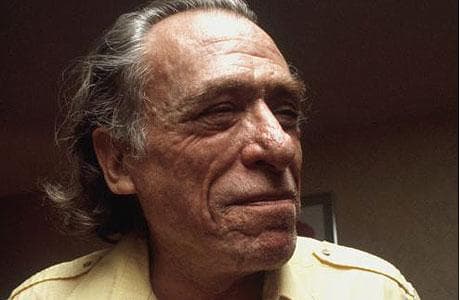
Charles Bukowski was a prolific German-American poet and novelist, often celebrated for his raw, autobiographical style. His notable works include 'Notes of a Dirty Old Man,' 'Factotum,' and 'Ham on Rye,' which vividly depict the gritty realities of working-class life and his own struggles with alcohol and poverty. Bukowski's unflinching prose and anti-establishment themes have cemented his status as a counter-culture icon.

Ashley Antoinette
4.6

Mark McDonald
4.4
Luo Guanzhong
4.4
Mia McKenzie
4.3
Dorothy Parker
4.3

Joaquim Maria Machado de Assis
4.3
James Thurber
4.2
Terry Kay
4.2