“I had been further than you, and I'd got my things, and I was going to take care of myself.”
— Antonia speaking to Jim about her independence and resilience.

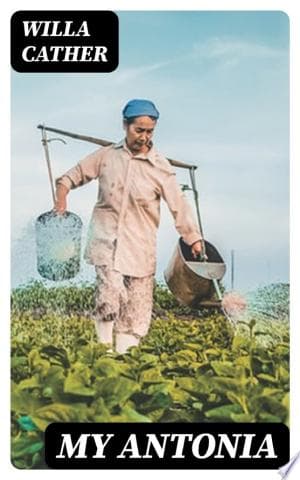
Willa Cather (2020)
Genre
Fiction
Reading Time
180 min
Key Themes
See below
Sign in to track this book
Through the eyes of an orphaned boy, My Ántonia paints an unforgettable portrait of a resilient Bohemian immigrant woman whose spirit, like the Nebraska prairie itself, endures and flourishes despite the harsh realities of pioneering life.
Ten-year-old Jim Burden, an orphan from Virginia, arrives in Black Hawk, Nebraska, to live with his grandparents after his parents' death. On the same train is the Shimerda family, Bohemian immigrants who speak little English. The Burdens' hired man, Jake Marpole, helps the Shimerdas find their new, basic sod house on the prairie. Jim's grandmother, Mrs. Burden, feels sorry for the Shimerdas' difficulties and poverty, often bringing them food and supplies. Jim quickly becomes interested in the eldest daughter, Ántonia, a spirited girl with dark eyes and a lively personality, despite their language barrier. He begins to teach her English words, and they explore the wild prairie together, forming a strong, early bond.
The first winter proves very harsh for the Shimerda family. Their lack of experience with farming the prairie, along with Mr. Shimerda's inability to adjust to the physical labor and isolation, leads to severe deprivation. Mrs. Shimerda is often ill, and the younger children suffer from cold and hunger. Jim's grandparents continue to help, but the Shimerdas' pride and the language barrier sometimes cause tension. Mr. Shimerda, a cultured and sensitive man, becomes more and more sad and withdrawn. His despair grows as he feels the weight of his family's struggles and his own unsuitability for pioneer life, hinting at a tragic event.
The constant hardships of winter take a heavy toll on Mr. Shimerda. One morning, Jim's grandfather is called to the Shimerda farm and returns with the news: Mr. Shimerda has killed himself by shooting himself. The community, though shocked, comes together to help. Otto Fuchs, the Burdens' kind hired man, and Jake Marpole help with the burial, as the ground is frozen too hard for a proper grave in the local cemetery. This tragic event deeply affects Ántonia and her family, forcing her to take on adult responsibilities at a very young age. Her resilience begins to show as she works constantly to support her family.
After her father's death, Ántonia, along with her older brother Ambrosch, takes over the farm work. She becomes an incredibly strong and capable farmhand, working in the fields like a man. Jim watches her change from a carefree girl into a powerful, sun-bronzed young woman, toughened by labor but still keeping her core spirit. Their close friendship continues, though their paths separate slightly as Ántonia is now tied to the land. Jim admires her strength and persistence, seeing her as an example of the pioneering spirit. Her commitment to her family and the farm becomes a main defining quality.
When Jim reaches adolescence, his grandparents decide to move from the farm into the town of Black Hawk so Jim can get a good education. Soon after, Ántonia, now a young woman, also moves to Black Hawk to work as a hired girl for the Harling family, a well-known and respected household. She quickly adjusts to town life, learning domestic skills and enjoying social events. Jim, now living closer to Ántonia, watches her interactions with other hired girls and the townspeople. She becomes a popular and lively figure among the 'hired girls,' who are often seen as more energetic and independent than the local town girls.
In Black Hawk, Jim and Ántonia's friendship continues, though it changes as they both grow up. Ántonia thrives among the other 'hired girls,' especially Lena Lingard and Tiny Soderball, who are also immigrant women working in town. These girls are independent, financially self-sufficient, and enjoy dancing and social gatherings. Jim, while attending school, often spends time with them, feeling a deep connection to their energy and enthusiasm for life. He observes the social divisions in Black Hawk, where the hired girls, despite their hard work, are sometimes looked down upon by the town's more established families. Ántonia's liveliness makes her a central person in this group.
Ántonia, despite her strong character, falls for the charms of Larry Donovan, a smooth-talking and irresponsible railroad conductor. Against the advice of her friends and the Harlings, she gets engaged to him and eventually follows him to Denver, believing they will marry. Jim, who has always thought highly of Ántonia, is very disappointed by her choice, seeing Donovan as not worthy of her. He later learns that Donovan abandons Ántonia, taking her savings and leaving her pregnant and unmarried. This betrayal is a crushing blow to Ántonia's reputation and spirit, forcing her to return to Black Hawk in shame.
As Ántonia deals with the aftermath of her failed engagement, Jim prepares to leave Black Hawk for the University of Nebraska. He visits Ántonia before he leaves, finding her working in the fields again, strong and resilient despite her recent heartbreak and pregnancy. This meeting strengthens his lasting admiration for her strong spirit. Jim does well in his studies, first at the University of Nebraska and then at Harvard Law School, pursuing a successful career as a corporate lawyer in New York. Though physically distant, Ántonia remains a powerful, almost mythical figure in his memory, representing the essential goodness and strength of the prairie.
Years later, Jim, now a successful lawyer, returns to Nebraska and finds Ántonia. He finds her married to Anton Cuzak, a fellow Bohemian immigrant, and living on a farm with their large family of ten children. Ántonia has become a sturdy, weathered woman, her hands roughened by work, but her eyes still hold the familiar spark and warmth. She is a devoted mother, a loving wife, and a capable farm manager, showing a deep sense of fulfillment and belonging. Jim is deeply moved by her happiness and the busy life she has created, seeing her as the embodiment of fertile, productive life on the prairie.
Jim spends time with Ántonia and her family, watching her interactions with her children and her husband. He sees in her not just a woman who has endured hardship, but one who has succeeded through sheer force of character and a constant connection to the land. Their reunion is a moment of nostalgic reflection for Jim. He realizes that Ántonia, more than anyone else, embodies his memories of the prairie and the experiences that shaped his youth. Her image and spirit have formed his understanding of life, strength, and the American West, leaving a lasting mark on him, even as their lives took different paths.
The Protagonist/Narrator
Jim grows from a dependent orphan into an educated, successful man, but his emotional journey is one of continually processing and idealizing his past, particularly his relationship with Ántonia.
The Protagonist
Ántonia transforms from a vivacious immigrant girl into a hardened farmhand, then a lively domestic servant, and finally a robust, fulfilled matriarch, always retaining her essential strength and connection to the land.
The Supporting
Remains a consistent, grounding force, embodying unwavering moral integrity and practicality.
The Supporting
Remains a consistent, loving, and practical figure, representing the nurturing aspect of pioneer life.
The Supporting
His arc is tragic, descending from a hopeful immigrant to a despairing figure overwhelmed by the prairie's harshness, culminating in suicide.
The Supporting
Lena moves from being a 'hired girl' to a successful, independent businesswoman, illustrating a different kind of female achievement in the West.
The Supporting
Tiny transforms from a hardworking domestic servant to a wealthy, successful entrepreneur through sheer ambition and luck, particularly in the Alaskan gold rush.
The Supporting
Otto remains a consistently kind and adventurous spirit, ultimately choosing the open road over settled life, symbolizing the passing of the frontier era.
The Antagonist
Larry's arc is brief but impactful, serving as the catalyst for Ántonia's period of heartbreak and social disgrace before her eventual triumph.
The Supporting
Cuzak provides stability and fulfillment for Ántonia, allowing her to realize her potential as a mother and farmer.
The novel explores the many parts of the immigrant experience in pursuit of the American Dream on the Nebraska prairie. For characters like the Shimerdas, the dream is filled with great difficulty, cultural displacement, and tragedy, as seen in Mr. Shimerda's suicide. Yet, for others like Ántonia, Lena, and Tiny, it eventually offers paths to independence, success, and contentment, though through different means. Ántonia's journey, in particular, shows the dream not just as material wealth, but as the creation of a meaningful life rooted in family and land, despite initial struggles.
“I was thinking of the Shimerdas' first winter in this country, when they had almost nothing to eat. And the Shimerdas were the first Bohemian family to come to Black Hawk. So they were often lonely.”
The vast, wild Nebraska prairie is a central character itself, shaping the lives and futures of all who live on it. It is both a source of great challenge, with its harsh winters and demanding labor, and deep beauty and sustenance. The land connects the immigrants to a basic existence and encourages resilience. Ántonia, more than any other character, shows this theme, drawing strength and identity from her deep connection to the earth, from her early days exploring with Jim to her later life as a fertile farm wife. The land determines success, failure, and character.
“The earth was so rich and the grass so thick, that if we had not been able to cut our wheat, we might have been able to cut it with a scythe. But we had a machine, and it was a good one.”
The entire novel is told as Jim Burden's nostalgic memory of his youth and, specifically, his memories of Ántonia. Cather uses memory to explore identity, loss, and the passage of time. Jim idealizes Ántonia and the prairie, seeing them as symbols of a purer, more authentic past. His longing for this past shapes his current understanding of himself and the world. Remembering is not just about telling events but about giving them meaning and preserving a disappearing way of life.
“For Ántonia and for me, this was the beginning of our friendship. I remember how I used to sit on the porch and watch her as she worked.”
Despite great difficulties, the characters, especially the immigrant women, show incredible resilience and a refusal to be defeated. Ántonia's journey from a struggling orphan to a strong, fulfilled mother, overcoming poverty, tragedy, and betrayal, is the main example. The 'hired girls' also show this spirit through their independence and determination to create their own paths. This theme celebrates the lasting strength, adaptability, and fundamental goodness of individuals in the face of great adversity, portraying a moving tribute to the human spirit.
“She was a rich mine of life, like the earth itself. She knew how to work, and she knew how to play.”
Cather presents different female experiences and agency. Ántonia embodies the traditional, yet powerful, role of the pioneer woman, deeply connected to family and the land, finding fulfillment in motherhood and hard work. In contrast, characters like Lena Lingard and Tiny Soderball represent a growing independence, pursuing careers and financial autonomy outside of marriage and domesticity. Even the town girls are contrasted with the 'hired girls,' who are seen as more spirited and self-reliant. The novel subtly critiques restrictive social expectations while celebrating the strength and diverse paths women create.
“The hired girls were not afraid of anything. They were not afraid of the town girls, or of the town boys, or of the rich people.”
The story is told as a recollection by an older Jim Burden.
The novel begins with a brief introduction where an unnamed narrator meets Jim Burden, who then presents his manuscript about Ántonia. This structure establishes the entire narrative as Jim's personal memory and interpretation of events. It allows for a reflective, nostalgic tone and positions Ántonia as an idealized figure in Jim's mind. The frame emphasizes the subjective nature of memory and the enduring impact of childhood experiences, making the past feel both vivid and slightly distant.
Jim Burden recounts his past experiences and observations from a later point in his life.
Jim Burden tells the story from his adult perspective, looking back on his childhood and adolescence. This allows him to reflect on the significance of events and characters, particularly Ántonia, with the wisdom of hindsight. His narration is often elegiac and deeply personal, imbued with his affections and idealizations. It means the reader experiences Ántonia and the prairie primarily through Jim's subjective lens, highlighting her lasting impact on his identity and worldview rather than an objective account.
The vast Nebraska landscape represents both struggle and life-giving power.
The prairie is more than just a setting; it is a powerful symbol throughout the novel. Initially, it represents a harsh, unforgiving force that challenges the immigrants, leading to despair for some (Mr. Shimerda). Over time, it becomes a symbol of fertility, resilience, and the life-affirming power of nature, particularly through Ántonia's connection to it. The 'red grass' and the 'humped' earth are recurring images that evoke the wild beauty and fundamental strength of the land, which ultimately shapes the characters' spirits.
Other 'hired girls' provide contrasting paths and values to Ántonia's.
Lena Lingard and Tiny Soderball serve as foils to Ántonia, illustrating different ways immigrant women adapted to American life. While Ántonia finds fulfillment in family and farming, Lena pursues personal independence and a career in dressmaking, and Tiny seeks financial success through entrepreneurship. These contrasting figures highlight the diversity of female agency in the early 20th century and emphasize Ántonia's unique connection to the land and her choice of a more traditional, yet equally powerful, form of fulfillment, making her values stand out more sharply.
“I had been further than you, and I'd got my things, and I was going to take care of myself.”
— Antonia speaking to Jim about her independence and resilience.
“The only thing that was much good in this world was the big out-of-doors, and that was good, God help us, only when it was warm.”
— Jim's reflection on the harshness and beauty of the Nebraska landscape.
“Some memories are realities, and are better than anything that can ever happen to one again.”
— Jim's poignant thought on the power of memory and his past with Antonia.
“We were talking about things that are always the same, things that never change.”
— Jim describing a conversation with Antonia, highlighting their enduring connection.
“She was a rich mine of life, like the founders of early races.”
— Jim's admiring description of Antonia's vitality and strength.
“The land was one of the elements that had made us what we were.”
— Jim reflecting on the formative influence of the land on the prairie settlers.
“Whatever we had missed, we possessed together the precious, incommunicable past.”
— Jim's realization about the shared history and bond with Antonia.
“I was thinking how it was she, Antonia, who had come along at the right time to make us all feel young and gay.”
— Jim recalling Antonia's youthful spirit and its impact on those around her.
“There was nothing but land: not a country at all, but the material out of which countries are made.”
— Jim's initial impression of the vast, untamed Nebraska prairie.
“The great fact was Antonia.”
— Jim's simple yet profound statement about Antonia's central importance in his life and the narrative.
“She was a battered woman now, not a lovely girl; but she still had that something which fires the imagination.”
— Jim's observation of Antonia in later life, noting her enduring spirit despite physical changes.
“The older immigrants, like the Shimerdas, who had come with a purpose, to found a home and to make a fortune, were the real pioneers.”
— Jim reflecting on the true pioneer spirit of the immigrant families.
“The wind was like a living thing, and it had a voice, and a way of calling to you.”
— Jim describing the powerful and almost sentient presence of the prairie wind.
“It was no wonder that her children loved her. She was not only their mother but their comrade, their playfellow.”
— Jim observing Antonia's loving and engaged relationship with her many children.
Ready to see how well you understood this book? Take our interactive quiz with 10 questions.
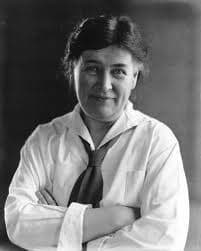
Willa Sibert Cather was an American writer known for her novels of life on the Great Plains, including O Pioneers!, The Song of the Lark, and My Ántonia. In 1923, she was awarded the Pulitzer Prize for One of Ours, a novel set during World War I.

Ashley Antoinette
4.6

Mark McDonald
4.4
Luo Guanzhong
4.4

Mia McKenzie
4.3

Dorothy Parker
4.3

Joaquim Maria Machado de Assis
4.3

James Thurber
4.2
Terry Kay
4.2