“The young people think the old people are fools; but the old people know the young people are fools.”
— Miss Marple reflecting on generational differences in the village.

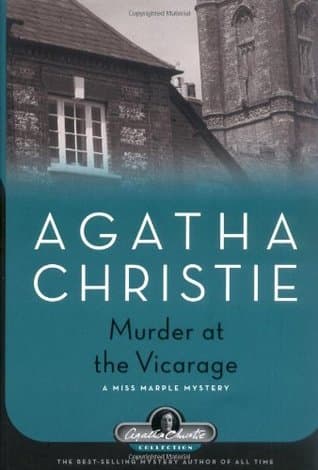
Agatha Christie (1930)
Genre
Mystery
Reading Time
360 min
Key Themes
See below
Sign in to track this book
When a universally despised colonel is murdered in a vicar's study, Miss Marple must navigate a village teeming with suspects who all secretly wished him dead.
The story begins in St. Mary Mead, told by Reverend Leonard Clement, the vicar. He introduces the reader to the villagers, including his wife Griselda, his nephew Dennis, and Miss Jane Marple. Colonel Lucius Protheroe, the magistrate, is disliked for his controlling nature. At dinner at the vicarage, Reverend Clement, annoyed by Protheroe's unpleasantness and his criticism of church accounts, jokes that killing Colonel Protheroe would 'do the world at large a favour.' This comment hints at what will happen.
The next day, the vicar gets a call from Colonel Protheroe, who wants to meet him at 6:30 PM. Earlier, Protheroe had also arranged to meet Lawrence Redding, an artist, at the vicarage at 6:15 PM. When Reverend Clement returns to his study, he finds Colonel Protheroe dead at his desk, shot in the head. The vicar calls Dr. Stone and Inspector Slack. The gun, a Luger pistol, is found nearby. The investigation focuses on the timing and the fact that Protheroe was killed in the vicar's study, making the vicar's earlier joke seem like a prophecy and putting him in a difficult spot.
Soon after the discovery, Lawrence Redding arrives and says he killed Protheroe after an argument. He says he then left the gun. But, the vicar's wife, Griselda, also confesses to the crime, though less convincingly. Miss Marple, watching from her window and listening to village talk, notices the unusual events and the different stories. She starts to connect the motives and alibis, watching behaviors and relationships, especially focusing on new arrivals and the colonel's difficult family life. She thinks there is more to the story than a simple confession.
The investigation gets confusing when another body is found in the vicarage study — that of Mrs. Lestrange, a woman new to the village. This second victim is also shot, seemingly with the same Luger. The plot gets more complex with the discovery that the clock in the vicarage study was moved forward by ten minutes. This change in time makes alibis and the order of events for both murders harder to understand. Inspector Slack struggles with the new information, as the first, seemingly clear case becomes a more complex puzzle. Miss Marple, however, sees the changed clock as an important clue, showing a deliberate attempt to mislead.
As the police investigate, it becomes clear that many villagers had strong reasons to want Colonel Protheroe dead. His wife, Anne Protheroe, was having an affair with Lawrence Redding. Protheroe's daughter, Lettice, strongly disliked her father. Dr. Stone, an archaeologist, was involved in a questionable financial deal with Protheroe and was also having an affair with Mrs. Protheroe. Even the vicar himself had said he wanted Protheroe dead. A note from Protheroe to Lawrence Redding, arranging a meeting, suggests a confrontation was about to happen. The police start to suspect a conspiracy, given the many confessions and motives. Mrs. Lestrange further complicates things, linking back to Protheroe's past.
The murder weapon, a Luger pistol, is identified as Lawrence Redding's. However, the police note that no spent cartridges were found where the first murder happened. This detail is important, as Luger pistols eject their cartridges. This difference suggests that the crime scene might have been altered, or that the gun used was not the one found, or that the shooting happened somewhere else. Miss Marple thinks about what this means, understanding that it points to a more complex plan than a simple, unplanned act of violence. The focus moves from who shot the gun to how the scene was set up.
Miss Marple, through her quiet observations and listening to village talk, starts to understand the plot. She realizes that the clock was moved forward to mislead investigators about when Colonel Protheroe died. She concludes that the first shot fired was not the one that killed him, and that the 'body' found by the vicar was not actually dead. The vicar had left his study door unlocked, letting someone enter. She understands that the key to the mystery is who had the chance and the reason to alter the scene and the clock, and who would gain from a delayed discovery of the body.
Anne Protheroe, Colonel Protheroe's wife, eventually confesses to shooting her husband. She says she went to the study, found him alive, shot him, and then left, leaving the gun. However, her confession does not completely match all the facts, especially the missing cartridges and the staged scene. Miss Marple, with her understanding of the characters, knows that Anne is protecting someone or is not telling the whole truth. Anne's confession, though it seems to solve the case, only adds more deception, as Miss Marple suspects it is a partial truth meant to hide the real, more complex plan.
Miss Marple finally puts together the full truth. Dr. Stone and Anne Protheroe were lovers and planned to kill Colonel Protheroe. Dr. Stone first shot the Colonel in the woods earlier in the day, hurting him badly but not killing him right away. They then set up the scene in the vicarage study. Anne Protheroe was to 'discover' the body and confess to a 'mercy killing' after finding him already dead, making it seem like she shot him in the study. The clock was moved forward to give her an alibi for the earlier shooting in the woods. Lawrence Redding's Luger was planted, and his confession was a desperate attempt to protect Anne, whom he also loved. Mrs. Lestrange was Dr. Stone's former wife, who recognized him and was killed.
With Miss Marple's deductions, the police arrest Dr. Stone and Anne Protheroe. It is revealed that Mrs. Lestrange was Dr. Stone's first wife, whom he had married illegally and left for dead years ago. She recognized him in St. Mary Mead and was about to expose him, leading him to kill her to protect his plan with Anne. Lawrence Redding is cleared, and he can be with Lettice Protheroe. St. Mary Mead slowly returns to normal, though the events leave a lasting impression. Reverend Clement, though relieved, remains somewhat confused by the evil uncovered, while Miss Marple continues her observations, her understanding of people again proven right.
The Supporting
Miss Marple remains consistently astute, using her wisdom and experience to unravel the mystery, reaffirming her role as the village's unofficial solver of crimes.
The Protagonist/Narrator
He begins as a somewhat flippant observer, but the events of the murder force him to confront the darker side of human nature and his own complicity, making him more reflective.
The Victim
His character is fixed as the catalyst for the plot; his death reveals the hidden lives and secrets of the villagers.
The Supporting
She remains a vibrant and somewhat impetuous character, maturing slightly through the ordeal but retaining her youthful spirit.
The Supporting
He begins as a desperate lover willing to sacrifice himself, eventually being cleared and finding a new, more stable relationship.
The Antagonist
She begins as a sympathetic, oppressed wife but is gradually revealed to be a co-conspirator and murderer, culminating in her arrest.
The Antagonist
Introduced as a new, intriguing villager, he is gradually exposed as the cunning and ruthless primary antagonist.
The Supporting
She moves from a resentful daughter to a character who finds love and a new future after her father's death.
The Supporting
He begins as a somewhat arrogant and dismissive investigator but eventually learns to respect Miss Marple's abilities.
The Mentioned
Her brief appearance as a mysterious figure culminates in her death, which is key to unraveling the full scope of the conspiracy.
The novel's main theme is how appearances can deceive, especially in St. Mary Mead. What seems like a peaceful community is full of secrets, affairs, and strong dislikes. Characters like Anne Protheroe seem weak but are clever, and Dr. Stone seems respectable but is a killer. Miss Marple is good at this theme, seeing past polite outsides to the darker truths of human nature, often comparing villagers' actions to people she has known.
“One always knew a good deal about one's neighbours in St. Mary Mead, but one never knew everything.”
Christie shows how evil can exist in ordinary people and places. Colonel Protheroe's murder is not random but the result of widespread ill-will and specific, planned malice. The killers, Anne Protheroe and Dr. Stone, are not monsters but people driven by desire, greed, and no conscience, hiding behind respectable appearances. The theme shows how ordinary human faults and desires can lead to extreme acts, and that evil is not always obvious but can be subtly part of society.
“I suppose one ought not to say such things, but really, the Colonel was a very difficult man.”
The novel deals with justice and morality, especially when a disliked person is murdered. Reverend Clement's joke about Protheroe's death helping everyone shows the moral uncertainty. The legal system, shown by Inspector Slack, struggles with the many confessions and motives, while Miss Marple's justice relies on a deeper understanding of right and wrong and human behavior. The resolution, where the guilty are caught, brings back order, but the path to it questions if some deaths are 'deserved' or if all life has equal moral value.
“There are some people who are so bad that they deserve to die.”
Miss Marple's way of detecting is almost entirely based on her skill in observation and her careful use of village talk. She knows that small details and idle chatter often contain important insights into why people do things. The novel shows how information, when understood correctly, can be a powerful tool. It contrasts Miss Marple's intuitive approach with the police's more formal, often less effective, methods. Gossip, often seen as unimportant, becomes a real source of information in Miss Marple's hands.
“One does hear things, you know, living in a village. One can't help it.”
The story is told through the vicar's limited and often bewildered perspective.
Reverend Clement narrates the story, providing a subjective and sometimes naive viewpoint. His limited understanding of human depravity and his personal biases (e.g., his dislike for Protheroe, his affection for Griselda) mean that the reader only gets part of the picture. This device creates suspense and allows Miss Marple's superior intellect to shine, as she sees beyond the narrator's perceptions. The vicar often misses crucial details or misinterprets events, reflecting the common human tendency to judge by appearances, which is central to the novel's themes.
Misleading clues and false confessions designed to mislead both characters and readers.
Christie masterfully employs red herrings throughout the novel. Multiple characters, including Lawrence Redding and Griselda Clement, confess to the murder, creating confusion and diverting suspicion from the true culprits. The initial discovery of the Luger pistol belonging to Lawrence, combined with his affair with Anne Protheroe, paints a clear, but ultimately false, picture of guilt. These misdirections force the reader to constantly re-evaluate their assumptions and highlight the difficulty of discerning truth from falsehood, even with seemingly strong evidence.
The murder occurs in a seemingly secure study, but the reality is more complex.
Colonel Protheroe is found shot in the vicar's study, a seemingly contained and private space. This setup initially suggests a 'locked room' scenario, where the killer must have been present or had unique access. However, the twist is that the room was not truly 'locked' in a way that prevented the killer's machinations, and the scene itself was staged. The apparent simplicity of the murder in the study is a deliberate deception, leading investigators to focus on the wrong timeline and immediate suspects, rather than the more elaborate pre-planning involved.
The clock in the study is altered to mislead about the time of death.
A crucial plot device is the manipulation of the clock in the vicarage study, which is moved forward by ten minutes. This seemingly minor detail is vital to the murder plot, creating false alibis and confusing the exact time of Colonel Protheroe's death. Miss Marple's ability to recognize the significance of this altered clock is key to unraveling the true sequence of events and exposing the elaborate staging of the crime, demonstrating how a small, precise action can have profound implications for an investigation.
“The young people think the old people are fools; but the old people know the young people are fools.”
— Miss Marple reflecting on generational differences in the village.
“I always find that if one is patient and does not worry, things usually come right in the end.”
— Miss Marple advising on her approach to solving mysteries.
“There is a great deal of wickedness in village life.”
— Miss Marple commenting on the hidden complexities of rural society.
“One does see so much evil in a village.”
— Miss Marple explaining her keen observational skills.
“I have no imagination. I only know what I see.”
— Miss Marple downplaying her deductive abilities.
“It is so difficult to know what people are really like.”
— A character musing on the challenge of understanding others.
“The truth is never simple.”
— Reflecting on the complexities uncovered during the investigation.
“People are so fond of talking about things they know nothing about.”
— Miss Marple on gossip and misinformation in the village.
“I have always found that there is usually a very simple explanation for everything.”
— Miss Marple's philosophy on unraveling mysteries.
“One must never jump to conclusions.”
— Advice given during the investigation to avoid hasty judgments.
“It is amazing how much one can learn by just listening.”
— Miss Marple emphasizing the value of attentive listening.
“The most unlikely people are capable of the most unlikely things.”
— A reflection on the surprises revealed by the murder case.
“There is no detective like time.”
— Miss Marple on how time reveals truths and resolves mysteries.
Ready to see how well you understood this book? Take our interactive quiz with 10 questions.
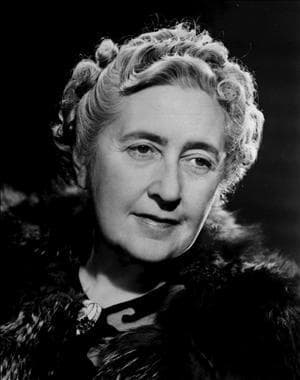
Dame Agatha Mary Clarissa Christie, Lady Mallowan, was an English writer known for her 66 detective novels and 14 short story collections, particularly those revolving around fictional detectives Hercule Poirot and Miss Marple. She also wrote the world's longest-running play, the murder mystery The Mousetrap, which has been performed in the West End since 1952. A writer during the "Golden Age of Detective Fiction", Christie has been called the "Queen of Crime". She also wrote six novels under the pseudonym Mary Westmacott. In 1971, she was made a Dame (DBE) by Queen Elizabeth II for her contributions to literature. Guinness World Records lists Christie as the best-selling fiction writer of all time, her novels having sold more than two billion copies.