“The Book of Thoth, or the Tarot, as it is more popularly known, is not a book of fortune-telling, but a book of initiation.”
— Describing the true nature of the Tarot.

Sign in to track this book
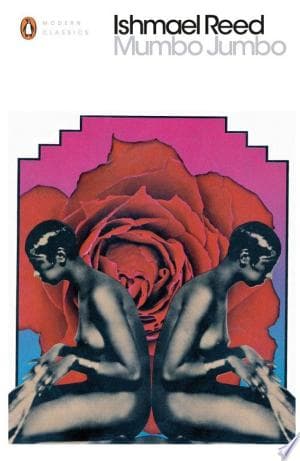
In 1920s America, a Vodun priest and private eye, Papa LaBas, fights a global puritanical group to protect the growing jazz movement from an 'epidemic' of Black artistic expression and find an ancient text that could ensure its freedom.
It is 1920, and a mysterious event called the 'Atonist Plague' is spreading across America, starting in New Orleans and moving north. This 'plague' makes people want to dance, sing, and express joy, especially among Black communities, showing up as the growing jazz and ragtime movements. This cultural burst is seen as a direct threat by the Wallflower Order, an old, secret, and strict society with ties to the Knights Templar. Based in New York, their goal is to stop any spontaneous, 'pagan' expression and keep a rigid, controlled social order. They believe this plague comes from a powerful ancient text, a sacred Black aesthetic, and they are determined to find and stop it.
In Harlem, Papa LaBas, a Vodun priest and private detective, learns about the spreading Atonist Plague and the bad forces working against it. LaBas knows a lot about ancient spiritual traditions and history, which he uses to understand what is happening. He sees the Wallflower Order's actions as a continuation of historical attempts to stop non-Western, intuitive, and body-focused cultures. His office is a center for understanding and defending the growing Black artistic movement. His helper, Black Herman, assists him with both everyday and spiritual investigations. LaBas understands that the 'plague' is not a sickness but a rebirth of an old spirit of freedom.
The search for an ancient Egyptian text is central to the conflict. This text is thought to be the source or 'carrier' of the Atonist Plague. It is not a physical book, but a powerful, self-creating aesthetic or spiritual force. The Wallflower Order, led by Hinckle Von Vampton, believes that by getting and stopping this text, they can stop the spread of joy and bring back their desired order. Papa LaBas, however, seeks the text to protect and understand its power, making sure Black culture and expression continue to thrive. The text is rumored to have come to America from Haiti, and its path is complex, hidden by history and conspiracy.
The Wallflower Order uses various agents to fight the Atonist Plague. Hinckle Von Vampton, a former Black Arts critic, now works for the Order, changing public opinion and looking for the ancient text. Another important person is the 'Jes Grew' killer, a mysterious assassin who targets people who show or spread the Atonist spirit. This killer is often linked to a series of murders, with each victim having expressed intense joy or creativity just before their death. The Order also tries to get into and corrupt new Black artistic movements, turning artists against their own culture by promoting Eurocentric ideas and stopping 'primitive' forms of expression.
The Harlem Renaissance, a time of great Black artistic and intellectual creativity, becomes a main stage for this spiritual battle. Black artists, writers, and musicians are at the forefront of spreading the 'Jes Grew' virus, which is the spirit of the Atonist Plague. The Wallflower Order sees this growing cultural movement as a direct threat to their control and actively works to weaken it. They fund certain 'acceptable' forms of Black art while condemning others, trying to take over and dilute the true expression of the movement. LaBas and his friends work to protect these artists and keep their culture whole against the Order's sneaky influence.
Papa LaBas investigates Hinckle Von Vampton's past, finding out about his long history of betraying Black artists and movements. It is revealed that Von Vampton, once a supporter of Black art, joined the Wallflower Order, becoming a key person in their efforts to stop Jes Grew. LaBas discovers that the ancient text, or its spiritual essence, was brought from Haiti by a group of former slaves and Vodun practitioners. This historical link shows the deep roots of the Atonist Plague in African spiritual traditions and resistance to oppression. The text's journey from Haiti to America represents the transfer of a powerful, freeing consciousness.
LaBas's investigation leads him to the Museum of Haitian Art, an important place for understanding the text's journey and its connection to Vodun practices. Here, he gathers more clues about the ancient aesthetic's presence in America. During his investigation, the 'Jes Grew' killer is revealed to be Earl of Lemur, a seemingly harmless person who is actually a very effective assassin for the Wallflower Order. Lemur, driven by a twisted sense of duty to his strict masters, systematically targets individuals most affected by the joyful spirit of Jes Grew, trying to 'cure' the world by removing its carriers.
The conflict ends in a direct fight at the Wallflower Order Building. Papa LaBas and his allies, including Black Herman and other members of the Mumbo Jumbo Kathedral, get into the Order's base. This fight is not just physical; it is spiritual and ideological. LaBas aims to expose the Order's true nature and stop them from completely suppressing the Atonist Plague. The Wallflower Order, in turn, tries to capture LaBas and destroy the source of Jes Grew, believing they are about to get rid of this 'disease' of joy and freedom. The building itself symbolizes their strict control and opposition to spontaneity.
During the climax, the true nature of the ancient text is revealed. It is not a single, physical item that can be destroyed, but a continuously renewing spiritual force, a self-spreading virus of joy and freedom called 'Jes Grew.' It shows up as an aesthetic, a way of being, a cultural movement. The Wallflower Order's attempts to contain or destroy it fail because Jes Grew does not rely on one source. It is a natural human desire for expression, especially strong within oppressed communities. This revelation means that the spirit of Black culture cannot be permanently stopped.
While Papa LaBas and his allies succeed in stopping the Wallflower Order's immediate plans to get rid of Jes Grew, the struggle is not over. The Order, though temporarily set back, continues its sneaky work, changing its methods to control and take over cultural movements. Jes Grew, the spirit of the Atonist Plague, continues to spread and change, showing its natural strength and ability to adapt. The novel concludes with the understanding that the battle between strict control and joyful self-expression is an ongoing, repeating process, deeply part of history and human nature. LaBas remains a watchful protector of this ancient spiritual freedom.
The Protagonist
LaBas begins as a knowledgeable guardian and evolves into the active defender of Jes Grew, orchestrating its protection against the Wallflower Order.
The Antagonist
Von Vampton's true allegiance is gradually exposed, revealing his consistent role as a betrayer of Black cultural movements throughout history.
The Central Concept/Force
Jes Grew begins as an emerging cultural phenomenon and is revealed to be an ancient, resilient, and self-generating force.
The Antagonistic Force
The Order's ancient origins and consistent methods are revealed, highlighting their unchanging agenda across history.
The Supporting
Herman develops his understanding of Jes Grew and the Wallflower Order through his apprenticeship with LaBas.
The Supporting/Antagonist
Lemur's identity is initially a mystery, and his reveal solidifies the direct physical threat posed by the Wallflower Order.
The Supporting
Hamid moves from skepticism and criticism of Jes Grew to a more nuanced understanding and eventual acceptance of its spiritual significance.
The Supporting
The Moochers embody the initial, uninhibited spread of Jes Grew, facing the direct threats of the Wallflower Order.
This is the novel's main conflict. The Wallflower Order, representing strict, Eurocentric control, actively tries to stop and get rid of Jes Grew, which shows Black artistic, spiritual, and physical freedom. The Order's attempts to 'cure' the 'plague' symbolize historical efforts to control non-Western cultures. In contrast, Jes Grew's spontaneous spread and resilience show the lasting power of oppressed cultures to express their identity and freedom. This theme is clear in the Order's attempts to censor art and kill 'carriers' of Jes Grew, set against Papa LaBas's efforts to protect and support this freeing force.
“Jes Grew is a psychic epidemic, that's what it is. A spiritual plague, a disease of the soul.”
Reed presents art, especially Black art (jazz, ragtime, blues), as a powerful, almost living force that can change society. Jes Grew is not just a cultural movement but an aesthetic entity, an ancient text that creates itself and fills people with joy and creativity. The novel puts art above mere entertainment, showing it as a spiritual weapon and a way for collective consciousness. The Harlem Renaissance is a clear example, where artistic expression becomes a form of resistance and self-assertion. The Wallflower Order's fear of Jes Grew highlights the deep power art has to challenge established orders and inspire freedom.
“Jes Grew is infectious. It is the nameless microbe that can cause a literary and artistic epidemic.”
The novel rejects a simple view of history, instead showing it as a repeating cycle of conflict between forces of control and forces of freedom. Papa LaBas's broad historical knowledge shows that the Wallflower Order's efforts to stop Jes Grew are just the latest version of an old, ongoing battle against 'pagan' or non-Western spiritual expression. The references to the Knights Templar, ancient Egypt, and Haitian Vodun emphasize that the struggle is timeless. This cyclical view suggests that while specific events change, the basic conflict remains, and victory is never final, but a continuous effort to keep balance.
“The Wallflower Order has been around since the Knights Templar. They've been trying to stop Jes Grew for centuries.”
Reed explores different kinds of knowledge: the logical, analytical, and often manipulative knowledge of the Wallflower Order versus the intuitive, spiritual, and body-focused knowledge found in Vodun and Jes Grew. The 'ancient text' is not a physical book but a living, self-creating aesthetic, challenging common ideas of what knowledge and truth are. LaBas's Vodun practices represent a complete understanding of the world, contrasting with the Order's broken, controlling approach. The novel suggests that true understanding comes from accepting a broader, more spiritual perspective, rather than relying only on Western logic.
“The book itself is a text, an aesthetic, a culture. It is not a thing to be read, but a thing to be experienced.”
The theme of betrayal and takeover shows the internal and external threats to cultural movements. Hinckle Von Vampton, a former Black Arts critic, embodies betrayal by actively working for the Wallflower Order to suppress the very culture he once claimed to support. The Order's plan involves not just direct suppression but also taking over and weakening true Black expression, funding 'acceptable' art forms that fit their standards. This shows how oppressive forces can get into and neutralize movements by turning their own members or aesthetics against them, making alertness against internal compromise as important as external resistance.
“He was a Black man, but he had bought into the white man's ways, lock, stock, and barrel.”
The novel constantly references and incorporates other texts, historical documents, and cultural forms.
Reed employs metafiction by directly addressing the reader, referencing historical figures and events (both real and fictionalized), and incorporating various textual forms like footnotes, newspaper clippings, and even illustrations. This creates a layered narrative that blurs the line between fiction and reality, inviting the reader to question conventional historical accounts. The novel itself becomes a 'text' in the same way Jes Grew is a 'text,' actively participating in the cultural dialogue it describes. This device serves to deconstruct traditional narratives and highlight the constructed nature of history and knowledge.
Uses humor and exaggeration to critique societal norms, racism, and intellectual pretension.
Mumbo Jumbo is a highly satirical novel, using exaggeration, irony, and parody to critique racism, cultural appropriation, puritanism, and the academic establishment. The Wallflower Order, with its absurdly rigid rules and ancient origins, is a parodic representation of oppressive institutions. Characters like Hinckle Von Vampton are caricatures of intellectual betrayers. This satirical approach allows Reed to deliver biting social commentary while maintaining a comic and anarchic tone. It undermines the seriousness of oppressive forces by exposing their inherent absurdity, making their control seem less formidable.
Integrates ancient African, Haitian, and Egyptian mythologies and Vodun practices into the narrative.
The novel heavily draws upon and reinterprets various mythologies, particularly Vodun, ancient Egyptian beliefs, and African spiritual traditions. Papa LaBas's character and his understanding of the world are rooted in Vodun, which provides an alternative epistemic framework to Western rationalism. Jes Grew itself is presented as an ancient, recurring spiritual force. This device allows Reed to construct a counter-narrative to Eurocentric history, asserting the validity and power of non-Western spiritual systems. It also imbues the story with a sense of cosmic significance, framing the cultural struggle as a timeless battle of archetypal forces.
A metaphorical and literal 'psychic epidemic' of joy, dance, and Black aesthetic.
The 'Jes Grew' virus is both a central plot device and a powerful metaphor. It functions as a literal 'plague' that spreads contagiously, causing people to spontaneously dance, sing, and express themselves. Metaphorically, it represents the irresistible force of Black culture and aesthetic, particularly during the Harlem Renaissance. Its viral nature highlights the organic, uncontrollable spread of cultural movements, challenging the notion that culture can be centrally managed or suppressed. The Wallflower Order's attempts to 'cure' it underscore their misinterpretation of life-affirming expression as a disease.
A mythical, self-generating aesthetic that embodies Jes Grew, sought by both sides.
The ancient Egyptian text is a crucial MacGuffin, driving much of the plot. However, it is revealed to not be a physical book but a self-generating aesthetic, a spiritual force that manifests as Jes Grew. This device challenges the Western concept of a fixed, authoritative 'text' and instead proposes a living, evolving, and decentralized form of knowledge and culture. Its pursuit by both LaBas and the Wallflower Order highlights their differing philosophies on knowledge and power – one seeking to protect and understand, the other to control and destroy.
“The Book of Thoth, or the Tarot, as it is more popularly known, is not a book of fortune-telling, but a book of initiation.”
— Describing the true nature of the Tarot.
“History is a paddle to the canoe of the future.”
— A philosophical statement about the importance of understanding the past.
“What is the secret of the universe? It is that you are not alone.”
— A profound revelation about existence and connection.
“The disease is called Jes Grew. It is a spiritual plague, a psychic epidemic.”
— Introducing the central mysterious 'disease' that spreads throughout the narrative.
“A book is a loaded gun in the house next door. Burn it. Before the always-on watchman comes and burns it for you.”
— A warning about the power of books and censorship.
“The United States is a place where you can be whatever you want to be, as long as you don't step on anyone's toes.”
— A cynical observation about American freedom and conformity.
“Everywhere there is a black man, there is a Jes Grew carrier.”
— Highlighting the association of Jes Grew with African American culture and its spread.
“The past is not dead, it is not even past.”
— Emphasizing the enduring influence of history and its continuous presence.
“To be a voodoo priest is to be a doctor of the soul.”
— Defining the role and significance of voodoo practitioners.
“The work of the Atonists is to keep the people from dancing, to keep them from Jes Grew.”
— Explaining the agenda of the secret society trying to suppress Jes Grew.
“Myth is the history of the world.”
— A statement about the deep connection between myth and historical understanding.
“The world is a vampire, and we are its blood.”
— A dark and poetic metaphor for the exploitative nature of the world.
“Every man is a prophet, and every woman is a witch.”
— A statement empowering individuals with spiritual and intuitive abilities.
“The purpose of art is to make people uncomfortable.”
— A provocative definition of the role and impact of art.
Ready to see how well you understood this book? Take our interactive quiz with 10 questions.

Ishmael Scott Reed is an American poet, novelist, essayist, songwriter, composer, playwright, editor and publisher known for his satirical works challenging American political culture. Perhaps his best-known work is Mumbo Jumbo (1972), a sprawling and unorthodox novel set in 1920s New York.

Ashley Antoinette
4.6

Mark McDonald
4.4
Luo Guanzhong
4.4
Mia McKenzie
4.3

Dorothy Parker
4.3
Joaquim Maria Machado de Assis
4.3
James Thurber
4.2
Terry Kay
4.2