“Mrs. Dalloway said she would buy the flowers herself.”
— The opening line of the novel, establishing Clarissa's domesticity and her intention to prepare for her party.

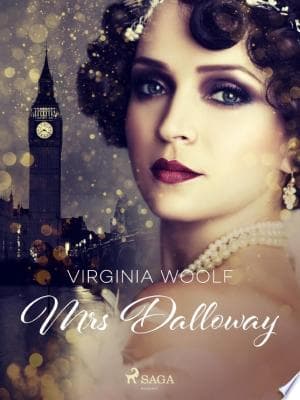
Virginia Woolf (2021)
Genre
Fiction
Reading Time
180 min
Key Themes
See below
Sign in to track this book
Clarissa Dalloway's day of party preparations becomes a journey through memory, class, and quiet desperation, set against post-WWI London.
On a beautiful June morning in 1923, Clarissa Dalloway, a fifty-two-year-old society woman, walks through Westminster to buy flowers for her evening party. As she moves through the busy London streets, she feels connected to the city and its people, a feeling she values despite her often superficial social life. Her thoughts turn to her youth, especially her summers at Bourton, a country estate. She remembers her affection for Sally Seton and the marriage proposal from Peter Walsh, a passionate young man whom she chose not to marry, instead marrying the more stable Richard Dalloway. Clarissa considers her past choices and the person she has become, feeling both satisfied and vaguely dissatisfied with her life.
Meanwhile, Peter Walsh, Clarissa's former suitor and long-time friend, returns to London after years in India. He is on his way to see Clarissa, feeling a mix of anticipation, resentment, and lingering love. Peter is a romantic and somewhat impractical man with a complex emotional history with Clarissa. When he arrives at her house, he finds her in the middle of party preparations. Their reunion is charged with unspoken history and regret. Peter criticizes Clarissa's social life and her marriage to Richard, restarting old arguments and highlighting the basic differences in their personalities and life views that led to their separation years ago. He is still deeply affected by her, constantly fidgeting with a penknife, a symbol of his unresolved emotions.
At the same time as Clarissa's morning, Septimus Warren Smith, a young World War I veteran with severe shell shock, is experiencing deep mental distress. He sits in Regent's Park with his Italian wife, Rezia, who is desperate to help him. Septimus is tormented by horrifying hallucinations, believing he talks to his dead friend Evans and sees trees burning. He feels immense guilt for his inability to feel and for Evans's death, and he feels completely detached from the world. His doctors, Dr. Holmes and Sir William Bradshaw, offer little understanding or effective treatment, dismissing his suffering and recommending forced rest and separation from Rezia, which only worsens his despair and isolation.
Richard Dalloway, Clarissa's husband and a Member of Parliament, has lunch with Lady Bruton and Hugh Whitbread. He plans to tell Clarissa he loves her, a rare and important gesture for him. After lunch, he buys roses and returns home to Clarissa. However, when he sees her, he cannot say his feelings, instead just handing her the flowers. Clarissa understands his unspoken affection but also feels a familiar distance in their relationship. She reflects on their marriage, which, while stable, lacks the intense passion she experienced, or imagined, with Peter or Sally. She values the space and independence Richard gives her, contrasting it with Peter's more demanding nature, but she also acknowledges an emotional reserve between them.
Septimus's condition continues to worsen under the 'care' of Sir William Bradshaw, a renowned psychiatrist known for his rigid approach. Bradshaw believes in 'proportion' and 'conversion,' advocating strict control over patients' lives, often isolating them from loved ones. He insists that Septimus be sent to a country asylum for complete rest, removing him from Rezia's care and denying him any control. Septimus feels trapped and misunderstood; his vivid, terrifying visions contrast sharply with the doctors' dismissive diagnoses. Rezia, though desperate, feels powerless against the medical establishment, watching her husband slip further into his illness.
Lady Bruton hosts a lunch attended by Richard Dalloway and Hugh Whitbread, among others. The conversation covers social pleasantries, minor topics, and the upcoming party. Hugh Whitbread, a charming but somewhat superficial man, represents the conventionality and class consciousness that Clarissa often feels restricted by. Clarissa herself is not there, but her party is discussed, showing its importance in her social world. The scene highlights the social connections and obligations that define the lives of Clarissa's acquaintances, revealing the subtle power dynamics and unspoken rules of their upper-class London society. It also hints at these individuals gathering later at Clarissa's party.
Facing the threat of being institutionalized and separated from Rezia by Sir William Bradshaw, Septimus reaches a breaking point. He feels violated by the doctors' intrusion into his mind and their lack of understanding. As Dr. Holmes approaches his flat, Septimus, in a desperate act of rebellion and a desire to protect his inner world from further invasion, throws himself from the window onto the railings below. His death is a tragic result of his mental anguish and society's failure, especially the medical establishment, to understand and treat his war trauma with compassion. Rezia is left alone, devastated by her husband's death.
As evening falls, Clarissa's party begins. Guests arrive, including her old friends Peter Walsh and Sally Seton (now Lady Rosseter), who have not seen each other in years. The gathering is a small representation of Clarissa's social world, with politicians, artists, and society figures. Clarissa, as the hostess, moves among her guests, making connections and ensuring everyone is entertained, yet she often feels detached from the event she planned. The party is her offering to the world, a way to bring people together and create shared experiences, despite her internal struggles with identity. Peter watches her, still captivated, while Sally enjoys reconnecting with old friends.
Sally Seton, Clarissa's lively and unconventional friend from Bourton, arrives at the party. Now Lady Rosseter, she is married with five sons, her youthful wildness softened by domesticity. Her reunion with Clarissa and Peter is full of nostalgia and unspoken memories of their past. Sally represents a different path Clarissa could have taken, a life of less convention and more passionate freedom. She still has a lively spirit and a sharp eye, engaging in animated conversations and reflecting on how time has changed their lives and friendships. Her presence at the party stirs a mix of fondness, regret, and a re-evaluation of past choices for both Clarissa and Peter.
Late in the evening, Sir William Bradshaw and Lady Bradshaw arrive at the party, bringing news of Septimus Warren Smith's suicide. Clarissa, at first annoyed by their late arrival and the somber topic, retreats to a small room to absorb the information. She feels a deep connection to Septimus, a stranger whose death resonates with her own anxieties about life, death, and social pressures. She understands his act not as madness, but as a desperate attempt to protect something sacred within himself from the world's invasive forces. His death makes her confront her own mortality and the superficiality of her social life, leading to introspection and empathy.
Alone in the small room, Clarissa thinks about Septimus's death. She imagines his leap as an escape, a defiant act against oppression. She understands his suffering and the violation he felt from those who tried to 'cure' him. In this moment, she realizes that his death is, in a strange way, an affirmation of life, a sacrifice that allows others, including herself, to continue living. She sees a connection between his desperate act and her own vulnerability and the constant struggle to maintain one's identity. This thought brings her a strange peace and a renewed appreciation for life's preciousness and danger, strengthening her resolve to embrace her existence, however imperfect.
After her moment of introspection, Clarissa returns to her party. She re-enters the social activity with a renewed sense of purpose. The news of Septimus's death, rather than casting a shadow, has deepened her understanding of life and human connection. She looks at her guests with fresh eyes, seeing their individual struggles and joys. Peter Walsh, still observing her, feels her presence intensely, recognizing the unique essence of Clarissa that has always captivated him. The party continues, a mix of conversations, laughter, and unspoken emotions, all held together by Clarissa's subtle influence. The novel ends with Peter's intense perception of Clarissa, highlighting her lasting appeal and impact on those around her.
The Protagonist
Clarissa begins the day feeling a familiar mix of joy and quiet regret, but through a stranger's death, she achieves a deeper understanding of life's fragility and her own place within it.
The Supporting
Peter arrives in London still haunted by his past with Clarissa, and while his feelings for her are reawakened, he ultimately comes to a renewed acceptance of their separate paths.
The Supporting
Septimus's arc is one of escalating mental torment, culminating in his desperate suicide as a final act of preserving his inner self from perceived violation.
The Supporting
Rezia endures immense suffering and powerlessness as her husband succumbs to his illness, ultimately becoming a tragic figure of loss and resilience.
The Supporting
Richard remains largely unchanged, serving as a stable anchor in Clarissa's life, though he briefly attempts to express deeper affection.
The Supporting
Sally's arc shows the tempering of youthful rebellion into a contented, if slightly less vibrant, domesticity, while still retaining her core spirit.
The Supporting
Elizabeth is at the cusp of her own identity, beginning to explore her independence and interests outside of her mother's social sphere.
The Antagonist
Bradshaw's character remains static, embodying the unyielding, conformist pressures of society.
Woolf explores how past and present exist together in the human mind, blurring the lines between what was and what is. Clarissa's day is often marked by vivid memories of Bourton, her youth, and her relationships with Peter Walsh and Sally Seton. These memories are not just recollections but active forces shaping her current feelings and decisions, such as her ongoing thoughts about her marriage choices. The novel's stream-of-consciousness style allows for smooth transitions between different time periods, showing how memory shapes identity and creates a rich, layered internal world for each character, highlighting the subjective experience of time.
“What she liked was simply life. 'That's what I like,' she thought; 'the high things and the low things, the good things and the bad things, the old things and the new things. And the things that will never happen.'”
The novel shows the rigid social structures and expectations of post-World War I London society, especially among the upper classes. Clarissa's party itself is a display of social standing and a way to maintain her position in this hierarchy. Characters like Lady Bruton and Hugh Whitbread represent the conventionality and snobbery of this world, while Clarissa often feels limited by its demands. Septimus's suffering, in contrast, highlights the gap between the privileged and those marginalized, particularly in the lack of compassionate care he receives. The pressure to conform to social roles, whether as a wife, a politician, or a 'sane' person, is a constant force.
“She had the oddest sense of being herself invisible; unknown; there being no more marrying, no more having of children, but only this astonishing and perpetual experience of being herself.”
World War I affects the novel deeply, most clearly through Septimus Warren Smith. His severe shell shock, hallucinations, and inability to feel are direct results of his wartime experiences. The novel criticizes society's failure to acknowledge and treat such trauma, as Septimus is dismissed and driven to suicide by the uncomprehending medical establishment. The war also subtly affects other characters; Peter Walsh reflects on its changes, and Clarissa, though not on the front lines, feels its lingering presence in London's altered mood. Septimus's story reminds readers of the hidden casualties of conflict.
“He was not Septimus now. He was a pioneer, a explorer, a man who had gone where no man had gone before.”
Woolf explores the complexities of different types of love and the compromises in marriage. Clarissa's choice between the passionate Peter Walsh and the stable Richard Dalloway is a central part of her reflections. Her marriage to Richard offers comfort and independence but lacks deep emotional intimacy, while her past connection with Sally Seton suggests a deep, almost romantic, bond. The novel questions whether true intimacy is possible in conventional marriage and examines the unspoken feelings and distances that exist even between loving partners, such as Richard's inability to directly tell Clarissa he loves her. Rezia's devotion to Septimus highlights the burden of unconditional love in the face of mental illness.
“She felt like a nun who has forsworn the world. For by living with Richard she had become a woman, and a woman who had to be, what she was, a wife.”
A main theme is the tension between a person's inner world and society's demands. Clarissa constantly navigates this divide, presenting a composed social facade while experiencing a rich, complex internal life. Septimus's tragedy results directly from society's inability to tolerate or understand his unique inner torment, leading to his alienation and destruction. The novel suggests that society, through its conventions and institutions (like the medical system or social expectations), often stifles individuality. Characters like Peter Walsh and Sally Seton also struggle to find authentic self-expression within social limits, reflecting on how their younger, more rebellious selves have been shaped or subdued.
“She felt very young; at the same time unspeakably ancient. She knew very well that she was not a lady, but a woman.”
A narrative technique that mirrors the continuous flow of thoughts, feelings, and memories.
Woolf employs stream of consciousness to immerse the reader directly into the subjective experiences of her characters. The narrative moves seamlessly from one character's mind to another, often without clear transitions, reflecting the associative nature of thought. This technique allows for deep psychological insight, revealing characters' unexpressed desires, fears, and memories as they perceive the world around them. It blurs the line between internal monologue and external reality, creating a rich, multi-layered tapestry of perspectives that emphasizes the private, often unspoken, dimensions of human experience, as seen in Clarissa's and Septimus's internal monologues.
A narrative mode that blends the narrator's voice with a character's thoughts and speech.
Free indirect discourse is crucial to Woolf's narrative style, allowing her to convey characters' inner thoughts and feelings without explicit quotation marks or introductory phrases like 'she thought' or 'he said.' This technique creates a sense of intimacy and immediacy, making the reader feel directly privy to the characters' minds. It also enables subtle shifts in perspective, as the narrator's voice can blend with a character's, creating ambiguity and a richer psychological portrait. For example, when Clarissa is walking, her observations of London and her internal reflections often merge, making it difficult to separate objective description from her subjective experience.
Clarissa's evening party serves as a central symbol for her identity and connection.
Clarissa's party is more than just a social event; it is a profound symbol of her identity, her life's work, and her attempt to connect with the world. She sees it as her 'offering,' a way to bring people together and create beauty and meaning. The party represents her public self, the carefully constructed facade she presents to society, but also her deep desire for connection and her fear of isolation. It serves as a microcosm of London society, bringing together diverse characters and allowing for moments of both superficial interaction and profound revelation, particularly when the news of Septimus's death infiltrates its boundaries, forcing Clarissa to confront deeper truths.
The parallel lives of Clarissa and Septimus highlight contrasting responses to life's pressures.
Woolf masterfully uses the juxtaposition of Clarissa Dalloway's and Septimus Warren Smith's lives to explore themes of sanity, madness, and societal pressures. Though they never meet, their stories run parallel throughout the day, often experiencing similar sensations or thoughts at the same time (e.g., the passing car, the sky). Clarissa, a privileged socialite, represents a successful adaptation to societal demands, albeit with a lingering sense of internal dissatisfaction. Septimus, a war veteran, embodies a complete breakdown under these same pressures. Their parallel narratives highlight the fragility of the human mind and the arbitrary line between 'normalcy' and 'madness,' culminating in Clarissa's empathetic understanding of Septimus's suicide.
“Mrs. Dalloway said she would buy the flowers herself.”
— The opening line of the novel, establishing Clarissa's domesticity and her intention to prepare for her party.
“What a lark! What a plunge!”
— Clarissa's internal exclamations as she steps out into the London morning, reflecting her joy and the vibrancy of life.
“She had the oddest sense of being herself invisible; unseen; unknown.”
— Clarissa's feeling of anonymity and detachment while observing the world around her, despite her active social life.
“It was awful, he cried, awful, awful! And he would have cried, awful, awful, over and over again, but the very word (which was not awful to him at all) prevented him.”
— Septimus Smith's internal struggle and the inadequacy of language to express his profound suffering and shell shock.
“She felt like a nun who has left the world and feels absolutely pure, and when she goes out she is not sure whether she has done the right thing.”
— Clarissa's reflection on her marriage to Richard and the path her life has taken, pondering alternative choices.
“For having lived in Westminster – how many years now? over twenty, – one feels even in the midst of the traffic, or waking at night, Clarissa was positive, a particular hush, or solemnity; an indescribable pause; a suspense before Big Ben strikes.”
— Clarissa's deep connection to London, particularly Westminster, and her sensory experience of the city.
“Fear no more, says the heart, committing its burden to some sea, which it deeply feels, for it belongs to that sea, and will flow away, and give itself to the waves.”
— Septimus's internal monologue, referencing Shakespeare, as he contemplates his own death and a sense of belonging.
“She had to break with it, all this romance and all this nonsense.”
— Sally Seton's rebellious spirit and her desire to escape societal expectations and romantic ideals in her youth.
“It was Virginia Woolf's idea that one should write of ordinary life. I want to write of the people who live in the ordinary world.”
— Peter Walsh's thoughts on Clarissa and her life, reflecting on the value of everyday experiences.
“The world has been so terrible to him.”
— Rezia Smith's poignant reflection on her husband Septimus's suffering and the world's indifference to it.
“She would not say of any one in the world now that they were this or were that.”
— Clarissa's evolving perspective, moving beyond simple judgments of people, recognizing complexity.
“She always felt a little like a nun. She had a passion for women.”
— Clarissa's complex feelings and her unspoken desires, particularly her deep affection for Sally Seton.
“Death was an attempt to communicate, people feeling the impossibility of reaching the centre which, mystically, evaded them; closeness drew apart; rapture faded, one was alone.”
— Clarissa's profound meditation on Septimus's suicide, understanding it as a desperate act of communication.
“She felt somehow very like him—the young man who had killed himself. She felt glad that he had done it; thrown it away.”
— Clarissa's unexpected empathy and understanding for Septimus's suicide, seeing it as a defiance against life's intrusions.
“For there she was.”
— The final line of the novel, spoken by Peter Walsh as he sees Clarissa, encapsulating her presence and impact.
Ready to see how well you understood this book? Take our interactive quiz with 10 questions.
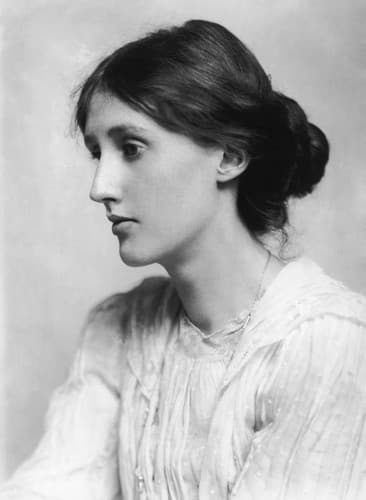
Adeline Virginia Woolf was an English writer. She is considered one of the most important modernist 20th-century authors and a pioneer in the use of stream of consciousness as a narrative device.

Ashley Antoinette
4.6

Mark McDonald
4.4
Luo Guanzhong
4.4
Mia McKenzie
4.3
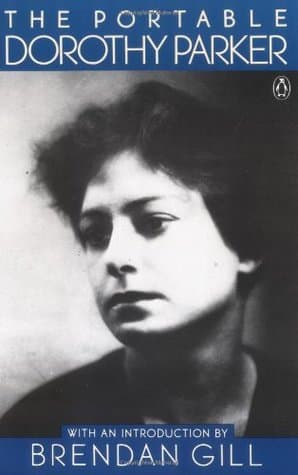
Dorothy Parker
4.3

Joaquim Maria Machado de Assis
4.3

James Thurber
4.2

Terry Kay
4.2