“I can’t live in this house! I can’t live in this town! I can’t live in this world!”
— Lavinia's desperate cry after the deaths of her mother and brother.

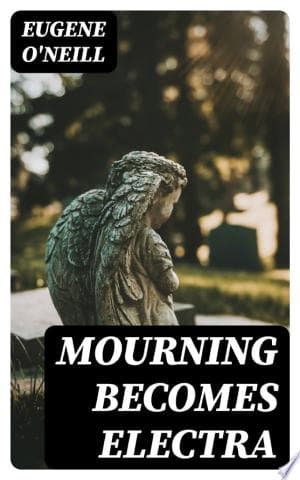
Eugene O'Neill (2022)
Genre
Fiction
Reading Time
173 min
Key Themes
See below
Sign in to track this book
After the American Civil War, the Mannon family unravels in a chilling echo of ancient Greek tragedy, consumed by adultery, murder, and incestuous love that twists their Puritanical facade into a grotesque mask of doom.
The play opens in front of the Mannon house in New England, shortly after the end of the Civil War. Christine Mannon is having an affair with Captain Adam Brant, a descendant of the black sheep Mannon line. Christine despises her husband, General Ezra Mannon, and their imposing, puritanical home. She confesses to Brant her plan to poison Ezra, making it look like a heart attack, as he suffers from a weak heart. Lavinia Mannon, Christine and Ezra's daughter, has long suspected her mother's affair and warns Brant to stay away from her family. Lavinia is fiercely devoted to her father and harbors a deep resentment towards her mother, fueled by her own unacknowledged desire for Ezra's affection.
General Ezra Mannon returns home, expressing his war weariness and a desire to finally find peace and love with Christine. He confides in her his hopes for a new beginning, revealing a vulnerability that surprises Christine. However, Christine remains cold and determined. That night, after a heated argument where Ezra reveals his knowledge of her affair and his own past infidelities, Christine administers the poison. Ezra dies, and Lavinia immediately suspects foul play, recognizing the symptoms of poison rather than a natural heart attack. She confronts Christine, who feigns innocence, but Lavinia's suspicions are solidified.
Orin Mannon, Ezra and Christine's son, returns from the war, suffering from shell shock and a strong maternal attachment. He is deeply disturbed by his father's death and his mother's apparent grief. Lavinia, seeing an opportunity to gain an ally, takes Orin to visit Ezra's grave. There, she subtly plants seeds of doubt about Christine's innocence, eventually revealing her belief that Christine murdered Ezra. Orin, already emotionally fragile and possessing an Oedipal attachment to Christine, is torn between his love for his mother and the shocking accusation from his sister. His bond with Lavinia intensifies, becoming increasingly unhealthy and co-dependent.
Lavinia and Orin follow Christine to Boston, where she meets Adam Brant. They spy on Christine and Brant, witnessing their intimate moments, which confirms Lavinia's accusations for Orin. Overwhelmed by jealousy and a sense of betrayal, Orin's fragile mental state deteriorates further. They confront Christine, revealing their knowledge of her affair and their conviction that she murdered Ezra. Christine, cornered, confesses to the murder but attempts to justify her actions by recounting Ezra's coldness and her love for Brant. The confrontation is emotionally charged, sealing the fate of the Mannon family.
Driven by a desire for revenge and manipulated by Lavinia, Orin decides to kill Adam Brant. Lavinia, fueled by her own jealousy and a twisted sense of justice, assists Orin in tracking Brant to his ship. Orin shoots Brant, making it appear as a robbery gone wrong. The siblings then return home, attempting to cover their tracks. The act profoundly affects Orin, deepening his psychological torment and guilt. Lavinia, while outwardly resolute, is also deeply implicated in the violence, binding her further to Orin in their shared secret and crime.
Upon learning of Adam Brant's death, Christine is utterly devastated. She realizes the full extent of her children's vengeful actions and the complete destruction of her hopes for happiness. Confronted by Lavinia, who coldly informs her of Brant's murder and Orin's involvement, Christine's resolve breaks. Overcome by grief and despair, she retreats into the Mannon house. Later, a gunshot is heard from within. Christine has committed suicide, leaving Orin and Lavinia to grapple with the immediate consequences and the lingering guilt of their actions, further entrenching the curse upon the Mannon household.
After Christine's death, Orin and Lavinia travel to the South Sea Islands, a place Christine had once dreamed of escaping to with Brant. Lavinia hopes this change of scenery will help Orin recover, but instead, he becomes increasingly obsessed with their shared crimes and their twisted family history. He begins writing a detailed account of the Mannon family's sins, convinced he is documenting a curse. He sees Lavinia as a reincarnation of Christine, further blurring the lines of their relationship and his own deteriorating sanity. Lavinia, meanwhile, attempts to find solace and perhaps even love with a sailor, Peter Niles, but Orin's presence continually thwarts her.
Back at the Mannon house, Orin's mental state rapidly deteriorates. He is haunted by the ghosts of his parents and Brant, and his fixation on Lavinia intensifies, bordering on incestuous desire. He sees Lavinia as a mirror image of Christine, constantly reminding him of his mother's affair and his own complicity in the murders. Lavinia, desperate to escape his possessiveness and the dark shadow of their past, tries to find a life with Peter Niles. Orin, unable to cope with Lavinia's attempts at independence and consumed by guilt and madness, takes his own life with Ezra's pistol in the Mannon study.
Following Orin's death, Lavinia is left completely isolated. She has destroyed all her relationships, including her potential for happiness with Peter Niles, who is repulsed by the Mannon family's dark history and her coldness. Lavinia, now resembling her mother, Christine, and even her puritanical father, Ezra, in her sternness, rejects any possibility of love or escape. She understands that the Mannon curse has fully consumed her. In a final, symbolic act of self-imprisonment, she orders the shutters of the Mannon house to be nailed shut, condemning herself to live out her days alone within its walls, haunted by the past.
Lavinia, in her final moments, recognizes that she is the last of the Mannons and that the curse has finally come to rest with her. She explicitly states her intention to live in the house alone, to keep the Mannon dead company, and to atone for the family's sins. She rejects Seth's offer of company and any hope of a future outside the house. By choosing this path of self-imposed isolation and penitence, Lavinia believes she is fulfilling her destiny and, paradoxically, bringing an end to the active cycle of violence and revenge. The Mannon house, now a tomb, becomes her final resting place, a monument to the family's tragic downfall.
The Protagonist
Lavinia begins as a rigid, vengeful figure who instigates her family's downfall, only to become a haunted, isolated woman who embraces her role as the final keeper of the Mannon curse.
The Antagonist/Tragic Figure
Christine attempts to escape her oppressive life through illicit love and murder, but her actions lead to her children's vengeful spiral and her own despair and suicide.
The Protagonist/Tragic Figure
Orin returns from war emotionally fragile, is manipulated into avenging his father, and then descends into madness, guilt, and an incestuous obsession with Lavinia, ultimately leading to his suicide.
The Supporting/Catalyst
Ezra returns from war seeking peace, only to be murdered by his wife, becoming the initial victim whose death sets the entire tragic cycle in motion.
The Supporting/Catalyst
Adam Brant serves as Christine's means of escape and passion, only to become a pawn in the Mannon family's tragic drama and a victim of their revenge.
The Supporting
Peter offers Lavinia a path to normalcy and happiness, but he is ultimately repelled by her family's dark past and her eventual embrace of the Mannon curse.
The Supporting
Hazel offers Orin a chance at love and normalcy, but he is too consumed by his family's curse and his own madness to accept it.
The Supporting/Observer
Seth remains a constant, detached observer throughout the Mannon tragedy, offering a grounded perspective on their spiraling doom.
The central theme is the idea of a generational curse, echoing the House of Atreus. The Mannon family seems fated to repeat a cycle of murder, revenge, and incestuous desires, driven by their puritanical repression and inability to express healthy love. Each character attempts to break free, but their actions only deepen the curse. Christine's murder of Ezra, intended to secure her freedom, directly leads to her own death and the further unraveling of her children. Lavinia and Orin's revenge on Brant and Christine, while seemingly a choice, is presented as an inescapable response to the preceding crimes, ultimately trapping them further in the cycle. The play suggests that while characters make choices, the weight of their family history and inherent psychological flaws make their tragic end almost inevitable.
“There's a Mannon look in her eyes... just like her father... and her mother too... a look of being dead and alive at the same time.”
The Mannon family embodies the destructive nature of puritanical repression. Their stern, moralistic facade hides illicit desires, hatred, and unexpressed emotions. Ezra's coldness and Christine's stifled sensuality are direct results of this repression. Lavinia, initially a champion of Mannon virtue, is revealed to harbor deeply repressed desires, including an Oedipal love for her father and a subsequent transformation into a mirror image of her mother's sensuality and vengefulness. The Mannon house itself, with its Greek temple-like facade, symbolizes this hypocrisy – an outward show of order and virtue concealing inner chaos and corruption. The constant struggle between the 'purity' of the Mannon name and the 'sin' that festers within drives much of the conflict.
“I was a Mannon. I had to be strong. I had to forget I was a woman.”
O'Neill explicitly draws on Freudian psychology, particularly the Oedipal and Electra complexes. Orin exhibits a clear Oedipal attachment to his mother, Christine, which is shattered by her affair and Ezra's murder, leading to his subsequent fixation on Lavinia. Lavinia, in turn, harbors a deep, unacknowledged Electra complex towards her father, Ezra, which fuels her hatred for Christine and her possessiveness over Orin. This incestuous undercurrent manifests in the characters' inability to form healthy relationships outside the family, and in Orin's eventual pathological obsession with Lavinia, seeing her as a reincarnation of Christine. This theme highlights the destructive power of unresolved family dynamics and forbidden desires.
“You're not Orin! You're the Mannon dead!”
The play is a relentless cycle of revenge, where each act of violence begets another. Christine murders Ezra to escape him and be with Brant. Lavinia and Orin murder Brant to avenge Ezra. Christine commits suicide out of grief and despair, which Orin and Lavinia see as a final act of justice. The characters are driven by a primitive desire for retribution, often cloaked in a sense of moral duty, particularly by Lavinia. However, this pursuit of 'justice' only perpetuates the suffering, demonstrating that revenge is a destructive force that consumes both the avenger and the avenged. The cycle only ends when Lavinia, the last Mannon, willingly embraces her isolation as a form of atonement, becoming both the executioner and the final victim.
“I'm going to stay in this house and live alone with the dead!”
Many characters yearn for escape from the oppressive Mannon house and their puritanical heritage. Christine dreams of escaping to the South Sea Islands with Adam Brant, seeking passion and freedom. Orin, after the murders, finds a temporary, imagined freedom in the same exotic locale, yet cannot escape his guilt. Lavinia initially desires to escape the 'Mannon curse' by marrying Peter Niles, but ultimately realizes it is impossible. The play suggests that true escape is elusive, as the psychological chains of family history and personal guilt are inescapable. The Mannons are trapped by their own desires and the consequences of their actions, with death or self-imprisonment being the only 'freedom' they achieve.
“I hate the Mannons! I hate the house!”
A symbolic setting that embodies the family's puritanical facade and hidden corruption.
The Mannon house is not merely a setting but a powerful symbol. Its Greek temple-like facade represents the family's outward show of respectability, order, and puritanical virtue. However, its interior is a place of dark secrets, repressed desires, and violence. It acts as a prison for the characters, an inescapable monument to their cursed lineage. The house 'watches' the characters, and its atmosphere influences their actions, reflecting their internal turmoil. As the tragedy unfolds, the house becomes increasingly oppressive, culminating in Lavinia's decision to nail its shutters shut, sealing herself inside with the 'dead' and transforming it into a tomb.
Characters physically transform to resemble other family members, highlighting inherited traits and the cyclical nature of the curse.
A key plot device is the recurring physical resemblance among the Mannons. Lavinia initially resembles Ezra, but gradually takes on Christine's features, especially after her mother's death. Orin, too, sees Christine in Lavinia, and later, Lavinia sees Ezra in Orin. This physical transformation underscores the idea of a family 'type' or curse, suggesting that the characters are not entirely distinct individuals but rather different manifestations of the same doomed lineage. It highlights the cyclical nature of their tragedy and the inescapable influence of their ancestors, blurring individual identity with inherited fate and psychological patterns.
A symbolic representation of an idealized, unattainable escape from the Mannon curse.
The South Sea Islands function as a powerful symbol of freedom, passion, and escape from the cold, puritanical world of the Mannons. Christine idealizes them as a haven with Adam Brant, a place where she can shed her Mannon identity. Orin and Lavinia actually travel there, but find that the islands cannot erase their guilt or their family's curse. Instead, Orin's madness intensifies, and Lavinia's attempts at a new life are thwarted. The islands represent a false hope, demonstrating that the Mannon curse is not a geographical confinement but a psychological and spiritual one, inescapable even in paradise.
Used to emphasize self-recognition, inherited traits, and the blurring of identities within the family.
The motif of mirrors and reflections appears throughout the play, both literally and figuratively. Characters often see themselves or others as reflections of past Mannons, particularly Christine and Ezra. This device highlights the idea of inherited traits, the cyclical nature of the family curse, and the blurring of individual identities within the Mannon lineage. For instance, Orin sees Christine in Lavinia, and Lavinia herself eventually recognizes her transformation into her mother. These reflections force the characters to confront their own complicity in the family's tragic patterns and their inability to escape their past.
“I can’t live in this house! I can’t live in this town! I can’t live in this world!”
— Lavinia's desperate cry after the deaths of her mother and brother.
“There's a devil in our blood.”
— Christine reflecting on the destructive nature of the Mannon family.
“God, I'm so sick of the dead! I wish they'd stay dead!”
— Orin's tormented outburst, haunted by the past.
“It's as if I had been born dead.”
— Lavinia describing her emotional numbness and detachment.
“I've got to punish myself! I've got to make myself pay!”
— Lavinia's declaration of self-imposed penance.
“There's no justice in the world—except what you make yourself.”
— Seth's cynical observation about morality.
“We're caught in a trap, Christine. There's no way out.”
— Ezra Mannon expressing his feeling of being trapped in his marriage and life.
“I want to be loved! I want to love!”
— Christine's desperate plea for affection, a stark contrast to her cold demeanor.
“The past is an evil dream. It's only the present that matters.”
— Christine trying to convince herself and others to forget the past.
“I'm going to lock myself in this house—and live alone with the dead!”
— Lavinia's final, chilling decision to isolate herself.
“It's fate, I tell you! It's the Mannon curse!”
— Seth's superstitious belief about the family's misfortunes.
“I hate love! It's an ugly thing!”
— Orin's bitter rejection of love, scarred by his experiences.
“There’s no escape from the past.”
— A recurring theme, often felt by the characters, particularly Orin.
“I loved him! I loved him! I loved him!”
— Christine's frantic repetition, trying to justify her actions and feelings.
Ready to see how well you understood this book? Take our interactive quiz with 10 questions.
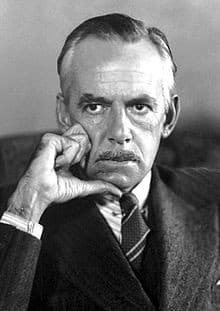
Eugene Gladstone O'Neill was an American playwright awarded the 1936 Nobel Prize in Literature. His poetically titled plays were among the first to introduce into the U.S. the drama techniques of realism, earlier associated with Russian playwright Anton Chekhov, Norwegian playwright Henrik Ibsen, and Swedish playwright August Strindberg. The tragedy Long Day's Journey into Night is often included on lists of the finest U.S. plays in the 20th century, alongside Tennessee Williams's A Streetcar Named Desire and Arthur Miller's Death of a Salesman.

Ashley Antoinette
4.6

Mark McDonald
4.4
Luo Guanzhong
4.4

Mia McKenzie
4.3
Dorothy Parker
4.3
Joaquim Maria Machado de Assis
4.3
James Thurber
4.2

Terry Kay
4.2