“My mother used to say that there were two kinds of people in the world: the ones who ate the cake, and the ones who baked it. She always baked.”
— Narrator's reflection on her mother's self-sacrificing nature.

Sign in to track this book
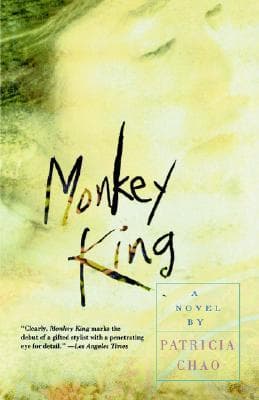
Haunted by a shattering family secret and the mythical Monkey King, a young Chinese-American woman must piece together her fractured identity during a mental health crisis to reclaim her life.
The novel begins with Sally Wang, a twenty-eight-year-old Chinese-American woman, having a severe mental breakdown. Overwhelmed by anxiety, paranoia, and hallucinations, she finds herself in a psychiatric hospital. Her breakdown results from professional pressures at her advertising job, a sense of cultural displacement, and an unacknowledged family trauma. Sally's first days in the hospital are marked by confusion and resistance, as she struggles to understand her reality and why she must be there. She resents the loss of control and the forced self-reflection, yet a fragile part of her knows she needs help, even if she cannot say it. This initial crisis sets the stage for her journey into her past.
In the hospital, Sally meets a diverse group of patients, each with their own struggles, and begins a structured routine. She meets Dr. Li, her psychiatrist, a kind but firm woman who encourages Sally to talk about her past. Sally is guarded at first, using humor and deflection to avoid painful memories. Her therapy sessions become a battle between her desire to escape pain and Dr. Li's efforts to guide her towards self-discovery. Sally observes the other patients, sometimes with disdain, sometimes with growing empathy, slowly realizing she is not alone. The hospital provides a safe, though confining, space for her healing to begin.
As Sally begins to open up, fragmented memories of her childhood in a Chinese-American home surface. She remembers her overbearing, traditional mother, her quiet, often absent father, and her older brother, Peter, who was always favored. These memories carry a sense of otherness and the pressure to meet both Chinese expectations and American ideals. Sally remembers feeling like an outsider, constantly trying to reconcile the two cultures within herself. She relives moments of strict discipline, cultural rituals, and the unspoken rules that governed her family life, all contributing to her fragmented sense of self. These early recollections hint at the complex family dynamics that shaped her.
Sally explores the immense pressure she felt growing up, especially from her mother, to excel academically and professionally. Unlike Peter, who seemed to meet their parents' high standards easily, Sally often felt she fell short. She remembers constant comparisons to other Chinese children and the emphasis on 'saving face' for the family. This pressure extended beyond academics to her social life, where she struggled to fit in with both her American peers and her Chinese heritage. These memories highlight the conflict between her desire for individuality and the ingrained need for parental approval, a conflict that contributed to her anxiety and self-doubt as an adult.
A significant part of Sally's memories is her complex relationship with her older brother, Peter. He was the golden child, smart, charming, and the family's pride. Sally both adored and resented him. She recalls their childhood games and his protective nature, but also the growing distance between them as they got older. The most painful memory linked to Peter is his mysterious disappearance years before, an event her parents never fully explained or discussed. This unresolved loss and the family's silence left a deep wound in Sally, creating a void she unknowingly carried into adulthood and contributing to her mental health struggles.
Through continued therapy and a careful review of her fragmented memories, Sally starts to uncover the truth behind Peter's disappearance. She recalls hushed conversations, her parents' grief and secrecy, and her own suppressed observations. The full horror of the family secret slowly comes into focus: Peter did not merely disappear; he committed suicide. This revelation is devastating, but also a crucial step towards understanding her long-standing emotional turmoil. The family's inability to confront this tragedy, their decision to bury it in silence, had created a toxic environment that deeply affected Sally's psychological well-being, leading to her breakdown.
With the recovered memory of Peter's suicide, Sally knows she must confront her parents. This is a daunting task, as she expects their denial, their grief, and their deep cultural aversion to discussing such painful topics. Dr. Li supports her in preparing for this difficult conversation, stressing the importance of open communication for Sally's healing. Sally understands that confronting them is not about blame, but about breaking the cycle of silence and allowing a shared acknowledgment of their collective trauma. This impending confrontation is a turning point in her journey towards reconciliation and self-acceptance.
Sally eventually confronts her parents about Peter's suicide. The initial reaction is as she feared: denial, anger, and a desperate attempt to maintain the image of a perfect family. However, Sally, empowered by her therapy, persists. Slowly, painfully, her parents begin to acknowledge the truth, their own suppressed grief and guilt finally surfacing. This confrontation is emotionally brutal for all of them, but it also marks the beginning of a fragile healing process. The long-held secret finally comes to light, allowing for a more honest and open discussion about their family's past and the deep impact of Peter's death on each of them. It is a cathartic, though agonizing, breakthrough.
After the confrontation, Sally begins the hard process of rebuilding her relationships, especially with her mother. The initial raw pain slowly gives way to a tentative understanding. Sally starts to see her parents not just as figures of authority and cultural expectation, but as individuals who were deeply wounded and struggled with their own grief and cultural norms. She gains empathy for their choices, even while acknowledging the harm they caused. The family begins to communicate more openly, though awkwardly, building a newfound, fragile connection. This period marks Sally's conscious effort to forgive and to integrate her family's history into her own identity.
Throughout her recovery, Sally grapples with the tension between her Chinese heritage and her American upbringing. She reflects on how these two powerful forces have shaped her, often pulling her in conflicting directions. As she heals from her trauma, she begins to see that her identity does not have to be one or the other, but a unique blend of both. She learns to appreciate the richness of her Chinese culture while embracing her American individuality. This integration is crucial for her sense of wholeness, allowing her to move past feeling perpetually split and to forge a cohesive self that honors both aspects of her background. She finds strength in her biculturalism rather than seeing it as a source of conflict.
The mythical figure of the Monkey King, Sun Wukong, from Chinese folklore, appears as a recurring motif throughout Sally's journey. Initially, he appears as a trickster figure, a chaotic force mirroring her own internal turmoil and fragmented mind. As Sally progresses in her therapy, she reinterprets his symbolism. The Monkey King, with his rebelliousness, his struggles with authority, and his eventual enlightenment, becomes a metaphor for Sally's own journey of self-discovery and liberation from the constraints of her past and cultural expectations. He represents the wild, untamed part of her spirit that she must learn to harness and integrate, rather than suppress. He embodies her resilience and capacity for change.
After months of intensive therapy and self-reflection, Sally is ready for discharge from the hospital. While her healing journey continues, she leaves with a deep understanding of her past trauma, a more integrated sense of self, and tools to cope with future challenges. She no longer feels like a victim but an active participant in her own recovery. The world outside the hospital seems different, viewed through her newfound clarity and strength. She is ready to re-engage with her life, her career, and her relationships with a more authentic and resilient perspective, having faced her inner demons and begun to mend her fractured spirit.
After discharge, Sally actively rebuilds her life. She returns to her work, approaching it with a fresh perspective and a healthier work-life balance. Her relationships with friends and family are tentatively re-established, now built on greater honesty and understanding. She finds new ways to express herself, perhaps through creative outlets, and develops a deeper appreciation for her bicultural identity. This phase of her life is characterized by hope and agency. While the scars of her past remain, they no longer define her; instead, they remind her of her strength and resilience. Sally is truly rejoining the land of the living, ready to forge her own path.
The Protagonist
Sally transforms from a mentally shattered, emotionally repressed individual into a self-aware, integrated woman who confronts her family's secrets and embraces her bicultural identity.
The Supporting
Dr. Li remains a consistent, supportive figure, facilitating Sally's growth without undergoing a personal arc herself.
The Supporting
Initially rigid and resistant to discussing the past, she slowly begins to acknowledge her grief and the impact of her silence, leading to a tentative reconciliation with Sally.
The Supporting
He gradually begins to open up and acknowledge his grief after Sally's confrontation, allowing for a fragile reconnection with his daughter.
The Mentioned
His story is revealed retrospectively, his tragic end serving as the catalyst for Sally's journey of discovery and healing.
The Supporting
They serve as a static, collective presence, reflecting the various stages and forms of mental illness, without individual arcs.
The novel explores how unspoken family trauma, specifically Peter's suicide, can manifest as severe mental illness in later generations. The Wang family's cultural inclination to 'save face' and avoid painful truths creates a toxic environment of silence and denial. Sally's breakdown is a direct result of living under the shadow of this unacknowledged grief and the emotional repression it demanded. Her healing begins only when she unearths and confronts this secret, forcing her family to do the same, as seen in the painful but necessary confrontation with her parents (plot_summary section 8).
“The silence was a thick, suffocating blanket, woven from grief and shame, covering everything we were not allowed to say.”
Sally's struggle to reconcile her Chinese heritage with her American upbringing is a central theme. She feels pulled between the traditional expectations of her immigrant parents – emphasizing academic success, filial piety, and community reputation – and her desire for individual freedom and self-expression in American culture. This internal conflict contributes to her anxiety and fragmented sense of self. Her journey in the hospital is not only about healing from trauma but also about integrating these two powerful influences into a cohesive, authentic identity (plot_summary section 10), finding strength in her biculturalism rather than seeing it as a source of division.
“I was a bridge, stretched thin between two worlds, always feeling like I belonged fully to neither.”
The novel provides an intimate and honest portrayal of mental breakdown, psychiatric hospitalization, and the difficult process of recovery. Sally's initial resistance to therapy, her hallucinations, and her gradual steps towards self-awareness offer a realistic depiction of navigating mental illness. The therapeutic relationship with Dr. Li is important, highlighting the need for professional guidance in unpacking trauma and developing coping mechanisms. Her journey shows that healing is not linear but a process of painful discovery, confrontation, and integration, as she learns to understand and accept her past to build a healthier future (plot_summary section 12).
“The mind is a house of mirrors, and sometimes you need someone else to show you which reflections are real.”
The complex dynamics within the Wang family, especially the overwhelming pressure from Sally's parents, play a significant role in her development and breakdown. The parents' desire for their children's success, rooted in their immigrant experience and traditional Chinese values, leads to immense academic and social expectations. The favoritism shown towards Peter and the constant comparisons create a sense of inadequacy in Sally. This theme explores how parental expectations, even if well-intentioned, can stifle individuality and contribute to psychological distress, especially when combined with an inability to express emotion or acknowledge pain (plot_summary section 4).
“Their love was a heavy cloak, warm but suffocating, woven with expectations I could never fully meet.”
Non-linear narrative revealing past trauma through Sally's recovering memories.
The novel employs fragmented flashbacks and a non-linear narrative structure to mirror Sally's fractured mental state. As Sally undergoes therapy, her memories of childhood, her brother Peter, and the family secret emerge in disjointed pieces. This device effectively conveys the disorientation of trauma and the painstaking process of psychological recovery. It allows the reader to experience Sally's journey of discovery alongside her, slowly piecing together the truth about Peter's suicide and the family's pervasive silence, enhancing the suspense and emotional impact of the revelations.
A symbolic figure from Chinese mythology representing chaos, rebellion, and eventual enlightenment.
The Monkey King (Sun Wukong) from the classic Chinese novel 'Journey to the West' serves as a powerful symbolic motif. He appears in Sally's thoughts and hallucinations, initially as a mischievous, chaotic, and uncontrollable force, reflecting her own internal turmoil and fragmented psyche. As Sally progresses in her healing, the Monkey King evolves in her perception, becoming a symbol of resilience, rebellion against oppressive structures, and the journey towards self-mastery and enlightenment. This motif helps to bridge Sally's Chinese heritage with her personal struggle, providing a cultural lens through which to understand her path to integration.
Provides direct access to Sally's thoughts, feelings, and internal struggles.
The story is told from Sally Wang's first-person perspective, primarily through her internal monologue. This device immerses the reader directly into Sally's subjective experience of her mental breakdown, her therapy sessions, and her process of recalling traumatic memories. It allows for a deep exploration of her anxieties, her sarcasm, her cultural conflicts, and her gradual insights. The unfiltered access to her thoughts makes her journey deeply personal and relatable, highlighting the internal battle she wages as she grapples with her past and strives for self-understanding and healing.
“My mother used to say that there were two kinds of people in the world: the ones who ate the cake, and the ones who baked it. She always baked.”
— Narrator's reflection on her mother's self-sacrificing nature.
“The past is never dead. It's not even past.”
— A character's musing on the enduring impact of history and personal trauma.
“Sometimes I felt like I was living in a dream, but it was a dream I couldn’t wake up from, and it wasn’t always a good one.”
— The narrator describes her sense of disorientation and detachment.
“There’s a kind of silence that’s louder than any scream.”
— Reflecting on unspoken emotions and hidden suffering.
“We were all just trying to find our way, even if we didn’t know where we were going.”
— A general observation about the human condition and the search for purpose.
“Love, I learned, was not always a gentle thing. Sometimes it was a sharp tooth, a tearing claw.”
— The narrator's evolving understanding of the complexities and pain of love.
“The things you don’t say are often the heaviest.”
— Highlighting the burden of unexpressed thoughts and feelings.
“You can’t outrun your own skin, no matter how fast you try to go.”
— A character's realization about the inescapable nature of one's identity and past.
“Every family has its ghosts, and ours were just louder than most.”
— Acknowledging the pervasive presence of family history and dysfunction.
“It was a strange thing, how you could love someone and still want to run from them at the same time.”
— Exploring the conflicted emotions within a strained relationship.
“The world was full of stories, and some of them were true, and some of them were just what we wanted to believe.”
— A reflection on the subjective nature of truth and narrative.
“Grief was a language I was learning, slowly and painfully, word by painful word.”
— The narrator's struggle to process loss and sorrow.
“We carry our homes inside us, wherever we go.”
— A poignant thought about the internal sense of belonging and origin.
Ready to see how well you understood this book? Take our interactive quiz with 10 questions.

Ashley Antoinette
4.6

Mark McDonald
4.4
Luo Guanzhong
4.4

Mia McKenzie
4.3

Dorothy Parker
4.3

Joaquim Maria Machado de Assis
4.3

James Thurber
4.2

Terry Kay
4.2