Biography coming soon.

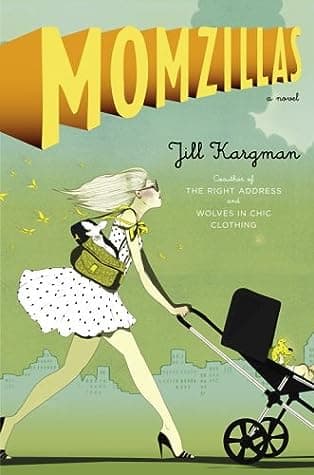
Jill Kargman (2007)
Genre
Relationships
Reading Time
12 Minutes
Key Themes
See below
Sign in to track this book
A suburban mom enters the competitive world of Manhattan's elite mothers, where toddlers are groomed for Ivy League success before they can walk.
Hannah Allen, her investment banker husband Peter, and their two-year-old daughter Violet move to the Upper East Side of Manhattan. Hannah, an outsider to this world, immediately faces the intense competition among the neighborhood's wealthy mothers. Her mother-in-law, experienced in this social scene, begins to teach Hannah the unspoken rules. Hannah quickly realizes that raising a child here is less about nurturing and more about navigating a strict social hierarchy, where children's achievements are status symbols. She feels like an observer of a strange, high-pressure game.
The pressure of preschool admissions dominates Hannah's early experiences. She learns about 'Little Acorns,' the only pre-pre-preschool that matters, and the lengths mothers go to for a spot. This includes complex applications, strategic donations, and networking. Hannah's new, often critical, friends and her mother-in-law advise her on how to dress Violet, what activities to enroll her in, and even what to say during interviews. She sees the extreme anxiety and aggressive tactics other mothers use, which makes her question her own parenting and the sanity of this environment.
Violet's second birthday party becomes Hannah's first major social test. She is pressured to throw an elaborate celebration that competes with those of her peers. This means hiring expensive entertainment, securing exclusive venues, and sending out designer invitations. Hannah watches other 'Momzillas' examine every detail, using the party as another chance to display wealth and social standing. The focus shifts from the children's fun to the mothers' competition, leaving Hannah overwhelmed and doubting the sincerity of these interactions. She struggles to balance her wish for a simple celebration with the immense social pressure.
Hannah discovers the unspoken rules for children's fashion on the Upper East Side. She learns, subtly and not so subtly, about the required designer clothes for toddlers, including a $300 baby dress that symbolizes status. The financial impact is huge, as mothers invest heavily in their children's wardrobes, seeing them as an extension of their personal brand. Hannah feels pressured to conform, despite her discomfort with the high prices and the superficiality. This part shows the consumerism and materialism deeply embedded in this social circle, where even children's clothing is a competitive area.
Hiring and managing nannies is another challenge for Hannah. She learns that nannies are not just childcare providers but also status symbols and sources of gossip. There is a strict hierarchy among nannies, and other mothers often scrutinize how employers treat them. Hannah hears stories of demanding employers, nannies being stolen away, and the complex network of information shared among them. This reveals the class dynamics and the often-unspoken power struggles within these wealthy homes, where nannies learn intimate family details and their loyalty is constantly tested.
Playdates, for Hannah, are not casual gatherings. They are carefully planned social events, often with hidden agendas. Mothers use playdates to judge each other's parenting styles, children's development, and social standing. Conversations often contain subtle boasts, veiled criticisms, and strategic information gathering. Hannah navigates a minefield of unspoken rules, from appropriate snacks to the 'right' toys. She realizes that these interactions are less about the children's enjoyment and more about the mothers' competitive dynamic, making real connection difficult and increasing her feeling of isolation.
Hannah's mother-in-law, a long-time Upper East Side resident, becomes a major source of pressure and 'guidance.' She constantly offers unasked-for advice, criticizes Hannah's parenting, and subtly pushes her to follow the neighborhood's strict social codes. Her intentions are often a mix of genuine care and a desire to maintain her family's social standing. This creates tension between Hannah and Peter, as Hannah feels unsupported and judged. The mother-in-law represents the ingrained values of the 'Momzilla' culture, making it hard for Hannah to find her own way.
Despite feeling overwhelmed, Hannah begins to find small ways to resist the 'Momzilla' culture. She questions the need for certain extravagances and the sincerity of some social interactions. While still trying to navigate the system for Violet's sake, she finds moments of quiet rebellion, choosing simplicity over showing off when possible. This is a turning point where Hannah, without fully rejecting the Upper East Side, starts to strengthen her own values and priorities, refusing to be completely caught up in the competitive rush. She seeks out more genuine connections.
As Hannah continues to navigate the social maze, she slowly begins to find and connect with other mothers who, like her, feel uncomfortable with the extreme competitiveness. These women offer a refreshing contrast to the 'Momzillas,' giving Hannah much-needed validation and a sense of belonging. Through these new friendships, Hannah realizes she is not alone and finds a support system that helps her maintain her sense of self amid the overwhelming pressure to conform. This provides an important outlet and helps her feel less isolated.
By the end of her initial time in the Upper East Side, Hannah better understands the 'Momzilla' phenomenon. She learns to choose her battles, deciding which parts of the culture are worth engaging with for Violet's benefit and which she can ignore. While the pressures do not disappear, Hannah develops a stronger sense of self and a clearer vision of her own parenting style. She finds a way to exist within the system without fully compromising her values, realizing that true success is not about outcompeting others, but about raising her daughter with love and integrity, on her own terms.
The Protagonist
Hannah evolves from a bewildered outsider to a more confident mother who learns to navigate the Upper East Side's social intricacies while staying true to her own values. She finds a balance between conforming when necessary and rebelling when appropriate.
The Supporting
Peter's arc is less pronounced, but he gradually gains a slightly better understanding of the unique pressures Hannah faces, moving from passive support to occasional, more active empathy.
The Supporting
Violet experiences the Upper East Side childhood as a pawn in her mother's social games, but her innocence helps ground Hannah's perspective.
The Antagonist/Supporting
Her character remains largely static, serving as a consistent embodiment of the 'Momzilla' ethos that Hannah must contend with.
The Antagonists/Supporting
They serve as the static, pervasive social force that Hannah reacts against and ultimately learns to manage, rather than characters with individual arcs.
The Supporting
These characters are largely static, providing insight into the social dynamics and class structures of the Upper East Side.
The novel shows the extreme and often absurd lengths mothers go to on the Upper East Side for their children's perceived success. From expensive birthday parties to fierce preschool admissions, the story humorously depicts how child-rearing becomes a way to gain social status and personal validation, often ignoring the children's actual needs or happiness. This theme reveals the intense pressure and the performative nature of parenting in this elite setting.
“It was as if the children were mere accessories, expensive handbags to be admired and compared, rather than actual human beings with their own burgeoning personalities.”
Hannah's journey is a constant struggle between conforming to the strict social expectations of the Upper East Side and keeping her own identity and parenting style. The theme explores the immense pressure to fit in, to buy the right things, and to enroll children in the 'correct' activities, even when it goes against one's own judgment. It questions the cost of individuality in a highly conformist, status-driven society, and Hannah's eventual success in finding a balance.
“Every decision, from Violet's outfit to her playdate schedule, felt like a public performance, judged by an invisible panel of Upper East Side matriarchs.”
The novel clearly shows the widespread materialism and consumerism in the Upper East Side. Expensive designer clothes for toddlers, lavish parties, and exclusive classes are not just luxuries but necessities for maintaining social standing. This theme critiques how wealth is displayed through children's possessions and experiences, showing a superficiality where value is often equal to price. It highlights the economic differences and the pressure to keep up with an impossible standard of living.
“A $300 baby dress wasn't just clothing; it was a uniform, a declaration of status, a silent scream of 'we belong.'”
Many 'Momzillas' try to present an image of perfect lives, perfect children, and perfect families. The theme explores the flaws beneath this polished appearance, hinting at the anxieties, insecurities, and personal sacrifices made to maintain such an illusion. Hannah often sees the stress and unhappiness beneath the outward displays of success, suggesting that this pursuit of perfection comes at a significant emotional cost. It explores the difference between public image and private reality.
“Beneath the perfectly coiffed hair and designer strollers, Hannah could sense a frantic, almost desperate energy, a silent competition to prove who had it all.”
Exaggerated humor to critique social norms.
The novel employs satire to mock and critique the extreme aspects of Upper East Side motherhood. Through exaggeration and irony, it highlights the absurdity of competitive parenting, the obsession with status, and the superficiality of wealth. This device allows the author to deliver a scathing commentary on societal values while maintaining a humorous and engaging tone. The satirical lens prevents the story from becoming overly preachy, instead inviting readers to laugh at the ridiculousness of the situations.
Hannah's fresh eyes reveal the absurdity.
By positioning Hannah Allen as an outsider new to the Upper East Side, the novel effectively uses her fresh perspective to expose the peculiar and often bizarre social customs of the 'Momzillas.' Her initial bewilderment and judgment allow the reader to experience the culture shock alongside her, making the critiques more potent and relatable. This device highlights the insular nature of the community and provides a clear contrast between conventional parenting and the specialized version practiced in this elite world.
Critique of wealth, class, and gender roles.
Beyond humor, the novel serves as a sharp social commentary on wealth, class, and the pressures placed on women in affluent societies. It critiques the commodification of childhood, the superficiality of elite social circles, and how traditional gender roles (motherhood) are warped by extreme wealth. The plot devices reveal the underlying anxieties and power dynamics at play, offering a deeper look into the societal implications of such a competitive and materialistic environment.
Ready to see how well you understood this book? Take our interactive quiz with 10 questions.
Biography coming soon.