BookBrief
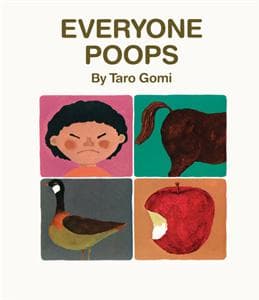
Everyone Poops cover
Archivist's Choice

Everyone Poops

Taro Gomi (2020)

Genre

Children's / Health / Science / Relationships

Reading Time

5 min

Key Themes

See below

Track Your Reading

Sign in to track this book

From tiny mice to massive elephants, this charming classic reminds every child that pooping is a perfectly natural and universal part of life for all creatures, big and small.

Core Idea

Everyone Poops, regardless of size, species, or location, as it is a fundamental biological process. The book normalizes this bodily function, presenting it as a natural and necessary part of existence for all living things, demystifying a topic often considered taboo. Through simple, repetitive language and diverse illustrations, the book shows that defecation is a shared experience across the animal kingdom, highlighting the variety in how and where different creatures poop. This helps children understand biological diversity and the purpose of waste, encouraging acceptance of a natural bodily process, especially beneficial for young children during potty training and for basic biological understanding.
Reading time
5 min
Difficulty
Easy
✓ Read this if...
You are a parent looking for a gentle, universally acclaimed book to introduce the concept of pooping and potty training to young children, or if you want to normalize bodily functions in a lighthearted, educational way.
✗ Skip this if...
You are an adult seeking complex scientific explanations of the digestive system, or if you are uncomfortable with direct discussions of bodily functions, even in a child-friendly context.

Core idea

The central argument and framework that powers the entire book.

Everyone Poops, regardless of size, species, or location, as it is a fundamental biological process. The book normalizes this bodily function, presenting it as a natural and necessary part of existence for all living things, demystifying a topic often considered taboo.

Through simple, repetitive language and diverse illustrations, the book shows that defecation is a shared experience across the animal kingdom, highlighting the variety in how and where different creatures poop. This helps children understand biological diversity and the purpose of waste, encouraging acceptance of a natural bodily process, especially beneficial for young children during potty training and for basic biological understanding.

At a glance

Reading time

5 min

Difficulty

Easy

Read this if...

You are a parent looking for a gentle, universally acclaimed book to introduce the concept of pooping and potty training to young children, or if you want to normalize bodily functions in a lighthearted, educational way.

Skip this if...

You are an adult seeking complex scientific explanations of the digestive system, or if you are uncomfortable with direct discussions of bodily functions, even in a child-friendly context.

Key Takeaways

1

Universal Biological Imperative

Pooping is a fundamental, shared experience across all living beings.

Quote

Every animal poops.

The book shows that defecation is not only a human or shameful act, but a universal biological process essential for life. From tiny mice to enormous elephants, every creature that eats must also eliminate waste. This concept normalizes a bodily function often kept secret and seen as embarrassing, especially for young children. By presenting various animals doing the same act, Gomi emphasizes the naturalness and inevitability of pooping, making it a shared experience rather than an isolated or odd one. This shared biological need help...

Supporting evidence

The book illustrates various animals—birds, fish, hippos, snakes, elephants, and even humans—all engaging in the act of pooping, showcasing the diversity of forms and locations but the universality of the action.

Apply this

Parents can use this understanding to normalize potty training discussions, emphasizing that pooping is a natural part of being alive, just like eating and sleeping. Encourage open and honest conversations about bodily functions without shame or euphemisms.


biological-imperativeuniversalitybodily-functions
2

Diversity in Defecation

Pooping manifests in various forms, sizes, and consistencies across species.

Quote

Some poop is big and some poop is small.

While pooping is universal, the book highlights the diversity in how it happens. Gomi illustrates that poop varies in size, shape, and even the way it is produced, reflecting the diet, size, and physiology of each animal. This visual exploration not only engages young readers but also introduces basic biological concepts like digestion and adaptation. Understanding this diversity helps children recognize that variations in their own bowel movements are normal and expected, removing any idea of a 'perfect' or 'standard' poop and reduci...

Supporting evidence

The book depicts a mouse producing tiny droppings, an elephant creating massive piles, and a snake leaving a long, continuous coil, among others, illustrating the range of fecal characteristics.

Apply this

Educate children about the different types of animal droppings they might encounter in nature, linking them to the animals themselves. For personal health, encourage observation of their own bowel movements as a normal part of understanding their body, without judgment, and discuss what different consistencies might mean (e.g., needing more water).

fecal-diversityanimal-physiologydigestion
3

Functional Purpose of Waste

Poop is the necessary byproduct of consuming food.

Quote

Since we all eat, we all must poop.

Gomi gives a simple explanation for why pooping occurs: it is the result of eating. This direct cause-and-effect relationship makes the process clear, linking it to a concept children already understand — eating. The book introduces the idea of the digestive system without explicit terms, showing that food goes in, nutrients are absorbed, and what is left comes out. This clarifies that poop is not 'bad' or 'dirty' in a moral sense, but simply the body's way of processing what it needs and expelling what it does not. This understanding...

Supporting evidence

The central premise repeated throughout the book directly links consumption ('Since we all eat...') to elimination ('...we all must poop.'), often visually depicting animals eating then later pooping.

Apply this

When discussing meals, parents can casually mention that food gives us energy and helps us grow, and then our bodies get rid of what they don't need. This can be integrated into discussions about healthy eating and the importance of fiber for smooth digestion.

digestion-processwaste-eliminationcause-and-effect
4

Privacy and Public Pooping

While universal, the act of pooping often involves a desire for privacy.

Quote

Some animals poop in private, and some poop in public.

One of the book's observations is the varying social contexts of defecation. While some animals openly relieve themselves, others, particularly humans, seek privacy. This distinction is important for children learning social norms around bodily functions. It acknowledges the natural desire for modesty that often develops, providing context for why humans use toilets and bathrooms. The book does not judge either approach but simply shows the reality, allowing children to understand that while pooping is natural, the where and how o...

Supporting evidence

The book shows a bird pooping mid-air or a cow in a field (public), contrasting with a human child using a toilet in a bathroom (private).

Apply this

Use this takeaway to explain why we use toilets and close bathroom doors. It helps children understand social etiquette around bodily functions, reinforcing the importance of privacy and hygiene in a gentle, non-shaming way. It can also open a discussion about different cultural practices regarding waste disposal.

social-normsprivacycultural-practices
5

Emotional Neutrality Towards Poop

The book presents pooping as a neutral, factual process, devoid of judgment.

Quote

Everyone poops!

Perhaps the most important contribution of 'Everyone Poops' is its neutral and non-judgmental tone. The book avoids any language or imagery that could cause shame, disgust, or fear about defecation. Instead, it treats pooping as a simple fact of life, an ordinary occurrence. This emotional neutrality is vital for children, as society often gives bodily waste negative meanings. By removing these judgments, Gomi helps children view their own bodies and their functions with acceptance and curiosity, building a foundation for positive bod...

Supporting evidence

The straightforward, declarative sentences and clear, unembellished illustrations consistently present the act without any accompanying facial expressions of disgust or embarrassment from the characters, nor any negative descriptive adjectives.

Apply this

Parents should adopt a similar neutral and factual tone when discussing potty training or bodily functions with children. Avoid using terms like 'stinky' or 'gross' in a judgmental way. Celebrate successful eliminations as a normal bodily achievement rather than an 'icky' task completed. This fosters a healthy self-perception.

emotional-neutralitybody-acceptancenon-judgmental
6

The Potty Training Aid

The book serves as an invaluable, reassuring tool for potty training.

Quote

A child sits on a potty.

Beyond its broad biological lessons, 'Everyone Poops' is an effective resource for potty training. By showing that even a human child uses a potty, it directly addresses a key developmental step. The book normalizes using a toilet, making it less intimidating and more relatable for toddlers. It provides a framework for understanding the process, reducing the mystery and anxiety often linked to transitioning from diapers. Its simple, repetitive message reinforces that this is a natural, expected part of growing up, offering both comfor...

Supporting evidence

The inclusion of a human child using a potty, explicitly stating 'A child sits on a potty,' directly connects the universal act to the specific human practice of toilet use, which is central to potty training.

Apply this

Read this book frequently with children who are approaching or in the midst of potty training. Use the illustrations as talking points to discuss their own experiences and feelings about using the potty. Keep it in the bathroom as a reference point to reinforce the message during actual potty attempts.

potty-trainingchild-developmentbehavioral-reinforcement
7

Breaking Down Taboos

The book courageously tackles a traditionally taboo subject with openness.

Quote

Everyone poops.

In a society that often avoids open discussions about bodily functions, 'Everyone Poops' is a courageous and important work. It directly addresses a subject often seen as impolite or embarrassing, especially in children's literature. By doing so, Gomi provides a valuable service: he models a healthy, open approach to a natural biological process. This helps break down taboos surrounding defecation, creating an environment where children can ask questions and discuss their bodies without shame. Breaking these taboos early can lead to h...

Supporting evidence

The very existence and popularity of a children's book explicitly titled 'Everyone Poops' and directly illustrating the act is evidence of its taboo-breaking nature in a genre that often sanitizes or avoids such topics.

Apply this

Parents should embrace the book's directness and use it as a springboard for open, honest conversations about all bodily functions. Avoid shushing or shaming children for discussing poop, and instead, answer their questions factually and calmly. This helps create a home environment where no topic about the body is off-limits for discussion.

taboo-breakingopen-communicationbody-positivity
8

Simple Language, Profound Impact

The book's minimalist text conveys complex biological and social lessons.

Quote

A big animal makes a big poop. A small animal makes a small poop.

Gomi's skill is in conveying biological and social lessons through simple, repetitive language. The text is short, direct, and matches the comprehension level of its target audience. Each sentence builds on the last, reinforcing the core message of universality and normalcy. This minimal approach prevents overcomplication, allowing the visual storytelling to be clear. The simplicity ensures that the message is accessible and memorable, showing that complex ideas (like biological cycles, diversity, and social norms) do not need complex...

Supporting evidence

The entire book is characterized by short, declarative sentences ('An elephant makes a big poop. A mouse makes a small poop.') paired with equally simple, clear illustrations, demonstrating the power of economy in storytelling.

Apply this

When explaining new concepts to children, strive for clarity and simplicity, using direct language and visual aids. Avoid jargon or overly complex explanations. For parents, this book is a model for effective communication with young children on sensitive topics, emphasizing directness and factual presentation.

minimalist-communicationvisual-storytellingearly-literacy
9

Connections to Nature and Life Cycles

Poop is a vital part of the natural world and ecological balance.

Quote

Some animals poop while moving.

While focused on the act itself, 'Everyone Poops' implicitly connects defecation to broader ecological concepts. Animal droppings contribute to soil enrichment, seed dispersal, and provide food for other organisms, playing a role in nutrient cycling. Although not explicitly stated, the diverse settings where animals poop (in the air, in the water, in fields) introduces children to the idea that waste is not merely 'gone' but becomes part of the environment. This lays an early groundwork for understanding life cycles, ecosystems, and t...

Supporting evidence

Illustrations showing animals pooping in various natural environments (e.g., a bird in the sky, a fish in water, a cow in a field) implicitly suggest its integration into the natural world, rather than being confined to human-made waste systems.

Apply this

When discussing the book, parents can extend the conversation to how animal poop helps plants grow or feeds insects. This can be a gentle introduction to concepts of decomposition, composting, and the circular nature of ecosystems, fostering an appreciation for the natural world.

ecological-balancenutrient-cyclinglife-cycles
10

Empathy and Shared Humanity

Acknowledging a universal bodily function fosters empathy and connection.

Quote

Everyone poops!

The book's message, 'Everyone poops,' goes beyond biological fact; it helps foster a sense of shared humanity and empathy. By highlighting a fundamental, often private, and sometimes embarrassing bodily function as a universal experience, it creates an underlying connection between all individuals, regardless of species, size, or culture. This common biological denominator can lead to a deeper understanding and acceptance of others. It reminds us that beneath our differences, we all share basic biological processes, encouraging a more...

Supporting evidence

The repetitive, inclusive phrase 'Everyone poops!' applied to a vast array of animals and a human child, emphasizes a shared, fundamental experience across all beings.

Apply this

Use the book to discuss how we all have bodies that do similar things, even if we look different or come from different places. This can be a starting point for discussions about respecting everyone's bodies and understanding that everyone has private needs and experiences, fostering empathy and inclusivity.

shared-humanityempathyinclusivity

Critical analysis

Notable Quotes

An elephant poops.

Illustrates that large animals poop.

A mouse poops.

Illustrates that small animals poop.

A lion poops.

Depicts a wild animal pooping.

A fish poops.

Shows that even aquatic animals poop.

A bird poops.

Illustrates airborne animals pooping.

All living things poop.

A central, unifying theme of the book.

A child poops.

Relates the concept directly to human children.

Some poop is big and some poop is small.

Highlights the variation in poop size.

Some poop is long and some poop is round.

Describes the different shapes of poop.

Some poop is smelly and some poop isn't.

Addresses the olfactory aspect of poop.

Poop can be different colors too.

Points out the color variations in poop.

Animals poop in many places.

Shows different environments where pooping occurs.

Everyone poops. It's a natural thing to do.

The book's ultimate comforting and normalizing message.

Where do you poop?

A direct question to the reader, encouraging self-reflection.

Quiz

Test Your Knowledge

Ready to see how well you understood this book? Take our interactive quiz with 10 questions.

10
Questions
~5
Minutes
?
Best Score

Key Questions (FAQ)

'Everyone Poops' delivers the simple, universal truth that pooping is a natural and necessary bodily function shared by all living creatures, from humans to animals. It normalizes this process for young children in a gentle and humorous way.

About the author