“We are bound not by blood, but by the choices we make in the face of war.”
— Reflecting on the deep bonds formed between the main characters during WWII.

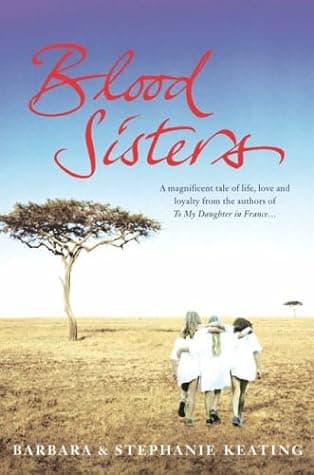
Barbara Keating (2005)
Genre
Historical Fiction / Relationships / Romance
Reading Time
1200 min
Key Themes
See below
Sign in to track this book
In 1957 Kenya, three blood sisters from different backgrounds find their childhood vow tested by the Mau Mau rebellion, the birth of independent Kenya, and the conflicting paths of love, ambition, and survival that pull them from London's swinging sixties to the fight for their ancestral farm.
In the Kenya Highlands of 1957, young Camilla Broughton Smith, daughter of wealthy British colonialists; Sarah Mackay, whose family runs a local store and garage; and Hannah Van der Beer, from an Afrikaans farming family, become close friends. Despite their different social statuses and family expectations, they perform a blood sister ritual, swearing lasting loyalty and promising to always be there for each other. Their childhood is spent exploring the African countryside, unaware of the political tensions. This period creates their deep emotional connection, which they believe will last through any challenge, setting up their intertwined futures as Kenya moves towards independence.
As Kenya nears independence, the political situation becomes unstable. The Mau Mau rebellion's past and the uncertain future begin to affect the girls' families. Camilla's parents, worried about safety and keeping their colonial lifestyle, send her to boarding school in England. Sarah's parents, facing money problems and wanting stability, plan for her to go to university in Ireland. Hannah's family, rooted in their Afrikaans heritage and determined to keep their farm, faces adapting to a new black-majority government. These decisions, made by outside forces, are the first big test of their blood sister pact, starting their physical separation.
After being sent to England, Camilla at first struggles but soon does well in 1960s London. She becomes a successful model, appearing on magazine covers and going to exclusive nightclubs. Her beauty and charm open doors to a fast, glamorous life. She gets involved with several men, including a photographer and a businessman. Despite her success and freedom, Camilla often thinks about her childhood in Kenya and her bond with Sarah and Hannah, feeling a sense of longing amid her new life. Her experiences in London make her a sophisticated, independent woman.
Sarah, at university in Ireland, finds herself in a foreign place. While she studies, her heart stays in Kenya. She feels out of place and struggles to connect with her Irish peers, always comparing her new surroundings to Africa's beauty. Her time in Ireland strengthens her decision to return to Kenya as soon as possible, driven by love for the land and a desire to help its future. She keeps in touch with Hannah through letters, strengthening their bond despite the distance and different paths they take.
Back in Kenya, Hannah's family faces big problems. The new government introduces policies that threaten their land and farming. Hannah, a determined young woman, works hard with her father to keep their farm going, having inherited her ancestors' strong work ethic and connection to the land. They endure economic hardship, political uncertainty, and the constant threat of violence. Hannah's experiences on the farm make her fiercely protective of her family and their legacy, even as she deals with the changing racial dynamics of her homeland.
Years later, Sarah returns to Kenya after finishing her studies. Camilla, despite her successful career, feels drawn back for a visit, perhaps sensing something missing in her glamorous life. Their reunion with Hannah is emotional, but they also see how much they have changed. Their shared past gives them a foundation, but their individual experiences have created new views and, at times, unspoken tensions. They try to reconnect and understand each other's different lives. The innocence of their childhood pact now faces adult complexities, including growing romantic interests and the realities of post-colonial Kenya.
As the three women live their adult lives in Kenya, romantic relationships create tension. Camilla is drawn to a powerful, influential man. Sarah reconnects with a childhood acquaintance, Alex. Hannah struggles with her own romantic prospects amid the farm's problems. Competing love interests and different loyalties start to strain their friendship. Misunderstandings, jealousy, and choices made for love threaten to break the bond they made as children. They must face the true strength of their pact.
Political unrest in Kenya continues to grow, affecting the lives of all three women. Land disputes, tribal tensions, and the struggle for power lead to more violence and instability. Hannah's farm is especially vulnerable, facing threats from land grabbers and unhappy locals. Sarah, working in the developing country, becomes aware of social injustices. Camilla, though somewhat removed, experiences the fear and uncertainty through her friends and her observations. This unstable environment brings personal tragedy and forces the women to make difficult, often dangerous, choices, further testing their resolve and their friendship.
A horrific act of violence—a murder—deeply affects one of the blood sisters, or someone close to them, sending shockwaves through their lives. This event shows the political unrest and personal betrayals that have been building. The murder forces the remaining friends to face grief, fear, and the harsh realities of their world. It sparks a desire for justice and revenge, pushing them to their limits and showing hidden strengths and weaknesses. The aftermath of this tragedy becomes a turning point, demanding that they either break ties completely or renew their bond in the face of big problems.
After enduring years of separation, personal struggles, romantic entanglements, and the impact of violence, the blood sisters find a way to reconcile. The shared trauma and their history make them overcome past disagreements and misunderstandings. They see that despite their different paths and the pain they have experienced, their childhood pact has a unique and powerful meaning. Their friendship, though scarred, lasts. The bond made in childhood can withstand the demands of reality and the events of a changing continent, though in a more mature and complex way.
The Protagonist
From a privileged colonial child to a glamorous but sometimes unfulfilled model, Camilla ultimately seeks deeper meaning and connection beyond material success.
The Protagonist
Sarah evolves from a loyal childhood friend to a determined woman dedicated to Kenya, navigating cultural shifts and personal challenges with resilience.
The Protagonist
Hannah transforms from a spirited farm girl into a tenacious guardian of her family's legacy, enduring immense hardship and loss while fighting for her home.
The Supporting
Alex develops from a minor childhood figure to a committed partner for Sarah, representing a future rooted in Kenya.
The Supporting
Remains largely consistent as a symbol of colonial power and the anxieties of the transition period.
The Supporting
He endures hardship and loss while steadfastly fighting to preserve his family's farm and legacy.
The Supporting
She consistently acts as a supportive mother, prioritizing Sarah's future and well-being.
The Mentioned
N/A (Historical figure)
The novel explores how the characters deal with their sense of self and where they belong, especially in a changing Kenya. Camilla, Sarah, and Hannah, each from different backgrounds, must define their identities in relation to their origins and the evolving political and social situation. Camilla struggles with her British heritage versus her African upbringing. Sarah longs for Kenya while in Ireland. Hannah fights to keep her Afrikaans identity on ancestral land. Their experiences show the complexities of belonging when one's 'home' changes, and how their shared childhood in Kenya shapes their adult views of self.
“Africa was in their blood, an undeniable pulse that beat beneath the surface of their separate lives, calling them home.”
At its core, 'Blood Sisters' shows the strength of the bond between Camilla, Sarah, and Hannah. Despite separation, different life paths, romantic rivalries, and personal tragedies, their childhood pact is an anchor. The theme explores how friendship can be tested by outside pressures like political upheaval and personal choices, but a deep connection can survive and even grow stronger through trouble. Their blood sisterhood becomes a symbol of loyalty and an emotional support in a turbulent world, offering comfort and understanding when other relationships fail.
“No matter how far they drifted, the invisible thread of their childhood pact would always pull them back together.”
The novel shows the effects of colonialism and the transition to independence in Kenya. It examines the experiences of British, Irish, and Afrikaans settlers, as well as the local population, during this time. The 'Mau Mau rebellion' and the challenges of nation-building create a background of political unrest, violence, and social upheaval that directly affects the characters' lives, livelihoods, and relationships. The story explores the loss, fear, and uncertainty faced by those linked to the colonial system, and the hopes and struggles of building a new nation.
“The land was changing hands, and with it, the very fabric of their lives was being rewoven, thread by painful thread.”
Romantic love and betrayals are a theme throughout the story. The three characters experience different forms of love—passionate, lasting, unrequited—and face the pain of betrayal, both romantic and personal. These relationships often cross with and complicate their friendship, testing their loyalties and forcing hard choices. The theme shows the complexities of adult relationships, where innocence is lost, and trust can be fragile, especially when mixed with ambition, societal pressures, and the emotions of a changing world. The betrayals cause growth and conflict within the group.
“Love, like the African sun, could burn with fierce intensity, but also leave behind a landscape scarred and parched.”
The characters in 'Blood Sisters' experience loss, from an idyllic childhood and a familiar way of life to the grief of losing loved ones to violence and tragedy. This theme explores how people cope with such experiences and find strength to continue. Hannah, especially, shows resilience as she fights to save her family's farm against big problems. The repeated acts of violence and the sense of uncertainty make the characters face their own mortality and the fragility of peace, showing the human ability to endure and rebuild.
“They had lost so much, but in the ashes of their past, a new, tougher kind of hope began to flicker.”
A foundational childhood ritual symbolizing an unbreakable bond.
The blood sister pact is the central plot device, established early in the novel. It serves as a narrative anchor, representing the pure, innocent ideal of their friendship. Throughout the story, this pact is repeatedly referenced, tested, and ultimately reaffirmed. It acts as both a source of comfort and a source of conflict, as the women struggle to uphold its ideals amidst adult complexities, betrayals, and separations. The pact underscores the novel's exploration of enduring friendship and the power of childhood promises, driving much of the emotional narrative.
Contrasting Camilla's London life with Sarah and Hannah's experiences in Kenya.
This device highlights the divergent paths of the protagonists. Camilla's glamorous life in swinging London provides a stark contrast to Sarah's more academic pursuit in Ireland and Hannah's arduous struggle on the Kenyan farm. By presenting these parallel journeys, the author emphasizes how external environments shape individual identities and experiences. It also allows for the exploration of different facets of the 1960s – from the vibrant cultural scene of London to the political turmoil of post-colonial Kenya – enriching the historical context and underscoring the challenges of maintaining their bond across vast distances and vastly different realities.
The Mau Mau rebellion and Kenyan independence drive character decisions and plot points.
The historical context of the Mau Mau rebellion and Kenya's transition to independence is not merely a backdrop but a crucial plot device. The political unrest directly influences major character decisions, such as the families' choices to send Camilla and Sarah away, and Hannah's struggle to keep her farm. It introduces elements of danger, loss, and social change, acting as a powerful external force that tests the characters' resilience and their friendship. The escalating violence and political shifts create dramatic tension and serve as catalysts for many of the plot's tragic and pivotal events, including the murder that rocks their lives.
Brief glimpses into their shared childhood to underscore the strength of their bond.
While not a strictly dual timeline, the novel frequently uses recollections or brief flashbacks to the girls' idyllic childhood in the Kenya Highlands. These moments serve to remind both the characters and the reader of the foundational strength of their bond and the innocence they once shared. In times of conflict, separation, or despair, these memories highlight the stark contrast between their past and present, emphasizing how much they have changed and how far they have come, while also reinforcing the enduring emotional weight of their blood sister pact.
“We are bound not by blood, but by the choices we make in the face of war.”
— Reflecting on the deep bonds formed between the main characters during WWII.
“In the silence of the Irish countryside, I found the courage to speak my truth.”
— A character's moment of self-discovery and honesty in rural Ireland.
“Love does not ask for permission; it simply arrives, unannounced and undeniable.”
— Describing the sudden and powerful nature of romantic feelings.
“The war stole our innocence, but it could not steal our hope.”
— A reflection on the resilience of the characters amidst WWII's devastation.
“Sometimes, the strongest bonds are forged in the fires of shared adversity.”
— Highlighting how hardships strengthened the friendships in the story.
“In every goodbye, there is a promise of return, whispered on the wind.”
— A poignant moment of parting between lovers during the war.
“History is not just written by the victors; it is lived by those who survive.”
— A character's musing on the personal impact of historical events.
“The heart remembers what the mind tries to forget.”
— Reflecting on enduring emotional connections despite time and distance.
“In the tapestry of life, every thread of friendship adds color and strength.”
— Metaphor for the importance of friendships woven through the narrative.
“War taught us that home is not a place, but the people who hold you safe.”
— A realization about the true meaning of home during turbulent times.
“Love in wartime is a fragile bloom, cherished all the more for its rarity.”
— Describing the precious and vulnerable nature of romance during conflict.
“We carried our secrets like hidden treasures, each one a weight and a wonder.”
— A character's internal reflection on personal secrets and their burdens.
“The past may shape us, but it does not define who we choose to become.”
— A theme of personal growth and overcoming historical legacies.
“In the end, it is the small acts of kindness that echo through the years.”
— Highlighting the lasting impact of compassion in the characters' lives.
Ready to see how well you understood this book? Take our interactive quiz with 10 questions.







