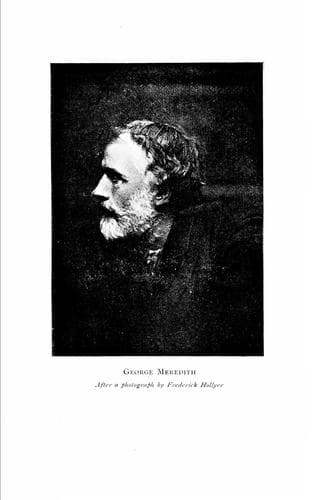
Biography coming soon.

Sign in to track this book
A young woman navigates the complexities of love, marriage, and personal freedom within Victorian society, challenging conventions to find genuine emotional connection.
The poem begins late at night, as the unnamed husband and wife return home from a party. They stand on the porch, a space between inside and out. The silence between them is heavy with unspoken thoughts and resentments. The wife, called 'Lady,' feels a 'coldness' from her husband, who seems distant and lost in his own mind. He, in turn, is keenly aware of the 'false smiles' and 'hollow words' they used in public, a show of marital bliss that hides their decaying relationship. They both recognize their love is 'spectral,' a ghost of what it once was, and that rekindling their dead passion is impossible. This scene sets the sad and thoughtful tone for the entire sequence, immediately establishing the central conflict of a marriage in decline.
The wife confronts her husband, not about a specific act, but about the emotional distance and the 'shadow' of another woman she senses in his thoughts. She asks for honesty, even if it hurts, rather than the polite but destructive silence and pretense that has become their marital norm. She questions why they continue to live together when love has clearly vanished, suggesting their outward show of affection mocks themselves and the world. Her words reveal a desperate desire for truth, even if it confirms her worst fears, believing it better than the suffocating deceit they now endure. This scene challenges the superficiality of their relationship.
Responding to his wife's plea, the husband, without naming another woman, admits to a past affair. He frames it as a desperate attempt to escape their loveless marriage. He describes feeling trapped by societal expectations for their union and how the affair offered a brief sense of freedom and passion he no longer found with his wife. However, he also expresses a deep tiredness, not only with his past mistake but also with the emotional exhaustion of their current situation. He acknowledges the pain he caused but cannot offer a path to reconciliation. Instead, he points to their shared responsibility for their marital breakdown and the permanent damage done.
In a shared moment, both the husband and wife remember the passionate early days of their relationship. They recall the intensity of their first love, its 'golden glow,' and the dreams they once shared for a future together. This memory contrasts sharply with their current sadness, showing how far they have fallen from their original ideal. The memory of happiness, however, also brings a new wave of pain, as it emphasizes the extent of what they have lost. It highlights the sad irony that the very qualities that drew them together now seem extinguished, leaving only the ashes of a once-burning fire.
The scene moves to a dinner party, where the husband and wife must act like a happy couple, maintaining a facade of domestic peace for their guests. They observe other couples, some genuinely happy, others also pretending. The husband is particularly cynical, noting the 'painted smiles' and 'empty laughter' that mark much social interaction. His wife, while equally aware of the charade, feels deeply isolated among the company. The dinner party becomes a small example of their societal trap, where appearances matter most and genuine emotion is suppressed. This further emphasizes the theme of societal pressures and the performance of marriage.
While the husband has admitted his past infidelity, the wife subtly reveals her own emotional attachment, though not necessarily a physical affair. She speaks of a 'friend' or 'admirer' who offers her understanding and intellectual companionship, a comfort she no longer finds with her husband. Her words are veiled, hinting at a connection that gives her emotional support and makes her feel 'alive' in a way her marriage does not. This revelation adds another layer to their failing relationship, showing that the breakdown is not one-sided but a shared experience of disillusionment and seeking comfort elsewhere, even if only emotionally. It suggests a mutual erosion of fidelity, in different forms.
During a quiet walk in their garden, the couple shares a brief, fragile moment of understanding. The beauty of nature around them seems to soften their hardened hearts for a moment, and they speak with a tenderness long absent. They acknowledge their mutual pain and the impossibility of truly separating in a society that disapproves of divorce. However, this fleeting connection is quickly overshadowed by their ingrained patterns of resentment and distance. The understanding they achieve is intellectual rather than emotional, a recognition of their shared predicament rather than a rekindling of affection. The moment highlights the deep-seated nature of their marital wounds, too deep to be healed by a simple shared walk.
The wife receives a letter from her admirer, which stirs a complex mix of emotions within her. The letter, though not explicitly revealing an affair, clearly expresses affection and intellectual rapport, offering her a glimpse of a different life and a different kind of love. It brings both comfort and renewed guilt, as she struggles with her feelings for another man while still bound by her marriage vows. The letter represents the emotional escape she has found and the temptation she faces, highlighting the internal conflict between duty and desire. It intensifies her longing for a connection her husband can no longer provide, pushing her further to think about her choices.
The husband, aware of his wife's emotional attachment, observes her interacting with her admirer at a social gathering. A bitter wave of jealousy washes over him, a surprising return of feeling in a heart he thought had grown cold. This jealousy is not necessarily rooted in love for his wife, but perhaps in wounded pride, a sense of possession, or the realization of his own inadequacy. He sees the genuine smiles and animated conversation between them, a stark contrast to his strained interactions with his wife. This observation ignites a painful awareness of his loss, even if that loss is of something he himself helped to destroy. It reveals that beneath his indifference, some raw emotion still lingers.
In a final, somber conversation, the husband and wife directly address the future of their marriage. They both acknowledge that their love is irrevocably dead and that their continued cohabitation is a mere formality. There is a sense of resignation, a weariness that has replaced their earlier passion and resentment. They discuss the societal constraints that prevent them from openly separating, recognizing the 'world's eye' that judges such departures from convention. While there is no dramatic split, there is a quiet, deep acceptance of their fate—to live together in a state of emotional divorce, maintaining appearances while their hearts remain separate. This conversation marks the definitive end of any hope for reconciliation.
The poem concludes with the couple accepting their tragic fate: to remain bound by marriage vows and societal expectations, despite the complete absence of love. They are trapped in a 'modern love' characterized by pretense, emotional distance, and a deep sense of loneliness within the marital bond. There is no traditional resolution, no dramatic separation or reconciliation, but rather a somber acknowledgment of their permanent, loveless union. The final verses emphasize the 'irony' and 'cruelty' of their situation, where outward respectability masks inner desolation. They are left to endure a life of quiet despair, a sad reflection on the destructive power of unfulfilled expectations and societal pressures on intimate relationships.
The Protagonist
He begins as detached and cynical, confessing a past affair and struggling with the pretense of his marriage. While he experiences a flicker of jealousy and brief understanding, he ultimately resigns himself to a loveless existence, hardened by the experience.
The Protagonist
She starts by confronting her husband about their marital facade and her perceived emotional neglect. She gradually reveals her own emotional attachments outside the marriage, ultimately resigning herself to the same fate of a loveless union, having sought solace elsewhere.
The Supporting
This character remains largely static, serving primarily as a reflection of the wife's desires and a source of conflict for both spouses.
The Antagonist
This 'character' remains a constant, oppressive force, never changing but always present, dictating the boundaries and consequences of the protagonists' actions.
The central theme is the gradual erosion of passion and affection within a marriage, turning it into an empty shell. The poem details the emotional distance, resentment, and eventual indifference that replace initial love. It questions whether marriage can last when its emotional foundation has crumbled, showing it as a 'modern love' built on pretense rather than genuine connection. The decay is not sudden but a slow, painful process, observed with precision, highlighting the quiet tragedy of two people growing irrevocably apart while still bound by vows and society.
“We are betrayed by what is false within.”
The poem strongly emphasizes the oppressive weight of Victorian social conventions that force the couple to maintain a facade of marital harmony. They must perform their 'love' for the 'world's eye,' creating a public image that sharply contrasts with their private sadness. This theme explores the hypocrisy in such societal demands, where appearances are valued over genuine emotion or individual happiness. The fear of scandal and social ostracism traps them in a loveless union, making them prisoners of their carefully constructed lies and the expectations of their peers.
“The world has many masks, but none so fair / As that which hides a loveless pair.”
A core element of the marital decay is the deep failure of communication between the husband and wife. They are often lost in their own thoughts, unable or unwilling to express their true feelings, leading to misunderstandings and deeper resentments. Even when they speak, their words are often guarded, sarcastic, or full of hidden meaning, preventing any real connection or resolution. The poem shows how unspoken grievances and half-truths contribute to the widening gap between them, making true intimacy impossible and sealing their fate in a cycle of emotional isolation.
“Ah, what a dusty answer gets the soul / When hot for certainties in this our life!”
The theme of infidelity is explored in both its physical and emotional forms. The husband admits to a past physical affair, while the wife hints at a strong emotional connection with another man. This dual exploration suggests that infidelity is not only about physical transgression but also about the betrayal of emotional trust and seeking comfort outside the marriage. It complicates the blame, showing that both parties contribute to the breakdown by seeking fulfillment elsewhere, highlighting the reciprocal nature of their marital disillusionment and the various forms betrayal can take.
“No wonder if they fly to other fires.”
Memory is a poignant and often painful theme, as both characters frequently recall the passionate early days of their love. These recollections of 'golden glow' and shared dreams contrast sharply with their present sadness, intensifying their sense of loss and despair. The memory of what was once beautiful becomes a source of fresh agony, emphasizing the irreversible nature of their marital decay. It highlights the tragedy of watching a deep love wither and die, leaving behind only the ghost of former happiness and the bitter awareness of what has been irrevocably lost.
“Our love was new, and then the world was new.”
A series of 50 sixteen-line sonnets.
The entire poem is structured as a sequence of 50 sonnets, each consisting of sixteen lines (a 'Meredithian Sonnet'). This rigid form, traditionally associated with love poetry, is ironically employed to explore the *decay* of love. The consistent structure provides a framework for the intense, often fragmented emotional states of the characters, creating a sense of formal constraint that mirrors the societal constraints binding the couple. The individual sonnets allow for detailed, introspective snapshots of their deteriorating relationship, building a cumulative narrative of despair and disillusionment.
Alternating internal thoughts and direct confrontations.
Meredith frequently employs elements of dramatic monologue and dialogue. Many sonnets delve into the internal thoughts and reflections of either the husband or the wife, offering direct access to their private anguish and cynical observations. Other sonnets present direct, often strained, conversations between the couple, revealing their inability to truly connect or resolve their issues. This device allows for a dynamic portrayal of their inner lives and their external, often performative, interactions, highlighting the chasm between their private suffering and public facade.
Symbolism of fading love and hidden truths.
Throughout the poem, Meredith uses vivid imagery of light and shadow to symbolize the state of the couple's love and their emotional landscape. 'Golden glow' and 'sunlight' represent their initial passion, while 'twilight,' 'shadows,' and 'darkness' signify the decay of their affection and the hidden truths within their marriage. This recurring imagery visually reinforces the theme of love's decline, moving from the bright promise of courtship to the dim, melancholic reality of their present, where secrets and unspoken resentments linger in the 'shadows' of their hearts.
The use of contrast between appearance and reality.
Irony is a pervasive plot device, particularly in the contrast between the title 'Modern Love' and the actual state of the relationship, which is anything but loving. The couple's public performance of marital harmony directly contradicts their private despair. The use of the sonnet form, traditionally for celebrating love, to lament its demise is also deeply ironic. This device highlights the hypocrisy of Victorian society and the painful disconnect between outward appearances and inner realities, emphasizing the tragic nature of their predicament and the 'mockery' of their continued union.
Ready to see how well you understood this book? Take our interactive quiz with 10 questions.
Biography coming soon.

Ashley Antoinette
4.6

Mark McDonald
4.4
Luo Guanzhong
4.4
Mia McKenzie
4.3
Dorothy Parker
4.3
Joaquim Maria Machado de Assis
4.3
James Thurber
4.2

Terry Kay
4.2