“Christ was the first Miss Lonelyhearts.”
— A cynical observation made by Shrike to Miss Lonelyhearts.


Nathanael West (2009)
Genre
Fiction
Reading Time
150 min
Key Themes
See below
Sign in to track this book
A cynical reporter struggles with his advice column, facing the absurd pleas of readers and the grotesque realities of Hollywood's broken promises, while a disillusioned artist confronts similar issues.
The unnamed protagonist, a young man working for a New York newspaper, has been assigned the advice column 'Miss Lonelyhearts.' He finds the job deeply disturbing, as the letters he receives detail endless human suffering, despair, and pain. His editor, Shrike, a brilliant but nihilistic intellectual, constantly mocks Miss Lonelyhearts's attempts to find genuine meaning or offer comfort, seeing all human effort as absurd. Shrike views the column as a cruel joke, yet insists Miss Lonelyhearts continue writing it, forcing him to confront the raw misery of his readers, which begins to erode his own spiritual and mental well-being.
Miss Lonelyhearts visits his fiancée, Betty, at her apartment. Betty represents a desire for normalcy, simplicity, and escape from the overwhelming despair he encounters in his column. She is practical and suggests he quit the job, urging him to pursue a simpler life in the country. However, Miss Lonelyhearts finds it difficult to explain the deep spiritual crisis he is undergoing. He feels a growing inability to connect with her pragmatic worldview, and his attempts to express his feelings of being overwhelmed by the suffering he reads about are met with her well-meaning but ultimately uncomprehending concern. Their contrasting perspectives highlight his isolation.
Shrike often subjects Miss Lonelyhearts to elaborate, cynical parodies of various philosophical and religious systems, including Catholicism, Freudianism, and primitivism. He does this both in person and through letters, often dictating responses to Miss Lonelyhearts's column that are filled with ironic detachment and intellectual posturing. Shrike's goal seems to be to dismantle any sense of hope or meaning Miss Lonelyhearts might cling to, proving that all paths to comfort are ultimately useless. These intellectual attacks further confuse and distress Miss Lonelyhearts, who is earnestly searching for a genuine spiritual answer to the suffering he witnesses, rather than a clever philosophical evasion.
Miss Lonelyhearts receives a particularly disturbing letter from Fay Doyle, a woman who details her husband Peter's impotence and her own resulting sexual frustration and despair. The letter, full of raw, almost grotesque imagery, deeply affects him. Feeling a desperate need to offer help, or perhaps to experience suffering firsthand, Miss Lonelyhearts decides to meet Fay. Their encounter is awkward and charged. Fay is a physically imposing, desperate woman, and her bluntness and the raw reality of her situation further immerse Miss Lonelyhearts in the very despair he is trying to address, blurring the lines between his role as an advice columnist and his personal life.
Driven by a complex mix of pity, a desire to experience suffering, and a perverse sense of Christ-like empathy, Miss Lonelyhearts engages in a sexual encounter with Fay Doyle. The act itself lacks genuine intimacy or pleasure; instead, it is portrayed as a grotesque and desperate fusion of two damaged individuals. For Miss Lonelyhearts, it is an attempt to descend into the abjection he reads about, to truly 'feel' the pain of his correspondents. However, the experience leaves him feeling further alienated and disgusted, rather than enlightened or purified. It signifies a deeper descent into his own spiritual and psychological torment, failing to provide the redemptive suffering he unconsciously seeks.
Miss Lonelyhearts, still involved with Fay, attends a dinner party at the Doyles' apartment. The evening is a study in domestic squalor and emotional violence. Peter Doyle, Fay's impotent husband, is a meek and pathetic figure, whose suffering Miss Lonelyhearts feels drawn to. Fay, in contrast, is domineering and coarse. The dinner is punctuated by their arguments, Peter's quiet despair, and Fay's attempts to provoke Miss Lonelyhearts. He observes their dysfunctional marriage up close, seeing the raw misery that fuels Fay's letters. The experience reinforces his growing conviction that genuine compassion requires him to directly engage with, and even absorb, the suffering of others.
The cumulative effect of the letters, his encounters with Fay and Peter Doyle, and Shrike's relentless cynicism pushes Miss Lonelyhearts to a breaking point. He falls physically ill, experiencing a feverish delirium. During this period, he undergoes a deep spiritual crisis, which he interprets as a form of religious awakening. He believes he has found the answer to human suffering in a radical form of Christ-like love and self-sacrifice. He envisions himself as a vessel for divine love, capable of healing the wounds of others by absorbing their pain. This newfound conviction is intense and all-consuming, bordering on delusion.
Feeling transformed by his spiritual awakening, Miss Lonelyhearts tries to reconcile with Betty, believing he can now offer her genuine love and a share in his revelation. He wants to marry her and live a simple, pure life. Betty, though still wary, is willing to try. However, their fragile peace is shattered when Shrike, out of spite or a desire to prove Miss Lonelyhearts's faith is a delusion, calls Betty and tells her about Miss Lonelyhearts's affair with Fay Doyle. This act of betrayal by Shrike highlights his destructive cynicism and further complicates Miss Lonelyhearts's attempts to achieve spiritual purity and human connection.
Miss Lonelyhearts receives a letter from Peter Doyle. Peter, having learned of Fay's affair (likely from Shrike's meddling or his own suspicions), mistakenly believes Miss Lonelyhearts is his wife's lover. The letter expresses Peter's deep pain, confusion, and a desperate plea for Miss Lonelyhearts to meet him, not out of anger, but out of a profound need for understanding and perhaps even forgiveness. Peter, a physically disabled and emotionally broken man, represents the ultimate embodiment of the suffering Miss Lonelyhearts has been trying to address. This letter sets the stage for the tragic climax, as Miss Lonelyhearts feels compelled to respond to Peter's raw plea.
Having embraced his role as a Christ-like figure, Miss Lonelyhearts believes he can heal Peter Doyle through an act of pure, selfless love. When Peter arrives at his apartment, carrying a loaded pistol (given to him by Fay for protection, though Miss Lonelyhearts is unaware), Miss Lonelyhearts, filled with his new spiritual fervor, rushes towards him with open arms, intending to embrace him in a gesture of divine compassion. Peter, startled and misinterpreting the sudden movement as an attack, instinctively pulls the trigger. Both men tumble down the stairs, and Miss Lonelyhearts is fatally shot. The ending is a tragic, ironic culmination of his misguided spiritual quest.
The Protagonist
From cynical detachment to spiritual despair, culminating in a delusional messianic complex and tragic death.
The Antagonist
Remains consistently cynical, serving as a static force that highlights Miss Lonelyhearts's spiritual struggle.
The Supporting
Remains a voice of reason and normalcy, unable to pull Miss Lonelyhearts back from his descent.
The Supporting
Remains a figure of raw, desperate suffering, serving as a catalyst for Miss Lonelyhearts's misguided actions.
The Supporting
Remains a symbol of passive suffering, tragically becoming the unwitting agent of the protagonist's demise.
The Supporting
Her character is static, serving to exemplify the cynical and unfaithful environment surrounding Miss Lonelyhearts.
The Mentioned
Their cumulative effect drives Miss Lonelyhearts's spiritual descent.
The novel explores the difficulty, and ultimate failure, of finding genuine spiritual or intellectual meaning in a world perceived as absurd and without inherent purpose. Miss Lonelyhearts's earnest attempts to answer his readers' suffering through various ideologies – Christianity, Freudianism, primitivism – are constantly undermined by Shrike's cynical parodies and the overwhelming, unyielding nature of the suffering itself. His final, desperate embrace of a messianic complex is portrayed not as a triumph, but as a tragic delusion, suggesting that any grand solution to existential pain is ultimately useless and self-destructive. His death is the ultimate example of the impossibility of imposing meaning on a chaotic reality.
“Men have always hated the truth and that is why they have made religions and philosophies and sciences to make them think that they were not apes dreaming of paradise.”
The novel presents suffering as an omnipresent and often grotesque force, depicted through the raw letters to Miss Lonelyhearts and his encounters with characters like Fay and Peter Doyle. It questions the effectiveness and nature of compassion. Miss Lonelyhearts's initial pity evolves into a desperate, almost perverse desire to experience and absorb suffering, believing it to be a path to redemption. However, his attempts at compassion are misguided and ultimately destructive, leading to his own demise. The novel suggests that genuine compassion is dangerous and that an overidentification with suffering can lead to madness and tragedy, rather than healing or salvation. The suffering itself remains unresolved.
“It is hard to laugh at the need for beauty and romance, no matter how tasteless the form may be. But it is easy to laugh at the need for strength and love.”
West criticizes the dehumanizing aspects of modern urban life and the media's role in it. The newspaper column 'Miss Lonelyhearts' itself is an instrument of this dehumanization; it treats suffering as a commodity, turning personal tragedies into entertainment or a source of cynical amusement for Shrike. The urban environment is depicted as alienating and isolating, contributing to the despair of the characters. Miss Lonelyhearts is trapped in a profession that forces him to confront endless misery without offering any real solution, highlighting how modern media can exploit human pain rather than alleviate it. The superficiality of the advice column contrasts sharply with the deep spiritual hunger it inadvertently exposes.
“He was a master of the journalism of pity.”
Religion, particularly Christianity, is a recurring idea, often presented through the lens of hypocrisy or as a source of misguided delusion. Shrike relentlessly parodies religious dogma, exposing its perceived absurdities and comforts as intellectual evasions. Miss Lonelyhearts, however, genuinely seeks spiritual answers, eventually embracing a distorted, self-sacrificial form of Christ-like love. His belief that he can heal others by absorbing their pain becomes a messianic delusion, leading him to a tragic end. The novel suggests that while the longing for spiritual salvation is deep, its manifestation in a world without clear meaning can lead to self-destruction rather than true redemption, blurring the lines between faith and madness.
“Christ was the only answer.”
The agony column letters drive the plot and reveal human suffering.
The letters sent to 'Miss Lonelyhearts' are a central plot device. They serve as the primary catalyst for the protagonist's spiritual crisis, immersing him directly in the raw, unvarnished suffering of humanity. These letters provide the narrative's emotional core, depicting a range of physical, emotional, and spiritual pains. They are West's method of presenting the grotesque reality of human despair, often without filter or resolution, and they force Miss Lonelyhearts to confront the limits of his own capacity for empathy and his search for meaning. The letters are not just background; they are the engine of his internal and external conflict, directly influencing his actions and eventual demise.
Miss Lonelyhearts's identification with Christ as a suffering redeemer.
Miss Lonelyhearts increasingly identifies himself with a Christ-like figure, particularly in his desire to absorb and redeem human suffering. This symbolism is evident in his desire to 'take their pain,' his feverish spiritual awakening, and his final, fatal embrace of Peter Doyle. However, West subverts this traditional religious symbolism; Miss Lonelyhearts's messianic complex is presented as a delusion, leading to a grotesque and ironic death rather than a redemptive sacrifice. The device highlights the protagonist's spiritual desperation and critiques the simplistic application of religious archetypes to complex modern suffering, suggesting that such attempts can be profoundly misguided and tragic.
Distorted and exaggerated descriptions to convey psychological states.
West employs grotesque imagery and elements of surrealism to depict the psychological and spiritual decay of his characters and their environment. Descriptions of physical deformities, distorted bodies, and exaggerated emotional states in the letters and encounters (e.g., Fay Doyle's physicality, Miss Lonelyhearts's feverish visions) create a sense of unease and horror. This device serves to externalize the internal torment of Miss Lonelyhearts and to emphasize the absurd, often repulsive nature of the suffering he witnesses. It blurs the line between reality and hallucination, reflecting Miss Lonelyhearts's deteriorating mental state and the disorienting impact of his exposure to extreme human misery.
Shrike's cynical intellectual attacks on belief systems.
Shrike's elaborate parodies of various philosophical and religious systems (e.g., Catholicism, Freudianism, primitivism) serve as a crucial plot device. These intellectual assaults function as an antagonist force, constantly undermining Miss Lonelyhearts's earnest attempts to find meaning or offer solace. They highlight the intellectual's escape into cynicism and irony as a defense mechanism against suffering, and they challenge the validity of any grand narrative or belief system. Shrike's discourses are not mere comic relief; they are a direct attack on the protagonist's spiritual quest, illustrating the intellectual's capacity to dismantle hope and meaning, pushing Miss Lonelyhearts further into isolation and despair.
“Christ was the first Miss Lonelyhearts.”
— A cynical observation made by Shrike to Miss Lonelyhearts.
“He was aware of something else besides the physical data. He knew that his glib cynicism was not the solution.”
— Miss Lonelyhearts' internal reflection on his own struggles and the inadequacy of cynicism.
“All he could do was to elaborate the physical details of his sickness.”
— Miss Lonelyhearts contemplating his inability to articulate his deeper spiritual or emotional pain.
“The missive was a typical one. It was from a woman who wanted to know if she should marry a man who had only one leg.”
— An example of the absurd and often tragic letters Miss Lonelyhearts receives.
“He felt that he was a rock, a dead rock, and that there was nothing to do but wait for the slow process of disintegration.”
— Miss Lonelyhearts' feeling of utter despair and stasis.
“Men have always fought for their women, and women have always fought for their men.”
— A general statement about human nature and relationships, often in a violent context in the novel.
“His world had been in pieces, and now it was whole again.”
— Miss Lonelyhearts' brief, deluded moment of spiritual epiphany before his tragic end.
“He could not believe in God and he could not believe in a man-made religion.”
— Miss Lonelyhearts' struggle with faith and the inability to find solace in traditional or new belief systems.
“It is a big world, and it is full of big questions.”
— A simple yet profound statement highlighting the overwhelming nature of existence.
“He was trying to give them something they could feel, something that they could hold in their hands.”
— Miss Lonelyhearts' desire to offer tangible comfort or answers to his readers, despite his own lack of them.
“He saw that he was an accomplice to the human comedy.”
— Miss Lonelyhearts' realization of his role in the grotesque and often farcical suffering he witnesses.
“He had an erection and he was ashamed.”
— A moment revealing Miss Lonelyhearts' internal conflict between his physical desires and his spiritual aspirations.
“He wanted to escape from the room, from the city, from the earth.”
— Miss Lonelyhearts' overwhelming desire for transcendence or escape from his circumstances.
“He had been walking for a long time, and he was tired.”
— A simple, understated observation that conveys a deeper sense of emotional and spiritual exhaustion.
“It was a big joke, but it was not funny.”
— A summary of the novel's dark humor and the tragic nature of the situations presented.
Ready to see how well you understood this book? Take our interactive quiz with 10 questions.
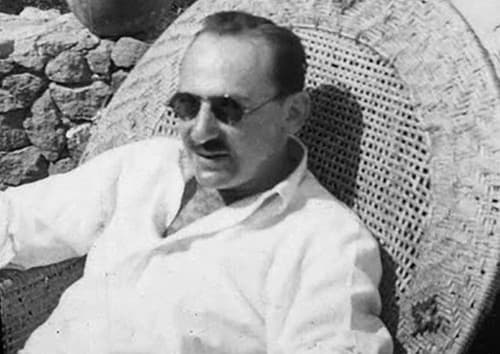
Nathanael West was an American writer and screenwriter. He is remembered for two darkly satirical novels: Miss Lonelyhearts (1933) and The Day of the Locust (1939), set respectively in the newspaper and Hollywood film industries.

Ashley Antoinette
4.6

Mark McDonald
4.4
Luo Guanzhong
4.4

Mia McKenzie
4.3

Dorothy Parker
4.3

Joaquim Maria Machado de Assis
4.3
James Thurber
4.2

Terry Kay
4.2