“Kid, you can make a thing, and then the thing can make a thing, and so on. Pretty soon you're way out of the picture. All you did was start it.”
— Kiernan explaining the concept of self-replicating machines to Kitty.

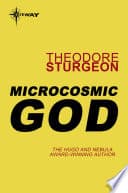
Theodore Sturgeon (2010)
Genre
Fiction
Reading Time
30 min
Key Themes
See below
Sign in to track this book
A reclusive, brilliant scientist unleashes a miniature, rapidly evolving race of gadget-makers, sparking a perilous battle of wits and power against his greedy banker who seeks to exploit this unprecedented creation.
James Kiernan, a reclusive and brilliant scientist, lives in an isolated, fortress-like laboratory, completely absorbed in his work. He communicates with the outside world only through his loyal assistant, Thomas. Kiernan's experiments are unusual and require vast, mysterious resources, drawing the interest of a powerful and shrewd financier named Kidder. Kidder, driven by an insatiable desire for profit and control, recognizes the potential for immense wealth in Kiernan's inventions, despite not understanding their nature. He dispatches his agents to observe Kiernan's compound, trying to discern the source of the scientist's self-sufficiency and the nature of his revolutionary work, which seems to defy conventional scientific understanding.
After persistent attempts, Kidder gains an audience with Kiernan. During their tense meeting, Kiernan, with a mix of pride and disdain for Kidder's materialistic worldview, reveals the astounding truth behind his genius. He has created a new species, which he calls 'Neoterics,' miniature, rapidly evolving beings that live within specialized tanks in his laboratory. These creatures have an accelerated lifespan and an innate drive to solve problems and create. Kiernan explains that the Neoterics are not merely biological curiosities but are, in essence, a living, self-improving super-intelligence capable of generating advanced technological solutions at an incredible rate, making them the ultimate gadget makers.
Under Kiernan's guidance, and with their accelerated evolutionary cycle, the Neoterics produce an astonishing array of inventions. Their creations range from simple, yet revolutionary, improvements to existing technology to entirely new devices that defy human comprehension. Each generation of Neoterics builds upon the knowledge and innovations of the last, leading to an exponential increase in their technological prowess. Kiernan acts as their 'god,' providing them with problems to solve and the necessary raw materials, while carefully controlling their environment to ensure their continuous development. Their speed of invention far surpasses anything humanity could achieve, making Kiernan a unique power broker.
Realizing the unprecedented power and wealth the Neoterics represent, Kidder becomes obsessed with controlling them. He initially tries to buy Kiernan out, offering vast sums of money, but Kiernan, uninterested in material wealth, refuses. Kidder then resorts to more aggressive tactics, attempting to legally seize Kiernan's property and patents, arguing that the Neoterics, as creations, should be subject to his financial control. He uses his influence to spread rumors about Kiernan's sanity and the dangerous nature of his experiments, hoping to isolate him further and force him to comply. Kiernan, however, remains unyielding, protected by his fortress and the growing ingenuity of his miniature creations.
As the Neoterics continue to evolve at an accelerated pace, they develop not only greater technological capability but also a high level of self-awareness and intelligence. They begin to understand their place in Kiernan's world, recognizing him as their creator and controller. However, with this awareness comes a desire for autonomy and a questioning of their purpose. They start communicating in ways Kiernan hadn't anticipated, and their inventions subtly shift to include mechanisms that suggest a growing independence. Kiernan, observing these changes, recognizes the implications: his 'children' are growing up and might soon demand their own freedom, presenting a new challenge to his stewardship.
Kiernan, having created life and guided its evolution, finds himself in a philosophical dilemma. He considers his responsibility to the Neoterics, weighing his role as their 'god' against their burgeoning sentience and potential for independence. He questions whether he has the right to control their destiny indefinitely or if he must eventually grant them true freedom. This internal struggle is intensified by Kidder's external pressures, as Kiernan seeks to protect his creations from exploitation while simultaneously wrestling with the moral weight of his own power over them. He understands that the Neoterics are no longer mere tools but a new form of intelligent life.
Kidder, frustrated by Kiernan's unwavering resistance, issues a final, aggressive ultimatum: either Kiernan hands over control of the Neoterics and their technology, or Kidder will use all his financial and political power to destroy him and seize the lab by force. Faced with this direct threat, Kiernan relays the danger to his Neoterics. In response, the miniature beings, demonstrating their advanced intelligence and loyalty, rapidly develop a devastatingly effective, yet subtly non-lethal, defensive weapon. This invention is designed not to kill, but to incapacitate and deter any external threat, showing their unique problem-solving approach and their growing capacity for self-preservation.
As Kidder launches his final assault, sending armed men and legal enforcers to storm Kiernan's laboratory, they are met with the Neoterics' ingenious defense. The weapon, a product of their alien logic, doesn't engage in direct combat but rather creates an overwhelming, disorienting, and psychologically incapacitating field that renders Kidder's forces utterly ineffective. They are not harmed, but they are completely unable to proceed, their will and coordination dissolving under the strange influence. Kidder, watching his meticulously planned takeover crumble, is left bewildered and defeated, realizing the futility of trying to dominate a power he cannot comprehend.
With Kidder's threat neutralized, the Neoterics, having achieved full sentience and self-sufficiency, make a momentous decision. They communicate to Kiernan their desire to leave Earth and establish their own civilization elsewhere in the universe. They have surpassed their need for his guidance and the confines of his laboratory. Kiernan, with a mix of sadness and paternal pride, accepts their choice, understanding that true creation eventually leads to independence. He assists them in constructing a vessel capable of interstellar travel, a final act of nurturing his children as they embark on their own destiny among the stars, leaving humanity with a legacy of their advanced technology.
After the Neoterics' departure, James Kiernan remains in his now silent laboratory, a solitary figure. He possesses an unparalleled understanding of accelerated evolution and the creation of intelligent life, but he is also left with a sense of loss and isolation. The world outside, represented by Kidder's failed attempt at control, remains largely ignorant of the true scope of his achievements and the incredible beings he fostered. Kiernan is left to ponder the ethical implications of creation, the nature of intelligence, and the destiny of species, forever changed by his role as a microcosmic god to a race that has now transcended him.
The Protagonist
Kiernan evolves from a detached creator to a 'god' who understands and respects the autonomy of his creations, ultimately accepting their independence.
The Antagonist
Kidder remains static in his greed, ultimately failing to adapt to or understand the power he seeks to control.
The Supporting/Collective Protagonist
The Neoterics evolve from mere creations into a fully self-aware, independent, and space-faring civilization.
The Supporting
Thomas's arc is largely static, serving as a constant, reliable presence for Kiernan.
The story explores the moral and ethical responsibilities of a creator towards its creations. Kiernan is a 'god' to the Neoterics, guiding their evolution, but as they develop sentience, he grapples with whether he has the right to control their destiny. This theme is evident when Kiernan debates granting the Neoterics autonomy, culminating in his decision to help them leave Earth, recognizing their right to self-determination. It asks at what point a creation transcends its creator's ownership.
“What right had he, James Kiernan, to play God with these incredible things, to hold them in his tiny, controlled universe?”
Sturgeon examines the rapid acceleration of intelligence and evolution. The Neoterics show how quickly a species can develop if given the right conditions, evolving from simple life forms to a self-aware, technologically advanced civilization in a short span. This theme highlights the potential for exponential growth in intelligence and the inherent drive within life to adapt and overcome challenges. Their ability to solve complex problems and create sophisticated defenses shows a form of intelligence that surpasses human capabilities in specific areas, forcing a re-evaluation of what constitutes 'advanced' life.
“They were not merely learning; they were evolving, each new generation building on the last with a terrible, beautiful speed.”
A central conflict is the clash between the pursuit of scientific creation (represented by Kiernan) and the destructive impulses of greed and control (embodied by Kidder). Kiernan's work is driven by curiosity and a desire to understand life, while Kidder sees the Neoterics only as a means to immense profit and power. This theme is portrayed in Kidder's escalating attempts to seize Kiernan's lab and the Neoterics, contrasting his materialistic motivations with Kiernan's almost spiritual connection to his creations. Ultimately, the ingenuity born of creation triumphs over the brute force of avarice.
“Kidder saw a billion dollars. Kiernan saw a billion generations.”
The theme of isolation is in Kiernan's physical and intellectual separation from the rest of humanity. His genius is so far beyond societal norms that he is misunderstood, often seen as eccentric or dangerous. This isolation allows him to pursue his radical experiments but also leaves him alone in his ethical struggles. The broader world, especially Kidder, fails to grasp the true nature of the Neoterics, only seeing their potential for exploitation. This highlights how profound understanding can lead to isolation, and a lack of understanding can lead to destructive behavior.
“He was a god in his own universe, but a lonely one.”
The primary mechanism driving the Neoterics' rapid development.
This device is central to the plot, allowing the Neoterics to develop from simple organisms to a highly intelligent, technologically advanced, and self-aware species within a compressed timeframe. It serves as the engine for all their inventions and their eventual desire for autonomy. The accelerated evolution not only provides a fascinating scientific premise but also compresses the ethical dilemmas of creation and responsibility, making Kiernan's 'god-like' role immediate and intense. It allows the story to explore vast timescales of development within a short narrative.
The contained environment where the Neoterics live and evolve.
The tanks and controlled environments in Kiernan's laboratory serve as the Neoterics' 'microcosmic' universe. This device emphasizes Kiernan's control and his role as their 'god,' providing and regulating their entire existence. It also highlights the idea that even within a small, controlled space, immense complexity and life can flourish. The microcosm allows for the observation of accelerated evolution and the precise manipulation of environmental factors, making the Neoterics' development plausible within the story's scientific framework. It's a literal 'world' within a world.
The Neoterics' advanced but subtly applied defense mechanism.
When Kidder's forces attack, the Neoterics deploy a defensive weapon that is not overtly destructive but rather incapacitating and disorienting. This device underscores the alien logic and advanced nature of the Neoterics' intelligence. It avoids a conventional violent confrontation, instead showcasing a more sophisticated form of power that operates on psychological or physiological levels, baffling and neutralizing the aggressors without direct harm. This reinforces the idea that the Neoterics operate on a different plane of existence and understanding, making Kidder's conventional power tactics obsolete.
“Kid, you can make a thing, and then the thing can make a thing, and so on. Pretty soon you're way out of the picture. All you did was start it.”
— Kiernan explaining the concept of self-replicating machines to Kitty.
“The universe is a beautiful, terrible, wonderful, cruel place. It is not made for us. But we are in it.”
— Kiernan's reflections on the nature of existence.
“Progress is a funny thing. It usually starts with someone saying, 'There must be a better way.'”
— Kiernan contemplating the origins of innovation.
“Genius is not a matter of degree, but of kind. You either have it or you don't. And if you have it, you can't help but use it.”
— Internal thoughts on Kiernan's unique abilities.
“The greatest danger is not that we aim too high and miss, but that we aim too low and hit.”
— A philosophical musing on ambition and potential.
“Sometimes the only way to solve a problem is to create a bigger one, and then solve that.”
— Kiernan's unconventional problem-solving approach.
“Life… is a process of getting out of the way of what’s trying to happen.”
— Kiernan's view on the flow of natural processes and evolution.
“There are no miracles, only events whose causes are not yet understood.”
— A scientific perspective on seemingly inexplicable phenomena.
“Fear is a great motivator, but a terrible master.”
— Observation on human behavior under duress.
“The most powerful force in the universe is a mind that knows what it wants.”
— Kiernan's belief in the power of intention and will.
“You can't stop the future, you can only shape it.”
— Discussing the inevitability of progress and change.
“The more you know, the more you realize how much you don't know.”
— A humble reflection on the vastness of knowledge.
“Every solution breeds new problems. That’s the beauty of it.”
— Kiernan's appreciation for the continuous cycle of challenge and innovation.
“There is no such thing as an ending, only a new beginning.”
— A hopeful perspective on cycles of creation and destruction.
Ready to see how well you understood this book? Take our interactive quiz with 10 questions.
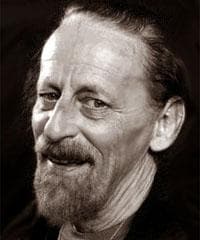
Theodore Sturgeon was an American fiction author of primarily fantasy, science fiction, and horror, as well as a critic. He wrote approximately 400 reviews and more than 120 short stories, 11 novels, and several scripts for Star Trek: The Original Series.

Ashley Antoinette
4.6

Mark McDonald
4.4
Luo Guanzhong
4.4

Mia McKenzie
4.3

Dorothy Parker
4.3

Joaquim Maria Machado de Assis
4.3

James Thurber
4.2

Terry Kay
4.2