“I was born in a small town, in a province, in a country where nothing ever happens. My childhood was spent in the shadow of an old church, whose bells tolled mournfully every hour.”
— Opening lines, setting the scene of his youth.

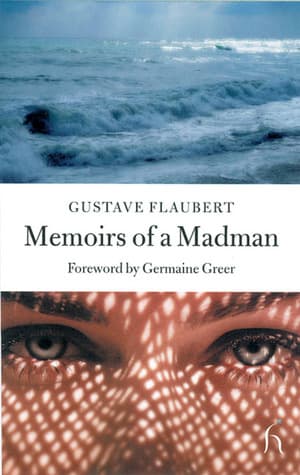
Genre
Fiction
Reading Time
90 min
Key Themes
See below
Sign in to track this book
A young genius's self-proclaimed madness begins when a brief glimpse of a woman by the sea shatters his boyhood innocence, forcing him into a tragic and early adulthood.
The unnamed narrator, calling himself a 'madman,' starts by reflecting on his current state and how he got there. He describes his youth as a time of intense thought and philosophical ideas, where he saw himself as a genius meant for greatness. He recalls his early interest in nature, solitude, and life's big questions. He felt a deep separation from ordinary life and people, believing his mind worked on a higher level. This opening sets a sad and reflective tone, as the narrator deals with the difference between his youthful hopes and his current disappointment, hinting at a loss of innocence and the harshness of reality.
The narrator describes his childhood, showing himself as a sensitive and imaginative boy who preferred being alone to being with others. He tells of his early experiences with nature, the sea, and the books he read, which fueled his romantic and philosophical ideas. He felt a unique bond with the world, seeing beauty and depth in everything. This time is marked by an almost naive idealism, where he believed in the power of thought and emotion to shape his future. He recounts his early education and how certain books greatly affected his developing mind, creating an intense inner world separate from everyday life.
The key moment in the narrator's life happens during a summer by the sea. While walking along the shore, he sees a beautiful woman. This meeting is described with intense detail, showing the immediate and overwhelming effect she has on him. Her beauty, grace, and presence completely captivate him, instantly replacing his former philosophical interests. This moment marks a deep change from abstract thought to concrete emotion, from the world of ideas to human connection and desire. It is the start of his 'tragic coming of age,' as his carefully built intellectual world begins to fall apart under this new, powerful feeling.
After first seeing her, the narrator becomes completely obsessed with the woman. He spends his days trying to catch glimpses of her, imagining detailed scenarios and projecting all his romantic ideals onto her. He knows nothing about her, yet he creates an entire identity for her in his mind, seeing her as the embodiment of beauty, grace, and perfection. This idealization stops him from seeing her as a real person, turning her instead into a symbol of his growing romantic desires. His former intellectual pursuits are forgotten, replaced entirely by this single, all-consuming passion, which he keeps secret.
Driven by his obsession, the narrator tries to create situations where he might meet the woman. He follows her, watches her from a distance, and imagines conversations they might have. Each near-encounter fills him with both terror and excitement. He longs to speak to her, to confess his feelings, but his shyness, inexperience, and the sheer intensity of his emotions paralyze him. He experiences the exquisite pain of unrequited love, where the person he loves stays distant and unknown. This period highlights his youthful naivety and his inability to connect his inner world with outer reality.
One day, their paths cross, and their eyes meet for a brief, intense moment. The narrator sees this shared gaze as a deep connection, a silent acknowledgment of his feelings, even if it was just a quick glance from her side. This moment fuels his hopes and strengthens his belief that their futures are linked. He cherishes this unspoken interaction, replaying it constantly in his mind, finding every possible meaning in it. This brief, imagined connection becomes the foundation of his romantic fantasy, further cementing his idealization of the woman.
Sadly, the summer ends, and the woman leaves town without the narrator ever speaking to her. Her departure leaves him completely devastated. The world he had built around her image collapses, leaving him with a deep sense of loss and emptiness. This event marks the definite end of his innocent idealism and his entry into the harsh realities of unfulfilled desire and sorrow. He describes his despair as a kind of madness, a torment that consumes him. The beauty and hope she represented are gone, replaced by a bitter disappointment that colors his view of life.
After the woman's departure, the narrator struggles to recover. His philosophical pursuits now seem empty and meaningless compared to the intensity of his emotional experience. He carries the weight of his unfulfilled love, feeling its scars on his soul. He reflects on how this single event changed his view of himself and the world forever. His boyhood innocence is shattered, replaced by a cynical understanding of love's pain and the fragility of human desires. He sees his 'madness' as a direct result of this emotional trauma, a state of constant sadness born from lost ideals.
Looking back from his 'madman' state, the narrator bitterly compares his youthful belief in being a genius with the stark reality of his life. He realizes that his grand philosophical ideas and perceived intellectual superiority were ultimately not enough to handle the complexities of human emotion and relationships. His genius, once a source of pride, now seems like a delusion that protected him from the truth. He questions the value of his intellectual pursuits when faced with the raw power of love and loss, concluding that his early idealism was a form of blindness that led to his eventual despair and 'madness.'
The narrator explains what he means by 'madness.' It is not clinical insanity, but a deep disappointment, a profound sense of sadness and alienation that comes from the shattering of his youthful ideals and the pain of his first love. He feels a permanent separation from life's joy and simplicity, forever stained by the bitterness of unfulfilled desire. This 'madness' is his constant companion, a state of heightened sensitivity and ongoing reflection on the fleeting nature of happiness and the lasting weight of sorrow. It is the lens through which he now views the world.
In his final thoughts, the narrator acknowledges that despite the pain, his experience with love, though unrequited and brief, was a defining moment. It was the event that changed him from an idealistic boy into the 'madman' he is today. He recognizes that this deep emotional awakening, though it led to suffering, also gave him a deeper understanding of the human condition and the complexities of the heart. The memory of the woman, though a source of torment, remains a lasting part of his identity, shaping his views on life, love, and the enduring power of human emotion.
The Protagonist
Transforms from an idealistic, self-proclaimed genius into a 'madman' burdened by unfulfilled love and disillusionment, losing his innocence but gaining a deeper, albeit painful, understanding of life.
The Supporting/Catalyst
Serves as a static catalyst, her presence and subsequent departure initiating the narrator's emotional transformation.
The main theme is the narrator's painful shift from naive boyhood idealism to the harsh realities of adult emotion. His initial belief in his genius and the power of abstract thought is shattered by the raw, consuming experience of unrequited love. The meeting with the woman by the sea marks the end of his untroubled, philosophical solitude, throwing him into a world of desire, longing, and deep disappointment. This loss is shown as a 'madness,' a permanent state of sadness that replaces his former bright view of the world.
“My childhood was a strange thing, a dream full of flowers and sunshine, and yet, a presage of storms.”
The book explores love not as a shared relationship, but as an intense, singular obsession from idealization. The narrator's love for the woman is entirely one-sided, a projection of his own desires and romantic fantasies onto an unknown figure. He falls in love with an image rather than a person, leading to an all-consuming passion that ultimately consumes him. This theme highlights the destructive power of unrequited love and the dangers of idealizing another so much that it prevents real connection, leaving the lover in torment and despair when reality eventually intrudes.
“I loved her, not as one loves a woman, but as one loves a dream, a chimera, a vision.”
Flaubert explores the conflict between the narrator's highly developed intellectual life and his sudden, overwhelming emotional awakening. Initially, the narrator prides himself on his philosophical depth and intellectual superiority, believing thought to be the highest form of existence. However, the raw power of his love for the woman by the sea completely overshadows his intellectual pursuits, making them seem meaningless. This conflict suggests that pure intellect, without emotional experience, is incomplete and vulnerable to the deep impact of human feeling. His 'madness' can be seen as emotion's ultimate victory over his previously cherished rationality.
“My genius, my dreams, my whole being seemed to dissolve before her gaze.”
From childhood, the narrator feels a deep sense of separation from ordinary people and the everyday world, preferring his own company and the solitude of nature. He sees himself as unique, a genius set apart. This inherent solitude is initially a source of pride, but after his romantic disappointment, it becomes a painful isolation. His 'madness' is marked by a continued separation from others, now born not from intellectual superiority, but from a deep sadness and an inability to fully connect after his heart has been broken. The unfulfilled love reinforces his solitary existence, leaving him perpetually adrift.
“I was alone in the world, alone with my thoughts, alone with my dreams, alone with my madness.”
The story is told from the perspective of the older, disillusioned narrator looking back on his youth.
The entire narrative is framed as a memoir, told by the 'madman' looking back on his younger self. This allows for a melancholic, reflective, and often ironic tone, as the older narrator can comment on the naivety and idealism of his youth with the wisdom of hindsight and suffering. It creates a sense of foreboding and tragedy, as the reader knows from the outset that the narrator's journey leads to a state of 'madness.' This device emphasizes the lasting impact of his early experiences and the subjective nature of memory and self-perception.
The sea represents both the boundless potential of youth and the overwhelming, uncontrollable nature of emotion.
The sea serves as a powerful symbol throughout the narrative. In the narrator's childhood, it embodies freedom, mystery, and the vastness of his imagination. It is a place of solitude and philosophical contemplation. However, it is also by the sea that he first encounters the woman, transforming it into a symbol of burgeoning desire, the unpredictable currents of emotion, and the overwhelming force of love that shatters his intellectual world. Its boundless nature reflects both his initial idealism and the depth of his subsequent despair, representing the uncontrollable forces that shape his destiny.
The narrator projects his romantic fantasies onto the unknown woman, creating an idealized image.
Idealization is a key device, as the narrator knows almost nothing about the woman he falls in love with. Instead, he projects all his romantic, aesthetic, and emotional desires onto her, creating a perfect, almost divine figure in his mind. This prevents any genuine connection and sets him up for inevitable disappointment. His 'love' is for his own creation rather than for a real person, highlighting the dangers of romantic fantasy and the gap between an individual's inner world and external reality. This idealization fuels his obsession and deepens his eventual despair.
“I was born in a small town, in a province, in a country where nothing ever happens. My childhood was spent in the shadow of an old church, whose bells tolled mournfully every hour.”
— Opening lines, setting the scene of his youth.
“Oh! how many times have I not been on the point of throwing myself into the water, or from the top of some high place, just to see what would happen!”
— Reflecting on his youthful suicidal ideations and morbid curiosity.
“I loved the sea with a frantic, almost delirious passion. It was for me the image of immensity, of eternity, of the infinite.”
— Describing his profound connection and attraction to the sea.
“My soul, like a sea-bird, was always ready to take flight, to soar into the blue, to lose itself in the clouds.”
— Metaphorically expressing his longing for freedom and transcendence.
“I felt myself to be a stranger in this world, an exile from some unknown fatherland.”
— Expressing a deep sense of alienation and not belonging.
“What is life but a dream, and what is the world but a vast illusion?”
— Philosophical musings on the nature of reality and existence.
“I believed in everything, in nothing, in God, in the devil, in beauty, in ugliness, in truth, in falsehood.”
— Illustrating his youthful ambivalence and lack of fixed beliefs.
“The greatest joy of my life was to dream, to construct imaginary worlds, to people them with fantastic beings.”
— Revealing his profound love for imagination and fantasy as an escape.
“My heart was a vast desert, where no flower ever bloomed, where no spring ever flowed.”
— A poignant description of his emotional barrenness and loneliness.
“I was devoured by an insatiable thirst for the ideal, for the beautiful, for the sublime.”
— Expressing his relentless pursuit of idealized beauty and perfection.
“Love! I had never known it, except in dreams, in books, in the feverish delirium of my imagination.”
— Reflecting on his lack of real-world romantic experience, confined to fantasy.
“I hated the crowd, the noise, the vulgarity, the stupidity of men.”
— An expression of his misanthropy and disdain for common humanity.
“My life was a perpetual oscillation between ecstasy and despair.”
— Summarizing the extreme emotional swings that characterized his existence.
“To be alone, always alone, in the midst of a crowd, that is the most terrible torture.”
— Highlighting the acute pain of feeling isolated even when surrounded by others.
Ready to see how well you understood this book? Take our interactive quiz with 10 questions.
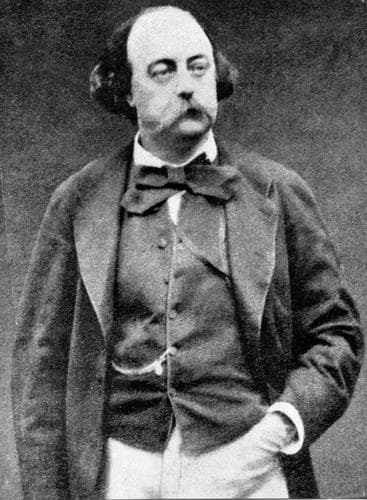
Gustave Flaubert was a French novelist. He has been considered the leading exponent of literary realism in his country and abroad. According to the literary theorist Kornelije Kvas, "in Flaubert, realism strives for formal perfection, so the presentation of reality tends to be neutral, emphasizing the values and importance of style as an objective method of presenting reality". He is known especially for his debut novel Madame Bovary (1857), his Correspondence, and his scrupulous devotion to his style and aesthetics. The celebrated short story writer Guy de Maupassant was a protégé of Flaubert.

Ashley Antoinette
4.6

Mark McDonald
4.4
Luo Guanzhong
4.4

Mia McKenzie
4.3

Dorothy Parker
4.3

Joaquim Maria Machado de Assis
4.3

James Thurber
4.2

Terry Kay
4.2