“I have traversed the world in the search, and no one, to gain that world, would lose his own soul!”
— Melmoth's lament about his futile search for someone to take his cursed bargain.


Charles Maturin (2022)
Genre
Fiction
Reading Time
1200 min
Key Themes
See below
Sign in to track this book
A damned scholar roams the earth for 150 years, desperately seeking a soul desperate enough to inherit his infernal pact and free him from eternal damnation.
The novel opens in 1816 with John Melmoth, a poor but studious theology student, returning to his dying uncle's estate in rural Ireland. His uncle, also named Melmoth, is obsessed with a portrait of a distant ancestor, a 'Melmoth the Wanderer,' dated 1646. After his uncle's death, John discovers a hidden compartment containing an ancient manuscript in Spanish and a letter from his uncle, warning him about the portrait and its subject. The manuscript, written by a shipwrecked English sailor named Stanton, describes his encounters with the mysterious Wanderer in a Spanish monastery, where he was tormented by visions and the Wanderer's unsettling presence. John, at first doubtful, becomes increasingly disturbed by the portrait's gaze and the manuscript's suggestions of a supernatural deal.
The first major story within the manuscript is Stanton's. While traveling in Spain, Stanton falls ill and is confined to a monastery that also serves as an asylum. There, he repeatedly meets the enigmatic Melmoth the Wanderer, who appears and disappears at will, seemingly unaffected by time or physical barriers. Melmoth tries to tempt Stanton with an offer: to take on Melmoth's deal with the devil in exchange for power and extended life, thus freeing Melmoth from his torment. Stanton, horrified by Melmoth's cynical view of humanity and his clear despair, refuses, enduring psychological torture and seeing the Wanderer's supernatural abilities before escaping the monastery, forever haunted by the encounter.
John Melmoth then starts reading a much longer, more complex manuscript within Stanton's papers, detailing the life of a Spanish nobleman, Don Monçada. Monçada, a young man, is forced into a monastery by his family to prevent him from marrying a woman they find unsuitable. He experiences the realities of monastic life, including harsh discipline, hypocrisy, and intellectual stagnation. During his confinement, Monçada often meets Melmoth the Wanderer, who appears to him in moments of crisis, trying to persuade him to accept the pact. Monçada eventually escapes the monastery with the help of a Jewish physician, Adonijah, and starts a dangerous journey, facing persecution from the Inquisition.
Monçada's narrative includes the story of Walberg and his family, a good German Protestant couple reduced to poverty. Melmoth appears to them, offering great wealth and relief from their suffering if Walberg will take on the pact. Walberg, despite his family's destitution and the death of his children, refuses, keeping his faith. This section also introduces Immalee (later known as Isidora), a 'child of nature' raised alone on an island in the Indian Ocean. Melmoth discovers Immalee, educates her, and eventually marries her, despite the spiritual implications of their union and her innocence. He seeks to break her spirit and tempt her into accepting his pact.
Immalee, now Isidora, travels to Spain with Melmoth. Her pure, innocent nature clashes with the corrupt society and the strict doctrines of the Catholic Church. Their marriage, performed by Melmoth himself without official permission, is seen as sacrilegious. Isidora becomes pregnant, and her brother, Don Ferdinando, tries to 'rescue' her from Melmoth, believing her to be a victim of a sorcerer. She is eventually imprisoned by the Inquisition for heresy and witchcraft, suffering greatly. Despite Melmoth's attempts to break her will and offer her freedom in exchange for the pact, Isidora refuses, choosing spiritual salvation over worldly relief, even as her child dies in prison.
Another embedded story focuses on Elinor Mortimer and John Sandal, a devout Puritan couple in England during the English Civil War. They face religious persecution and personal tragedies, including the loss of their children. Melmoth appears to them in their deepest despair, offering them a way out of their suffering if they will take his place in the pact. He preys on their weaknesses, showing the hypocrisy and cruelty of the religious groups around them. Despite their great pain and the appeal of Melmoth's offer, both Elinor and John Sandal refuse to sacrifice their souls, showing the strength of their faith and moral conviction.
Monçada's narrative is further interrupted by the story of Adonijah, the Jewish physician who helped him escape the monastery. Adonijah recounts the persecution of his family and other Jews by the Spanish Inquisition, ending in a public auto-da-fé where many are burned. During these events, Melmoth the Wanderer is often a silent observer, sometimes seeming to help the persecuted, but always with the goal of finding someone desperate enough to accept his pact. Adonijah's story highlights the widespread suffering and injustice in the world, which Melmoth uses as chances for his cursed quest.
Among the many tales, Monçada also tells the story of Guzman's Daughter, a young woman forced into a bad marriage with a madman. Her life is a long agony of psychological torment and physical abuse, made worse by the social limits of her time. Melmoth appears to her, offering her release from her suffering if she accepts his pact. He emphasizes the uselessness of her existence and the absence of divine help. Despite her extreme distress, she also refuses Melmoth's offer, holding onto her faith and a hope for eventual spiritual peace, even when despair is constant.
After Monçada finishes his long narrative, John Melmoth and Monçada are still together. Suddenly, Melmoth the Wanderer appears in John's room, having returned to his ancestral home after 150 years of wandering. He is tired and tormented, his time nearly up. He confesses the full horror of his pact: that he sold his soul for extended life, but only if he could find someone to take his place. Having failed, he must now face his damnation. He describes the horrors of his coming fate, the torment he has endured and will continue to endure, and the futility of his search for a replacement.
Melmoth the Wanderer retreats to a hidden, inaccessible part of the house, forbidding John and Monçada from following him. They hear terrifying sounds of struggle and despair throughout the night – shrieks, groans, and the sounds of a body being dragged away. In the morning, they discover the room ransacked and empty, with a single, muddy footprint leading towards the sea. The Wanderer's body is never found, suggesting his soul has been claimed by the devil and his physical form destroyed. John Melmoth, having inherited the estate and the dreadful knowledge, decides to destroy the portrait and the manuscripts, hoping to end the curse and prevent anyone else from being tempted by the Wanderer's story.
The Antagonist/Cursed Protagonist
He begins as a man seeking knowledge and extended life, becomes a tormented tempter, and ultimately faces his eternal damnation having failed to find a replacement.
The Protagonist
Starts as an academic skeptic, becomes a horrified witness to supernatural evil, and concludes by rejecting his family's dark legacy.
The Supporting/Narrator
From naive nobleman to persecuted monk, then a wandering witness to suffering, maintaining his faith despite constant temptation.
The Supporting/Victim
Transforms from an innocent 'child of nature' to a persecuted, tragic figure, steadfastly maintaining her faith in the face of immense suffering.
The Supporting/Narrator
From curious traveler to psychologically tormented witness, forever haunted by the Wanderer.
The Supporting
A survivor of persecution who offers aid to others, representing resilience and compassion amidst widespread cruelty.
The Supporting/Victim
Endures extreme suffering while maintaining his unwavering faith, rejecting Melmoth's temptation.
The Supporting/Victim
Suffers persecution and loss, yet remains steadfast in her Puritan faith, rejecting Melmoth's offer.
The Supporting/Victim
Endures persecution and loss alongside his wife, maintaining his Puritan faith and rejecting Melmoth's offers.
The Supporting/Victim
Lives a life of profound suffering, yet refuses Melmoth's ultimate temptation, maintaining her spiritual integrity.
The main theme is Melmoth's deal with the devil for extended life and his quest to find someone to take his place. This theme explores temptation, the appeal of forbidden knowledge and power, and the cost of sacrificing one's soul. Melmoth consistently preys on individuals in their deepest despair, offering them relief from suffering in exchange for eternal damnation. The repeated refusal of his victims, even facing torture, poverty, and loss, shows the novel's focus on spiritual integrity over worldly gain, as seen in the steadfastness of Walberg, Isidora, and Monçada.
“''Take my place, and I will give thee what thou wilt – wealth, power, length of days; and thou shalt be as I am, but without my curse.''”
The novel is full of descriptions of human suffering: religious persecution by the Inquisition, the strictness of monastic life, extreme poverty, mental illness, and the loss of loved ones. Melmoth the Wanderer uses this despair, seeking those whose suffering is so deep they might trade their souls for release. The detailed accounts of torture, imprisonment, and social injustice across different times and cultures show the commonness of human misery. They also serve as a background for the characters' moral choices. The book suggests that even in the darkest moments, hope and faith can last.
“''To be alone in the universe, is to be alone in hell!''”
Maturin, an Anglican clergyman, criticizes the abuses of organized religion, especially Catholicism and the Spanish Inquisition. The novel clearly shows the cruelty, fanaticism, and hypocrisy of monastic life and the Inquisition's courts, through Monçada's narrative and Adonijah's story of Jewish persecution. Priests are shown as corrupt, monks as cruel, and religious institutions as tools of oppression rather than salvation. This theme highlights the suffering caused in the name of God and contrasts it with true faith, which often gives characters the strength to resist Melmoth's temptations, as shown by the piety of Walberg and the Puritan couple, Elinor and John Sandal.
“''The Inquisition, as if to mock the God of mercy, had converted the temple of his worship into a dungeon, and his altar into a rack.''”
The novel constantly explores the lines between good and evil, not just through Melmoth's pact, but also through the moral choices of his victims. Melmoth represents a cynical, negative view of humanity, believing that all souls have a price when pushed to the edge of despair. However, most characters consistently refuse his offer, even under extreme difficulty. This shows the lasting power of human goodness, faith, and the will to resist ultimate corruption. The stories show that true evil is not just a supernatural pact, but also the everyday cruelties humans inflict on each other, and that true good is found in steady spiritual integrity.
“''What is the most terrible thing in the world? Is it not the power of man over man?''”
Melmoth's extended life is not a blessing but a curse, showing that immortality without a soul or true human connection leads to deep isolation and torment. He is condemned to wander the earth, a detached observer of human suffering, unable to truly connect or feel empathy, except as a way to his goal. His long life means he outlives everyone he knows, seeing generations and empires rise and fall, which only deepens his despair. This theme suggests that life's meaning is found in its limited nature and in human relationships, and that an existence without these is a form of hell.
“''I am doomed to wander through the world, an outcast from humanity, a stranger to the joys and sorrows of my kind.''”
A story within a story structure, creating multiple layers of narration.
The novel utilizes a complex frame narrative. John Melmoth's discovery of his uncle's will and Stanton's manuscript forms the outermost frame. Within Stanton's manuscript is the much longer and more intricate narrative of Don Monçada, which itself contains numerous embedded tales, such as those of Walberg, Isidora, Elinor Mortimer, John Sandal, Adonijah, and Guzman's Daughter. This layered structure allows Maturin to present a vast panorama of human suffering across different times and places, emphasizing the pervasive nature of Melmoth's influence and the universality of his temptations.
A literary archetype of an immortal figure condemned to roam the earth.
Melmoth the Wanderer is a direct adaptation of the Wandering Jew archetype. Like the legendary figure, Melmoth is cursed with immortality and condemned to wander the earth, a solitary and tormented observer of human history. However, Maturin's Melmoth differs by actively seeking to transfer his curse, rather than simply enduring it. This motif emphasizes themes of eternal punishment, isolation, and the burden of extended life, grounding the supernatural elements in a recognizable literary tradition of figures condemned by divine or infernal judgment.
The use of dark, oppressive, and isolated settings to evoke fear and dread.
Maturin masterfully employs Gothic elements to create a pervasive atmosphere of dread and psychological terror. Settings like the decaying Irish estate, the tyrannical Spanish monastery, the dungeons of the Inquisition, and isolated islands contribute to the novel's dark mood. These environments are not merely backdrops but active participants in the characters' suffering, symbolizing confinement, moral decay, and the forces of oppression. The frequent use of shadows, secrets, and the supernatural appearance of Melmoth in these settings heightens the sense of horror and despair.
Focus on mental torment and the internal struggles of characters.
Beyond external persecutions, the novel delves deep into psychological horror. Melmoth's primary method of temptation is not physical coercion but mental torture, preying on the deepest fears and despair of his victims. He offers release from mental anguish, isolation, and the fear of damnation. Characters like Stanton and Isidora endure profound psychological torment, battling their own minds as much as external forces. This focus on internal suffering makes the stakes of Melmoth's bargain intensely personal and emphasizes the strength of will required to resist his insidious offers.
A narrator whose account may be biased or incomplete, adding layers of ambiguity.
While not entirely unreliable in the traditional sense, Monçada's narrative is presented as an extensive, often rambling account, colored by his own experiences and biases. His stories are not always linear and are sometimes interrupted or supplemented by other characters' accounts. This contributes to the sprawling, almost chaotic feel of the novel, reflecting the fragmented nature of truth and experience. The sheer volume and subjective nature of his tales, passed down through generations, add to the sense of mystery and the difficulty of discerning absolute truth, particularly regarding the fantastical elements of Melmoth's appearances.
“I have traversed the world in the search, and no one, to gain that world, would lose his own soul!”
— Melmoth's lament about his futile search for someone to take his cursed bargain.
“The mind is its own place, and in itself can make a heaven of hell, a hell of heaven.”
— A reflection on psychological torment, echoing Milton's Paradise Lost.
“I am not mad—most surely do I not dream; yet I will cling to the hideous vision that makes me what I am.”
— A character grappling with horrific reality and sanity.
“The past is a sepulchre, and I have buried there all that could make life desirable.”
— Melmoth reflecting on his lost humanity and regrets.
“There is no crime which man may not commit, when he is once assured that his soul is forfeited.”
— Observation on moral degradation under despair.
“The wanderer is abroad, and the graves are yielding up their dead.”
— Gothic imagery evoking supernatural horror and unrest.
“In solitude, where we are least alone, I have held communion with the darkest thoughts of my heart.”
— A character's introspection in isolation.
“Hope is the most treacherous of all human fancies; it is the last to leave us, and the first to betray.”
— Cynical view on hope amidst suffering.
“The clock of eternity has struck, and I am doomed to hear it forever.”
— Melmoth's perception of his endless cursed existence.
“Man is not made to be alone; and when he is so, he becomes either a god or a devil.”
— Commentary on isolation's effects on human nature.
“The light of heaven is as darkness to me, and the joys of earth are turned into bitterness.”
— Expression of spiritual and worldly despair.
“I have seen the universe as a vast prison, and myself as the only prisoner.”
— Melmoth's existential view of his cursed state.
“Fear is the mind's most potent enemy, and I have learned to live in its constant shadow.”
— Reflection on the psychological impact of fear.
“The curse of immortality is to see all you love turn to dust, while you remain unchanged.”
— Melmoth on the sorrows of his endless life.
Ready to see how well you understood this book? Take our interactive quiz with 10 questions.
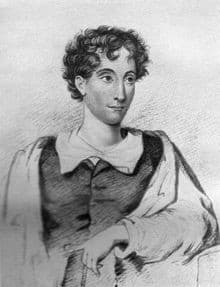
Charles Robert Maturin, also known as C. R. Maturin, was an Irish Protestant clergyman and a writer of Gothic plays and novels. His best known work is the novel Melmoth the Wanderer.

Ashley Antoinette
4.6

Mark McDonald
4.4
Luo Guanzhong
4.4

Mia McKenzie
4.3

Dorothy Parker
4.3

Joaquim Maria Machado de Assis
4.3

James Thurber
4.2

Terry Kay
4.2