“Of all creatures that have life and reason, we women are the most miserable.”
— Medea laments the plight of women in Corinth.

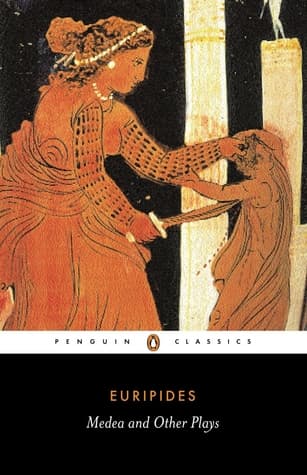
Euripides (1703)
Genre
Fiction
Reading Time
180 min
Key Themes
See below
Sign in to track this book
When gods stay silent, Euripides shows the raw human rage of betrayed queens and vengeful daughters as they break society's rules to get their horrific justice.
The play starts in Corinth, where Medea's Nurse expresses sorrow over her mistress's situation. Medea, a sorceress and Colchis princess, married Jason after helping him get the Golden Fleece, then fled with him to Iolcus and then Corinth. Jason has now left Medea and their two sons to marry Glauce, King Creon of Corinth's daughter. The Nurse fears Medea's unpredictable and vengeful nature, knowing her deep anger and potential for destructive acts. She hears Medea's cries of pain from inside the palace, cursing Jason and wishing death on her children and herself, hinting at the terrible events to come.
King Creon, seeing Medea's dangerous nature and her reputation as a sorceress, arrives at Medea's house and orders her immediate exile from Corinth, along with her children. He fears she will take revenge on Glauce, Jason, or himself. Medea, pretending to be humble and tearful, asks for one day's delay, claiming she needs time to arrange for her children's future. Creon, despite his initial resolve, is persuaded by her pleas and grants her the extension, a decision that will prove deadly. This short delay gives Medea the time she needs to plan her terrible revenge.
Jason confronts Medea, trying to explain why he left her. He claims his marriage to Glauce is not for love, but a strategic move to secure a better future for their sons and improve their family's social standing in Corinth. He accuses Medea of being overly emotional and unreasonable, blaming her for her own troubles due to her temper and outspokenness. Medea, however, strongly reminds him of the many sacrifices she made for him: betraying her father, killing her brother, and helping him steal the Golden Fleece. She points out his ingratitude and deep betrayal, calling his justifications empty and selfish.
Aegeus, the childless King of Athens, comes across Medea's house while returning from the Oracle of Delphi. Medea, taking the chance, tells him her plight and cleverly manipulates him by promising to use her magic to help him have an heir. In return, she secures an oath from him to give her refuge in Athens, guaranteeing her a safe place after she carries out her revenge. This promise of safety removes Medea's last obstacle, letting her proceed with her plan without fear of immediate punishment or homelessness, sealing her victims' fate.
With her escape route secured, Medea begins her horrifying plan. She pretends to reconcile with Jason, asking him to let their sons stay in Corinth. As a sign of goodwill, she sends the children to Glauce with seemingly beautiful gifts: a finely woven gown and a golden coronet, both filled with deadly poison. Jason, unaware of her true intentions, is easily convinced and sends the boys to the palace. The Chorus expresses its dread and sorrow, seeing the coming disaster and Medea's firm resolve to make Jason suffer as much as possible.
A messenger rushes to Medea's house, telling of the horrific deaths at the palace. Glauce, delighted with the gifts, puts on the gown and coronet. The poisons immediately start to work, causing her flesh to melt and her hair to catch fire. King Creon, rushing to save his daughter, embraces her and gets caught in the poisoned garment, suffering the same painful death. The messenger describes the gruesome scene in detail, showing the extreme pain and irreversible nature of Medea's revenge. Medea, hearing the news, remains unrepentant, her resolve stronger.
Despite her initial hesitation and a brief moment of maternal pain, Medea firmly decides to complete her revenge by killing her own sons. She knows this will cause her immense pain, but her desire to make Jason suffer greatly, by taking away his lineage and future, overrides her love for her children. She enters the house, and the children's cries are heard by the horrified Chorus. When Jason arrives, frantic and wanting to protect his sons, he finds them dead. Medea appears above the stage in a dragon-drawn chariot, holding her children's bodies.
Medea, in a divine chariot sent by her grandfather, the Sun God, confronts Jason, gloating over her successful revenge. She refuses to let him bury their children, stating she will take their bodies to Hera Akraia's shrine, ensuring they receive proper burial rites and protecting them from their enemies. Jason is left utterly destroyed, his life and legacy gone. He curses Medea and his own fate, lamenting the loss of his family and the future he imagined. Medea leaves for Athens, leaving Jason to face a desolate life, his ambition and betrayal having led to his ultimate ruin.
After Troy's fall, Hecuba, once a powerful queen, is now a slave. Achilles' ghost appears, demanding the sacrifice of Polyxena, Hecuba's virgin daughter, at his tomb to appease his spirit. Odysseus arrives to take Polyxena, and despite Hecuba's desperate pleas, Polyxena bravely accepts her fate, choosing a dignified death over slavery. She is led away and nobly sacrifices herself, showing the tragic results of war and lost innocence. Hecuba is left to grieve, her suffering growing with each new loss.
As Hecuba prepares for Polyxena's burial, a slave woman brings her the body of her youngest son, Polydorus. During the Trojan War, Polydorus had been sent to King Polymestor of Thrace with gold for safekeeping. Polymestor, driven by greed, murdered Polydorus after Troy's fall and threw his body into the sea. This discovery pushes Hecuba to her breaking point. The loss of her last surviving son, coupled with Polymestor's betrayal, sparks a fierce desire for revenge within her, turning her grief into burning rage.
Hecuba, consumed by her desire for vengeance, asks Agamemnon for justice. With Agamemnon's quiet approval, she lures Polymestor and his two sons into her tent by pretending to reveal hidden Trojan gold. Once inside, Hecuba, with the help of the Trojan women, blinds Polymestor and kills his sons. The horrific act happens offstage, but Polymestor's screams show the brutality of the revenge. Hecuba's change from a grieving mother to a ruthless avenger is complete, showing how suffering can corrupt and how cruel humans can be.
Years after their father Agamemnon's murder by their mother Clytemnestra and her lover Aegisthus, Electra lives in poverty, forced to marry a peasant by Aegisthus to stop her from having noble children who might seek revenge. Her brother, Orestes, returns to Argos in disguise, with his friend Pylades, sent by the Oracle of Delphi to avenge his father. After subtle clues and a dramatic reveal, Electra recognizes Orestes. Their shared grief and desire for revenge unite them in a plan to kill their mother and Aegisthus.
Orestes ambushes and kills Aegisthus while he is sacrificing to the Nymphs, bringing his body back to the house. Electra then lures Clytemnestra to her home by falsely claiming to have just given birth. When Clytemnestra arrives, Orestes, after a moment of hesitation, stabs her. The matricide is a deeply disturbing act, and both Orestes and Electra are immediately filled with guilt and the horror of what they have done. They are left with the burden of their actions, their vengeance complete but their peace shattered.
While Heracles is in the Underworld finishing his final labor, the tyrant Lycus has taken the throne of Thebes and plans to murder Heracles' wife, Megara, and their three sons to remove any future claim to power. Megara and Amphitryon, Heracles' mortal father, are in despair, preparing for their deaths. Just as Lycus is about to execute them, Heracles miraculously returns from the Underworld, having successfully completed his labors. His arrival is a moment of triumph and relief, as he quickly kills Lycus, restoring order and protecting his family.
Despite Heracles' victory over Lycus, the goddess Hera, who deeply hates Heracles, sends Lyssa (Madness) to afflict him. In a fit of divine-induced insanity, Heracles mistakes his wife Megara and their sons for Eurystheus's family, his tormentor, and brutally murders them. When he awakens from his madness, he is horrified and overwhelmed by grief and guilt, realizing the monstrous deeds he has done. His friend Theseus arrives and stops Heracles from taking his own life, offering him comfort and a way to make amends in Athens.
The Protagonist/Antagonist
Medea transforms from a grieving, abandoned wife into a cold, calculated avenger, culminating in the horrific murder of her own children to punish Jason.
The Antagonist
Jason begins as a seemingly noble hero but is revealed to be a calculating, self-serving individual who loses everything due to his betrayal and lack of foresight.
The Protagonist
Hecuba transforms from a despairing, grieving queen into a vengeful, cunning woman who exacts brutal retribution for her son's murder.
The Protagonist
Electra's life is defined by her quest for vengeance, which she achieves but is left to grapple with the moral implications and consequences of her actions.
The Protagonist
Orestes fulfills his divine command to avenge his father but is immediately plagued by guilt and the consequences of matricide.
The Protagonist
Heracles experiences a brief moment of triumph before being afflicted by divine madness, leading him to commit unimaginable acts and leaving him shattered by guilt.
The Antagonist
Clytemnestra, having committed regicide and matricide, faces her own death at the hands of her children, completing a cycle of familial violence.
The Supporting
Creon's initial caution is undermined by a moment of pity, leading directly to his horrific death and the destruction of his family.
The Antagonist
Polymestor's greed leads him to betray Hecuba, resulting in his brutal blinding and the murder of his own children as Hecuba's revenge.
The plays explore how destructive revenge is, asking if it brings true justice or just continues violence. Medea's planned and terrible child murder directly responds to Jason's betrayal, destroying both him and her. Hecuba's blinding of Polymestor and murder of his sons, though caused by extreme betrayal, turns her into a monstrous figure. Similarly, Electra and Orestes' mother-killing, though approved by gods, leaves them tormented. Euripides shows that while revenge might feel good, it often leads to more suffering and moral decay, blurring the lines between victim and attacker. The plays suggest that human justice, when driven by passion, often escalates to extreme cruelty, worse than the original offense.
“What woman is there in the world who would not seek to repay a husband who betrayed her?”
Euripides often highlights the deep suffering and low status of women in ancient Greek society. Medea, as a foreign woman, is especially vulnerable to Jason's betrayal and the exile order, which takes away all her security. Her extreme actions can be seen, in part, as a desperate attempt to act in a world that denies women power. Hecuba's journey from queen to slave, enduring Polyxena's sacrifice and Polydorus's murder, embodies the ultimate degradation and sorrow war inflicts on women. Electra's forced marriage and poor life further illustrate how uncertain women's lives were. These women, stripped of power and dignity, are driven to extreme acts to regain some control or justice.
“Of all creatures that have life and understanding, we women are the most unfortunate.”
Betrayal is a main cause for the tragic events in these plays. Jason's betrayal of Medea is the main trigger for her horrific revenge, leading to the deaths of his new bride, her father, and his own children. Polymestor's betrayal of Hecuba's trust by murdering her son Polydorus for gold fuels Hecuba's change into a ruthless avenger. In Electra, Agamemnon's initial betrayal by Clytemnestra and Aegisthus starts the whole cycle of vengeance. Euripides shows that betrayal, whether personal, political, or familial, shatters trust and unleashes a series of destructive consequences, often far worse than the original offense and consuming everyone involved.
“Oh, what a bitter thing it is to be betrayed by those one loves!”
The plays explore the complex interaction between the gods' will and human choice. While divine figures (Hera in Heracles, Apollo's oracle in Electra, Helios' chariot in Medea) often influence or start events, the characters themselves make crucial decisions that drive the tragedy. Medea chooses her path of vengeance, even against her maternal instincts. Orestes struggles with the moral implications of killing his mother despite the divine command. Heracles is a victim of Hera's malice, yet his subsequent grief and despair are intensely human. Euripides suggests that while the gods may set the stage, human passions, flaws, and decisions ultimately determine the horrifying outcomes, leaving characters to deal with the deep and often devastating consequences of their actions.
“For the gods often lift up to the heights those whom they wish to destroy, and then cast them down.”
Extreme suffering and loss are shown to corrupt and change people, driving them to acts they might otherwise never commit. Medea's deep grief and anger over Jason's betrayal turn into a cold, calculated desire for vengeance that overrides her maternal love. Hecuba, stripped of her family and status, is completely dehumanized by her losses, turning into a cunning and brutal avenger against Polymestor. Even Heracles, a noble hero, is driven to madness and child murder by divine persecution. Euripides illustrates how overwhelming pain can erode morality, turning victims into perpetrators and continuing cycles of violence and despair, leaving characters permanently changed and often morally bankrupt.
“What grief is there that is not mine? What sorrow that I have not known?”
A seemingly insoluble problem is suddenly resolved by an unexpected and unlikely intervention.
This device is most prominently used in 'Medea' when Medea escapes in a chariot sent by her grandfather, the Sun God Helios. This allows her to evade punishment and further taunt Jason, providing a supernatural resolution to her escape from Corinth. In 'Heracles', the arrival of Theseus, though not divine, functions similarly by preventing Heracles' suicide and offering him a path forward after his horrific act. Euripides uses it to conclude plays, sometimes abruptly, leaving the audience to ponder the implications of divine interference in human affairs and the limitations of human justice.
A character recounts off-stage violence or important events in vivid detail.
Euripides frequently employs messenger speeches to describe violent or climactic events that occur offstage, such as the gruesome deaths of Glauce and Creon in 'Medea' or the murder of Aegisthus in 'Electra'. This device prevents the staging of graphically violent scenes (which was uncommon in Greek theater) while simultaneously heightening the dramatic impact through the messenger's emotional and detailed narration. It allows the audience to imagine the horror, often making the descriptions more impactful than a visual representation, and provides crucial plot information from a seemingly objective perspective.
The audience possesses knowledge that characters do not, creating tension and foreshadowing.
Dramatic irony is a powerful tool in these plays. In 'Medea', the audience is aware of Medea's true intentions when she pleads for an extra day of exile and sends 'gifts' to Glauce, while Creon and Jason remain tragically oblivious. This creates immense tension as the audience anticipates the inevitable catastrophe. Similarly, in 'Hecuba', the audience knows of Polydorus's murder before Hecuba discovers his body, intensifying her grief. This device underscores the characters' vulnerability and highlights the tragic inevitability of their fates, often making their choices seem all the more poignant or foolish.
A divine prediction that dictates or influences character actions and plot progression.
The Oracle's prophecy plays a significant role, particularly in 'Electra' and 'Heracles'. In 'Electra', Orestes is commanded by the Oracle of Apollo to avenge his father, providing him with a divine justification (and burden) for matricide. In 'Heracles', the hero's labors are a result of Hera's wrath and divine decrees. While not always explicit, these prophecies often set the overarching framework for the characters' destinies, even as they grapple with their own agency within those divine parameters. They emphasize the role of fate and the gods in shaping human lives, even if the execution of those fates is left to human hands.
“Of all creatures that have life and reason, we women are the most miserable.”
— Medea laments the plight of women in Corinth.
“It is best to live life as if it were a play, and to leave at the end with a bow.”
— A general reflection on life's brevity and performance.
“For there is no more terrible woe for men than the loss of a loved one.”
— Chorus reflecting on the pain of loss.
“There is no trust to be placed in a man who is a friend only in words.”
— Medea's bitter observation on false friendships.
“When love is in excess, it brings a man no honor, nor any worthiness.”
— Chorus commenting on the destructive nature of uncontrolled passion.
“The gods visit the sins of the fathers upon the children.”
— A recurring theme in Greek tragedy, here in the context of inherited guilt.
“Happy is the man who gains wisdom, happy he who does not walk in the path of evil.”
— A moralistic reflection on the pursuit of virtue.
“What cannot be cured must be endured.”
— A stoic acceptance of unavoidable suffering.
“No one ever is at peace in the presence of a woman who has suffered wrong.”
— Chorus's warning about the danger of a wronged woman's wrath.
“For there is no more terrible woe for men than the loss of a loved one.”
— Chorus reflecting on the pain of loss.
“The wise man does not try to avoid the inevitable, but prepares for it.”
— A philosophical stance on facing destiny.
“It is not for mortals to command the gods.”
— A reminder of humanity's place in the cosmic order.
“The deadliest of all evils is a woman scorned.”
— A common sentiment reflecting fear of a woman's revenge.
“When a man's life is in ruins, he loses all respect for himself.”
— Observation on the psychological impact of personal disaster.
“To err is human; to persist in error is diabolical.”
— A reflection on human fallibility and the danger of obstinacy.
Ready to see how well you understood this book? Take our interactive quiz with 10 questions.
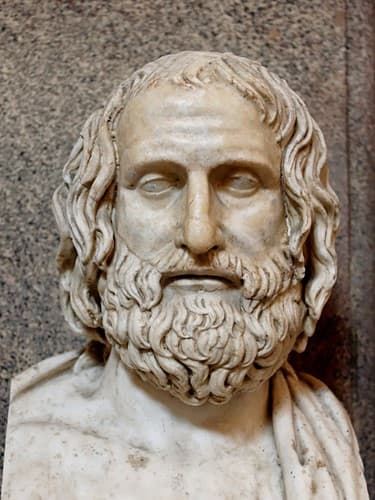
Euripides was a tragedian of classical Athens. Along with Aeschylus and Sophocles, he is one of the three ancient Greek tragedians for whom any plays have survived in full. Some ancient scholars attributed ninety-five plays to him, but the Suda says it was ninety-two at most. Of these, eighteen or nineteen have survived more or less complete. There are many fragments of most of his other plays. More of his plays have survived intact than those of Aeschylus and Sophocles together, partly because his popularity grew as theirs declined—he became, in the Hellenistic Age, a cornerstone of ancient literary education, along with Homer, Demosthenes, and Menander.

Ashley Antoinette
4.6

Mark McDonald
4.4
Luo Guanzhong
4.4

Mia McKenzie
4.3

Dorothy Parker
4.3

Joaquim Maria Machado de Assis
4.3

James Thurber
4.2

Terry Kay
4.2