BookBrief
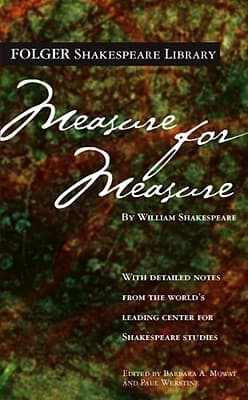
Measure for Measure cover
Archivist's Choice

Measure for Measure

William Shakespeare (1700)

Genre

Fiction

Reading Time

12 Minutes

Key Themes

See below

Track Your Reading

Sign in to track this book

A novice nun must defend her chastity against a corrupt deputy when he demands sex in exchange for her brother's life, all under the watchful, disguised eye of the absent duke.

Synopsis

In Vienna, Duke Vincentio feigns absence, entrusting his authority to the puritanical Angelo, who immediately condemns Claudio to death for premarital sex. Claudio's sister, Isabella, a novice nun, pleads for his life, only for Angelo to demand her chastity in exchange. Unbeknownst to them, the Duke, disguised as a friar, manipulates events from the shadows, orchestrating a complex scheme involving mistaken identities, bed tricks, and public shaming to expose Angelo's hypocrisy, save Claudio, and ultimately restore order and justice to his city, while also proposing marriage to Isabella.
Difficulty
Medium
Pacing
Moderate
Mood
Dark, Ironic, Thought-provoking, Morally complex

Plot Summary

The Duke's Departure and Angelo's Rise

Duke Vincentio of Vienna announces he will leave the city, giving control to his deputy, Angelo, a man known for severe piety and strict morals. Vincentio claims he needs to travel but secretly stays in Vienna, disguised as a friar named Lodowick, to watch Angelo's rule and the city's condition. He believes his own loose enforcement of laws caused moral decline and wants to see if Angelo's strictness can reform the people. Escalus, an older, more moderate counselor, is appointed to help Angelo, but Angelo quickly takes charge and ignores Escalus's pleas for leniency.

Claudio's Condemnation

Angelo, determined to prove his strictness and reform Vienna, immediately targets Claudio, a young man who impregnated his fiancée, Juliet, before marriage. Even though they plan to marry and are legally 'contracted,' Angelo uses an old, unused law against fornication, sentencing Claudio to public execution the next day. This harsh judgment shocks the city, showing Angelo's unforgiving nature. Claudio's friend, Lucio, a witty but talkative man, is horrified by the severity and decides to find help for Claudio, knowing his sister, Isabella, is about to join a convent.

Isabella's Plea

Lucio visits Isabella, a virtuous novice about to take her vows, to tell her about Claudio's situation and beg her to speak to Angelo. Initially hesitant because of her humility and sacred calling, Isabella eventually agrees, driven by love for her brother. She goes to Angelo, passionately arguing for mercy, emphasizing that humans make mistakes and that forgiveness is divine. Angelo, at first unyielding, starts to feel a strange, strong attraction to Isabella's purity and words, which he struggles to reconcile with his strict moral image. He dismisses her, telling her to return the next day.

Angelo's Temptation

When Isabella returns, Angelo reveals his true, corrupt intentions. He tells her he will spare Claudio's life only if she gives up her virginity to him. Isabella is horrified and outraged by this offer, seeing it as a monstrous twisting of justice and morality. She firmly refuses, saying she would rather see her brother die than sacrifice her honor. Angelo, confident in his power and her inability to expose him without incriminating herself, dismisses her, leaving her in despair. He believes his reputation is unassailable and that no one would believe her accusations against him.

Isabella Informs Claudio

Distraught, Isabella visits Claudio in prison to tell him about Angelo's vile proposal. She expects him to support her decision to protect her chastity. Claudio is at first resigned to his fate, but as Isabella describes the horror of Angelo's demand, a flicker of hope for life makes him waver. He begins to beg Isabella to sacrifice her honor, arguing that a momentary stain is better than death. Isabella is disgusted by his cowardice and selfishness, fiercely scolding him and declaring she would rather he die than she commit such a sin. The disguised Duke Vincentio overhears their talk.

The Duke's Intervention: The Bed Trick

The disguised Duke Vincentio, having overheard Isabella and Claudio, steps in to offer Isabella a solution. He reveals that Angelo was once engaged to a virtuous lady named Mariana but abandoned her when her dowry was lost at sea, claiming a flaw in her reputation. The Duke proposes a 'bed trick': Isabella should agree to Angelo's demand, but Mariana, still in love with Angelo, will secretly take Isabella's place in the dark. This plan aims to satisfy Angelo's lust, protect Isabella's virtue, and prove Angelo's hypocrisy, leading to his downfall and Mariana's restoration.

The Deception and Angelo's Duplicity

Isabella agrees to the Duke's plan and arranges to meet Angelo. Mariana, disguised and veiled, takes Isabella's place in the tryst. The bed trick works, with Angelo believing he has slept with Isabella. However, Angelo, fearing exposure and determined to cover his tracks, immediately breaks his promise. He sends orders to the prison for Claudio to be executed at once, demanding his head be sent to him, intending to eliminate any potential witness or source of future blackmail. The Provost, the prison keeper, is troubled by this sudden, cruel order.

The Provost's Dilemma and the Duke's Rescue

The Provost, knowing the Duke's original intention was mercy and troubled by Angelo's sudden harshness, hesitates to execute Claudio. He receives a letter from Angelo demanding Claudio's head by 4 AM. The disguised Duke, aware of Angelo's betrayal, intervenes. A pirate named Ragozine, who looks very much like Claudio, has died in prison of a fever. The Duke tells the Provost to send Ragozine's head to Angelo instead of Claudio's, saving Claudio's life while still fulfilling Angelo's demand for a head, thus buying more time to expose Angelo publicly. Claudio is kept hidden.

The Duke's Return and Public Accusations

The Duke, having arranged his 'return' to Vienna, prepares for a public hearing. He tells Isabella to publicly accuse Angelo, promising to support her claims. Isabella, Mariana (also veiled), and the disguised Duke (still in his friar's habit) await the Duke's arrival. When the Duke appears in his true identity, Isabella bravely steps forward to accuse Angelo of attempted sexual extortion and betrayal of justice. Angelo strongly denies the charges, confident that Isabella has no proof and that her story will be seen as madness. Mariana then steps forward, revealing her identity and the bed trick, further implicating Angelo.

Angelo's Exposure and Punishment

The Duke, still pretending to investigate thoroughly, at first acts as if he disbelieves Isabella and Mariana, even having the disguised Friar Lodowick (himself) arrested for slander. Lucio, unaware that the friar is the Duke, slanders the Duke, further digging his own grave. Eventually, the Duke reveals his true identity, shocking everyone, especially Angelo. Faced with undeniable evidence and the Duke's direct knowledge, Angelo confesses his guilt. The Duke sentences Angelo to marry Mariana and then to death, mirroring Claudio's original sentence, to show that justice is served according to the 'measure for measure' principle.

Mercy and Resolutions

Mariana, deeply in love, pleads with Isabella to speak for Angelo's life, and Isabella, showing great mercy, eventually does. The Duke, having tested their compassion, pardons Angelo, allowing him to live with Mariana. He then reveals that Claudio is alive, much to Isabella's joy and astonishment, and reunites him with Juliet. As the play ends, the Duke, having restored order and shown his wisdom, proposes marriage to Isabella, acknowledging her virtue and her role in exposing corruption. Lucio is punished for his slanders by being forced to marry a prostitute he impregnated. The play ends with a series of marriages and a renewed sense of justice and order in Vienna.

Principal Figures

Duke Vincentio

The Protagonist

He transitions from a seemingly passive ruler to an active, manipulative force, restoring order and justice to his city.

Angelo

The Antagonist

His character descends from esteemed virtue to exposed hypocrisy and moral depravity, ultimately facing judgment and mercy.

Isabella

The Protagonist

She evolves from a rigid defender of her chastity to a compassionate advocate for mercy and justice.

Claudio

The Supporting

His character undergoes a journey from despair and fear of death to relief and reunion.

Lucio

The Supporting

His character moves from irresponsible freedom to forced responsibility through marriage.

Mariana

The Supporting

From a heartbroken, abandoned woman, she is restored to her rightful place as Angelo's wife.

Escalus

The Supporting

He remains a consistent voice of reason and moderation throughout the play.

Provost

The Supporting

He serves as an instrument of the Duke's justice, demonstrating moral integrity under pressure.

Juliet

The Supporting

She endures imprisonment and the threat of loss, ultimately finding reunion and peace.

Themes & Insights

Justice vs. Mercy

This is the play's main conflict, shown through Angelo's strict law enforcement versus the Duke's more balanced approach. Angelo represents strict, unyielding justice, demanding the letter of the law even when mercy might be better. The Duke, however, eventually argues for balance, suggesting that true justice needs compassion and understanding of human flaws. The play questions whether absolute justice, without mercy, is truly fair, and ultimately argues for a kinder, more restorative form of government.

Hark how I'll bribe you: good my lord, turn back. / I have a brother is condemn'd to die: / I do beseech you, let it be your brother.

Isabella

Hypocrisy and Corruption of Power

The play examines how power corrupts and how outward virtue can hide inner depravity. Angelo, initially seen as a model of moral uprightness, quickly succumbs to his own lust and hypocrisy once given absolute authority. His actions show the dangerous gap between public image and private vice, demonstrating that even seemingly virtuous people can be corrupted by unchecked power. The Duke's disguise helps him expose this hypocrisy, showing that true leadership requires moral integrity, not just a facade.

O, what a tangled web we weave when first we practice to deceive!

Narrator (though often misattributed to Walter Scott, it captures the essence of Angelo's deceit)

Chastity and Sexual Morality

Chastity is a main theme, especially through Isabella's character. Her firm commitment to her virginity, even at the cost of her brother's life, shows the extreme value placed on female purity in the play's society. The play explores the double standards of sexual morality, where male transgressions (Claudio's fornication, Angelo's attempted rape) are treated differently from female virtue. It questions society's obsession with female chastity and its potential to be exploited or become a weapon for the powerful, while also celebrating Isabella's principled stand.

More than our brother is our chastity.

Isabella

Appearance vs. Reality

The theme of appearance versus reality is central to the Duke's disguise and Angelo's deception. The Duke's fake departure and his role as Friar Lodowick allow him to observe the true state of his city and the true character of his subjects, without their public performances. Angelo's virtuous exterior hides a corrupt and lustful interior, proving that outward appearances can be very misleading. The play constantly challenges the audience to look beyond surface presentations and consider the characters' underlying truths and motivations, exposing how easily deceit can flourish.

Hence shall we see, / If power change purpose, what our seemers be.

Duke Vincentio

Governance and Leadership

The play looks at different styles of governance and a ruler's responsibilities. The Duke's initial laxity caused moral decay, leading to his experiment with Angelo's strictness. Angelo's tyrannical application of law, without mercy, proves disastrous. The Duke's eventual return and his method of uncovering corruption show a more enlightened form of leadership—one that is observant, manipulates for good, and ultimately aims for restorative justice. The play suggests that effective governance requires a balance of authority, wisdom, and compassion, rather than extreme leniency or severity.

Lord Angelo is precise; / Stands at a guard with envy; scarce confesses / That his blood flows, or that his appetite / Is more to bread than stone.

Duke Vincentio

Plot Devices & Literary Techniques

Disguise

The Duke's hidden identity as Friar Lodowick.

The Duke's disguise as Friar Lodowick is the primary plot device. It allows him to move freely among his subjects, gather intelligence firsthand, and manipulate events without revealing his true identity or authority. This enables him to test Angelo's character, uncover his hypocrisy, and orchestrate the 'bed trick' and other interventions necessary to save Claudio and restore justice. The disguise functions as a tool for dramatic irony, as the audience is privy to the Duke's true role while other characters remain ignorant, leading to moments of tension and revelation.

The Bed Trick

Mariana's substitution for Isabella in a sexual encounter with Angelo.

The 'bed trick' is a classic Shakespearean device where one character secretly takes the place of another in a pre-arranged sexual encounter, usually in the dark. In 'Measure for Measure,' Mariana, Angelo's abandoned betrothed, replaces Isabella, satisfying Angelo's lust while preserving Isabella's chastity. This device is crucial for exposing Angelo's hypocrisy and ensuring justice without Isabella having to compromise her principles. It also serves to reunite Mariana with Angelo, albeit under coerced circumstances, highlighting themes of manipulation and conditional forgiveness.

The Head Trick

Substitution of a dead pirate's head for Claudio's.

The 'head trick' is a secondary but vital plot device orchestrated by the disguised Duke. When Angelo demands Claudio's head after the bed trick, the Duke arranges for the head of a recently deceased pirate, Ragozine, who resembles Claudio, to be sent to Angelo instead. This deception saves Claudio's life, buys the Duke more time to expose Angelo publicly, and further highlights Angelo's ruthless desire to cover his tracks. It also demonstrates the Duke's cunning and his commitment to ensuring justice without unnecessary loss of life.

Dramatic Irony

The audience's superior knowledge of the Duke's true identity.

Dramatic irony is pervasive throughout the play, largely due to the Duke's disguise. The audience is constantly aware of the Duke's true identity and his manipulative role, while most characters remain ignorant. This creates tension, suspense, and often dark humor, especially when characters like Lucio unwittingly slander the Duke to his face. This device allows the audience to anticipate revelations and appreciate the Duke's strategic genius, while also highlighting the characters' blindness to the true forces at play.

Critical analysis

Notable Quotes

Quiz

Test Your Knowledge

Ready to see how well you understood this book? Take our interactive quiz with 10 questions.

10
Questions
~5
Minutes
?
Best Score

Key Questions (FAQ)

Measure for Measure is a dark comedy that explores themes of justice, mercy, hypocrisy, and sexual morality. It centers on the strict enforcement of laws by the deputy Angelo, leading to a crisis when Claudio is condemned for premarital sex and his sister Isabella must navigate a morally complex situation to save him.

About the author

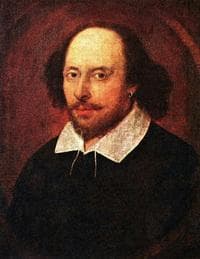
William Shakespeare

William Shakespeare was an English playwright, poet and actor. He is widely regarded as the greatest writer in the English language and the world's pre-eminent dramatist. He is often called England's national poet and the "Bard of Avon". His extant works, including collaborations, consist of some 39 plays, 154 sonnets, three long narrative poems, and a few other verses, some of uncertain authorship. His plays have been translated into every major living language and are performed more often than those of any other playwright. Shakespeare remains arguably the most influential writer in the English language, and his works continue to be studied and reinterpreted.