“I am a Javanese, and I have seen much.”
— Said by Saidjah, introducing his story.


Sign in to track this book
A Dutch idealist in 19th-century Java confronts the brutal hypocrisy of colonial rule and the corrupt coffee trade, sacrificing his own career to expose the systemic oppression of the native people.
The novel opens with Batavus Droogstoppel, a wealthy, self-important coffee broker in Amsterdam, introducing himself and his firm, Last & Co. He presents himself as a man of facts, figures, and commerce, uninterested in poetry or idealism. His main concern is the coffee trade from Java. He receives a manuscript from a former schoolmate, Scarfman (later revealed as Stern, the narrator), which he initially dismisses as useless for his business. Droogstoppel's chapters show his dry, materialistic view, repeating his belief in profit and his narrow view of the world, contrasting with the more compassionate narrative that follows.
Droogstoppel, finding the manuscript too 'poetic' for his taste, assigns his young German clerk, Stern, to rewrite it in a more business-oriented style. Stern, however, likes the story and begins to narrate the tale of Max Havelaar, often adding his own empathetic and imaginative voice, which annoys Droogstoppel. This shift introduces the main narrative, moving from the cold world of Dutch commerce to the vivid, often tragic, reality of colonial Java. Stern's narrative shows the injustices.
Stern's narrative introduces Max Havelaar, a new Assistant-Resident appointed to the district of Lebak in West Java. Havelaar is intelligent, charismatic, but somewhat impractical, committed to protecting the Javanese from oppression. He arrives with his wife, Tine, and their young son. Havelaar immediately senses tension and injustice in the region, noting the Javanese poverty despite the supposed prosperity of the Dutch colonial system. His first observations set the stage for his confrontation with the corrupt local regents and the Dutch administration.
Havelaar quickly finds widespread abuse of power by the local Javanese chiefs, especially the Regent of Lebak, who is the highest native authority. The Regent and his subordinates take goods, labor, and cattle from the common people (the 'dessamen') for personal gain, far exceeding traditional taxes and services. The Dutch colonial administration, despite official policies against such abuses, mostly ignores it, prioritizing stability and coffee production over justice. Havelaar is appalled by the suffering and decides to intervene, challenging the established order.
Driven by his conscience, Max Havelaar puts together detailed reports documenting the abuses by the Regent of Lebak and other chiefs. He sends these reports to his immediate superior, the Resident of Bantam, and eventually to the Governor-General in Batavia. However, his appeals are met with indifference, skepticism, and bureaucratic delays. His superiors, including Mr. Slymering and Mr. Duclari, care more about maintaining the status quo and avoiding scandal than about helping the Javanese. They accuse Havelaar of being overzealous, disruptive, and of misunderstanding the 'native character.'
Within Havelaar's struggle, Stern tells the story of Saïdjah and Adinda, two young Javanese lovers. Their lives are repeatedly ruined by the chiefs' arbitrary seizure of Saïdjah's buffaloes, making his family poor and forcing him to leave his village to find work. Each time Saïdjah returns, hoping to marry Adinda, he finds more hardship and loss. The story ends with their tragic deaths during a revolt in Lampung, where Dutch soldiers kill them. This narrative is an emotional counterpoint to the dry administrative reports, showing the human cost of the colonial system.
Frustrated by the lack of response, Havelaar travels to Batavia to present his case directly to the Governor-General. He gives an ultimatum: either the abuses in Lebak are addressed, and the Regent is punished, or he will resign. He believes justice will prevail if the highest authorities know. However, his earnestness is seen as insubordination and a threat to colonial stability. His superiors, unwilling to admit fault or disrupt the profitable coffee trade, side with the Regent and dismiss Havelaar's concerns as exaggerated or self-serving.
Facing an impenetrable wall of bureaucracy, self-interest, and a complete lack of support from the Dutch administration, Max Havelaar resigns from his post. His resignation ends his career as a civil servant in Java and his personal fight for justice within the system. He is left financially ruined and disillusioned, his idealism shattered by the reality of colonial power and corruption. His family also suffers because of his principled stand, showing the personal cost of challenging injustice.
At the novel's end, Multatuli (Eduard Douwes Dekker) takes over the narration from Stern. He dismisses Droogstoppel and directly addresses the reader, the King of the Netherlands, and the Dutch people. In a strong speech, Multatuli condemns the colonial system, the Dutch government's hypocrisy, and the suffering of the Javanese people. He identifies himself as the author and the voice of justice, demanding an end to abuses and calling for reform. This direct appeal shows the novel's purpose as an exposé and a call to action.
Multatuli ends the novel with a plea for the Dutch people to recognize and fix the injustices in Java. He warns that God will judge the nation for its part in the oppression and exploitation of the Javanese. He declares his intention to publish his story, despite personal risks, to show the truth to the world. The ending offers no resolution for Havelaar, but a strong, direct challenge to the reader's conscience and the Dutch government, aiming to cause social and political change and ensure the Javanese's suffering is no longer ignored.
The Protagonist
Havelaar's arc is one of disillusionment; he begins with hope for justice within the system but ends in defeat, forced to resign due to the impenetrable corruption and indifference of the colonial administration.
The Narrator/Antagonist (of ideas)
Droogstoppel remains static, embodying unyielding materialism and indifference throughout the novel, serving as a foil to Multatuli's ideals.
The Narrator/Supporting
Stern's arc is one of growing engagement and emotional investment in Havelaar's story, allowing him to become a conduit for the author's message.
The Author/Narrator
Multatuli's arc is a culmination, where he fully reveals himself and his purpose, moving from observer to direct advocate for the Javanese.
The Supporting
Tine's arc is one of increasing hardship and quiet suffering as she endures the consequences of her husband's principled but ultimately futile struggle.
The Antagonist
The Regent remains a static figure of corruption, largely unpunished, illustrating the systemic failure of justice.
The Supporting/Antagonist
Slymering remains a symbol of bureaucratic inertia and complicity, unwilling to challenge the profitable status quo.
The Supporting
Saïdjah's arc is one of escalating tragedy and loss, culminating in his violent death, symbolizing the destruction of innocent lives.
The Supporting
Adinda's arc mirrors Saïdjah's, moving from hopeful youth to tragic victim of colonial violence.
The central theme of the novel is the injustice and exploitation by the Dutch colonial administration in Java, through direct Dutch actions and by enabling corrupt native chiefs. Multatuli details how the Javanese people are exploited for their labor, goods, and cattle, causing poverty and suffering, all under the guise of 'order' and 'commerce.' Max Havelaar's struggle to expose these abuses, and the administration's efforts to silence him, show the pervasive corruption and moral bankruptcy of the colonial system. The story of Saïdjah and Adinda illustrates this theme's human impact.
“For the Javanese are plundered, plundered of everything, everything!”
The novel criticizes the hypocrisy of Dutch society, especially the bourgeois class represented by Droogstoppel, who profit from colonial exploitation while remaining ignorant of the suffering it causes. Droogstoppel's constant justifications for his wealth and his dismissal of 'sentimental' talk about native rights show this moral blindness. The Dutch administration's official policies often claimed care for the natives, yet their actions, or lack of action, directly enabled oppression. Multatuli uses satire to show how self-interest and a focus on profit outweigh ethical considerations.
“I am a coffee broker, and I live in a house at Lauriergracht 37. I am not a man of imagination, or of sentiment, or of poetry.”
Max Havelaar shows the struggle of idealism against pragmatism and bureaucracy. Havelaar's desire for justice and his belief in humanity's goodness clash with the cynical, self-serving attitudes of his superiors like Slymering, who prioritize administrative peace and personal gain over moral principles. His detailed reports and appeals are met with indifference, suspicion, and accusations of insubordination. This theme explores the difficulty, if not impossibility, of achieving justice when faced with an unyielding system that benefits from the status quo.
“I will not rest until justice is done to the poor Javanese!”
The novel itself shows the power of narrative to expose truth and cause change. Through its layered narrative structure—from Droogstoppel's dry accounts to Stern's empathetic storytelling, and finally to Multatuli's direct authorial intervention—the book argues that truth, even when suppressed, will emerge. Multatuli's takeover of the narration shows his belief that personal testimony and storytelling are essential for challenging injustice and awakening the public conscience, even when official channels fail. The story of Saïdjah and Adinda, though fictional, serves as a powerful emotional truth.
“I, Multatuli, have written this book. I am a novelist, but I am also an official. My purpose is to be read.”
The novel explores the nature of justice, questioning if it can exist within a system built on exploitation. Havelaar's quest for justice is noble but ultimately futile within the colonial framework. The book suggests that true justice is not just about following laws, but about moral rectitude, empathy, and protecting the vulnerable. The repeated denial of justice to the Javanese, despite clear evidence of abuse, forces the reader to confront the ethical implications of colonial rule and the complicity of those who benefit from it. Multatuli's final plea is a direct demand for a more fundamental, humane form of justice.
“Is it possible that the God of the Dutch is a different God from the God of the Javanese?”
Multiple narrators and narrative frames to present different perspectives and build complexity.
The novel employs a highly innovative and complex layered narrative structure, beginning with the cynical Batavus Droogstoppel, transitioning to his empathetic clerk Stern, and finally culminating in the direct intervention of Multatuli himself. This device allows for multiple perspectives on the events in Java and the Dutch colonial system. Droogstoppel's chapters provide a satirical counterpoint of bourgeois indifference, Stern's narrative humanizes Havelaar's struggle, and Multatuli's direct address serves as a powerful, polemical climax, underscoring the author's intent and breaking the fourth wall to directly appeal to the reader's conscience.
Used to expose hypocrisy and moral failings of Dutch society and colonial administration.
Multatuli extensively uses satire and irony, particularly through the character of Batavus Droogstoppel. Droogstoppel's self-important, materialistic pronouncements, his disdain for anything not related to profit, and his complete lack of empathy are presented in an exaggerated manner to expose the moral bankruptcy of the Dutch bourgeoisie. The ironic contrast between the official rhetoric of 'civilizing' the natives and the reality of their brutal exploitation is a recurring satirical element, highlighting the profound hypocrisy at the heart of the colonial enterprise and the metropolitan indifference to suffering.
A fictionalized, emotional subplot illustrating the human cost of colonial injustice.
The tragic love story of Saïdjah and Adinda serves as a powerful emotional counterpoint to Havelaar's more bureaucratic struggle and the dry, factual tone of some parts of the narrative. This fictionalized account vividly illustrates the devastating, personal consequences of the colonial system's exploitation on individual Javanese lives. By focusing on the repeated loss of their buffaloes, their forced separation, and their ultimate, brutal deaths, Multatuli provides a human face to the statistics of oppression, evoking deep empathy from the reader and making the abstract concept of injustice painfully real.
The author directly addresses the reader and Dutch authorities to deliver a direct polemic.
One of the most striking plot devices is Multatuli's dramatic breaking of the fourth wall in the novel's final sections. He dismisses his fictional narrators and directly addresses the reader, the King of the Netherlands, and the Dutch nation. This direct intervention transforms the novel from a fictional story into an explicit political pamphlet and a moral indictment. It underscores the urgency and seriousness of the issues, removing any distance between the author's message and the audience, and firmly establishing the book's purpose as a call to action and a demand for justice in the Dutch East Indies.
Contrasting elements (characters, narratives, ideas) to highlight moral and social conflicts.
Juxtaposition is a key device throughout the novel. The most prominent example is the stark contrast between the materialistic, self-serving world of Batavus Droogstoppel in Amsterdam and the suffering, exploited reality of the Javanese in the colonies. Similarly, Max Havelaar's idealism and passionate pursuit of justice are juxtaposed against the cynical pragmatism and bureaucratic indifference of his superiors. The emotional, tragic tale of Saïdjah and Adinda is juxtaposed against the dry, official reports and the abstract discussions of colonial policy, thereby emphasizing the human impact of the system's failures.
“I am a Javanese, and I have seen much.”
— Said by Saidjah, introducing his story.
“I am the man who has broken with tradition, who has dared to speak the truth, who has shown you the wound that festers under the silken robe.”
— Multatuli's self-assessment in the 'Introduction'.
“The Javanese are like children, but they are also like men. And they are men who suffer.”
— Havelaar reflecting on the Javanese people.
“Where is the Chief of Lebak, who robbed Saidjah of his buffalo?”
— A direct accusation within Saidjah's story.
“But the truth, my dear friend, is often stranger than fiction, and sometimes more beautiful.”
— Multatuli's commentary on the narrative's veracity.
“I will be read by thousands. And they will know the truth.”
— Multatuli's defiant declaration of his purpose.
“There are two kinds of people in this world: those who exploit and those who are exploited.”
— A general observation by Multatuli.
“And the buffalo was all he had. And he lost it.”
— The tragic simplicity of Saidjah's loss.
“I will not rest until justice is done, even if I have to shake the world to its foundations.”
— Havelaar's resolute stance against injustice.
“It is a crime to remain silent when one sees injustice.”
— Multatuli's moral imperative.
“The Javanese had no voice. I gave them a voice.”
— Multatuli's claim about his role in the narrative.
“And the Dutch government, what did it do? It closed its eyes.”
— Multatuli's direct accusation against the colonial power.
“I am not a novelist. I am a man who tells a story, and that story is true.”
— Multatuli's assertion about the book's nature.
“But the Javanese, they are not dogs. They are human beings.”
— Havelaar's impassioned defense of the Javanese.
Ready to see how well you understood this book? Take our interactive quiz with 10 questions.
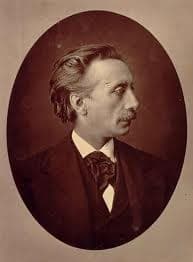
Eduard Douwes Dekker, better known by his pen name Multatuli, was a Dutch writer best known for his satirical novel Max Havelaar (1860), which denounced the abuses of colonialism in the Dutch East Indies. He is considered one of the Netherlands' greatest authors.

Ashley Antoinette
4.6

Mark McDonald
4.4
Luo Guanzhong
4.4

Mia McKenzie
4.3

Dorothy Parker
4.3

Joaquim Maria Machado de Assis
4.3

James Thurber
4.2

Terry Kay
4.2