“I will search until I find truth and justice.”
— Matigari's opening declaration as he begins his quest.

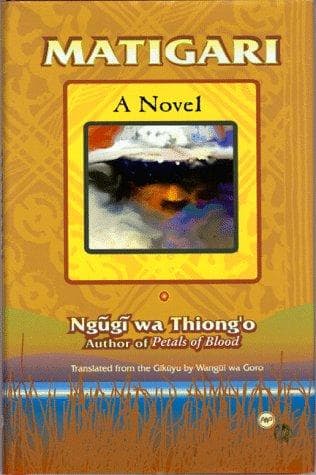
Ngugi wa Thiongo, Ngũgĩ wa Thiong'o (2020)
Genre
Fiction
Reading Time
240 min
Key Themes
See below
Sign in to track this book
Coming out of the forest into a 'new' Kenya, Matigari, the freedom fighter, finds his chains have just been re-forged by the people he fought to free.
After years of fighting for independence, Matigari, a freedom fighter, comes out of the Mount Kenya forest, burying his weapons – a pistol and a rifle – under a fig tree. He wears a girdle of peace and has a new name, meaning 'the patriots who survived the bullets.' His first goal is to find his family and reclaim the land stolen from him by the colonial oppressor, Settler Williams, and his helper, John Boy. Matigari hopes for a new, fair society, believing the new government will uphold freedom and equality, which he fought for. He is surprised to find that the new rulers are doing the same injustices, with many oppressors still holding power and wealth, while common people remain poor and exploited.
Matigari meets a young man named Muriuki, who works as a servant for the new rich elite. Through Muriuki, Matigari starts to understand the harsh realities of Kenya after independence. He sees fancy cars and big houses belonging to the new African rulers, while most people live in bad conditions. He learns that the land he fought for is still held by the powerful, including Settler Williams's son, Robert Williams, and John Boy. Matigari's disappointment grows as he realizes that the freedom he imagined has not happened for common people, who are still exploited and silenced by the same leaders who promised freedom.
Because he wants justice, Matigari confronts Robert Williams and John Boy, asking for his land back and for the recognition of the people's rights. He is arrested and brought to court, where he is called insane for speaking about truth and justice in a society that prefers to ignore its basic injustices. During his 'trial,' Matigari speaks strongly about his vision of a truly free society, showing the hypocrisy of the new government and its leaders. But his words are twisted and dismissed, and he is eventually sent to a mental asylum, called a madman for challenging the way things are.
Even though he is in the mental asylum, Matigari's spirit is not broken. He escapes with help from a kind guard and his own strong will. His escape shows that truth cannot be suppressed and that people want real freedom. After escaping, Matigari's decision to fight for justice becomes stronger. He realizes that the fight for true independence is not over and that people must keep challenging the oppressive systems that have just changed hands. He understands that the fight needs more than just physical weapons; it needs a collective awakening and a demand for responsibility.
Matigari starts to gather followers among the marginalized and oppressed. He meets Githaa, a student, and Ngaruro, a worker, who are also disappointed with the reality after independence. They are drawn to Matigari's strong commitment to truth and justice. Matigari shares his experiences and his vision for a truly free society, explaining the importance of working together and the power of the people's voice. He says that true freedom means not just political independence but also economic fairness, dignity, and the right to self-determination. His message strongly connects with those who have been silenced and exploited, starting hope and resistance.
Matigari meets a woman, later seen as a mother figure or a representation of the nation itself, who has also suffered much under both colonial and post-colonial oppression. She is a strong symbol of the people's strength and their lasting hope for a better future. Matigari sees in her the nation's collective pain and strength, and their connection becomes a main part of his journey. She represents the 'truth' Matigari is looking for, the people's suffering, and the need for a revolution of mind and spirit. Her presence strengthens Matigari's commitment to fighting for everyone's rights, especially the most vulnerable.
Matigari thinks a 'belt of truth' is needed to unite the nation and ensure justice. This 'belt' represents the moral and ethical rules that should guide a truly free society. He searches for this belt, believing it will empower people to reclaim their stolen inheritance and hold their leaders accountable. The search for the belt is a journey for collective awareness and the re-establishment of moral order. He believes that once people understand this truth, they will unite and overthrow the oppressive system that continues to exploit them.
Matigari, with his growing group of followers, confronts Robert Williams and John Boy at their fancy house. He demands justice and the return of the stolen land. The confrontation grows, and in a defiant act, Matigari sets fire to the house. This symbolizes the destruction of oppressive structures and the corrupt legacy of both colonialism and neo-colonialism. This act is not random violence but a strong statement against ongoing exploitation and injustice. The burning house represents getting rid of the old order and the urgent need for a new start, even if it means destroying parts of the past.
After the house burns, Matigari becomes a wanted man, pursued by authorities who see him as a dangerous troublemaker. But his actions inspire people, making him a legend and a symbol of resistance. News of his defiance spreads, encouraging others to question the government's legitimacy and demand their rights. Matigari's flight is a metaphor for the ongoing fight against oppression, with the people's growing awareness and collective action representing the true 'bullets' that will eventually bring change. The authorities' pursuit only makes Matigari a more important revolutionary figure.
Matigari is eventually cornered by the police at a river. As he faces capture or death, he gives his mission and the future of the struggle to Muriuki, the young boy he met earlier. He tells Muriuki to get the weapons he buried under the fig tree, meaning the fight for true freedom must go on and will be taken up by the next generation. Matigari's fate is left unclear, suggesting that while one person may fall, the spirit of resistance and the search for justice are eternal. The novel ends with the implied continuation of the struggle, saying that true freedom needs sustained effort and the people's strong commitment.
The Protagonist
From hopeful liberator to disillusioned prophet, Matigari inspires a new generation to continue the fight for genuine freedom.
The Supporting
From an innocent servant, Muriuki transforms into the chosen successor, ready to take up the mantle of resistance.
The Supporting
Initially disillusioned, Githaa finds purpose and direction in Matigari's fight for truth.
The Supporting
From an exploited worker, Ngaruro becomes an active participant in the collective struggle for justice.
The Antagonist
He remains steadfast in his inherited position of power, resisting any challenge to the unjust status quo.
The Antagonist
From a colonial collaborator, John Boy adapts to become a key figure in the new oppressive regime.
The Supporting
She remains a steadfast symbol of the suffering and enduring spirit of the people, inspiring Matigari's continued fight.
The Mentioned
His historical actions set the stage for the ongoing conflict, his influence persisting through his son.
The novel explores the disappointment felt in Kenya after independence. Matigari comes out of the forest expecting a truly free and fair society, only to find that the new African rulers have continued the same systems of exploitation and oppression as the colonial regime. This theme is clear in Matigari's surprise at seeing Robert Williams and John Boy still in power, owning the land he fought for, and common people living in poverty. The 'freedom' achieved is just a change of leaders, not a real change of society, causing a deep feeling of betrayal among the people.
“''He had thought that the country had achieved Uhuru, that the land had been returned to its rightful owners.''”
A main theme is the fight between truth and the powerful forces that try to suppress it with lies and manipulation. Matigari consistently speaks truths about injustice and corruption, leading authorities to call him insane and put him in an asylum. The government uses media and legal systems to control the story and silence disagreement, showing Matigari as a dangerous madman. This theme shows how those in power often twist reality to stay in control, and how challenging that story can be a revolutionary act.
“''Truth, like a baby, can be gagged and bound and thrown into a dungeon. But it will always be found. It will always cry out in the dark.''”
Ngugi wa Thiong'o uses Matigari's journey to ask what real freedom means. For Matigari, freedom is not just political independence or a change in leadership; it includes economic fairness, land ownership for the people, dignity, and no exploitation. The novel argues that without these basic things, political independence is empty. Matigari's search for his 'belt of truth' represents the search for a complete freedom that addresses past injustices and creates a fair society, instead of just replacing one group of oppressors with another.
“''What kind of freedom is this where the children of the soil are still slaves on their own land?''”
The novel shows that the fight for justice lasts a long time and that it is important to pass on resistance to new generations. Matigari, as an experienced freedom fighter, represents the historical struggle against oppression. His act of giving his mission and buried weapons to Muriuki means that the fight continues and goes beyond individual lives. This theme suggests that true freedom needs lasting effort and that the spirit of resistance will always find new champions, ensuring that the search for a just society never truly ends, even if some battles are lost.
“''Tell them to go and dig up the weapons I buried under the fig tree. Tell them it is time to fight again.''”
Land and home are strong symbols throughout the novel, representing not just property but also identity, belonging, and economic self-sufficiency. Matigari's journey starts with wanting to reclaim his stolen land and find his family, which symbolizes the nation's struggle to reclaim its heritage and establish a real sense of belonging. The land represents the people's stolen birthright, and its continued ownership by oppressors means ongoing injustice. The burning of Robert Williams's house is a symbolic act of reclaiming ownership and destroying the symbols of oppression.
“''Our land, our home, our roots. Without it, we are nothing.''”
The entire narrative functions as a moral and political allegory.
The novel itself is a profound allegory, where characters and events represent broader social, political, and historical realities in post-colonial Kenya and Africa. Matigari embodies the spirit of the freedom fighter and the enduring quest for justice. Robert Williams and John Boy represent the continuity of colonial exploitation and the betrayal by the new African elite. The 'belt of truth' is an allegorical quest for moral integrity and societal justice. This device allows Ngugi to critique complex political issues without direct, explicit references, making the message universally applicable.
Objects, places, and characters carry deeper symbolic meanings.
Ngugi employs rich symbolism to convey deeper meanings. Matigari's buried weapons represent the readiness for renewed struggle when peaceful means fail. The fig tree symbolizes indigenous knowledge and the roots of the struggle. The 'belt of truth' symbolizes moral integrity and justice. The burning of Robert Williams's house is a symbolic act of destroying oppressive structures. The unnamed woman often represents the nation itself or the suffering populace, while Muriuki symbolizes the hope for the future generation taking up the struggle. These symbols enhance the novel's allegorical nature.
The narrative mimics the style and tone of an African oral fable.
The novel is structured like a traditional African folk tale or moral fable, beginning with a clear protagonist on a quest and featuring didactic elements. The narrative voice often addresses the reader directly, using repetitive phrases and rhetorical questions common in oral storytelling. This style makes the complex political themes accessible and resonates with African cultural traditions, reinforcing the idea that this is a story for the people, meant to be shared and discussed, much like a communal narrative. The ambiguity of Matigari's fate also aligns with the open-ended nature of many oral tales.
Situational and dramatic irony highlight the hypocrisy of the new regime.
Irony is a pervasive device, particularly situational and dramatic irony. Matigari's initial hope for a free Kenya, only to find continued oppression, is deeply ironic. The government's labeling of Matigari as 'mad' for speaking the truth, while they themselves perpetuate injustice, is a prime example of dramatic irony, as the reader understands the true madness lies with the corrupt system. The 'independence' that brings no real change for the majority of people is a central ironic premise, exposing the hypocrisy and betrayal of the revolution's ideals.
The narrative often questions the nature of reality and leaves Matigari's ultimate fate ambiguous.
The novel employs a degree of unreliable narration, particularly through the lens of Matigari's perceived 'madness' by the authorities. This raises questions about who defines sanity and truth in an oppressive society. Furthermore, Matigari's ultimate fate is left ambiguous, enhancing his mythic status and emphasizing that the struggle is continuous rather than tied to a single individual's survival. This ambiguity encourages readers to interpret and engage with the ongoing nature of the revolution, rather than providing a definitive, closed ending.
“I will search until I find truth and justice.”
— Matigari's opening declaration as he begins his quest.
“The house is built on the sweat and blood of the workers.”
— Matigari criticizes the wealthy elite's exploitation.
“A person is a person through other persons.”
— Reflecting on community and interconnectedness.
“The bullet is mightier than the pen, but the pen is mightier than the bullet in the long run.”
— Debate on resistance methods against oppression.
“We shall overcome because our cause is just.”
— Rallying cry during a protest scene.
“The land belongs to the people, not to the few who fence it off.”
— Argument about land rights and colonialism.
“Fear is the weapon of the oppressor.”
— Analyzing how control is maintained by the powerful.
“Every story has a beginning, but not every story has an end.”
— Narrative reflection on ongoing struggles.
“The children of the revolution are always hungry.”
— Comment on the unmet promises of liberation.
“Truth is like the sun; you cannot hide it forever.”
— Assertion during a confrontation with authorities.
“We must plant seeds of change, even if we do not live to see the harvest.”
— Encouragement to future generations.
“The voice of the people is the voice of God.”
— Emphasizing collective will and democracy.
“Injustice anywhere is a threat to justice everywhere.”
— Inspired by global solidarity movements.
“The chains of the mind are heavier than those of the body.”
— Discussion on mental liberation post-colonialism.
Ready to see how well you understood this book? Take our interactive quiz with 10 questions.
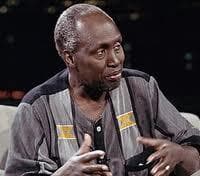
Ngũgĩ wa Thiong'o is a Kenyan author and academic who writes primarily in Gikuyu and who formerly wrote in English. He has been described as having been "considered East Africa's leading novelist". His work includes novels, plays, short stories, and essays, ranging from literary and social criticism to children's literature. He is the founder and editor of the Gikuyu-language journal Mũtĩiri. His short story The Upright Revolution: Or Why Humans Walk Upright, is translated into 100 languages from around the world.
Biography coming soon.

Ashley Antoinette
4.6

Mark McDonald
4.4
Luo Guanzhong
4.4

Mia McKenzie
4.3

Dorothy Parker
4.3

Joaquim Maria Machado de Assis
4.3

James Thurber
4.2

Terry Kay
4.2