“I was an only child—my mother died in my infancy. My father, during her life, was a man of the world; after her death, he became a recluse.”
— Mathilda introduces her family background and the early impact of her mother's death on her father.

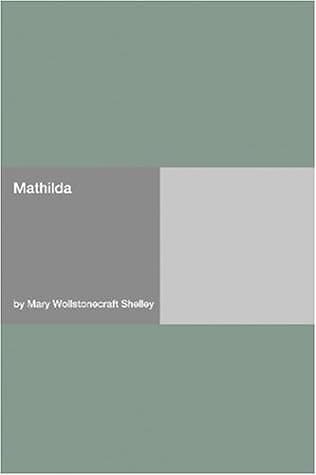
Mary Wollstonecraft Shelley (1959)
Genre
Fiction
Reading Time
90 min
Key Themes
See below
Sign in to track this book
Haunted by an unspeakable paternal love, Mathilda navigates a world that shuns her, forever scarred by the incestuous passion that shattered her innocence and isolated her from society.
Mathilda begins her story by reflecting on her deep loneliness and the sorrow that has shaped her life. She describes a childhood without typical parental affection, due to her mother's death shortly after her birth. This event sent her father into a long period of grief and travel, leaving Mathilda to be raised by a kind but distant aunt. Though cared for, Mathilda longed for a deeper connection, especially with her father, who remained emotionally unavailable, his heart seemingly buried with his deceased wife. This early isolation sets the sad tone for her entire life, hinting at the greater tragedies to come.
After sixteen years of almost complete separation, Mathilda's father finally returns to live with her. This reunion initially brings Mathilda great joy and a sense of completeness she has never known. She describes this time as the happiest of her life, filled with intellectual companionship and a deep, intense bond with her father. They spend their days in nature, reading, and philosophical discussions. However, Mathilda soon notices an unsettling intensity in her father's gaze and behavior, a passion that goes beyond paternal affection. This growing unease subtly spoils her newfound happiness, hinting at a darker current beneath their seemingly perfect bond.
The unsettling tension between Mathilda and her father ends in a horrifying confession. While on a walk, her father, overwhelmed by his emotions, reveals his incestuous love for her. Mathilda is devastated and repulsed by this revelation. Her view of her father, and her entire world, shatters. She falls into shock and despair, unable to understand or process the unnatural nature of his feelings. This moment marks the turning point in her life, stripping away her innocence and condemning her to a life of deep guilt and isolation, regardless of her own blamelessness.
Distraught and horrified by her father's confession, Mathilda refuses to see him again. She decides to leave him and live alone, believing her presence only fuels his unnatural passion. Her father, unable to bear his guilt and her rejection, sends her a letter expressing his deep remorse and his intention to end his life. He then disappears. Mathilda later learns of his suicide, his body found drowned. This tragic event plunges Mathilda into an even deeper grief and guilt, as she blames herself for his death, believing her harsh rejection drove him to it.
After her father's death, Mathilda completely withdraws from society. She takes on a new identity and seeks out remote, desolate places to live, believing herself cursed and unworthy of human companionship. She finds solace, though a sad one, in the wild beauty of nature, especially the Scottish Highlands. Her days are spent in solitary thought, haunted by the memory of her father's confession and his suicide. She sees herself as an outcast, forever marked by the incestuous sin, even though she was the victim. This self-imposed exile becomes her penance and her escape.
Years into her solitary life, Mathilda meets Woodville, a young and sensitive poet. He is drawn to her sad beauty and intellectual depth, and they form a platonic friendship. Woodville, unaware of Mathilda's tragic past, provides her with a rare period of intellectual companionship and emotional understanding. She finds brief, fragile solace in his presence, enjoying their shared love of literature and nature. This friendship, however, is tinged with Mathilda's constant fear of her secret being discovered, making her hesitant to fully embrace the connection, knowing it is ultimately unsustainable.
As her friendship with Woodville deepens, Mathilda struggles with the strong desire to tell him her tragic history. She longs for true understanding and release from her burden, but the fear of his reaction paralyzes her. She imagines his disgust and rejection, convinced that no one could ever forgive or understand the horror of her situation. This internal conflict causes her great distress, as she knows their relationship, however pure, is built on secrecy. The weight of her past is too heavy to share, reinforcing her belief that she is destined for eternal solitude.
Woodville eventually confesses his love for Mathilda. Despite her own affection for him and her deep loneliness, Mathilda cannot bring herself to accept his love. She believes her life is cursed and that accepting his affection would condemn him to a similar fate of sorrow and isolation. She acts coldly and pushes him away, pretending indifference to spare him from the perceived contamination of her past. This act of self-sacrifice, driven by a twisted sense of protection and self-loathing, ensures her continued solitude and Woodville's heartbreak.
After pushing Woodville away, Mathilda's already fragile health declines rapidly. The combined weight of her past trauma, her father's suicide, her self-imposed exile, and the recent loss of Woodville's companionship take their toll. She becomes increasingly frail, her body reflecting the decay of her spirit. She continues her solitary wanderings, finding grim comfort in the desolate landscapes that mirror her internal state. Her narrative becomes more reflective, a final account of her suffering, as she feels death approaching, which she welcomes as the ultimate release from her sorrow.
As death approaches, Mathilda spends her final days writing her life story. She sees this act as her last will, a posthumous plea for understanding from an indifferent world. She hopes that by recounting her experiences, future generations might learn compassion and avoid the harsh judgments that condemned her to a life of misery. She explicitly states her intention for the manuscript to be discovered after her death, believing that only then can her truth be heard without prejudice. Her final words are a poignant reflection on her suffering and a desperate hope for a more empathetic future.
The Protagonist
Mathilda begins as an innocent, yearning child, experiences the trauma of incest and her father's death, and ends as a self-sacrificing, solitary figure consumed by grief and guilt, ultimately finding a form of peace in death.
The Antagonist/Catalyst
He begins as a grieving widower, succumbs to an incestuous passion, confesses, and ultimately takes his own life due to guilt and rejection.
The Supporting
He begins as a solitary poet, attempts to connect with Mathilda and offers her love, but is ultimately rejected, returning to his solitary life, likely heartbroken.
The Mentioned
Her death is the initial tragic event that sets the story's melancholic tone and drives the father's subsequent actions.
The central and most horrifying theme is the incestuous love of Mathilda's father. This taboo act is not explicitly depicted physically but is revealed through the father's confession, which destroys Mathilda's innocence and sense of self. It leads directly to her father's suicide and Mathilda's subsequent self-imposed exile and eventual death. The novel explores the deep psychological trauma, guilt, and social alienation that result from such a transgression, showing its power to corrupt and destroy all involved. It highlights how a single, forbidden passion can shatter lives.
“My father loved me with no common love. He was not a man to feel by halves; and the ardour of his passions was fatal to him, and to me, his only child.”
Mathilda is consumed by an overwhelming sense of guilt, despite being the victim of her father's actions. She blames herself for his suicide, believing her rejection drove him to it, and sees herself as cursed and stained by the incestuous sin. This guilt appears as self-punishment, leading her to live in solitude and exile. She actively pushes away any chance of happiness, like Woodville's love, because she believes she is unworthy and would only bring sorrow to others. Her entire existence becomes a long penance for a 'crime' she did not commit, illustrating the psychological devastation of trauma.
“I was a curse, a blot, a pestilence. I could not love, and be beloved, as others are.”
From her early childhood, Mathilda experiences deep isolation due to her mother's death and her father's emotional distance. This alienation grows dramatically after her father's confession and suicide. She deliberately cuts herself off from society, convinced that her secret makes her an outcast. Her self-imposed exile in desolate landscapes reflects her internal loneliness and her inability to connect with others, even those who offer genuine affection like Woodville. The novel shows isolation not just as a physical state but as a deep psychological wound that prevents healing and ultimately leads to her death.
“I was alone, a blot upon the face of nature, a monster to be hidden from the sight of man.”
Grief is a constant force throughout the novel, initially driving Mathilda's father to despair after his wife's death, and later consuming Mathilda herself. Mathilda's narrative is full of a deep sadness, a constant sorrow that colors every part of her life. Her father's inability to process his initial grief properly leads to his destructive passion. Mathilda's own grief, combined with trauma and guilt, becomes an all-encompassing state that she never escapes. The novel explores how unchecked sorrow can lead to moral decay and self-destruction, defining the characters' very existence.
“My heart was a charnel-house, where the ashes of hope and joy lay mouldering.”
Mathilda recounts her life story from her deathbed, providing an intimate and melancholic perspective.
The entire novel is Mathilda's autobiography, written as she faces imminent death. This allows for an intensely personal and introspective tone, giving the reader direct access to her thoughts, feelings, and moral struggles. The retrospective nature means the narrative is colored by her profound sorrow and sense of impending doom, shaping the reader's understanding of events through her subjective, often guilt-ridden, lens. It also serves as her final plea for understanding, framing the entire story as a confession and a testament.
The father's explicit declaration of incestuous love serves as the central turning point.
The father's verbal confession of his forbidden love for Mathilda is the pivotal moment of the novel. It is not merely a revelation but a direct confrontation with the taboo, shattering Mathilda's innocence and irrevocably changing the course of her life. This explicit declaration pushes the story from a tale of distant parental affection to one of horror and moral transgression. It triggers Mathilda's flight, her father's suicide, and her subsequent guilt and isolation, making it the definitive catalyst for all subsequent tragedy.
Desolate natural settings mirror Mathilda's internal emotional state.
Shelley frequently uses descriptions of nature, particularly wild and desolate landscapes like the Scottish Highlands, to reflect Mathilda's internal emotional state. The bleak, stormy, and isolated environments parallel Mathilda's profound sorrow, loneliness, and sense of being an outcast. Conversely, during her brief period of happiness with her father, or her intellectual connection with Woodville, nature might be described with a fleeting beauty, only for the gloom to return. This device enhances the melancholic atmosphere and visually represents Mathilda's psychological landscape.
Mathilda's written autobiography is intended for posthumous discovery, acting as her final testament.
Mathilda writes her story with the explicit intention that it be discovered and read only after her death. This device adds a layer of pathos and urgency to her narrative, as it is her final act and her last plea for understanding from a world she believes has condemned her. It also emphasizes her profound isolation, as she cannot share her story with anyone living. The manuscript becomes her legacy, a warning, and her only means of communication with humanity, reinforcing the theme of her ultimate alienation.
“I was an only child—my mother died in my infancy. My father, during her life, was a man of the world; after her death, he became a recluse.”
— Mathilda introduces her family background and the early impact of her mother's death on her father.
“He loved me with a passionate devotion that absorbed all his soul; he loved me, not as a father loves a child, but as a lover doats on his mistress.”
— Mathilda describes the intense and unsettling nature of her father's affection after her mother's passing.
“My father's love was a poison that preyed upon my heart, and changed its very nature.”
— Mathilda reflects on the destructive influence of her father's affection on her emotional well-being.
“I was alone in the world; my father was worse than dead to me; he was a living tomb, in which my youth and my hopes were buried.”
— Mathilda expresses her profound sense of isolation and despair after the revelation of her father's feelings.
“I felt myself a criminal, though guiltless; I felt myself a pariah, though innocent.”
— Mathilda grapples with the shame and stigma she feels, despite not having committed any wrong.
“Oh, what a paradise is that country, where the sun ever shines, and the flowers ever bloom!”
— Mathilda idealizes a place of escape from her misery, a common romantic trope.
“My mind became a chaos, and my heart a desert.”
— Mathilda describes the mental and emotional desolation she experiences.
“I wandered about like a restless ghost, finding no repose, no peace, no hope.”
— Mathilda's aimless wanderings reflect her internal turmoil and lack of purpose.
“The memory of what I had been, and what I was, was a perpetual torment to me.”
— Mathilda is haunted by the contrast between her past innocence and her present suffering.
“I was a blot upon the fair face of creation, a living monument of despair.”
— Mathilda views herself as an anomaly, a symbol of profound unhappiness in the world.
“My only hope was in solitude, in the deep forests, and the silent mountains.”
— Mathilda seeks refuge and solace in nature, away from human society.
“I have been an outcast from society, a wanderer on the face of the earth.”
— Mathilda summarizes her life as one of banishment and constant movement.
“Death, the great healer, was my only refuge.”
— Mathilda expresses her ultimate desire for death as the only escape from her pain.
“My tale is one of sorrow, of desolation, and of death.”
— Mathilda provides a concise summary of the overarching themes of her narrative.
Ready to see how well you understood this book? Take our interactive quiz with 10 questions.

Mary Wollstonecraft Shelley was an English novelist who wrote the Gothic novel Frankenstein; or, The Modern Prometheus (1818), which is considered an early example of science fiction and one of her best-known works. She also edited and promoted the works of her husband, the Romantic poet and philosopher Percy Bysshe Shelley. Her father was the political philosopher William Godwin and her mother was the philosopher and women's rights advocate Mary Wollstonecraft.

Ashley Antoinette
4.6

Mark McDonald
4.4
Luo Guanzhong
4.4

Mia McKenzie
4.3
Dorothy Parker
4.3

Joaquim Maria Machado de Assis
4.3

James Thurber
4.2

Terry Kay
4.2