“It was Christmas Day, and the shop was busy.”
— Opening line, setting the scene for Markheim's visit to the antique shop.

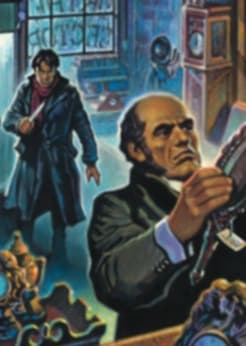
Robert Louis Stevenson (1982)
Genre
Fiction
Reading Time
20 min
Key Themes
See below
Sign in to track this book
On Christmas Day, a man who has just committed murder in an antique shop faces his conscience and the haunting presence of his own wickedness as a mysterious shopman closes in.
On a gloomy Christmas Day, Markheim enters an antique shop, supposedly to buy a gift for a woman. He is alone with the old dealer, a man he has seen before, whose shop is full of valuable, though dusty, curiosities. Markheim, driven by desperation and a long history of bad choices, suddenly attacks and kills the old man with a dagger. The dealer falls, gasping, and Markheim is left alone with the body, the deed done. His first reaction is a mix of terror and a strange calm, as he begins to think about what to do next: find money and escape.
After the murder, Markheim's immediate goal is to find money. He believes the dealer keeps large sums hidden in the shop, not in a bank. He systematically starts to search, moving from room to room, opening drawers, sifting through papers, and looking at the various objects. His search is not random; he has watched the dealer before and knows where money might be hidden. Despite his frantic state, he proceeds with a strange, almost professional care, even as the quiet of the shop and the presence of the body weigh heavily on him.
As Markheim continues his search, a clock in the shop chimes the hour, its sound echoing loudly in the silence. This sudden noise startles him, reminding him of time passing and the increased risk of being discovered. He imagines footsteps on the street outside and the chance of someone entering the shop. The chiming clock acts as a constant reminder of his crime and the danger of his situation, further increasing his paranoia and the psychological pressure he feels. He becomes very aware of every creak and shadow, convinced he is being watched.
During his search, Markheim becomes more and more aware of an unseen presence in the room. He senses it subtly at first, a feeling of not being alone, which then turns into a distinct, disembodied voice. This voice, calm and logical, speaks directly to him, showing it knows his thoughts, actions, and past very well. Markheim first tries to explain it as a trick of his mind or a hallucination caused by stress, but the voice's persistent and insightful remarks soon convince him it is real, though he cannot see its source.
The unseen presence talks with Markheim in a long and deeply psychological conversation. The voice, which Markheim later sees as the Devil or his own conscience, examines his character, his history of moral failures, and the true nature of his current act. It challenges his self-deceptions, pointing out the wickedness in his past and present deeds, while also offering him a way to escape and commit more crime. Markheim, though at first resistant, feels forced to respond, wrestling with the voice's accusations and its deep insights into his soul.
During his talk with the mysterious voice, Markheim begins to admit the full extent of his moral decay. He confesses that he is not just a man who made one mistake, but one whose life has been a series of corrupt choices, driven by laziness and a lack of real purpose. He acknowledges the 'canker' within him, the deep flaw that led him to this point. This confession is not born of remorse in the usual sense, but rather a clear recognition of his own degraded character, prompted by the voice's constant questioning.
The voice, seeming to be aligned with evil, offers Markheim a detailed and practical plan for escape. It suggests that Markheim finish his search for the money, then arrange the shop to make it look like the dealer simply disappeared, giving him plenty of time to flee. The voice insists that Markheim has the cleverness and the chance to succeed, playing on his desire for self-preservation. This offer presents a clear temptation for Markheim to fully embrace his criminal nature and continue down a path of more deception and evasion, without any immediate punishment for his actions.
Despite the appeal of escape and the voice's convincing arguments, Markheim experiences a deep inner change. He realizes that even if he were to escape justice, he would remain a prisoner of his own corrupted soul. The idea of living a life of constant deceit and more crime becomes unbearable. He recognizes that true freedom is not in avoiding punishment, but in facing his own wickedness. This realization marks a crucial turning point, as Markheim begins to value moral integrity over physical survival, a completely new feeling for him.
Just as Markheim is having his moral revelation, he hears a bell ring at the shop's door. The voice confirms that it is the dealer's maid, returning from her Christmas holiday. This arrival means immediate discovery and the end of any chance of a clean escape. The maid's presence highlights the finality of Markheim's situation and the limited time he has left. The sound of the bell, which earlier filled him with dread, now seems to resonate with a strange sense of purpose, forcing his hand.
Faced with the maid's imminent entry, Markheim makes a clear choice. He rejects the voice's final offers of escape and accepts the results of his actions. He decides not to hide or flee, but to let the maid discover him and the body. This decision is not born of fear, but of a new, though desperate, desire for redemption and an end to his life of moral compromise. He understands that this is his only chance to regain some honor, even if it means sacrificing his life and enduring punishment.
Markheim opens the door for the maid, who enters the shop, unsuspecting. He calmly stands before her, allowing her to discover the antique dealer's body. The maid's reaction is one of shock and horror, but Markheim remains composed. He has accepted his fate and the results of his actions. His surrender is quiet and firm, a stark contrast to the frantic, guilt-ridden man who committed the murder earlier. The story ends with Markheim's silent acceptance of his coming arrest and punishment, showing his final, desperate act of moral reclamation.
The Protagonist
From a desperate, morally compromised murderer seeking escape, Markheim undergoes a profound moral awakening, choosing to surrender and accept punishment for his crimes as a path to redemption.
The Victim
The dealer's arc is brief and tragic, serving as the initial victim whose death sets Markheim's internal struggle into motion.
The Antagonist/Catalyst
The voice acts as a catalyst, provoking Markheim's self-reflection and ultimately leading him to his moral transformation.
The Supporting
The maid serves as a plot device to bring the narrative to its resolution, without her own character development.
The story explores the psychological burden of guilt and the awakening of conscience. Initially, Markheim's guilt appears as paranoia and fear of discovery, but as the story moves forward, especially through his talk with the mysterious voice, it becomes a deep moral reckoning. He confronts his 'canker'—the flaw in his character—and realizes that true freedom is not in escaping justice, but in acknowledging his depravity. This is clear when he chooses to surrender rather than flee, showing conscience winning over self-preservation.
“''I am a man of a life too easy and too idle, and I have had to pay for it in one of those dishonest shifts to which I have at last succumbed.''”
Markheim's journey is one of possible redemption, not through forgiveness, but through a radical change in his moral priorities. His decision to surrender, knowing it means certain punishment, is his first truly moral act after a lifetime of wrongdoing. This change is not about avoiding sin, but about choosing to face its consequences honestly. The story suggests that even a deeply corrupt person can experience a moment of profound change, valuing spiritual integrity over worldly survival, as seen in his final, firm acceptance of his fate.
“''I have lived a life of what you call crime, and I have been punished for it, and I have been shamed for it; but I have never been broken for it.''”
Stevenson looks into the harmful nature of evil, showing it not as one terrible act, but as a slow buildup of small moral compromises and self-deceptions. Markheim's past is marked by 'dishonest shifts' and 'idle' living, which slowly weaken his character until he is capable of murder. The mysterious voice constantly exposes Markheim's attempts to explain his actions and his inherent wickedness, forcing him to face the truth that his crime is not a single event but a sign of deeper moral rot. His struggle shows how easily one can fall into a pattern of self-justification that hides true evil.
“''You have been a criminal all your life. Your life has been a succession of base and ignoble shifts.''”
The debate between Markheim and the voice touches on the old question of free will. The voice often presents Markheim's actions as the unavoidable results of his character, suggesting a fated view of his destiny. However, Markheim's ultimate choice to surrender, despite the clear path to escape offered by the voice, shows a powerful act of free will. It implies that even when seemingly trapped by one's past and nature, there remains a capacity for conscious moral choice. This inner conflict highlights the tension between the forces that shape a person and their ultimate power to choose their own path.
“''You have but to choose; and the choice is easy. You can yet be a free man.''”
An ambiguous, disembodied presence that acts as Markheim's interrogator and tempter.
The mysterious voice is the primary plot device that drives Markheim's internal conflict. Its ambiguity—whether it's the Devil, a hallucination, or his own conscience—allows for a multifaceted exploration of Markheim's psychology. The voice serves to externalize Markheim's inner turmoil, forcing him to articulate and confront his deepest moral failings and self-deceptions. By offering both temptation and brutal honesty, it acts as a catalyst for his ultimate moral awakening, pushing him towards a definitive choice about his fate.
A juxtaposition of a sacred holiday with a profane act of murder and moral reckoning.
The setting of Christmas Day is a powerful symbolic device. Christmas, typically associated with peace, goodwill, and redemption, starkly contrasts with Markheim's act of murder and his subsequent moral struggle. This juxtaposition amplifies the gravity of his crime and highlights his spiritual desolation. It also subtly suggests the possibility of a 'rebirth' or moral awakening, aligning with the themes of redemption, even amidst the darkness of his actions. The holiday emphasizes the profound moral stakes of Markheim's final decision.
A confined, cluttered space symbolizing Markheim's trapped mental state and his past.
The antique shop itself functions as a symbolic plot device. Its cluttered, dusty, and confined nature mirrors Markheim's own trapped and disordered psychological state. The 'curiosities' and 'old rubbish' within the shop can be seen as representing the accumulated moral debris of Markheim's past life. The shop becomes a stage for his internal drama, a place where time seems to stand still as he grapples with his conscience. Its isolation and the presence of the dead dealer intensify the claustrophobic atmosphere of his moral dilemma.
A recurring auditory reminder of time, danger, and the inevitability of consequences.
The chiming of the clock serves as a significant auditory plot device. Initially, it heightens Markheim's paranoia and fear of discovery, marking the relentless passage of time and the increasing risk of being caught. Later, as Markheim undergoes his moral transformation, the sound of the clock's chime takes on a different meaning, subtly guiding him towards the inevitability of his fate and the finality of his decision. It functions as a constant, external pressure that pushes Markheim towards a resolution.
“It was Christmas Day, and the shop was busy.”
— Opening line, setting the scene for Markheim's visit to the antique shop.
“For here, he reflected, was the very sanctuary of his life; here was the cupboard where he hid his shame; here were the tools with which he wrought his ruin.”
— Markheim's internal monologue upon entering the antique shop, reflecting on his criminal past and present.
“He knew he was a lost man; he had but to take the next step, and he was lost indeed.”
— Markheim contemplates his desperate situation and the irreversible nature of his actions.
“The thought of escape, which had hitherto buoyed him up, began now to desert him.”
— After committing the murder, Markheim feels trapped and the hope of escaping justice fades.
“He was not one of those who are afraid of a dead body; he was too familiar with death in many forms.”
— Markheim's callous reaction to the shopkeeper's corpse, revealing his hardened nature.
“It was not remorse, at least, not the remorse of a good man, that now began to gnaw him.”
— Markheim's internal struggle, distinguishing his guilt from true moral remorse.
“He had but one desire: to get rid of the witness, to bury it, to put it out of sight.”
— Markheim's immediate focus after the murder is on concealing the body and evidence.
“For the first time in his life, he was face to face with his own soul.”
— Markheim's profound realization during his internal debate with the mysterious visitor.
“The evil was in him, not in the circumstances.”
— The mysterious visitor's assessment of Markheim's inherent nature, challenging his self-pity.
“You have but to cross the threshold, and you are free.”
— The visitor tempts Markheim with the possibility of escape, highlighting the choice before him.
“I have been a bad man, and I have done a bad thing; but I will not add to it.”
— Markheim's declaration of his decision to confess, refusing to commit further evil.
“He had found his soul, and he had lost his life.”
— A poignant summary of Markheim's ultimate fate and the spiritual transformation he undergoes.
“The clock struck the hour, and he knew that his time was come.”
— Markheim's acceptance of his impending capture and the consequences of his actions.
“He had but to open the door, and the world was before him; but he chose to open the door to his doom.”
— Reflecting on Markheim's final decision to surrender rather than escape.
Ready to see how well you understood this book? Take our interactive quiz with 10 questions.
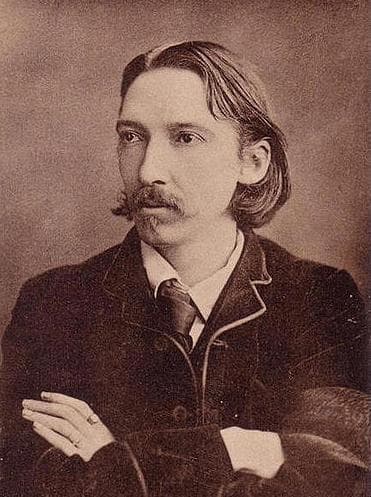
Robert Louis Stevenson was a Scottish novelist, essayist, poet and travel writer. He is best known for works such as Treasure Island, Strange Case of Dr Jekyll and Mr Hyde, Kidnapped and A Child's Garden of Verses.

Ashley Antoinette
4.6

Mark McDonald
4.4
Luo Guanzhong
4.4

Mia McKenzie
4.3

Dorothy Parker
4.3

Joaquim Maria Machado de Assis
4.3

James Thurber
4.2

Terry Kay
4.2