“The city is big and its life is made of little things.”
— Opening line of the book, setting the tone for Marcovaldo's urban adventures.

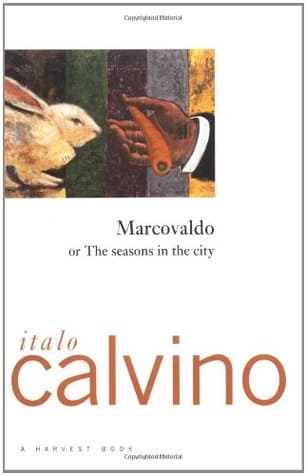
Sign in to track this book
In a bleak industrial city, the perpetually bewildered Marcovaldo chases fleeting natural wonders and ill-fated schemes, only to find his dreams comically unraveling in unexpected ways.
Marcovaldo, an unskilled laborer living in a dreary industrial city, spots a patch of wild mushrooms growing near a tram stop. Delighted, he keeps their location a secret, planning to harvest them for his family. He enlists a street sweeper, Amadigi, to help identify them, who confirms they are edible but warns him to keep quiet. Marcovaldo returns with his family to collect the mushrooms under the cover of darkness, only to find that others have already gathered them. He is left with a single, small mushroom, which his family cooks and eats, only to discover it tastes terrible and causes stomach upset, as it turns out they were poisonous after all. The experience leaves Marcovaldo feeling both disappointed and slightly ill.
Marcovaldo cares for a rabbit intended for laboratory experiments for his company, Sbav. He brings the caged rabbit home, to the initial delight of his children. However, the rabbit escapes and begins to reproduce rapidly in the unused spaces of their apartment building and the surrounding urban environment. Soon, the entire neighborhood is overrun with rabbits, causing chaos and damage to gardens and public spaces. The situation turns into a full-blown rabbit infestation, making the city an unexpected wildlife sanctuary, much to the exasperation of the other residents and the authorities.
Suffering from the stifling heat and polluted air of his apartment, Marcovaldo decides to sleep outdoors. He tries various spots: a park bench, a riverbank near a cement factory, and eventually a construction site. Each location brings its own disturbances – mosquitos, industrial noise, and the unexpected arrival of construction workers in the early morning. His attempts to find a peaceful, fresh-air sleeping spot are repeatedly stopped by the realities of the urban environment, leaving him exhausted and no better rested than before. His pursuit of natural peace is consistently undermined by the widespread industrial presence.
Marcovaldo, needing extra money, agrees to catch wasps for a local innkeeper who uses them for a traditional remedy. He discovers a large wasp's nest in a tree near his workplace. Despite his initial fear, he attempts to smoke out the wasps to capture them. His clumsy efforts result in him being severely stung multiple times. He returns home swollen and in pain, having failed to capture any wasps and having learned a painful lesson about interfering with nature. The innkeeper, upon seeing Marcovaldo's condition, dismisses his efforts and finds another, easier method.
Marcovaldo attempts to gather stray cats from the city and release them into a garden plagued by rats, hoping they will control the rodent population. He believes he can train them to be effective hunters. However, the cats, accustomed to scavenging and comfortable with their urban independence, show no interest in hunting rats. Instead, they cause more chaos, fighting among themselves and disrupting the garden, ultimately proving to be more of a nuisance than a solution to the rat problem. His well-intentioned plan backfires, showing his naive understanding of animal behavior.
Marcovaldo takes his family to the beach for a rare day of relaxation and fun. However, their outing is quickly marred by the reality of the polluted coastline. The sand is littered with debris, the water is dirty, and they are surrounded by noisy crowds. To make matters worse, the children fall ill after eating contaminated mussels, turning their much-anticipated day of leisure into a miserable experience. The dream of a refreshing escape to nature is once again shattered by the widespread industrial impact on the environment.
A strange, invisible cloud descends upon the city, causing irritation to eyes and throats, but its source is unknown. Marcovaldo and his family experience the discomfort firsthand, feeling its effects without being able to see or identify it. The event shows how sneaky modern pollution is; it can be present and harmful even when imperceptible. The city's inhabitants struggle to cope with this new environmental threat, showing the constant battle against the unseen consequences of industrialization. Marcovaldo's usual attempts to find a natural solution are useless against an invisible foe.
Seeking a moment of peace, Marcovaldo often rests on a particular park bench. One night, while sleeping there, he is woken by a man hiding a package under the bench. The next morning, he discovers the package contains stolen goods. Unwittingly, he becomes involved in the criminal's attempt to retrieve the items, leading to a comical chase with the police. Marcovaldo, ever the innocent, is more concerned with the disruption to his peaceful morning than the crime itself, showing his detachment from the urban underworld and his focus on simple pleasures.
Marcovaldo falls ill and is hospitalized, finding an unexpected sense of peace and quiet in the sterile environment, a stark contrast to his chaotic home life. He enjoys the regular meals and the rest from work and family responsibilities. However, his recovery is swift, and he is discharged sooner than he would have liked, much to his disappointment. His brief escape from the drudgery of his daily life is cut short, and he is returned to the familiar struggles of his urban existence, lamenting the loss of his temporary sanctuary.
Marcovaldo attempts to enjoy a beautiful moonlit night, appreciating the rare natural illumination in the city. However, his poetic moment is ruined by swarms of gnats attracted to the artificial lights of the city. He tries to escape them, moving from one spot to another, but the gnats, and the widespread urban lighting that attracts them, follow him everywhere. His desire to connect with the serene beauty of the moon is constantly interrupted by the irritating realities of city life, showing the persistent conflict between nature and the man-made environment.
During a rare snowfall, Marcovaldo and his children build a snowman in the city square, bringing a moment of joy and natural beauty to the drab surroundings. However, a local advertising company, seeing an opportunity, places a large, heat-emitting billboard next to the snowman. The heat from the billboard quickly melts the snowman, turning their creation into a puddle. This incident symbolizes the relentless spread of commercialism and artificiality on natural beauty and simple pleasures, leaving Marcovaldo and his children with a sense of loss and disillusionment.
Marcovaldo discovers a hidden world of insects living in the cracks and crevices of the city's paving stones. He is fascinated by their lives and the unexpected biodiversity within the urban setting. He dreams of a tiny, natural escape from his mundane life. However, his discovery is short-lived as the city council, to control pests, sprays the area with pesticides. The hidden insect world is quickly annihilated, leaving Marcovaldo once again confronted with the destructive power of human intervention and the fragility of nature in an urban setting.
Marcovaldo, longing for a genuine escape from the city, boards a bus, hoping it will take him to a natural, peaceful destination. He drifts off to sleep and misses his intended stop. When he finally disembarks, he finds himself in a desolate, industrial wasteland, far from the nature he sought. The area is dominated by factories, construction, and pollution, mirroring the very environment he tried to escape. His journey, intended as a brief rest, only reinforces the pervasive reach of the industrial city, leaving him more disheartened than before.
The Protagonist
Marcovaldo remains largely unchanged throughout the stories, consistently pursuing his dreams of nature despite repeated failures, embodying a persistent, if ultimately futile, resistance to the urban environment.
The Supporting
Domitilla's character remains consistent as the voice of practicality and the anchor of the family, constantly managing the consequences of Marcovaldo's escapades.
The Supporting
Michelino's character develops as he increasingly understands the futility of his father's dreams, though he remains fascinated by them.
The Supporting
Amadigi serves a specific narrative function in 'Mushrooms in the City' and does not undergo significant character development.
The Mentioned
Prof. Cavalieri is a static, off-stage character whose influence is felt through others.
The Supporting
Signora Isolina remains a consistent, observant neighbor, embodying the collective urban response to Marcovaldo's antics.
The Antagonist/Supporting
The Sbav Company remains a constant, unchanging force of industrial modernity, shaping Marcovaldo's daily life and the urban environment.
The Supporting
The children's characters remain largely static, serving as a reflection of Marcovaldo's dreams and the shared experience of urban life.
This is the central theme of 'Marcovaldo', exploring the constant tension and often comical conflict between the natural world and the spreading industrial city. Marcovaldo perpetually seeks out glimpses of nature – mushrooms, rabbits, fresh air, moonlight – only to find them polluted, exploited, or overwhelmed by urban infrastructure and human activity. The city, with its factories, advertisements, and concrete, consistently triumphs over or distorts nature, showing how hard it is to find authentic natural experiences in a modern urban setting. Each story is a vignette illustrating this fundamental struggle.
“''What a beautiful thing, to be able to sleep out of doors!' Marcovaldo thought, but then he realized he was thinking it in a city where there was no outdoors.”
Marcovaldo is an eternal optimist, but his dreams consistently lead to disappointment. His attempts to find beauty, comfort, or sustenance in nature invariably backfire: poisonous mushrooms, an unmanageable rabbit infestation, polluted beaches, painful wasp stings, or snowmen melted by advertising. This theme shows the gap between his romanticized view of nature and the harsh realities of urban life. The repeated failures show the uselessness of trying to impose natural order or find clean beauty within an environment changed by human industry, leaving Marcovaldo, and the reader, with a sense of gentle melancholy.
“He knew that the city, in its most secret and unexpected places, sometimes offered gifts, but that these gifts were always poisoned.”
Calvino uses Marcovaldo's experiences to satirize the absurdities of modern consumerism, bureaucracy, and urban planning. From the overzealous advertising that melts a snowman to the invisible cloud of pollution, and the misguided attempts to control nature (like the rabbit problem or the extermination of insects), the stories often present a world where human logic and systems create more problems than they solve. Marcovaldo's earnest but often clumsy interactions with this world expose its inherent irrationality, turning everyday situations into darkly humorous commentaries on contemporary society.
“The city, in all its aspects, seemed to have been designed to drive people mad.”
The stories subtly include the theme of poverty and its impact on Marcovaldo and his family. His desire to forage for mushrooms, catch wasps for extra money, or find a free place to sleep outdoors stems from their limited financial resources. Their inability to afford a vacation, their crowded apartment, and their reliance on cheap, often unhealthy, food are constant reminders of their social standing. This economic reality often dictates Marcovaldo's choices and increases the consequences of his failed schemes, showing how poverty limits access to genuine nature and leisure in the urban environment.
“He thought of the money he would save on groceries, and the delicious meals they would have.”
Marcovaldo's unique perception is a key element of the book. He sees what others overlook – a patch of mushrooms, a hidden world of insects, the subtle changes in the sky. However, his perception often clashes with reality. The mushrooms are poisonous, the fresh air is polluted, the beautiful moonlight is accompanied by gnats. This theme explores how individual perception can create a subjective reality, but how the objective, often harsh, reality of the industrial city ultimately asserts itself, forcing Marcovaldo to confront the gap between what he hopes to see and what truly exists.
“Marcovaldo had that eye, too sensitive to certain aspects of nature, and impervious to others.”
A collection of self-contained short stories featuring the same protagonist.
The book is structured as a series of independent short stories, or 'chapters', each focusing on a single incident or Marcovaldo's attempt to interact with nature in the city. While Marcovaldo and his family are recurring characters, each story has its own beginning, middle, and end, and can be read individually. This episodic format allows Calvino to explore a variety of scenarios and themes without needing a continuous overarching plot, emphasizing the cyclical nature of Marcovaldo's dreams and disappointments. It creates a mosaic of urban life seen through his unique perspective.
The frequent use of situational irony where Marcovaldo's intentions lead to opposite or unexpected outcomes.
Irony is a pervasive device in 'Marcovaldo'. Almost every one of Marcovaldo's attempts to connect with nature or improve his situation results in an ironic twist. He seeks edible mushrooms, finds poisonous ones; he wants fresh air, finds pollution; he builds a snowman, and it's melted by an advertisement. This consistent use of situational irony underscores the futility of his efforts against the backdrop of the industrial city and provides much of the book's dark humor. It highlights the gap between human intention and the often-unpredictable consequences of modern life.
Attributing human qualities to nature and urban elements.
Calvino occasionally imbues elements of nature and even aspects of the city with human-like qualities or intentions. The rabbits in 'The City of Rabbits' seem to deliberately mock human efforts, and the city itself often feels like a living, oppressive entity. This device enhances Marcovaldo's sensitive perception of his surroundings and deepens the conflict between man and environment, making nature's resistance or the city's encroachment feel more personal and deliberate. It blurs the lines between the animate and inanimate, reflecting Marcovaldo's imaginative worldview.
Objects or events that represent broader themes like nature, pollution, or fleeting beauty.
Various elements in the stories function as symbols. The mushrooms symbolize the deceptive allure of nature in an urban setting; the rabbits represent uncontrolled natural proliferation and chaos within an ordered environment; snow symbolizes temporary beauty and purity quickly corrupted or destroyed by commercialism and industry. These symbols enrich the narrative, allowing Calvino to comment on complex themes like pollution, the fragility of nature, and the encroachment of modernity without explicit exposition. They are often the catalysts for Marcovaldo's adventures and his subsequent disillusionment.
The juxtaposition of opposing elements to highlight thematic conflicts.
Calvino frequently uses stark contrasts to emphasize the central themes. The natural beauty Marcovaldo seeks is constantly contrasted with the ugliness and pollution of the industrial city. His innocent wonder is contrasted with the cynicism or indifference of others. The silence he desires is contrasted with the incessant noise of urban life. This device sharpens the thematic conflicts, making the clashes between nature and industry, dream and reality, all the more poignant and impactful. It underscores the pervasive tension that defines Marcovaldo's existence.
“The city is big and its life is made of little things.”
— Opening line of the book, setting the tone for Marcovaldo's urban adventures.
“He had discovered that the city, too, had its seasons, its signs, its way of turning.”
— Marcovaldo observes nature's cycles within the urban environment.
“In the city, the only thing that grows is the desire to have something grow.”
— Reflecting on Marcovaldo's longing for nature amid concrete.
“He was a kind of Diogenes of the suburbs, but without a lantern.”
— Narrator describes Marcovaldo's simple, searching character.
“The mushrooms were there, but they were poisonous; the city had poisoned them.”
— Marcovaldo finds mushrooms in the city, but they're inedible due to pollution.
“Every morning, Marcovaldo went to work by tram, and every morning, as the tram passed a certain spot, he saw a kind of little wood.”
— Marcovaldo's daily commute reveals a hidden patch of nature.
“He thought of the city as a forest, and of himself as a hunter in that forest.”
— Marcovaldo imagines urban life through a natural metaphor.
“The snow fell on the city, and for a moment, everything was clean.”
— A snowfall temporarily transforms the grimy cityscape.
“He wanted to teach his children to recognize the signs of the city as if they were signs of the woods.”
— Marcovaldo tries to pass on his unique perspective to his family.
“In the city, even the clouds are different: they are made of smoke and forgetfulness.”
— Poetic observation about how urban life alters natural elements.
“He followed a cat, thinking it would lead him to some secret place, but it only led him to another street.”
— Marcovaldo's whimsical adventure ends in mundane reality.
“The moon over the city is a prisoner of the skyscrapers.”
— Marcovaldo sees the moon constrained by urban architecture.
“He collected the sounds of the city as if they were rare insects.”
— Marcovaldo treats urban noises as natural specimens.
“In winter, the city becomes a great beast that breathes steam.”
— Personifying the city during cold weather.
“Marcovaldo thought that happiness was a thing that came from outside, like a train or a season.”
— Reflecting on Marcovaldo's external search for joy.
Ready to see how well you understood this book? Take our interactive quiz with 10 questions.
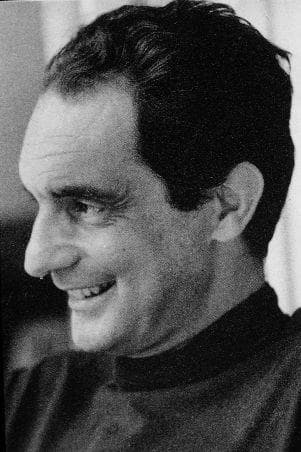
Italo Calvino was an Italian writer and journalist. His best known works include the Our Ancestors trilogy (1952–1959), the Cosmicomics collection of short stories (1965), and the novels Invisible Cities (1972) and If on a winter's night a traveler (1979).

Ashley Antoinette
4.6

Mark McDonald
4.4
Luo Guanzhong
4.4
Mia McKenzie
4.3
Dorothy Parker
4.3
Joaquim Maria Machado de Assis
4.3
James Thurber
4.2
Terry Kay
4.2