“The true story is a net to catch the light.”
— Michael K's reflections on his mother's life and the nature of stories.

J. M. Coetzee (2017)
Genre
Fiction
Reading Time
240 min
Key Themes
See below
Sign in to track this book
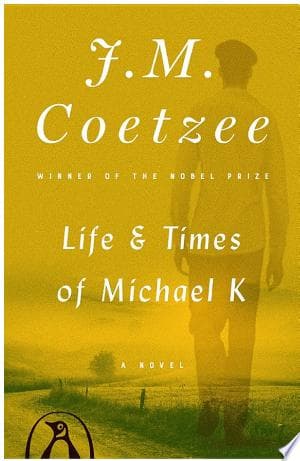
In war-torn South Africa, Michael K, a simple and resilient man, embarks on a journey to return his ailing mother to her rural home, navigating a chaotic world of armies and seeking a life of quiet dignity.
Michael K, a gardener in Cape Town, lives a simple life, marked by his harelip and perceived slowness. As civil war escalates and martial law is imposed, the city becomes dangerous and food scarce. His elderly mother, Anna K, is very ill and wants to return to her childhood home in Prince Albert, a rural town in the Karoo. Despite the difficulty and illegality of wartime travel, Michael, driven by a deep devotion to his mother, decides to undertake the perilous journey with her. He builds a crude, wheeled cart to transport her and their few belongings, beginning their arduous escape from the collapsing city.
The journey is incredibly difficult. Michael and Anna encounter roadblocks, hostile soldiers, and constant hunger. Anna's fragile health rapidly declines under the strain of travel and lack of food. At a desolate railway siding, she dies. Michael, affected yet stoic, cremates her body on a makeshift pyre, scattering her ashes in a small tin container. Her death leaves him utterly alone in a chaotic world, stripped of his primary purpose, facing the vast, indifferent Karoo with only a vague memory of her desired destination.
Continuing his journey alone, Michael eventually reaches the area near Prince Albert. He finds the farm his mother described as her birthplace, but it is abandoned and dilapidated. The house is collapsing, the fields are barren, and there are no signs of life. Despite the desolation, Michael feels a pull to the land. He begins to clear a small patch of ground, intending to plant seeds and grow a garden, driven by an instinct for survival and a desire to connect with the earth. He digs a burrow for shelter, showing his ability to adapt and survive in the wilderness, finding a peculiar peace in his solitude and the physical labor of tending to the land.
Michael's quiet existence on the farm is interrupted when a local official, a security guard, discovers him. His unauthorized presence and lack of identification immediately raise suspicion in the highly controlled wartime environment. He is apprehended and taken to a civilian work camp for displaced persons. The structured, communal life of the camp is anathema to Michael's solitary nature and his desire for freedom. He finds the confinement and forced labor unbearable, his simple mind yearning for the quiet autonomy of his garden. This experience marks his first significant encounter with organized authority since leaving Cape Town.
Driven by a strong urge for freedom and the memory of his small garden, Michael escapes from the work camp. He navigates the war-torn landscape, relying on his instincts and knowledge of the land, avoiding roads and people. He endures hunger and hardship, but his resolve to return to his patch of earth remains strong. Upon reaching the farm, he finds his garden neglected but still salvageable. He resumes his solitary life, tending to his plants, digging deeper into his burrow, and trying to live unseen and unburdened by the conflict around him. His return to the land is an act of defiance against the systems that seek to control him, reaffirming his deep connection to the natural world.
Michael's solitude on the farm is again disturbed, this time by a group of rebel soldiers. They stumble upon his hidden burrow and cultivated land. Initially suspicious, they question him but are ultimately dismissive of his simple, unthreatening nature. The soldiers briefly take over his shelter, eating some of his meager provisions. Michael, in his usual passive manner, observes them, neither resisting nor fully cooperating. The soldiers eventually depart, leaving Michael to reclaim his space and resume his quiet existence, showing his resilience and ability to endure the war's disruptions without losing his core identity.
Following the encounter with the rebels, government forces soon capture Michael. They mistake him for a rebel sympathizer or an escaped prisoner of war due to his presence in a contested area and his unkempt appearance. He is taken to a large military re-education camp, a harsher environment than the civilian work camp. Here, he is interrogated and subjected to rigid military discipline. His harelip and quiet, almost unresponsive demeanor make him difficult for his captors to understand, leading to frustration and further suspicion. He is seen as an enigma, a man who doesn't fit into any conventional category within the war's framework.
While in the military camp, Michael's health severely deteriorates. He becomes dangerously malnourished and weak, refusing most of the camp food and losing his will to live in such a confined state. A medical officer in the camp takes an interest in Michael, recognizing something unique in his quiet defiance. The officer, a thoughtful and empathetic man, tries to understand Michael's story and motivations, seeing him not as a simple prisoner but as a symbol of something more fundamental about human existence and freedom. He tries to nourish Michael back to health, offering him special food and protection, and even muses about Michael's inherent wildness and independence.
Despite the medical officer's care, Michael's spirit remains unbroken in its desire for freedom. Seizing an opportunity, he escapes from the military camp. He again disappears into the vast, desolate landscape, becoming a true wanderer. He survives by foraging for food, digging for water, and finding shelter in remote, hidden places. His existence becomes a testament to minimalist survival, a rejection of societal structures and conflicts that try to define and contain him. He avoids all human contact, finding solace and sustenance in the raw, untamed wilderness, becoming almost one with the land itself.
Driven by an almost unconscious impulse, Michael eventually finds his way back to the abandoned farm near Prince Albert for a third time. He discovers it completely overgrown and desolate, his previous efforts at cultivation erased by nature's relentless advance and the passage of time. The house is even more ruined, and his burrow has collapsed. Despite this, he stays for a short time, drawing water from the well and observing the wildness that has reclaimed his small patch of civilization. This visit is a reflection on the futility of his attempts to create permanence in a world of constant upheaval. He eventually moves on, continuing his solitary, unburdened existence, perhaps realizing that true freedom lies in detachment.
In the final stages of his journey, Michael K achieves a state of simplicity and self-sufficiency. He masters living off the land, finding sustenance in unexpected places, and requiring almost nothing from the structured world. He becomes a symbol of resistance not through active defiance, but through complete withdrawal and an unwavering commitment to his own inner life. He finds dignity in his humility, freedom in his detachment, and a spiritual connection to the earth that transcends the chaos of human conflict. His journey ends in an almost mystical understanding of existence, where the greatest wealth is independence and the deepest peace is found in being utterly alone and unburdened.
The Protagonist
Michael transforms from a devoted son into an embodiment of radical self-sufficiency and an unwitting symbol of resistance against oppressive systems.
The Supporting
Her physical journey ends with her death, but her spiritual desire for home continues through Michael.
The Supporting
He gains a deeper understanding of human freedom and the limitations of societal control through his encounter with Michael.
The Mentioned
N/A
The Mentioned
N/A
The Mentioned
N/A
The core of Michael K's journey is an unwavering, almost instinctual pursuit of personal freedom and autonomy. Despite being perceived as simple-minded, he consistently rejects confinement, whether it's the war-torn city, the civilian work camp, or the military re-education camp. His repeated escapes and his preference for a solitary existence, living off the land, show a need to be unburdened by societal structures and external control. This theme is illustrated in his repeated returns to the abandoned farm and his ability to survive independently (e.g., 'Escape and Return to the Land', 'Second Escape and Wandering').
“He knew that he would never be a prisoner again. He would rather die.”
Michael K has a deep, almost spiritual connection to the earth. His identity as a gardener is central to his character, and he consistently tries to cultivate the land, even in the most desolate circumstances. The earth provides him with sustenance, shelter, and a sense of belonging that no human society can offer. His burrowing, his planting of seeds, and his ability to find water and food in the wilderness highlight this bond. This theme is evident from his initial attempts to garden in Cape Town to his sustained efforts on the abandoned farm.
“He preferred the company of plants to the company of people.”
Michael K, despite his marginalized status and physical challenges, embodies a sense of dignity that stems from his simplicity and humility. He does not seek power or recognition, but rather an authentic existence free from pretense. His quiet resilience, his patience, and his unwavering commitment to his own truth, even when misunderstood or abused, elevate him. His ability to survive with minimal needs, rejecting the complexities and corruptions of the warring world, underscores this theme. The Medical Officer, in particular, recognizes this inherent dignity in Michael.
“He had stripped himself of everything. He was a stone, a plant, a grain of sand.”
The civil war in South Africa is the constant, oppressive backdrop to Michael K's journey. The war is depicted as a chaotic, senseless force that disrupts lives, destroys communities, and imposes arbitrary control. Michael, as an apolitical figure, is an innocent caught in its grip, forced to flee and endure its consequences without understanding its motives. The senseless violence, the checkpoints, the work camps, and the re-education camps all illustrate the war's dehumanizing effects and its inherent absurdity, which Michael largely navigates by simply trying to exist outside of its framework.
“The country was at war, but the war was elsewhere. It was a war of fences and passes, of curfews and checkpoints.”
Michael K struggles with questions of identity and belonging. His harelip marks him as an outsider, and his simple nature makes him difficult for others to categorize. He doesn't belong to any political faction, social class, or even a fixed home for much of the novel. Yet, he finds a sense of belonging with the earth itself, rather than with people or institutions. His journey is a quest to find a place where he can simply 'be,' unburdened by labels or expectations, ultimately finding his true identity in his radical self-sufficiency and connection to the land.
“He was a simple man, a man who belonged to no one, who owned nothing.”
A physical deformity that symbolizes Michael's marginalization and unique perspective.
Michael's harelip is a significant physical characteristic that immediately sets him apart. It contributes to his perceived 'slowness' and often causes others to dismiss or misunderstand him. Symbolically, it represents his marginalization from society and his inability to fully articulate his inner world through conventional means. This physical difference forces him into a more observational and internal mode of existence, allowing him to perceive the world with a unique, uncorrupted clarity, distinct from the complexities and deceptions of spoken language and social norms.
Michael's physical and spiritual pilgrimage through a war-torn landscape.
The entire novel is structured as a journey, a classic quest narrative. It begins with Michael taking his mother to Prince Albert and continues through his various escapes and wanderings. This journey is not just a physical movement across the landscape but also a spiritual and existential quest for freedom, peace, and a place to simply 'be.' The arduousness of the journey, the obstacles encountered, and the solitude experienced all contribute to Michael's transformation and his ultimate embrace of a minimalist existence. It's a journey of shedding, rather than acquiring.
A recurring motif representing shelter, self-sufficiency, and connection to the earth.
The garden and the burrow are central recurring motifs in Michael K's story. The garden represents his desire for self-sufficiency, his connection to the earth, and his ability to create life and sustenance even in desolation. It is his personal Eden, a place of peace and purpose. The burrow, his hidden underground dwelling, symbolizes his retreat from the chaotic human world, his desire for invisibility, and his deep connection to the earth as a source of shelter and safety. Together, they embody his ideal existence: self-contained, independent, and deeply rooted.
The pervasive, unspecific civil war that creates the oppressive setting for Michael's journey.
The civil war is not a character or a specific event, but a constant, pervasive backdrop that shapes every aspect of Michael's life. It is deliberately left vague and unspecific, making it a universal symbol of societal breakdown and oppressive power. The war creates the conditions for Michael's suffering (scarcity, checkpoints, camps) but also, paradoxically, for his profound solitude and the opportunity to forge a radically independent existence. It is the force he constantly evades, highlighting his apolitical nature and his focus on fundamental survival over ideology.
“The true story is a net to catch the light.”
— Michael K's reflections on his mother's life and the nature of stories.
“He knew that the earth was kind, and that the earth would provide, if only he were patient enough.”
— Michael K's philosophy while living off the land, cultivating pumpkins.
“The world was full of places where men could hide. The world was full of places where men could live.”
— Michael K's internal thoughts on escaping societal control and finding his own space.
“It was not a question of having a right to be here. It was a question of being here.”
— Michael K's simple, existential understanding of his presence in the world, unburdened by legalities.
“There was a time when he had thought that words were useful. Now he knew that words were a net, that words were a trap.”
— Michael K's growing distrust of language and its ability to misrepresent or confine.
“Perhaps all he had ever wanted was to be left alone, to be allowed to live his life in peace.”
— A recurring desire for Michael K as he navigates a world of conflict and bureaucracy.
“You are a simple man, Michael K, and your ways are simple ways. But the world is not simple.”
— A doctor's assessment of Michael K, highlighting the contrast between his nature and the complex world.
“He did not know what he wanted to do. He only knew that he wanted to be away.”
— Michael K's fundamental drive to escape his current circumstances and seek freedom.
“The past was a dream, and the future was a dream. Only the present was real.”
— Michael K's focus on the immediate moment, a coping mechanism and a philosophy.
“He had no name for himself, no history, no future. He was simply a man, walking.”
— Michael K's stripped-down existence, free from conventional identity markers.
“The wind was his only companion, and the stars his only guide.”
— Michael K's deep connection to nature during his solitary journeys.
“He had learned that the best way to survive was to be invisible, to leave no trace.”
— Michael K's strategy for avoiding capture and living freely in a war-torn land.
“To be truly free, one had to be free of everything, even of freedom itself.”
— An ironic reflection on the ultimate state of liberation, transcending even the concept of freedom.
“He was a man who had lost his way, but in losing his way, he had found something else.”
— A summary of Michael K's journey, suggesting an unexpected discovery through his meandering path.
Ready to see how well you understood this book? Take our interactive quiz with 10 questions.
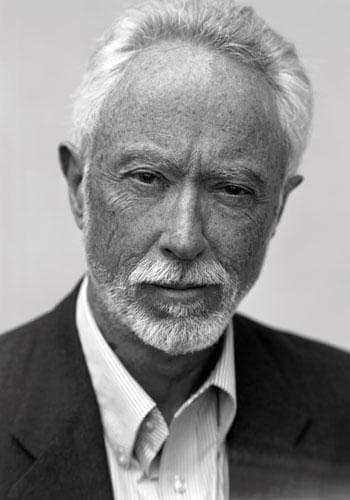
John Maxwell Coetzee OMG is a South African and Australian novelist, essayist, linguist, translator and recipient of the 2003 Nobel Prize in Literature. He is one of the most critically acclaimed and decorated authors in the English language. He has won the Booker Prize (twice), the CNA Prize (thrice), the Jerusalem Prize, the Prix Femina étranger, and The Irish Times International Fiction Prize, and holds a number of other awards and honorary doctorates.

Ashley Antoinette
4.6

Mark McDonald
4.4
Luo Guanzhong
4.4

Mia McKenzie
4.3
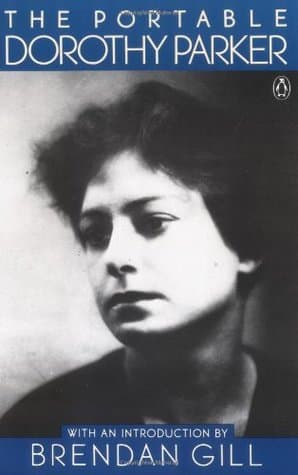
Dorothy Parker
4.3

Joaquim Maria Machado de Assis
4.3
James Thurber
4.2
Terry Kay
4.2