“Some people hear their own inner voices with great clearness. And they live by what they hear. Such people become crazy... or they become legend.”
— Narrator reflecting on the Ludlow family's fate and Tristan's wild nature.

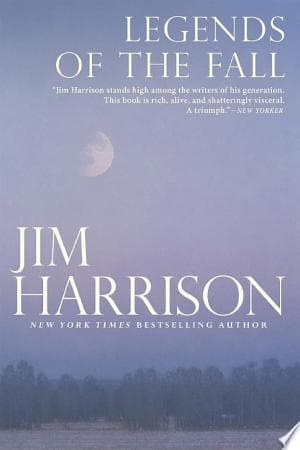
Jim Harrison (2016)
Genre
Fiction
Reading Time
240 min
Key Themes
See below
Sign in to track this book
In early 20th-century Montana, three brothers are driven by a quest for justice, their lives shaped by war and revenge.
Colonel William Ludlow, disappointed by the government's treatment of Native Americans, moves to his ranch in rural Montana with his wife, Isabel, and their three sons: Alfred, Tristan, and Samuel. He teaches them to respect nature and be independent. Alfred, the oldest, is responsible; Tristan, the middle son, is wild and connected to nature; Samuel, the youngest, is educated and hopeful. The boys grow up hunting and fishing, mostly isolated but close as a family. Their mother, Isabel, finds the wilderness too harsh and returns East, leaving the Colonel to raise the boys with help from his Cree servant, One Stab, and his family.
Years later, Samuel, after studying at Harvard, returns to the ranch with his fiancée, Susannah Fincannon. Her arrival changes the Ludlow home. All three brothers are drawn to her. Alfred is clearly smitten. Tristan, despite his wildness, finds himself interested in her. Samuel, in love, does not notice the attraction between his brothers and Susannah. The Colonel sees a coming storm, sensing the emotional trouble Susannah's presence will bring to his sons.
Despite Colonel Ludlow's wish for peace and his sons' initial hesitation, Samuel feels he must join the Canadian forces in World War I, driven by his beliefs. Tristan and Alfred, not wanting their youngest brother to go alone, volunteer to fight with him. In Europe, the war quickly overwhelms them. During a trench attack, German machine-gun fire kills Samuel. Tristan, filled with grief and rage, holds his dead brother, then scalps the German soldiers responsible, an act of revenge that changes him forever.
Samuel's death devastates Tristan. He feels guilty, believing he failed to protect his brother. His wildness grows, becoming a reckless self-destruction. He returns from the war deeply scarred, struggling to fit back into normal life. Alfred, also wounded in the war, returns as a hero but feels growing resentment toward Tristan. He dislikes Tristan's perceived irresponsibility, his appeal to Susannah, and how Tristan seems to embody the wild spirit Alfred tries to control. Alfred, always the dutiful son, takes on more ranch responsibility and tries to win Susannah's affection.
Upon their return, Susannah, still grieving Samuel, feels more and more drawn to Tristan. Despite Alfred's constant courtship, she cannot deny her strong attraction to Tristan's passionate nature, which she had felt before the war. They marry, but Tristan's war trauma and desire to wander keep him from settling down. He leaves on a long journey, traveling as a merchant sailor, trying to escape his pain and the grief of Samuel's death. His absence leaves Susannah heartbroken and alone, again creating a void in the Ludlow family.
After years of waiting, Susannah, believing Tristan will not return, accepts Alfred's steady devotion and marries him. Alfred, driven by his practical nature, succeeds. He enters politics, becoming a congressman, and tries to build a stable life with Susannah, though she still thinks of Tristan. Eventually, Tristan returns to the ranch, changed. His travels have matured him, but his wildness remains. He finds the ranch different, and seeing Susannah married to Alfred reminds him of the life he left behind.
Tristan tries to settle down, marrying Isabel Two, a local Cree woman who is One Stab's daughter, and they have children. He finds some peace and stability, running a successful whiskey distillery, a business that brings him into conflict with powerful bootlegging gangs. His new life contrasts with his earlier wanderings, and for a time, he seems to have found his place. However, his past and his defiance of authority make him a target, especially as his business moves into the territory of the powerful O'Banion brothers.
Tristan's peace ends when the O'Banion gang, retaliating against his whiskey business, kills Isabel Two. This violence pushes Tristan back into grief and rage, like the loss of Samuel. The death of his wife, whom he loved and who brought him stability, reawakens his vengeful instincts that had been quiet since the war. He focuses on retribution, leaving his settled life and embracing his wilder, more dangerous nature again.
Driven by revenge, Tristan finds and kills every member of the O'Banion gang responsible for Isabel Two's murder. His actions are brutal, showing his capacity for extreme violence when his loved ones are threatened. Meanwhile, Susannah, unable to handle her love for Tristan, her guilt over marrying Alfred, and the shadow of Samuel's death, takes her own life. Her suicide is a tragic end to the emotional trouble she faced since coming to the Ludlow ranch.
Alfred, despite his rivalry with Tristan, uses his political power to protect his brother from the law after his revenge spree. He understands the grief and rage that drove Tristan's actions. Showing lasting brotherly loyalty, he covers up Tristan's retribution. Tristan, now alone, retreats further into the wilderness, becoming a legendary figure. He lives his days as a trapper and guide, connected to the wild, until he dies fighting a grizzly bear, a fitting end for a man who lived by nature's laws.
The Protagonist
From a wild but innocent youth, he transforms into a war-scarred, vengeful wanderer, eventually finding brief peace before succumbing to a final, violent act of retribution and returning to the wild.
The Supporting
He evolves from a dutiful son into a successful politician, finding stability and recognition, though always living in the shadow of Tristan's wild allure.
The Supporting
His brief arc sees him transform from an idealistic scholar into a war casualty, serving as the catalyst for the subsequent events and character developments.
The Supporting
She arrives as an innocent fiancée, becomes a woman torn by love and grief, and ultimately succumbs to despair, ending her life.
The Supporting
He begins as a disillusioned but strong family patriarch, witnessing the tragedies and triumphs of his sons, and ends as a stoic survivor.
The Supporting
He remains a constant, wise presence throughout the narrative, observing the Ludlow family's trajectory with a timeless perspective.
The Supporting
She provides Tristan with a brief period of domestic bliss before her tragic death fuels his final, violent revenge.
The Mentioned
Her brief appearance and subsequent departure establish the harsh realities of the family's chosen life.
This theme is central to the novella, exploring the conflict between the natural world and society. The Ludlow brothers, especially Tristan, embody a wild spirit, living by their own code in the Montana wilderness. Colonel Ludlow's dislike of government and his choice to raise his sons outside societal norms show this. Tristan's difficulty adapting to marriage, his desire to wander, and his eventual return to the wilderness reflect his inability to be confined by society, contrasting with Alfred's embrace of politics and conventional life. The wilderness offers freedom and honesty that society often lacks, but also harsh laws.
“Some people hear their own inner voices with great clearness and they live by what they hear. Such people become mad, or they become legends.”
The cycle of grief and revenge drives the story. Samuel's death in WWI leads to Tristan's act of scalping German soldiers, a raw expression of sorrow and rage. This cycle repeats with Isabel Two's murder, leading Tristan on a ruthless quest for revenge against the O'Banion gang. The novella explores how great loss can change people, pushing them to extreme violence for their loved ones. Tristan's inability to move past these losses, choosing instead to take a bloody toll, defines much of his character and actions, showing the destructive nature of unchecked revenge.
“He would not let Samuel's death go unavenged. It was a matter of honor, a primitive, unyielding honor.”
The novella explores the complexities of love—familial, romantic, and unrequited—and the impact of loss. The strong bond between the Ludlow brothers, especially Tristan and Samuel, is a core part of the story, making Samuel's death a great loss for the family. Susannah's love for Samuel, her attraction to Tristan, and Alfred's devotion to her create a tragic love triangle. Each character experiences significant loss, from Samuel's early death to Isabel Two's murder and Susannah's suicide, showing how love brings both joy and pain, shaping their destinies.
“She was the rock on which the family foundered, though she was not to blame.”
The idea of an inescapable fate or destiny runs through the story, often expressed by One Stab. From Susannah's arrival, a sense of coming tragedy hangs over the family, as if their paths are set. Tristan's wild nature seems to destine him for a life outside society, and his violent end, fighting a bear, feels like a fated return to the primal elements he embodied. The repeated cycles of love, loss, and revenge suggest that the characters are caught in a larger, uncontrollable current, fulfilling a destiny shaped by their natures and the harsh realities of their world, rather than entirely by free will.
“He was a man that life had marked for a legend, and legends do not die easily.”
Provides a philosophical, often prophetic, indigenous perspective on the Ludlow family's story.
One Stab, the Cree elder and family confidant, serves as the primary narrator, or at least the framework for much of the narration, in 'Legends of the Fall'. His voice provides a unique, detached, and often prophetic perspective on the events unfolding around the Ludlows. His observations are steeped in indigenous wisdom, connecting the family's struggles to larger themes of nature, fate, and the human spirit. Through his eyes, the Ludlows' story transcends a mere family drama, becoming a mythic tale of men grappling with their primal instincts and the forces of destiny. His commentary often hints at future events or offers profound insights into the characters' true natures, lending an epic, almost legend-like quality to the narrative.
Represents the untamed wilderness, primal strength, and Tristan's ultimate fate.
The bear, particularly the grizzly, is a powerful and recurring symbol throughout the novella, closely associated with Tristan. It represents the raw, untamed power of the wilderness, a force of nature that is both majestic and dangerous. Tristan's deep connection to nature gives him a bear-like quality – fierce, independent, and capable of brutal strength when provoked. His final, fated encounter and death in a fight with a grizzly bear serves as a highly symbolic end, signifying his ultimate return to the wild from which he sprang, a fitting demise for a man who could never be truly civilized. It underscores his primal essence and his destiny to live and die by the laws of the natural world.
Acts as a character, shaping the Ludlow family's identity, values, and destiny.
The remote Montana wilderness is far more than just a backdrop; it is a central character in 'Legends of the Fall'. It shapes the Ludlow family's values, their independence, and their unique moral code. Colonel Ludlow's choice to raise his sons in this harsh, beautiful landscape instills in them a deep connection to nature and a distrust of conventional society. The wilderness offers freedom and a sense of belonging for Tristan, but also isolation and a breeding ground for his untamed spirit. It is a place of both solace and savagery, reflecting the dual nature of the Ludlow brothers themselves and serving as the ultimate refuge and final resting place for Tristan.
World War I serves as a pivotal event that irrevocably alters the Ludlow family's trajectory.
World War I functions as a crucial plot device, acting as a devastating catalyst for the subsequent tragedies and character developments. Samuel's idealistic desire to fight, and his brothers' decision to join him, pulls the family out of their isolated Montana haven and thrusts them into the brutal realities of global conflict. Samuel's death in the war directly triggers Tristan's first act of primal vengeance and sets him on a path of grief and self-destruction. The war scars both Tristan and Alfred, physically and emotionally, fundamentally changing their perceptions of the world and each other. It marks the end of their innocence and the beginning of their complex adult lives, forever impacting their relationships and choices.
“Some people hear their own inner voices with great clearness. And they live by what they hear. Such people become crazy... or they become legend.”
— Narrator reflecting on the Ludlow family's fate and Tristan's wild nature.
“He was born in the autumn of his father's life, a wild colt of a boy who could not be broken.”
— Description of Tristan Ludlow's character as a child.
“The only thing more painful than being an active forgetter is to be an inert rememberer.”
— Reflection on memory and loss, particularly regarding the Ludlow brothers' experiences in war.
“He was a man who could not live in peacetime.”
— Describing Tristan's restless spirit after World War I.
“Love is a temporary madness. It erupts like an earthquake and then subsides. And when it subsides you have to make a decision. You have to work out whether your roots have become so entwined together that it is inconceivable that you should ever part.”
— Reflection on the tumultuous relationships in the novel, such as Tristan's with Susannah.
“The heart breaks. That's all. It's made of muscle and blood and it just breaks.”
— On the emotional devastation faced by characters like Alfred and Susannah.
“He had the look of a man who has seen the world and found it wanting.”
— Describing Tristan's disillusionment after his travels and losses.
“In a world of lies, the truth is a revolutionary act.”
— Commentary on the hypocrisy and deception in society, as seen through the Ludlows' struggles.
“The land does not forgive. It remembers every drop of blood spilled upon it.”
— Reflecting on the Montana landscape and the violence that marks the Ludlow family's history.
“He was a storm that passed through lives, leaving wreckage and beauty in equal measure.”
— Describing Tristan's impact on those around him, like his brothers and lovers.
“Grief is not a line, but a circle. It comes back around, again and again.”
— On the cyclical nature of loss in the story, such as the deaths in the Ludlow family.
“Some men are born to wander, and no fence can hold them.”
— Explaining Tristan's inability to settle down, despite his family's wishes.
“The bond between brothers is thicker than blood; it is forged in shared pain and silent understanding.”
— Reflecting on the relationship between Tristan, Alfred, and Samuel Ludlow.
“She loved him not for what he was, but for what he might have been, and that is the most tragic love of all.”
— Describing Susannah's unrequited love for Tristan and her eventual despair.
Ready to see how well you understood this book? Take our interactive quiz with 10 questions.
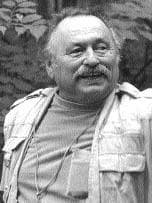
James Harrison was an American poet, novelist, and essayist. He was a prolific and versatile writer publishing over three dozen books in several genres including poetry, fiction, nonfiction, children's literature, and memoir. He wrote screenplays, book reviews, literary criticism, and published essays on food, travel, and sport. Harrison indicated that, of all his writing, his poetry meant the most to him.

Ashley Antoinette
4.6

Mark McDonald
4.4
Luo Guanzhong
4.4
Mia McKenzie
4.3
Dorothy Parker
4.3

Joaquim Maria Machado de Assis
4.3
James Thurber
4.2
Terry Kay
4.2