“When you have a friend, you have a mirror to your soul.”
— Lady Tan reflecting on her friendship with Meilin.


Lisa See (2023)
Genre
Fiction
Reading Time
450 min
Key Themes
See below
Sign in to track this book
In 15th-century China, two women born under the same sign form a strong bond, going against societal rules to practice medicine and advocate for women's health in a world that sees educated women as worthless.
Tan Yunxian is born in 1466, the Year of the Metal Snake, into a well-known family of physicians in Hangzhou, China. Her early life has sadness: her mother dies from puerperal fever soon after Yunxian's birth, and her older brother dies from smallpox. These losses affect her deeply. Her grandfather, a respected doctor, decides to raise her with her grandmother, a skilled physician for women. From a young age, Yunxian studies medicine, learning to read medical texts and watch her grandmother work. She forms an unexpected, yet close, friendship with Meiling, a girl from a lower class whose mother is a midwife. Despite social rules separating their classes, the two girls connect over their shared interest in healing and their wish to help women.
As Yunxian grows, her medical education with her grandmother becomes more intense. She learns about the specific illnesses affecting women, many related to childbirth and gynecological issues, which men were not allowed to treat directly. Meiling, meanwhile, apprentices with her own mother, learning the practical, often bloody, skills of midwifery. Their friendship grows, kept alive by secret meetings and shared dreams of healing. They discuss cases, share knowledge, and support each other, creating a 'circle of women' before Yunxian officially names it. This bond helps them navigate the strict social hierarchy and the limits placed on women, especially in the male-dominated field of medicine. They promise to always be there for each other, repeating their shared saying: "No mud, no lotus."
At sixteen, Yunxian marries into the respected Yang family, a match arranged by her grandparents. Her husband, Yang Ren, is kind but quiet. Her new life is ruled by strict Confucian customs and the watchful eyes of her mother-in-law, Lady Ma, who views Yunxian's medical knowledge with suspicion and discourages her from practicing. Yunxian finds herself mostly confined to the inner chambers, expected to manage the household and have a male heir. Her friendship with Meiling becomes harder to keep, as Lady Ma disapproves of their class difference. Despite the restrictions, Yunxian secretly continues her studies and watches the health of the women in the Yang household, wanting to use her skills.
Yunxian's first years in the Yang household are frustrating. Her mother-in-law, Lady Ma, greatly limits her freedom, especially her medical practice. Yunxian cannot treat anyone outside the family and is even discouraged from openly studying. She focuses on her wife duties, giving birth to a daughter, then a son. Despite the rules, Yunxian subtly uses her knowledge, helping the concubines, servants, and even her own children with small illnesses, often pretending they are traditional remedies. She secretly writes to Meiling through servants, sharing ideas and keeping their important connection, which gives her a link to her true self and purpose.
Yunxian gets a serious, long illness, possibly puerperal fever after her second child's birth. Her condition worsens, and traditional male doctors do not help. In desperation, Lady Ma allows Yunxian's grandmother and Meiling to be called. With their combined efforts, and Yunxian's own deep understanding of her body and symptoms, she slowly gets better. This near-death experience is an important moment. It shows Lady Ma the value of female medical knowledge and renews Yunxian's determination to practice. Her husband, Yang Ren, also sees her suffering and the limits of male doctors, becoming more supportive of her medical work.
After she gets better, Lady Ma gives Yunxian more freedom to practice medicine, first within the household and then carefully outside it. She begins to treat women from different social levels, often discreetly at first. Yunxian starts a formal 'Circle of Women,' where women of different backgrounds—from wealthy wives to common village women and even courtesans—can share their health concerns, support each other, and get treatment. Meiling becomes a valuable partner, bringing her practical midwifery skills and knowledge of common people. This circle challenges the male-dominated medical system and gives women a safe place to talk about their bodies and experiences, helping them through shared knowledge and care.
As Yunxian's reputation as a physician grows, she faces more scrutiny and resistance from male doctors and conservative parts of society who disapprove of a woman practicing medicine, especially one treating women of all classes. At the same time, her relationship with Meiling becomes tense. Meiling, a commoner, feels more and more left out and disrespected by the strict class system, which Yunxian, despite her good intentions, cannot fully escape. Meiling's direct, practical way, born of necessity, sometimes conflicts with Yunxian's more refined, scholarly methods. The power difference due to Yunxian's elite status creates resentment and distance between the once close friends, threatening their shared goal.
Yunxian's family, especially her husband Yang Ren, gets caught in the changing political environment and power struggles within the Ming court. Accusations of corruption and disloyalty lead to arrests and exiles, affecting Yunxian's extended family. During this difficult time, Yunxian experiences more personal losses, including the deaths of loved ones. These events show how uncertain life is, even for the elite, and force Yunxian to face the limits of her influence. The political trouble also tests her resolve and the strength of her medical practice, as she must navigate a world where even her privileged status offers little protection from unfairness and sadness.
After a time apart, Yunxian and Meiling are brought back together by a shared medical problem or a mutual need. They discuss their past complaints, acknowledging the pain caused by their different social positions and communication problems. Through honest talk and a new understanding of their complementary skills—Yunxian's scholarly approach and Meiling's practical, hands-on experience—they make up. Their friendship, though changed by life's difficulties, proves strong. They realize that their individual strengths are greater when combined, and their shared dedication to women's health goes beyond their class differences, solidifying their commitment to their 'circle of women' and their lifelong bond.
In her later years, Yunxian, now known as Lady Tan, puts her medical knowledge and experiences into a book, 'Sayings of a Female Doctor.' This important work, detailing women's health conditions and treatments, shows her lifelong dedication and was revolutionary for its time. She continues to guide younger women, making sure her 'circle' continues. Her book becomes a valuable resource, saving centuries of female medical wisdom that might have been lost. Lady Tan's life ends with an important legacy, not only as a physician who healed many women but also as an author who helped future generations of female healers, securing her place in history.
The Protagonist
From a sheltered, grieving child, Yunxian grows into a resilient and influential physician who compiles her medical knowledge into a groundbreaking book.
The Supporting
Meiling evolves from a spirited apprentice to a seasoned midwife and a crucial, if sometimes strained, collaborator in Yunxian's medical practice.
The Supporting
As Yunxian's mentor, she successfully passes on her medical legacy and wisdom, ensuring its continuation through her granddaughter.
The Supporting
Yang Ren transforms from a traditional husband to a supportive partner who recognizes and values his wife's unique talents and calling.
The Supporting
Lady Ma transitions from a rigid enforcer of tradition to a grudging, then more accepting, supporter of Yunxian's medical practice.
The Supporting
He establishes the foundation for Yunxian's medical career by providing her with an unconventional education.
The Supporting
She mentors Meiling in the traditional art of midwifery, ensuring the continuation of her family's healing lineage.
The Mentioned
She finds healing and community within Yunxian's circle, transcending her societal role.
The novel explores the lasting and complex bond between women, especially through the friendship of Yunxian and Meiling. Despite big class differences and social pressures, their connection provides mutual support, intellectual exchange, and emotional comfort. The 'Circle of Women' Yunxian eventually forms extends this theme, showing how women can help each other through shared knowledge, empathy, and working together, creating a safe space in a male-dominated society. Their friendship shows the strength and resilience in female unity against hardship.
““No mud, no lotus,” they told each other, a reminder that from adversity, beauty can bloom.”
The book supports the important, yet often hidden, role of female healers in 15th-century China. It shows how women, like Yunxian and her grandmother, had specific knowledge in treating women's illnesses, especially those related to childbirth and gynecology, which male doctors were not allowed to examine. The story highlights how effective and necessary this knowledge was, comparing it with the limits and sometimes harm caused by male physicians. Yunxian's book 'Sayings of a Female Doctor' shows the preservation and value of this important female wisdom.
“A man could not touch a woman; he could not ask her intimate questions. How then could he understand the subtleties of a woman’s body?”
The novel clearly shows the strict Confucian society of Ming China, where women were mostly confined to the inner chambers and expected to follow strict roles. Yunxian's journey is a good example of quiet resistance against these rules. She does not openly challenge society but navigates its rules with care, finding subtle ways to pursue her medical calling. Her arranged marriage, her mother-in-law's initial rules, and the disapproval of male doctors all represent these limits, which Yunxian gradually overcomes through persistence and smart actions, showing the power of subtle resistance.
“The greatest joy for a woman was to be a mother and to serve her husband’s family. Anything else was a distraction, a frivolous pursuit.”
The clear class differences in Ming China are a main theme, especially in the friendship between the elite Yunxian and the commoner Meiling. The novel explores how privilege gives Yunxian access to education and resources, while Meiling relies on practical experience and strength. These differences create tension and misunderstanding between them, showing the challenges in overcoming social classes. However, it also shows how, despite these divisions, a shared purpose can bridge gaps, but never fully remove the realities of their social standings, which influence their views and experiences.
“My life was dictated by the wishes of others, while yours was dictated by the needs of survival.”
The theme of legacy is central, ending with Yunxian's decision to write 'Sayings of a Female Doctor.' This act ensures that her collected knowledge and the wisdom of female healers are saved for future generations, countering the historical forgetting of women's contributions. Her authorship not only secures her personal legacy as a remarkable physician but also helps many other women by providing a written record of female-focused medical practices. The book itself becomes a symbol of lasting influence and the power of passing on knowledge.
“To write down what I know is to ensure that the women who come after me will not have to start from nothing.”
A network of female patients and healers that transcends social strata.
This is a literal and metaphorical device. Literally, it's the group of women Yunxian treats and learns from, ranging from elite wives to courtesans and common villagers. Metaphorically, it represents the solidarity, shared knowledge, and support system that women create for themselves in a restrictive patriarchal society. It allows Yunxian to gather diverse medical insights and provides a safe space for women to discuss their health, challenging the male-dominated medical establishment and fostering community among women who would otherwise be isolated.
Yunxian's medical treatise, representing her legacy and the preservation of female medical knowledge.
This historical text, actually written by Tan Yunxian, serves as the ultimate goal and culmination of Yunxian's life's work. It is a symbol of her defiance against historical erasure and her dedication to female health. As a plot device, its creation drives much of her later narrative, showcasing her intellectual rigor and her desire to leave a lasting impact. It also highlights the importance of written records in preserving knowledge that might otherwise be lost, especially knowledge created by women.
A recurring philosophical motif signifying resilience and finding beauty in adversity.
This mantra, shared between Yunxian and Meiling, acts as a guiding principle and a symbolic plot device throughout the novel. It represents their shared understanding that challenges and suffering ('mud') are often necessary for growth, wisdom, and beauty ('lotus'). It reinforces their friendship, their resilience in facing societal obstacles, and their commitment to their healing work despite personal hardships and professional resistance. It's a constant reminder of their inner strength and purpose.
The traditional Chinese medical diagnostic method, emphasizing observation, listening, inquiry, and pulse-taking.
This traditional diagnostic framework is a fundamental plot device that grounds Yunxian's medical practice in historical accuracy. It highlights the meticulous nature of Chinese medicine and Yunxian's skill. For female patients, particularly, the 'asking' and 'observing' aspects become crucial, as male doctors were forbidden from directly examining women. Yunxian's mastery of these examinations, often adapted to her unique position, allows her to effectively diagnose and treat her patients, demonstrating the depth of her medical knowledge and her ability to work within the constraints of her society.
“When you have a friend, you have a mirror to your soul.”
— Lady Tan reflecting on her friendship with Meilin.
“A woman's greatest strength lies in her ability to adapt, to bend without breaking.”
— Lady Tan considering the challenges women face in their society.
“To truly heal, one must understand the root of the illness, not just treat the symptoms.”
— Lady Tan's medical philosophy, influenced by her grandmother.
“Sometimes, the greatest freedom is found within the smallest choices.”
— Lady Tan finding agency in her medical practice despite societal constraints.
“The world outside our gates is full of dangers, but also opportunities for discovery.”
— Lady Tan's longing for knowledge beyond her sheltered life.
“A good doctor listens not only with her ears but with her heart.”
— Lady Tan emphasizing empathy in medical practice.
“Every woman carries a secret garden within her, where her true self blossoms.”
— A metaphorical reflection on women's inner lives and hidden strengths.
“Tradition can be a comfort, but it can also be a cage.”
— Lady Tan grappling with societal expectations and her desire for more.
“The greatest lessons are often learned through the greatest pain.”
— Lady Tan reflecting on personal hardships and growth.
“Silence can be a weapon, a shield, or a prison.”
— Discussing the power and implications of women's silence in their society.
“Even the smallest act of kindness can ripple through generations.”
— Lady Tan considering the legacy of her grandmother and her own actions.
“To be seen, truly seen, is a rare and precious gift.”
— Lady Tan cherishing the understanding and acceptance she finds with Meilin.
“The body tells stories that the tongue cannot speak.”
— Lady Tan's understanding of how illness reflects deeper emotional or physical imbalances.
“Hope is a seed that must be nurtured, especially in the harshest soils.”
— Lady Tan maintaining her aspirations despite the difficulties she faces.
Ready to see how well you understood this book? Take our interactive quiz with 10 questions.
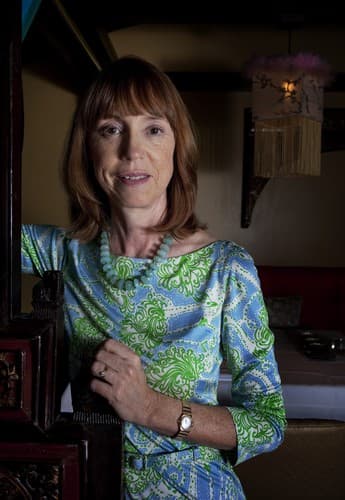
Lisa See is an American writer and novelist. Her books include On Gold Mountain: The One-Hundred-Year Odyssey of My Chinese-American Family (1995), a detailed account of See's family history, and the novels Flower Net (1997), The Interior (1999), Dragon Bones (2003), Snow Flower and the Secret Fan (2005), Peony in Love (2007) and Shanghai Girls (2009), which made it to the 2010 New York Times bestseller list. Both Shanghai Girls and Snow Flower and the Secret Fan received honorable mentions from the Asian/Pacific American Awards for Literature.

Ashley Antoinette
4.6

Mark McDonald
4.4
Luo Guanzhong
4.4

Mia McKenzie
4.3
Dorothy Parker
4.3
Joaquim Maria Machado de Assis
4.3

James Thurber
4.2

Terry Kay
4.2