“I have always imagined that Paradise will be a kind of library.”
— From 'The Library of Babel', a reflection on the nature of knowledge and infinity.

Jorge Luis Borges (1964)
Genre
Fiction
Reading Time
900 min (approx. 15 hours)
Key Themes
See below
Sign in to track this book
Libraries are infinite, dreams are reality, and every mirror reflects a maze of philosophical questions.
Dr. Yu Tsun, a former English professor and German spy in World War I, is being chased by Captain Richard Madden. Knowing he will soon be caught, Yu Tsun decides to send his information—the location of a new British artillery park—in an unusual way. He finds Stephen Albert, a sinologist studying *The Garden of Forking Paths* by Yu Tsun's ancestor, Ts'ui Pen. Yu Tsun says he will kill Albert, explaining that this murder will, through a newspaper report, tell his German handlers the city's name (Albert). During their talk, Albert reveals that Ts'ui Pen's novel is an infinite maze of time, where all possible outcomes of every choice exist at once. Yu Tsun, after understanding his ancestor's work, shoots Albert, finishing his mission and accepting his fate as a condemned man.
The narrator tells about his meetings with Ireneo Funes, a young man from Uruguay. After falling from a horse, Funes becomes paralyzed but gains an extraordinary memory. He remembers every detail, sensation, and moment of his life, and even things he only saw. This memory is not a gift; it is a curse. Funes is overwhelmed by his memories and cannot generalize, abstract, or forget. He has trouble sleeping, bothered by endless images and sensations. The narrator thinks about Funes's inability to think abstractly, as every idea is linked to countless specific instances. Funes, stuck in his boundless past, dies from lung problems, which represents the heavy weight of his memory.
The narrator describes the universe as a vast, perhaps infinite, Library made of hexagonal rooms. Each room has shelves of books, all the same size, filled with every possible combination of letters, spaces, and punctuation. The librarians believe that somewhere in this Library is a book that explains all the others, or even a list of all lists. They search for these 'Crimson Hexagon' books, facing hardship and madness. Most books, however, are nonsense, containing random letter sequences. This leads to despair; the huge number of meaningless texts makes finding a meaningful one statistically unlikely. This makes the Library a symbol of both endless potential and ultimate pointlessness in the search for complete knowledge or meaning.
Jaromir Hladík, a Jewish writer in Prague, is arrested by the Nazis during World War II and sentenced to death by firing squad. He worries about his unfinished play, *The Enemies*, and wants more time to finish it. The night before his execution, Hladík prays for a miracle. As the firing squad raises their rifles and the order to fire is given, time stops. For Hladík, a whole year passes in one moment. This lets him carefully revise and finish his play in his mind, down to the last comma. He experiences the entire creative process, the struggles and successes of writing, all within the frozen moment of his execution. When the year is over, the bullets hit him, and he dies, having reached his artistic goal through a divine, personal intervention.
The narrator and his friend Bioy Casares find an error in a copied encyclopedia: an entry for a country called 'Uqbar' that does not seem to exist. More searching shows that Uqbar is a region on a fictional planet called Tlön. Tlön is described in a large, secret encyclopedia made by a group of conspirators. Tlön is a world based on subjective idealism, where objects exist only if perceived. Its language has no nouns, only verbs and adjectives. Over time, objects from Tlön start appearing in the real world—a compass with Tlönian marks, then a coin, and finally, 'hrönir' (copies created by collective imagination). Tlön's ideas and creations slowly enter and replace reality. This shows how ideas and fiction can shape the world, eventually threatening to turn our reality into Tlön.
A silent, wounded man arrives at ancient, circular ruins and tries to dream a man into existence, detail by detail. He starts by dreaming a heart, then organs, then a skeleton, and finally a complete human being. This takes great effort and concentration. He tells his creation, whom he names, to perform rituals in a distant temple, making sure only he, the dreamer, knows the man is a dream. The created man lives and does his duties without suspecting his origin. The wizard fears his creation will learn the truth or that others will find out his secret. Eventually, the wizard learns of a fire approaching his temple. As the flames cover him, he feels no pain, realizing with relief and terror that he, too, is a dream, made by another.
Juan Dahlmann, a librarian and descendant of a German immigrant and an Argentine military hero, gets a blood infection after hitting his head on a window frame. While recovering in a hospital, he dreams of a romantic death, imagining himself dying in a duel instead of a slow illness. After being discharged, he decides to travel to his family's ranch in the South of Argentina to get better. The trip itself feels like a dream, full of symbolic meetings. At a remote inn, he is provoked by rowdy gauchos and a threatening foreman. Though he knows he is outmatched, Dahlmann feels a strong connection to his ancestor's heroic past. Embracing a fatalistic romanticism, he accepts a knife from an old gaucho and steps out to fight, choosing a heroic, if doomed, death over his prior illness.
Erik Lönnrot, a clever but overly logical detective, faces a series of murders that seem ritualistic. The first victim, Rabbi Yarmolinsky, is found in a hotel with a mysterious note. Lönnrot rejects the police's simple explanation and creates a complex theory involving the Tetragrammaton and a hidden synagogue. A second murder happens, then a third, each following a precise geometric and symbolic pattern. Lönnrot, sure he has solved a cabalistic plot, predicts the location of the fourth and final murder. He travels to a desolate villa, believing he will stop it. Instead, he faces Red Scharlach, a known gangster and Lönnrot's rival. Scharlach reveals he planned all the murders, carefully making them fit Lönnrot's intellectual interests to draw him into a trap. This shows that Lönnrot's extreme logic made him predictable and vulnerable.
Marcus Flaminius Rufus, a Roman tribune, finds a text suggesting the City of the Immortals exists. Wanting eternal life, he goes on a dangerous journey. He finds the City, a strange and maze-like ruin, and drinks from the River of Immortality, along with 'Troglodytes' who are the Immortals. He soon learns that immortality is a curse: without the threat of death, time loses meaning, individuality fades, and memory becomes a heavy burden. The Immortals, having lived for thousands of years, are indifferent to everything. Their minds are broken and their bodies decaying. Rufus spends centuries looking for a way to reverse the curse. He eventually finds a second river whose waters bring back mortality. After becoming human again, he lives a final, meaningful life before dying.
Tzinacán, an Aztec priest, is imprisoned in a dark, damp cell by the Spanish. In the next cell is a jaguar. Tzinacán believes a divine message, a 'god's script,' is hidden somewhere, perhaps in the jaguar's spots or star patterns. He spends years meditating, enduring torture, and slowly losing his senses, all while searching for this ultimate word that could solve existence's mysteries and give him power. After lightning reveals a hidden pattern of spots on the jaguar, Tzinacán has a cosmic understanding. He understands the universe, its origins, its purpose, and his place in it. He finds a single, all-encompassing word, so powerful that saying it would give him all power and let him rebuild his world. However, in his enlightened state, he realizes such power would be meaningless. He chooses to forget the word, staying in his cell, content with his new understanding.
The Protagonist
From a conflicted spy, he achieves his mission through a paradoxical act of violence, gaining profound insight into his family's legacy and the nature of time.
The Supporting
Transforms from an ordinary boy into a being burdened by infinite memory, ultimately succumbing to its overwhelming nature.
The Protagonist
From a hopeful seeker of the 'Crimson Hexagon' to a resigned observer of the Library's infinite, indifferent nature.
The Protagonist
Faces death with artistic desperation, and through a miraculous subjective experience, completes his life's work before his physical demise.
The Protagonist
Begins as a curious intellectual, becoming a witness to the dissolution of reality by a fictional construct.
The Protagonist
From a powerful creator, he discovers his own existence is also a dream, completing a recursive loop of creation.
The Protagonist
Recovers from a modern illness only to choose a romanticized, fatalistic death, affirming his connection to his ancestral past.
The Protagonist
From a master of deduction, he is outsmarted by his rival who exploits Lönnrot's own intellectual pride, leading to his demise.
The Protagonist
Seeks and achieves immortality, only to find it a curse, then quests for mortality to regain his humanity before finally dying.
The Protagonist
From a suffering priest seeking a powerful divine word, he achieves cosmic enlightenment and chooses to forgo omnipotence for profound understanding.
Borges often questions what we think is real. In 'Tlön, Uqbar, Orbis Tertius,' a fictional world slowly takes over our own, suggesting that reality is made of ideas and shared imagination. 'The Circular Ruins' explores a reality where a man dreams another into existence, only to find he too is a dream. These stories propose that reality is not fixed; it is subjective and can be changed or dissolved by ideas, language, or a dreamer's will. This blurs the lines between what is tangible and what is an illusion.
“For the world was less a world than a system of ideas.”
Many stories feature infinite or maze-like structures, both physical and conceptual. 'The Library of Babel' presents a universe as an infinite library of all possible books, leading to both the chance for ultimate knowledge and the despair of overwhelming meaninglessness. 'The Garden of Forking Paths' describes a novel that is an infinite maze of time, where all possibilities exist together. These mazes symbolize the human effort to find order, meaning, and a clear path in a vast, often chaotic, or endlessly branching universe. They show the limits of human understanding.
“The universe (which others call the Library) is composed of an indefinite, perhaps infinite, number of hexagonal galleries...”
Borges often changes and questions the linear nature of time. In 'Funes the Memorious,' a character's endless memory traps him in an eternal present, stopping him from abstract thought. 'The Secret Miracle' gives a condemned man an entire year of subjective time to finish his work in one objective moment. 'The Immortal' explores the heavy burden of eternal life, where memory becomes a fragmented, meaningless mess. These explorations show that time is not just a calendar progression but a personal experience. Forgetting is as important as remembering for human consciousness and meaning.
“To think is to forget differences, to generalize, to abstract. In the overly replete world of Funes there were nothing but details...”
Language and texts are central to Borges's meta-fictional explorations. Stories like 'The Library of Babel' and 'Tlön, Uqbar, Orbis Tertius' directly address how language, encyclopedias, and literature can define or create reality, and their limits. The search for meaning in a text (Ts'ui Pen's novel in 'The Garden of Forking Paths', the 'god's script' in 'The God's Script') often reflects the human search for ultimate truth. Borges suggests that interpreting is a creative act, and that a text's (or the universe's) meaning is often hard to find, subjective, and open to endless debate.
“I reflected that if the Library exists, this elegant variation (the number of letters) cannot fail to exist.”
Characters often go on journeys to learn about themselves, which often leads to major or unsettling discoveries about who they are. 'The Wizard' in 'The Circular Ruins' creates another man only to realize he himself is a dream, which breaks his sense of unique identity. Juan Dahlmann in 'The South' tries to define himself through a heroic, ancestral death. Marcus Flaminius Rufus in 'The Immortal' loses and then regains his individual identity through immortality and its reversal. These stories explore how identity is made, broken, and sometimes lost due to outside forces or personal discoveries. They question whether a stable self truly exists.
“With relief, with humiliation, with terror, he understood that he too was a mere appearance, dreamt by another.”
Stories that self-consciously draw attention to their own fictional nature.
Borges frequently employs metafiction, blurring the lines between author, narrator, and story. In 'Tlön, Uqbar, Orbis Tertius,' the story itself describes the creation and dissemination of a fictional encyclopedia, which then begins to alter reality. In 'The Garden of Forking Paths,' a novel within the story is central to the plot's philosophical implications. This device highlights the constructed nature of narratives, inviting readers to consider the power of storytelling and the relationship between fiction and reality, often positioning the literary work as a world-creating entity.
A recurring symbol representing complexity, confusion, and the human search for meaning.
The labyrinth is a pervasive motif, appearing literally and metaphorically. Ts'ui Pen's novel in 'The Garden of Forking Paths' is described as a labyrinth of time. The universe itself is depicted as 'The Library of Babel,' an infinite, bewildering labyrinth of books. The City of the Immortals is a 'senseless labyrinth.' This device symbolizes the overwhelming complexity of the universe, the human mind, and the search for truth. It suggests that knowledge is not linear, and that meaning is often found not in a single exit, but in the experience of navigating the twists and turns.
A concept representing boundless information, knowledge, and meaninglessness.
The idea of an infinite book or library is central to several stories. 'The Library of Babel' is the most direct example, where the universe is literally an endless collection of all possible books. This device explores the paradox of infinite information: while it contains every truth, it also contains every falsehood and every meaningless permutation, rendering the search for specific knowledge futile and overwhelming. It questions the value of knowledge when it is boundless and undifferentiated, and underscores the human struggle to find order in chaos.
A philosophical concept where reality is dependent on perception or consciousness.
Borges often integrates the philosophical idea that reality is not independent of the mind. Tlön, in 'Tlön, Uqbar, Orbis Tertius,' is a planet whose entire metaphysics is based on subjective idealism, where objects only exist when perceived. The Wizard in 'The Circular Ruins' dreams a man into existence, only to discover his own existence is also a dream, suggesting a recursive idealism. This device challenges the common-sense view of an objective reality, proposing that consciousness, imagination, and language actively shape and even create the world we inhabit, highlighting the power of mental constructs.
Reflections, doppelgängers, or recursive structures that question identity and originality.
Borges frequently uses doubles, mirror images, or recursive structures to explore themes of identity, originality, and the nature of creation. The created man in 'The Circular Ruins' is a double of his creator, who is then revealed to be a double himself. The 'hrönir' in 'Tlön, Uqbar, Orbis Tertius' are duplicates of objects conjured by collective thought. This device often destabilizes the concept of a unique, original self or object, suggesting that identity is fluid, imitative, or part of a larger, recursive pattern, blurring the lines between copy and original, and creator and creation.
“I have always imagined that Paradise will be a kind of library.”
— From 'The Library of Babel', a reflection on the nature of knowledge and infinity.
“Reality is not always probable or necessary.”
— From 'Tlön, Uqbar, Orbis Tertius', discussing the creation of an imaginary world that begins to infiltrate reality.
“To be immortal is commonplace; from the point of view of the immortal, all men are immortal; what is divine, terrible, incomprehensible, is to know oneself mortal.”
— From 'The Immortal', as the protagonist reflects on the nature of mortality and immortality.
“Every man is a writer, and every writer is a god.”
— From 'The Library of Babel', describing the inhabitants' relationship with the infinite books.
“The universe, which others call the Library, is composed of an indefinite and perhaps infinite number of hexagonal galleries.”
— Opening line of 'The Library of Babel', setting the scene for its unique cosmology.
“A book is not an isolated entity: it is a relationship, an axis of innumerable relationships.”
— From 'A Note on (lunar) Books', discussing the interconnectedness of literature.
“Time is the substance I am made of. Time is a river which sweeps me along, but I am the river; it is a tiger which devours me, but I am the tiger; it is a fire which consumes me, but I am the fire.”
— From 'A New Refutation of Time', a profound meditation on the nature of time and self.
“There is no exercise of the intellect which is not, in the final analysis, useless.”
— From 'The Library of Babel', reflecting on the futility of searching for meaning in an infinite library.
“All works of literature are the work of a single author, who is timeless and anonymous.”
— From 'Pierre Menard, Author of the Quixote', exploring the concept of authorship and originality.
“The world, unfortunately, is real; I, unfortunately, am Borges.”
— From 'Borges and I', highlighting the tension between the public persona and the private self.
“Don Quixote is a book, not a man.”
— From 'Pierre Menard, Author of the Quixote', emphasizing the textual nature of literary characters.
“I bequeath to the various futures (not to all) my garden of forking paths.”
— From 'The Garden of Forking Paths', a metaphor for the infinite possibilities and divergent timelines.
“Perhaps universal history is the history of a few metaphors.”
— From 'The Library of Babel', suggesting a cyclical and symbolic view of history.
“The fact is that the less we read, the more we admire.”
— From 'Tlön, Uqbar, Orbis Tertius', implying that ignorance can foster wonder and belief.
“I am not sure that I exist, in fact. I am all the writers I have read, all the people I have met, all the women I have loved; all the cities I have visited, all the adventures I have lived; all the dreams I have dreamed.”
— A composite reflection often attributed to Borges, encapsulating his fluid sense of self and influence.
Ready to see how well you understood this book? Take our interactive quiz with 10 questions.
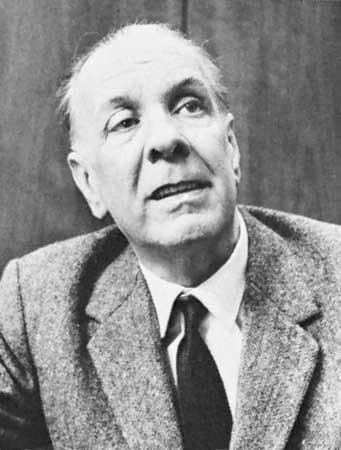
Jorge Francisco Isidoro Luis Borges Acevedo was an Argentine short-story writer, essayist, poet and translator, as well as a key figure in Spanish-language and international literature. His best-known books, Ficciones (Fictions) and El Aleph, published in the 1940s, are collections of short stories exploring themes of dreams, labyrinths, chance, infinity, archives, mirrors, fictional writers and mythology. Borges's works have contributed to philosophical literature and the fantasy genre, and have had a major influence on the magic realist movement in 20th century Latin American literature.

Ashley Antoinette
4.6

Mark McDonald
4.4
Luo Guanzhong
4.4
Mia McKenzie
4.3
Dorothy Parker
4.3
Joaquim Maria Machado de Assis
4.3
James Thurber
4.2
Terry Kay
4.2