“Ach, wenn du wüsstest, wie gern ich dich hätte!”
— The Young Gentleman to the Chambermaid, expressing desire.

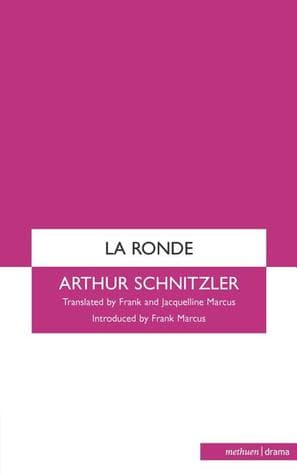
Arthur Schnitzler (2003)
Genre
Fiction
Reading Time
100 min
Key Themes
See below
Sign in to track this book
Arthur Schnitzler shows the raw, cyclical nature of human sexuality through ten interconnected encounters, each a fleeting, intimate confession of longing and conquest.
The play starts with Leocadia, a prostitute, on a bridge. A Soldier approaches her. He is direct in his desire for her, despite her initial pretended reluctance. They have a brief, suggestive conversation, full of hints and the Soldier's persistent advances. Leocadia agrees to go with him, and they leave for a private spot. The scene ends with the suggestion of their sexual encounter, setting the tone for the intertwined relationships that follow. It shows the transactional and often casual nature of their interaction in Vienna.
After his time with Leocadia, the Soldier meets Grete, a young and innocent parlor maid, on a park bench. He flirts with her, using charm and playful pressure. Grete is hesitant, worried about her reputation and being seen, but the Soldier's persistence and promises of affection break down her resistance. They share a kiss, and he leads her away to a private area, like his previous encounter. This scene shows the Soldier's opportunistic nature and Grete's vulnerability and desire for attention, despite her moral concerns.
Grete, having been with the Soldier, is now with Alfred, a young gentleman from the house where she works. Their encounter happens in a quiet salon. Alfred is somewhat awkward and self-conscious, but he clearly wants Grete. Grete seems more experienced and slightly distant, perhaps from her previous encounters. Their conversation has Alfred's attempts to show his status and Grete's more practical responses. They move to the sofa, and the scene implies their sexual intimacy, further showing how desire moves across different social classes.
Alfred is next with Emma, a young married woman, in her boudoir. Their interaction has passion and social limits. Emma worries about being discovered and keeping up appearances, while Alfred focuses on their secret affair. They discuss the risks and excitement of their forbidden relationship, with Emma showing some tiredness about her marriage. The scene ends with their lovemaking, revealing the hidden desires and infidelities under the surface of polite society. This encounter also shows Alfred moving up the social ladder in his romantic pursuits.
Emma is now with her husband, Robert, in their bedroom. Their conversation is tense and superficial, without the passion seen in Emma's previous encounter with Alfred. Robert is somewhat unaware of his wife's emotional distance and focuses on everyday topics. Emma, meanwhile, thinks about her lover. Their sexual act is implied to be a duty rather than a desire, showing the emptiness and routine that can exist in a marriage. The scene contrasts with the illicit affairs, showing the societal expectations and personal unhappiness within marriage.
Robert, the husband, is now with Mizzi, a sweet and seemingly innocent young girl, in a private room. Robert, somewhat tired of his marriage, tries to flatter and charm Mizzi, who seems pleased but also a little cautious. Their conversation is full of Robert's hidden intentions and Mizzi's hesitant responses. He uses his social standing and experience to try and influence her. The scene suggests an uneven power dynamic and the predatory nature of some relationships, as Robert gets Mizzi into an intimate encounter, continuing the cycle of casual liaisons.
Mizzi is next with a Poet in his studio. The Poet is self-absorbed and dramatic, more interested in talking about their encounter and his art than in real connection. Mizzi, initially charmed, gets bored and frustrated by his long speeches and lack of direct affection. She struggles to connect with his artistic pretense. Despite the intellectual talk, their interaction still leads to intimacy, showing the different reasons and dynamics in sexual relationships, and the Poet's tendency to romanticize his own experiences rather than connect with his partner.
The Poet is now with an Actress in her dressing room. Their relationship has intense emotion, dramatic statements, and a shared theatricality. They discuss their art, their feelings, and their connection, though much of it seems like a performance. The Actress is equally dramatic and self-aware, playing into the Poet's romantic ideas. Their intimacy is within this heightened emotional setting, suggesting that even in passionate affairs, there can be an element of performance and an idealized view of love that may not match reality. Their encounter is passionate but also intellectual.
The Actress is with a Count in his luxurious bedroom. Their encounter has a noticeable change in tone compared to her previous scene with the Poet. The Count is aristocratic, tired of the world, and cynical, treating the affair almost as a distraction. The Actress, while still dramatic, seems to adjust to his detached manner, engaging in talk that is less about grand passion and more about social maneuvering. Their intimacy is shown as a sophisticated game, without deep emotional connection, showing the transactional nature of relationships among the upper classes and the Actress's ability to move between different social circles.
The play ends with the Count meeting Leocadia, the prostitute from the first scene, in her bedroom. The Count, somewhat drunk and tired, has a brief, almost routine conversation with Leocadia. He is detached and perhaps a little sad, while Leocadia is practical and professional. Their interaction has no romance or pretense, a simple transaction. The circle is closed, bringing the audience back to the start and showing the repetitive, and often impersonal nature of human sexual encounters across all social groups in Vienna, removing the various social coverings.
The Supporting
Leocadia remains consistently pragmatic and unromantic throughout her two appearances, serving as a bookend to the cycle rather than undergoing personal development.
The Supporting
The Soldier's character remains consistent in his pursuit of immediate gratification, displaying no significant personal growth.
The Supporting
Grete moves from initial reluctance to a more experienced, albeit still somewhat passive, participant in the sexual chain.
The Supporting
Alfred's character shows a slight increase in confidence and social ambition in his romantic pursuits, but no profound internal change.
The Supporting
Emma's character reveals a yearning for passion and escape from marital complacency, but she remains trapped by societal expectations.
The Supporting
Robert remains a somewhat self-centered and unreflective character, perpetuating the cycle of infidelity without significant change.
The Supporting
Mizzi moves from a state of relative innocence to a more jaded understanding of men and relationships, though her core personality remains sweet.
The Supporting
The Poet's self-absorbed and romanticized view of love remains consistent throughout his encounters, showing no significant shift in perspective.
The Supporting
The Actress demonstrates adaptability and a performative nature in her relationships, adjusting her demeanor to suit different partners.
The Supporting
The Count remains consistently cynical and detached in his approach to relationships, completing the cycle with a sense of weariness.
The play's main theme is human sexual desire as a universal force that crosses social class and personal situation. The 'ronde' structure clearly shows how desire creates an unbroken chain of encounters, linking people from the lowest social group (the Whore) to the highest (the Count). Each character is both a seducer and seduced, showing how repetitive and often impersonal these interactions are. The cycle suggests that despite different reasons and social appearances, the basic drive for physical intimacy is constant in human experience.
“What does it matter if one sleeps with a chambermaid or a countess? It's all the same in the dark.”
Schnitzler clearly shows the strict social hierarchy of late 19th-century Vienna and also exposes its hypocrisy. While social rules set strict limits between classes, sexual desire easily crosses these lines. The same men who follow social rules in public readily have secret affairs with women from lower classes or commit adultery within their own. Characters like the Young Gentleman and the Husband keep respectable appearances while having casual relationships, showing the clear difference between public morality and private behavior. The play criticizes the social structures that allow such double standards.
“One always has a certain respect for a lady, even when one is sleeping with her.”
Many relationships in 'La Ronde' are transactional, even beyond the clear client-prostitute dynamic. Whether it is the Soldier offering flattery for intimacy, the Young Gentleman seeking excitement, or the Husband fulfilling a marital duty, there is often an exchange of something (attention, status, emotional validation, or physical pleasure) rather than true emotional connection. Love and romance are often secondary to immediate satisfaction or social maneuvering. This theme emphasizes the superficiality and often cold reality under the surface of romantic or marital ideals.
“One gives oneself to one, and to another. What does it matter?”
Several characters, especially the Poet and the Actress, perform in their intimate relationships. The Poet intellectualizes and dramatizes his feelings, often more in love with the idea of love or his own artistic sensibility than with his partner. The Actress, by profession, is good at playing roles and changes her persona to fit her lovers, whether it is the passionate artist or the cynical aristocrat. This theme questions how real emotions and connections are, suggesting that even in intense intimacy, people may be acting roles or presenting an idealized version of themselves, blurring the lines between real feeling and theatrical display.
“We artists are always a little like that, aren't we? We feel everything so intensely.”
Despite the constant search for sexual satisfaction, a feeling of emptiness and disappointment underlies many encounters. The characters rarely find lasting happiness or deep connection. The Young Wife is in a marriage without passion, the Poet's romantic ideals are often not met, and the Count ends up back with the prostitute, suggesting a tiredness with the endless cycle. The fleeting nature of these encounters leaves most characters wanting something more substantial, showing how useless it is to seek fulfillment only through physical intimacy and the social structures that often prevent deeper connections.
“And then, after it's over, one is just as lonely as before.”
A cyclical narrative where each character from one scene becomes a participant in the next.
The most prominent plot device is the 'ronde' or chain structure, where ten scenes feature ten different couples. The first partner from one scene becomes the second partner in the next, creating an unbroken circle (A-B, B-C, C-D... J-A). This structure explicitly demonstrates the universality and interconnectedness of sexual desire across different social strata. It emphasizes the cyclical, repetitive nature of human relationships and how individuals are both agents and objects in the pursuit of intimacy, effectively stripping away individual narratives to reveal a broader societal pattern of desire and exchange.
The actual sexual acts are never explicitly shown but are clearly implied through dialogue and stage directions.
Schnitzler deliberately avoids explicit depiction of the sexual acts themselves. Instead, he uses suggestive dialogue, stage directions that indicate movement offstage or to a bed/sofa, and the aftermath of the encounter (e.g., characters dressing or discussing the preceding events). This device allows the audience's imagination to fill in the details, making the play less about graphic portrayal and more about the prelude and postlude of desire, the power dynamics, and the psychological states of the characters. It also allowed the play to circumvent censorship issues of its time while still conveying its provocative message.
Characters' personalities, social status, and motivations are revealed primarily through their conversational styles.
Schnitzler masterfully uses dialogue to delineate character and social class. The Whore's pragmatic directness, the Soldier's crude charm, the Young Gentleman's self-conscious flattery, the Poet's verbose intellectualizing, and the Count's cynical wit all reflect their individual personalities and societal positions. The specific language, tone, and topics of conversation not only advance the immediate interaction but also provide deep insight into each character's inner world, their values, and their place within Viennese society, often revealing their hidden desires and hypocrisies.
Juxtaposing different social classes and their approaches to sex to highlight societal norms and hypocrisies.
The play uses stark contrasts to comment on society. By placing a prostitute next to a soldier, a parlor maid next to a gentleman, and a married woman next to her lover and then her husband, Schnitzler highlights the differing expectations, power dynamics, and moral codes applied across social strata. The contrast between the open sexuality of the lower classes and the clandestine affairs of the bourgeoisie exposes the hypocrisy of 'respectable' society, where underlying desires are the same but are cloaked in pretense and social maneuvering. This device serves to critique the artificiality of societal distinctions.
“Ach, wenn du wüsstest, wie gern ich dich hätte!”
— The Young Gentleman to the Chambermaid, expressing desire.
“Wir sind ja alle ein bißchen Schweine.”
— The Poet to the Actress, reflecting on human nature.
“Die Liebe ist wie ein Spiel, man gewinnt und verliert.”
— The Husband to the Young Wife, discussing their relationship.
“Es gibt nur eins auf der Welt, das zählt: das Glück.”
— The Count to the Sweet Young Thing, trying to rationalize his actions.
“Man muß die Liebe nehmen, wie sie kommt.”
— The Soldier to the Chambermaid, a pragmatic view on romance.
“Jeder Mensch hat seine Stunde.”
— The Pimp to the Whore, a fatalistic observation.
“Ich bin ein ehrliches Mädchen, ich lüge nie.”
— The Chambermaid to the Young Gentleman, an ironic statement.
“Das ist doch alles nur Komödie.”
— The Actor to the Actress, cynical about societal roles.
“Die Frauen sind doch alle gleich.”
— The Soldier to the Young Gentleman, a generalization about women.
“Man lebt nur einmal.”
— The Sweet Young Thing to the Count, a justification for indulgence.
“Was nützt die Moral, wenn man nicht glücklich ist?”
— The Young Wife to the Husband, questioning societal norms.
“Wir sind doch alle nur Menschen.”
— The Whore to the Soldier, a plea for understanding.
“Die Welt ist ein Irrenhaus.”
— The Poet to the Actress, expressing his disillusionment.
“Es ist doch alles nur ein Spiel.”
— The Count, reflecting on the cyclical nature of relationships.
Ready to see how well you understood this book? Take our interactive quiz with 10 questions.
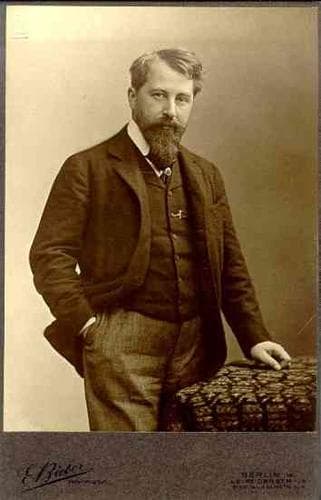
Arthur Schnitzler was a prominent Austrian novelist and playwright, a leading figure in Viennese Modernism. His works, including "Dream Story" (basis for the film "Eyes Wide Shut"), the play "La Ronde," and the novella "Fräulein Else," are celebrated for their psychological depth and exploration of human sexuality and mortality. Schnitzler's incisive prose and keen observation of societal mores cemented his literary legacy.

Ashley Antoinette
4.6

Mark McDonald
4.4
Luo Guanzhong
4.4

Mia McKenzie
4.3
Dorothy Parker
4.3

Joaquim Maria Machado de Assis
4.3
James Thurber
4.2

Terry Kay
4.2