“I think that in life, the only thing that's important is to be happy.”
— Molina shares his philosophy on life with Valentin.


Manuel Puig (1991)
Genre
Fiction
Reading Time
350 min
Key Themes
See below
Sign in to track this book
In an Argentine prison, a flamboyant homosexual's movie stories become a bridge to intimacy with a Marxist, even as a dangerous ultimatum closes in.
The novel begins in a Buenos Aires prison cell shared by Luis Molina, a homosexual man imprisoned for corrupting a minor, and Valentin Arregui, a young Marxist revolutionary incarcerated for his political activities. Molina often entertains Valentin by retelling old Hollywood film plots in detail, especially romantic melodramas. Valentin, at first dismissive of these 'bourgeois' distractions, sees them as a frivolous escape from their harsh reality, preferring to focus on his political ideals and the revolutionary cause. Their first interactions show their differences: Molina is effeminate, nurturing, and sentimental, while Valentin is stern, intellectual, and focused on political theory and the physical discomforts of prison life, including pain from his recent torture.
Valentin suffers from severe food poisoning, experiencing intense stomach cramps and vomiting. Molina, despite Valentin's initial protests and his own discomfort with bodily functions, becomes his caregiver. He cleans Valentin, brings him a bedpan, and offers comforting words. This selfless act is a turning point in their relationship. Valentin, weakened and vulnerable, begins to see Molina not just as an annoying cellmate but as a compassionate person. The physical closeness forced by Valentin's illness starts to break down the intellectual and social barriers Valentin had built, creating a new sense of trust and dependency.
Through internal monologues and a later conversation, it becomes clear that Molina is secretly working with the prison warden. He has been offered an early release and better treatment if he can get information about Valentin's revolutionary cell and its activities. Molina, initially motivated by freedom and a desire to see his ailing mother, struggles with this moral problem. He begins to subtly ask Valentin for details, but his growing affection for Valentin complicates his mission. He feels torn between his wish for freedom and his developing emotional bond with his cellmate, which makes betraying Valentin harder.
As their bond deepens, Valentin, still recovering and feeling the emotional strain of his imprisonment, begins to open up to Molina. He tells stories of his past loves, especially his complicated relationship with Marta, a fellow revolutionary, and his lingering feelings for her. He also shares details about his political struggles, his commitment to the cause, and his sacrifices. These intimate confessions show a more vulnerable, human side to Valentin, contrasting sharply with his earlier stoic manner. Molina listens carefully, offering comfort and understanding, further cementing their emotional connection and blurring their initial roles.
The warden continues to pressure Molina for specific information about Valentin's revolutionary contacts. Molina, while pretending to comply during his meetings with the warden, finds himself unable to betray Valentin. He offers vague, unhelpful details, trying to gain time. His internal conflict grows as he weighs the promise of freedom against his deepening affection for Valentin. He recognizes the moral implications of his task and the potential harm he could inflict on Valentin and his comrades. This internal struggle is a key part of Molina's character development, moving him beyond his initial self-interest.
One night, after an emotional conversation, Molina and Valentin share sexual intimacy. This act is ambiguous, born from a mix of affection, loneliness, and perhaps a manipulative element from Molina to gain Valentin's trust, though it also represents a genuine emotional connection. For Valentin, it's a confusing experience, challenging his heterosexual identity and his rigid political ideology. The morning after, both men deal with the implications of their intimacy, which deepens their bond but also increases Molina's guilt about his secret mission and Valentin's emotional turmoil.
Molina receives news of his impending early release. Before he leaves, Valentin, trusting Molina completely after their shared intimacy, asks him to deliver a crucial message to his revolutionary contacts outside the prison. This request puts Molina in a dangerous position. He understands that relaying the message would expose him to authorities and definitively align him with the revolutionary cause, risking his freedom and life. Despite his fear, Molina agrees to Valentin's request, showing his loyalty and love for Valentin, going beyond his initial self-serving reasons for freedom.
Upon his release, Molina tries to carry out Valentin's mission. He goes to the pre-arranged location to meet Valentin's contacts. However, he is under surveillance by the secret police, who have been monitoring his release as part of their plan to uncover the revolutionary cell. As Molina tries to pass the message, he is intercepted by the police. In a moment of defiance and loyalty to Valentin, Molina refuses to cooperate or reveal any information. He is shot and killed by the police, becoming a martyr for a cause he initially had no part in, and for the man he came to love.
Back in prison, Valentin is informed of Molina's death. The news devastates him, increasing his grief, guilt, and loneliness. He recognizes Molina's sacrifice and the depth of his love. Later, suffering from a severe fever and the lingering effects of his torture, Valentin is given a sedative by the prison doctor. Under its influence, he drifts into a vivid dream. In this dream, he is reunited with Molina on a beautiful, tranquil island, where they are together and free from suffering. This dream provides a poignant, if tragic, sense of closure, showing the transformative power of their relationship.
The Protagonist
Transforms from a self-interested informant into a selfless and loyal friend, ultimately sacrificing his life for love.
The Protagonist
Evolves from a rigid, emotionally closed revolutionary to a man capable of vulnerability, love, and grief.
The Antagonist
Remains a static, manipulative force, representing the unchanging nature of the oppressive system.
The Supporting
Her memory serves to reveal Valentin's emotional complexity and past vulnerabilities.
The Supporting
A static character whose presence facilitates key plot points related to Valentin's physical and mental state.
The Mentioned
Her presence is a static motivator for Molina's early actions.
The novel explores the power of love, especially between Molina and Valentin. Molina's initial self-interest in securing his release gives way to a selfless love for Valentin, ending in his sacrifice. Valentin learns to open himself to love and vulnerability, moving beyond his rigid political ideology. Their relationship shows how love can go beyond social barriers, personal prejudices, and political divides, leading to acts of courage and devotion, as seen when Molina tries to deliver Valentin's message despite the danger.
“What a strange thing, a love like this. That comes to you in prison. And makes you forget all your suffering.”
Molina and Valentin both undergo journeys of self-discovery. Molina, initially defined by his homosexuality and his role as an entertainer, finds a deeper purpose and courage through his love for Valentin. He challenges his own perceived weakness and becomes a hero. Valentin, a staunch Marxist, faces his emotional vulnerabilities, his prejudices against Molina's sexuality, and his capacity for intimate connection beyond political alliances. The confined prison space forces them to shed external identities and confront their true selves, leading to unexpected growth and understanding.
“I never thought I could feel this way about anyone, not like this. It's... it's confusing everything I believed.”
Molina's retelling of film plots is a central theme, showing how storytelling creates escape, connections, and ways to interpret reality. These fantasies offer refuge from the harsh prison life and become a way for the two men to express and understand emotions. The films, at first dismissed by Valentin as frivolous, gradually become a shared language, allowing them to explore themes of love, betrayal, and heroism in a safe, indirect way. Ultimately, the film narratives mirror and foreshadow the real-life drama in their cell.
“And the music, Valentin, the violins just swell, and you know, you just know, that this is true love, no matter what happens.”
The novel is set against an authoritarian Argentine regime, where political prisoners like Valentin are tortured and exploited. The prison itself is a small example of the oppressive state, with the warden representing its manipulative power. Molina's forced collaboration and ultimate sacrifice show how political oppression reaches into individual lives. However, it also shows resistance beyond overt political action, such as Molina's quiet defiance and his ultimate act of loyalty, demonstrating that human connection can be a strong form of resistance against dehumanizing systems.
“They want me to tell them everything. They want names, addresses. But I won't. I won't betray anyone.”
The entire novel is presented almost exclusively through dialogue and internal monologues.
Puig primarily uses dialogue between Molina and Valentin, interspersed with Molina's detailed film narrations and occasional footnotes providing academic information, to drive the narrative. There is no omniscient narrator describing scenes or actions. This unique structure immerses the reader directly into the characters' minds and interactions, allowing their personalities, emotions, and the nuances of their relationship to unfold solely through their spoken words and thoughts. It emphasizes the confined, intimate nature of their existence and forces the reader to actively interpret their unspoken feelings and the subtle shifts in their dynamic.
Molina's detailed recounting of old Hollywood films.
Molina's elaborate descriptions of various films serve multiple crucial functions. They act as a primary plot device for character development, revealing Molina's romantic sensibility and his escapist tendencies. For Valentin, they initially represent bourgeois distraction but gradually become a means of emotional connection and a way to explore complex feelings indirectly. The films' plots often parallel or foreshadow the events and emotional arcs within the cell, providing a meta-narrative layer. They also offer a vivid contrast between the harsh prison reality and the idealized worlds of cinema, highlighting the human need for fantasy and beauty.
Academic, psychoanalytic footnotes providing commentary on homosexuality.
Throughout the novel, Puig includes academic-style footnotes that discuss theories of homosexuality, psychoanalysis, and gender roles. These footnotes often appear at moments when Molina's sexuality or gender identity is being discussed or implicitly explored. This device serves to intellectualize and contextualize Molina's character, providing a counterpoint to the emotional immediacy of the dialogue. It also challenges the reader to consider the social and scientific interpretations of sexuality, adding a layer of critical analysis to the personal narrative and subtly commenting on the societal prejudices Molina faces.
The single, unchanging setting of the prison cell.
The entire story unfolds within the claustrophobic confines of a single prison cell. This restricted setting intensifies the psychological drama and forces the characters into an inescapable intimacy. It strips away external distractions, making their internal lives and their interactions the sole focus. The cell becomes a crucible where their personalities clash, merge, and transform under extreme pressure. The lack of external action emphasizes the power of dialogue, internal thought, and imagination to create a rich narrative world within a physically barren space, highlighting the human capacity for connection even in isolation.
“I think that in life, the only thing that's important is to be happy.”
— Molina shares his philosophy on life with Valentin.
“The only thing that matters is that you're not alone.”
— Molina comforts Valentin during a moment of despair.
“I'm not a woman, I'm a man who likes to act like a woman.”
— Molina explains his identity to Valentin.
“Reality is what you make of it.”
— Molina discusses his love for movies and escapism.
“In the movies, everything is possible.”
— Molina recounts a film plot to distract Valentin.
“You have to learn to live with your contradictions.”
— Valentin reflects on his political ideals and personal feelings.
“Love is the only thing that can save us.”
— Molina expresses his belief in love's power.
“I don't want to be a hero, I just want to be myself.”
— Molina rejects Valentin's revolutionary ideals.
“The world outside is full of monsters.”
— Molina describes his fear of societal judgment.
“We are all prisoners of something.”
— Valentin muses on their shared confinement.
“Sometimes, the truth is too painful to bear.”
— Molina avoids discussing his past.
“In the end, we only have each other.”
— Valentin acknowledges their growing bond.
“Beauty is a form of resistance.”
— Molina talks about his love for glamour and style.
“You can't change the world with violence.”
— Valentin debates his revolutionary methods.
Ready to see how well you understood this book? Take our interactive quiz with 10 questions.
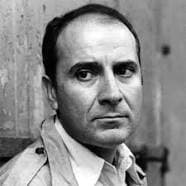
Juan Manuel Puig Delledonne, commonly called Manuel Puig, was an Argentine author. Among his best-known novels are La traición de Rita Hayworth, Boquitas pintadas, and El beso de la mujer araña which was adapted into the film released in 1985, directed by the Argentine-Brazilian director Héctor Babenco; and a Broadway musical in 1993.

Ashley Antoinette
4.6

Mark McDonald
4.4
Luo Guanzhong
4.4

Mia McKenzie
4.3
Dorothy Parker
4.3

Joaquim Maria Machado de Assis
4.3

James Thurber
4.2

Terry Kay
4.2