“How sharper than a serpent's tooth it is / To have a thankless child!”
— Lear's lament after Goneril's initial disrespect.


William Shakespeare (1723)
Genre
Fiction
Reading Time
180 min
Key Themes
See below
Sign in to track this book
An aging king, swayed by flattery, disowns his loyal daughter, setting off a chain of madness, betrayal, and suffering that destroys his kingdom and his mind.
Aged King Lear decides to retire from kingship and divide his realm among his three daughters: Goneril, Regan, and Cordelia. He creates a test, asking each daughter to declare her love for him publicly. Goneril and Regan, with their husbands the Duke of Albany and the Duke of Cornwall, give elaborate, false speeches of devotion, earning them large parts of the kingdom. Cordelia, Lear's youngest and favorite daughter, refuses this false show, saying she loves him 'according to her bond; no more nor less.' Angered by her plainness, Lear disinherits her, despite pleas from his loyal Earl of Kent, who is then banished for speaking up. The King of France, seeing Cordelia's goodness, marries her without a dowry, while the Duke of Burgundy rejects her.
Meanwhile, the Earl of Gloucester introduces his illegitimate son, Edmund, to Kent. Edmund, bitter about his birth status and societal bias, immediately plots against his legitimate older brother, Edgar. He fakes a letter, supposedly from Edgar, detailing a plan to kill Gloucester and take his inheritance. Gloucester, naive and quick to believe the worst, easily accepts Edgar's guilt. Edmund then warns Edgar of Gloucester's supposed anger, advising him to pretend madness and flee, which confirms Gloucester's belief in Edgar's guilt and allows Edmund to gain his father's trust and favor.
Lear begins his rotating stay with Goneril, who quickly tires of his hundred knights and their loud behavior. She tells her servants to treat Lear disrespectfully to provoke him. Lear, sensing her scorn, is deeply hurt. Kent, disguised as 'Caius,' offers his service to Lear and is accepted. Lear confronts Goneril, who demands he dismiss half his retinue. Outraged by her lack of gratitude, Lear curses her and decides to leave for Regan's castle, believing his second daughter will be more welcoming. His Fool, always present, offers sharp comments on Lear's mistake, pointing out his loss of power and wisdom.
Lear arrives at Gloucester's castle, where Regan and Cornwall are staying. To his shock, he finds Kent (as Caius) in the stocks, put there by Cornwall for assaulting Goneril's steward, Oswald. Regan, supported by Cornwall, refuses to see Lear immediately and then, upon meeting him, demands he dismiss all his remaining knights, leaving him with none. She argues that even Goneril's allowance of fifty knights is too many. Lear, completely devastated by this double betrayal, realizes the extent of his daughters' cruelty. He has no refuge and nowhere to go, as both Goneril and Regan conspire to deny him any comfort or authority.
Driven to madness by his daughters' ingratitude, Lear rushes out into a violent storm on the open heath, accompanied only by his loyal Fool and the disguised Kent. The storm mirrors Lear's inner turmoil and shattered mind. He rages against the elements, seeing them as helping his daughters' cruelty. His sanity quickly breaks down as he struggles with the unfairness of his situation. Meanwhile, Edgar, disguised as 'Poor Tom,' a mad beggar, wanders the same heath, having fled from his father, Gloucester. Their paths are set to cross, adding more suffering and despair to the already bleak scene.
Gloucester, seeing Lear's suffering and learning of a French invasion supporting Lear, feels pity and tries to help the king. He secretly sends Lear to Dover for safety. However, Edmund, wanting to secure his inheritance and power, betrays his father to Cornwall and Regan, revealing Gloucester's loyalty to Lear and his knowledge of the French forces. Cornwall, enraged by Gloucester's 'treason,' brutally blinds Gloucester by gouging out his eyes, with Regan encouraging the act. A servant tries to intervene but is killed by Regan. Gloucester, now blind, realizes Edmund's treachery and Edgar's innocence, a realization that comes too late.
Blind and hopeless, Gloucester is cast out. He meets Edgar, still disguised as 'Poor Tom.' Unrecognized by his father, Edgar agrees to lead Gloucester to Dover, where Gloucester plans to kill himself by jumping from the cliffs. Edgar, in this role, uses his disguise to protect his father and subtly guide him towards a form of redemption and understanding. He prevents Gloucester's suicide by tricking him into believing he has fallen from a great height, thus giving Gloucester a renewed will to live and endure his suffering. This journey becomes a test of endurance and a path to deeper spiritual insight for Gloucester.
Cordelia, having learned of her father's mistreatment, returns to Britain with a French army, determined to restore Lear to his rightful place. She finds Lear, still mad, wandering near Dover and lovingly cares for him. Lear slowly regains some sanity, recognizing Cordelia and expressing remorse for his past actions. The French and British armies prepare for battle. Meanwhile, Goneril and Regan compete bitterly over Edmund, both wanting him. The battle begins, and the French forces, led by Cordelia, are defeated by the British army, commanded by Albany and Edmund.
After the British victory, Lear and Cordelia are captured. Edmund orders their execution. Albany, having discovered Goneril's treachery and her affair with Edmund through a letter she sent, confronts her. Regan, poisoned by Goneril out of jealousy over Edmund, dies. Albany then challenges Edmund to single combat. Edgar, revealing his true identity, fights Edmund and fatally wounds him. Before he dies, Edmund, touched by Edgar's goodness, confesses his wickedness and reveals his order for Lear and Cordelia's deaths, trying a last-minute act of redemption by sending a messenger to stop the execution.
Despite Edmund's late attempt to save them, the messenger arrives too late. Lear enters, carrying Cordelia's dead body. He is utterly heartbroken and consumed by grief, unable to understand her death. He speaks of her innocence and laments her loss, imagining her still alive. The accumulated suffering, the loss of his beloved daughter, and the weight of his past errors finally overwhelm him. Lear dies of a broken heart, leaving Albany, Edgar, and Kent to witness the king's tragic end. The kingdom is left in chaos, with the survivors facing the huge task of rebuilding after such widespread devastation and loss.
The Protagonist
Lear transforms from an arrogant, self-absorbed monarch to a humbled, compassionate man who recognizes his folly and the true nature of love and suffering, though this wisdom comes at the cost of his life.
The Supporting
Cordelia remains steadfast in her virtue throughout the play, her unwavering love for Lear serving as a beacon of hope amidst tragedy.
The Antagonist
Goneril's unchecked ambition and cruelty lead to her demise, as she destroys all around her, including herself.
The Antagonist
Regan's descent into depravity and her rivalry with her sister ultimately lead to her death by poison.
The Antagonist
Edmund rises rapidly through deceit and betrayal but ultimately faces justice and, in his final moments, attempts a partial redemption.
The Supporting
Edgar transforms from a naive nobleman into a wise and compassionate survivor, ultimately becoming a leader who embodies justice and moral strength.
The Supporting
Gloucester moves from credulousness and injustice to profound suffering and spiritual insight, becoming a symbol of tragic recognition.
The Supporting
Kent remains a paragon of loyalty and integrity throughout the play, serving Lear faithfully until the very end.
The Supporting
The Fool provides a constant, ironic commentary on Lear's choices, serving as a voice of reason until Lear's madness fully consumes him.
The play explores the nature of justice, especially divine justice. Lear and Gloucester suffer great injustice from their children, leading them to question the universe's order. The suffering of the innocent, like Cordelia, alongside the wicked, challenges the audience to reconcile a seemingly indifferent or cruel cosmic order with human ideas of fairness. The play suggests that while human justice often fails, a natural order eventually reasserts itself, punishing the wicked, though often with terrible collateral damage. Gloucester's brutal blinding and Lear's descent into madness show the arbitrary and often cruel nature of suffering. Edgar's eventual rise to power offers a hint of hope for a just future.
“As flies to wanton boys are we to the gods; / They kill us for their sport.”
Both physical and metaphorical blindness are central to the play. Lear is initially 'blind' to Cordelia's true love and Goneril and Regan's deceit, leading to his tragic choices. His madness, ironically, brings him insight into the human condition, the nature of power, and the suffering of the poor. Gloucester's literal blinding symbolizes his earlier moral blindness in trusting Edmund over Edgar. Through his physical suffering, he gains spiritual sight, recognizing his mistakes and the true nature of his sons. The theme suggests that true understanding often comes through suffering and the removal of illusions.
“I have no way, and therefore want no eyes; / I stumbled when I saw.”
The betrayal of Lear by his daughters Goneril and Regan drives the tragedy. Their deep ingratitude, after receiving their inheritance, is shown as a monstrous and unnatural act that shatters Lear's world and sanity. This theme explores the breakdown of basic human bonds and the pain of parental rejection. Lear's repeated curses on his daughters and his laments over their cruelty highlight the psychological torment their actions cause. The play suggests that breaking such sacred bonds leads to chaos and destruction.
“How sharper than a serpent's tooth it is / To have a thankless child!”
The play often contrasts 'nature' as a force of order and love with 'unnatural' acts of cruelty and betrayal. Goneril and Regan are often called 'unnatural hags' or 'monsters of the deep' because their actions violate natural family bonds. Edmund, in his speeches, embraces a 'nature' that is ruthless and self-serving, rejecting social norms and traditional morality. The storm on the heath symbolizes the chaotic, 'unnatural' state of both Lear's mind and the kingdom, reflecting the breakdown of social and family order. The play explores what happens when people defy the natural order of affection and duty.
“Thou, Nature, art my goddess; to thy law / My services are bound.”
Lear's descent into madness is a central part of the play, caused by his daughters' cruelty and his loss of power. His madness is not just mental derangement but a way to gain deep philosophical insight. In his delirium, he strips away the illusions of royalty and status, showing humanity's raw, vulnerable core. He rails against social injustice, hypocrisy, and corrupt power, becoming a prophetic figure. The madness also helps him cope with unbearable suffering, allowing Lear to escape the full reality of his situation while also confronting deeper truths.
“O, let me not be mad, not mad, sweet heaven! / Keep me in temper; I would not be mad!”
Characters assume false identities to achieve their goals or protect themselves.
Kent disguises himself as 'Caius' to remain loyal to Lear and protect him after his banishment. Edgar disguises himself as 'Poor Tom,' a mad beggar, to escape Edmund's treachery and later to guide his blind father, Gloucester. Disguise allows characters to observe events from a different perspective, gain insights, and act without revealing their true intentions or vulnerability. It highlights the theme of appearance versus reality and the deception inherent in the human world, while also enabling acts of selfless loyalty and protection.
A powerful natural phenomenon that mirrors Lear's internal turmoil and the chaos in the kingdom.
The violent storm that Lear endures on the heath is a pathetic fallacy, reflecting both the king's internal madness and the cosmic disorder unleashed by his and his daughters' actions. It serves as a literal and metaphorical backdrop for Lear's descent into madness, intensifying his suffering and stripping him of his remaining illusions. The storm also symbolizes the 'unnatural' state of the kingdom and the breakdown of social and familial bonds, underscoring the play's themes of nature and chaos.
Written communications used to manipulate and betray.
Letters play a crucial role in advancing the plot through deception. Edmund forges a letter from Edgar to Gloucester, convincing his father of Edgar's treachery. Later, Goneril's letter to Edmund, detailing her plans to poison Albany, is intercepted and exposes her wickedness. These letters highlight the power of written communication to be twisted for malicious purposes, driving the plot forward by creating misunderstandings, betrayals, and ultimately, exposing the villainy of characters like Edmund and Goneril.
Two distinct but thematically linked storylines that mirror each other.
The play features two parallel plots: King Lear's tragic experience with his three daughters and the Earl of Gloucester's similar fate with his two sons. Both fathers are deceived by their wicked children (Goneril and Regan for Lear; Edmund for Gloucester) and reject their loyal, loving children (Cordelia for Lear; Edgar for Gloucester). This structural device intensifies the play's themes of filial ingratitude, blindness, and justice, demonstrating that such tragic folly is not unique to a king but a universal human failing, making the suffering more profound and widespread.
“How sharper than a serpent's tooth it is / To have a thankless child!”
— Lear's lament after Goneril's initial disrespect.
“Nothing will come of nothing. Speak again.”
— Lear's response to Cordelia's plain declaration of love.
“Thou, nature, art my goddess; to thy law / My services are bound.”
— Edmund's soliloquy declaring his intention to defy societal norms and pursue his own gain.
“As flies to wanton boys are we to th' gods; / They kill us for their sport.”
— Gloucester's despairing reflection on human suffering.
“I am a man / More sinned against than sinning.”
— Lear's self-pitying declaration during the storm.
“The gods are just, and of our pleasant vices / Make instruments to plague us.”
— Edgar's observation after his father, Gloucester, is blinded.
“O, let me not be mad, not mad, sweet heaven! / Keep me in temper; I would not be mad!”
— Lear's plea as he feels his sanity slipping.
“When we are born, we cry that we are come / To this great stage of fools.”
— Lear's philosophical reflection on life and suffering.
“Ripeness is all.”
— Edgar's advice to Gloucester about accepting his fate.
“Is there any cause in nature that makes these hard hearts?”
— Lear's bewildered question about his daughters' cruelty.
“All friends shall taste / The wages of their virtue, and all foes / The cup of their deservings.”
— Albany's statement on justice at the end of the play.
“Through tattered clothes small vices do appear; / Robes and furred gowns hide all.”
— Lear's observation about justice and appearances.
“The weight of this sad time we must obey; / Speak what we feel, not what we ought to say.”
— Edgar's closing lines, emphasizing authenticity and the burden of the events.
“Let me not stay a jot for dinner; go, get it ready.”
— Lear's imperious command, showing his initial arrogance.
Ready to see how well you understood this book? Take our interactive quiz with 10 questions.
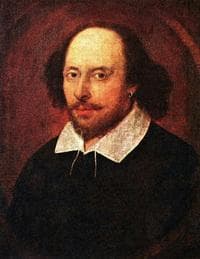
William Shakespeare was an English playwright, poet and actor. He is widely regarded as the greatest writer in the English language and the world's pre-eminent dramatist. He is often called England's national poet and the "Bard of Avon". His extant works, including collaborations, consist of some 39 plays, 154 sonnets, three long narrative poems, and a few other verses, some of uncertain authorship. His plays have been translated into every major living language and are performed more often than those of any other playwright. Shakespeare remains arguably the most influential writer in the English language, and his works continue to be studied and reinterpreted.

Ashley Antoinette
4.6

Mark McDonald
4.4
Luo Guanzhong
4.4

Mia McKenzie
4.3
Dorothy Parker
4.3
Joaquim Maria Machado de Assis
4.3
James Thurber
4.2

Terry Kay
4.2