“I'm not trying to be a hero. I'm just trying to be a person. And sometimes that's the hardest thing.”
— Sam's internal struggle with identity and the pressure to conform.

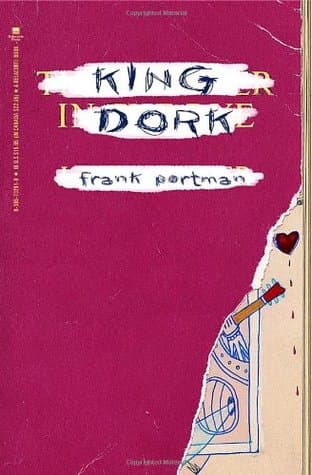
Frank Portman (2006)
Genre
Mystery / Young Adult
Reading Time
450 min
Key Themes
See below
Sign in to track this book
Armed with his dead father's copy of 'The Catcher in the Rye,' high school outcast Tom Henderson unravels a rock-and-roll conspiracy that turns his suburban angst into a Da Vinci Code-esque quest.
Tom Henderson, an awkward and unpopular high school student, navigates school with his best friend, Sam Hellerman. They share a love for punk rock and their band, 'The Little Lord Fauntleroys.' Tom's father died when he was young, leaving many unanswered questions. One day, Tom finds a hidden green metal box among his father's old things. Inside, he finds a copy of J.D. Salinger's 'The Catcher in the Rye,' heavily annotated by his father, along with a cryptic note and a photograph. This discovery makes Tom curious about his father's secret life and starts his quest to understand it.
Fascinated by the green box, Tom studies his father's copy of 'The Catcher in the Rye.' The book has underlined passages, notes in the margins, and cryptic symbols Tom struggles to understand. He suspects his father, a seemingly ordinary man, was involved in something more complex than he imagined. Tom sees the annotations as a code, a puzzle for him. His attempts to decipher the underlined phrases and handwritten notes consume his thoughts, drawing him deeper into his father's past and the book itself.
Throughout high school, Tom is called 'King Dork,' a cruel nickname from his peers. This constant reminder of his social standing fuels his feelings of alienation. He resents the label but also, in a strange way, uses it as a shield. The nickname reinforces his outsider status and his view of himself as different from everyone else. This internal struggle with his identity and the external pressure of the 'King Dork' label are central to his character and narrative voice, often leading to his cynical observations.
Tom's best friend, Sam Hellerman, is often in complex and disastrous romantic relationships, especially with a girl named Lisa. Sam's romantic problems frequently distract him and create tension between the two friends, as Tom often finds Sam's obsession with girls baffling. Meanwhile, their band, 'The Little Lord Fauntleroys,' struggles to get noticed. They practice regularly, writing their own punk rock songs, but their ambitions clash with their lack of talent and the indifference of their schoolmates. Their shared musical passion is a core part of their friendship, but it also highlights their shared outsider status.
Tom's English class, particularly a discussion about 'The Catcher in the Rye,' becomes a significant place for his internal and external conflicts. His teacher, Mr. Kerouac, is well-meaning but detached, trying to engage students in literary analysis. Tom's deep, personal connection to the book, from his father's annotations, makes him both defensive and intensely observant during these discussions. He often disagrees with the conventional interpretations in class, feeling his unique understanding of the book, through his father's lens, is superior or more authentic. This leads to awkward but revealing interactions between Tom and Mr. Kerouac.
As Tom investigates, he uncovers more of his father's past. He finds letters and notes that point to a secret group his father was involved with, called the 'Stumps.' This adds another layer of intrigue, suggesting his father's life was more complex than Tom imagined. The 'Stumps' appear to be a group connected by shared experiences and possibly by something significant. Tom pieces together the fragments, slowly building a picture of his father's secret activities and the true meaning of the annotations in 'The Catcher in the Rye.'
Tom notices parallels between the clues in his father's book and his own school experiences. He realizes certain teachers, students, and even locations in the school might connect to his father's past and the 'Stumps.' This revelation deepens the mystery and brings it uncomfortably close, blurring the lines between his father's secrets and his present. He starts to view his surroundings with a new, suspicious eye, wondering who else might be involved or aware of the hidden connections. The school, once a place of everyday suffering, becomes a key to understanding his father.
Tom discovers that Mrs. Kerouac, his English teacher's wife, had a significant, undisclosed connection to his father. This is a major turning point. Tom, driven by his search for truth, confronts Mrs. Kerouac, who is reluctant to share information. The confrontation is tense and emotional, as Mrs. Kerouac faces her past and the secrets she has kept. Her confession provides crucial pieces of the puzzle, explaining his father's involvement with the 'Stumps' and the true nature of the code in 'The Catcher in the Rye.'
Tom's detective work reveals that the 'Stumps' were not a grand secret society, but a support group for people with social anxiety and feelings of inadequacy, much like Tom. His father's annotations in 'The Catcher in the Rye' were not a complex spy code, but his personal reflections, coping mechanisms, and attempts to find meaning and connection in the text. The 'code' was his father's way of processing his anxieties and finding solace in literature. This deeply personal revelation initially disappoints Tom but ultimately helps him understand his father.
Amidst his personal revelations, Tom and Sam's band, 'The Little Lord Fauntleroys,' has a small but meaningful triumph. They get a chance to perform, perhaps at a school event. While not a massive success, their performance is a moment of genuine connection and accomplishment for Tom and Sam. It shows their shared passion and ability to create something meaningful together, regardless of external validation. This minor victory for the band balances Tom's more serious journey, highlighting the importance of friendship, creativity, and finding joy in small successes.
With the mysteries about his father mostly resolved, Tom accepts the truth. He realizes his father was not a secret agent, but a complex person who struggled with similar feelings of being an outsider and finding his place. This understanding helps Tom feel a deeper connection to his father, seeing him not as a distant, enigmatic figure, but as someone he can relate to. He starts to accept his 'King Dork' identity, not as a label of shame, but as part of who he is. The journey helps him find his own voice and begin to move forward, more confident and self-aware.
The story ends with Tom reflecting on how his father's book, 'The Catcher in the Rye,' affected his self-discovery. He recognizes literature's power to connect people across time and offer solace and understanding. More importantly, he appreciates Sam Hellerman's unwavering friendship, who stood by him through his eccentric investigations and band practices. Tom understands that while the grand mystery wasn't what he expected, the true treasures were the insights into his father, the stronger bond with Sam, and a new acceptance of himself. He finds a quiet sense of peace and a path to embrace his unique identity.
The Protagonist
Tom evolves from a self-pitying, alienated teenager to someone who accepts his unique identity and finds a deeper connection with his father's memory and his best friend.
The Supporting
Sam remains a constant, supportive friend to Tom, solidifying their bond through shared experiences and the band.
The Mentioned/Catalyst
His character is revealed retrospectively, showing him as a man seeking connection and understanding, much like his son.
The Supporting
Remains largely static, serving as a foil for Tom's literary interpretations.
The Supporting
She moves from a keeper of secrets to a revealer of truth, providing closure for Tom.
The Supporting
Her relationship with Sam provides recurring comedic and dramatic relief.
The Mentioned/Collective
Introduced as a mystery, they are revealed to be a relatable support group, shifting Tom's perception of his father.
Tom's journey is a quest to understand who he is, both in relation to his deceased father and as an individual. He deals with the 'King Dork' label, his perceived social inadequacy, and his desire to find a place where he belongs. His father's secret life mirrors Tom's feelings of being an outsider, showing the universal struggle to define oneself and find connection in a world that often feels alienating. This theme appears in Tom's introspective monologues, his attachment to punk rock as an expression of individuality, and his ultimate acceptance of his 'dork' status as part of his unique identity.
““I was a king dork, and I knew it. But at least I was *my* king dork.””
'The Catcher in the Rye' is not just a plot device but a central theme. The novel explores how literature can be a personal experience, open to multiple interpretations, and a way to understand oneself and others. Tom's father's annotations turn the book into a personal diary and a coded message, showing how texts can hold profound, private meaning. The discussions in Mr. Kerouac's class highlight the contrast between academic analysis and personal connection, showing how books can both unite and divide, and how their meaning changes with the reader's own life experiences.
““That's the thing about books. They let you travel without moving your feet.””
The novel explores how secrets, especially those of deceased loved ones, can shape the present. Tom's father's hidden life and the mysterious green box create a compelling mystery that drives the plot. The story suggests that people often have hidden depths and pasts that are more complex than they appear. The revelation that the 'Stumps' were a support group, not a grand conspiracy, shows that often, the most profound 'secrets' are simply the private struggles and vulnerabilities people carry. This can be both anticlimactic and deeply humanizing when finally revealed.
““Everyone has secrets. Some are just better at keeping them than others.””
Despite Tom's cynical outlook, his friendship with Sam Hellerman is a cornerstone of the novel. Sam's unwavering loyalty, even when Tom is difficult or obsessed with his father's mystery, provides a crucial emotional anchor. Their shared love for punk rock and their band, 'The Little Lord Fauntleroys,' strengthens their bond. The theme highlights the importance of having a true friend who accepts you, flaws and all, and who shares your passions, even if those passions are niche. Their friendship provides a sense of belonging and stability amidst Tom's internal turmoil and external struggles.
““Sam was my best friend. He was also a total idiot sometimes, but he was *my* total idiot.””
Tom's father's copy of 'The Catcher in the Rye' filled with cryptic notes and underlining.
This is the central MacGuffin and plot driver. The annotated book serves as a literal and metaphorical map to Tom's father's past. Initially perceived as a coded message for a grand conspiracy, it is ultimately revealed to be a deeply personal journal of his father's struggles and reflections. This device allows Tom to connect with his deceased father in an intimate way, fostering both his detective instincts and his emotional growth. It also grounds the mystery in a literary context, reflecting the novel's themes about the power of books.
A pervasive and cruel nickname that defines Tom's social standing.
This epithet acts as a constant external and internal conflict for Tom. It's a symbol of his alienation and perceived failure in the social hierarchy of high school. The nickname not only influences how others treat him but also how he sees himself, fueling his cynicism and self-deprecating humor. Its eventual acceptance, rather than rejection, marks a significant point in Tom's character arc, transforming a source of shame into a part of his unique identity. It's a classic underdog trope, but with a nuanced, self-aware twist.
A seemingly mysterious group Tom's father was involved with.
This device creates immediate intrigue and sets up the 'mystery' aspect of the novel. It plays on the protagonist's (and reader's) expectations of a grand, perhaps dangerous, secret. The eventual revelation that 'The Stumps' were a support group for socially awkward individuals serves as an effective anti-climax, subverting genre expectations and shifting the focus from external thrills to internal, character-driven revelations. It highlights the often mundane and relatable nature of human struggles, contrasting with Tom's initial fantastical assumptions about his father's secret life.
Tom's distinctive, sarcastic, and self-aware narrative voice.
The entire story is filtered through Tom's highly opinionated, often hilarious, and deeply cynical first-person perspective. This narrative style allows the reader to intimately understand Tom's internal struggles, his observations about the absurdities of high school life, and his emotional journey. His voice is a key element of the book's comedic and emotional impact, giving insight into his intelligence, his insecurities, and his eventual growth. It also enables the author to comment on literary tropes and the nature of storytelling itself through Tom's lens.
“I'm not trying to be a hero. I'm just trying to be a person. And sometimes that's the hardest thing.”
— Sam's internal struggle with identity and the pressure to conform.
“The thing about being a dork is that you’re always a dork. It’s not something you can just turn off.”
— Sam reflecting on his social status and the permanence of his 'dork' label.
“That’s the thing about secrets. They’re like a disease. They get inside you and they fester.”
— Sam's growing obsession with uncovering the truth about his father's death.
“Sometimes the most obvious things are the hardest to see.”
— Sam's realization about a clue in the mystery that was right in front of him.
“Music is the only thing that makes any sense in this messed up world.”
— Sam's deep connection to music and how it helps him cope.
“It’s not about being popular. It’s about being real.”
— Sam's internal monologue about the superficiality of high school popularity.
“The past is never really dead. It’s not even past.”
— Sam grappling with the lingering impact of his father's life and death.
“You can’t just wait for things to happen. You have to make them happen.”
— Sam's growing resolve to actively pursue the mystery rather than passively waiting.
“Being smart doesn’t make you immune to being stupid.”
— Sam's observation about seemingly intelligent people making poor decisions.
“Sometimes you have to break the rules to find out what the rules really are.”
— Sam's willingness to bend social norms and investigative ethics.
“The world is full of people who think they know everything, but they don’t know anything.”
— Sam's frustration with adults and peers who make assumptions.
“It’s amazing how much you can miss when you’re not really looking.”
— Sam reflecting on his initial oversight of crucial details in the mystery.
“Every family has its secrets. Some are just bigger than others.”
— Sam's realization about the hidden dynamics within his own family and others.
“Being a weirdo is like having a superpower, if you know how to use it.”
— Sam's eventual embrace of his unique qualities and perspective.
Ready to see how well you understood this book? Take our interactive quiz with 10 questions.

Biography coming soon.