“The city is a lover. It will take you in, chew you up, and spit you out, but it will never let you go.”
— Kari reflects on her relationship with the city of Mumbai.

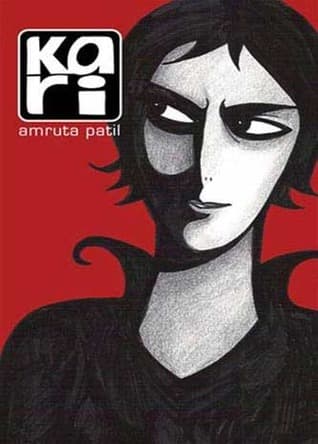
Sign in to track this book
Haunted by a shared past and a friend lost to the void, Kari navigates the surreal, sewage-laced underbelly of Smog City as an ad copywriter and PVC-clad sewer superhero, observing life's absurdities and longing for her absentee other.
The story begins with Kari recounting the day she and Ruth, her lover, tried to die by jumping from a building. Ruth, saved by safety nets, is taken away by her parents and leaves Smog City, disappearing from Kari's life. Kari, landing in a sewer, survives and emerges into a changed world. This event leaves a scar on Kari, shaping her life in the city and her search for connection and meaning. The memory of Ruth, her 'absentee Other,' stays with her, influencing Kari's perceptions and her understanding of love and loss.
Kari works a dull job writing ad copy for hair products and lingerie at an agency in Smog City. This work contrasts with her inner world, filled with philosophical thoughts and Ruth's lingering presence. Her daily commute and interactions show her the city's oddities and its marginalized people. Kari often feels disconnected from her professional life, using her observations of the city's hidden corners and its diverse population to cope with loneliness and unresolved trauma.
Driven by a need to connect with the city's underbelly and neglected infrastructure, Kari creates an alter ego: Danger Chhori. Dressed in a PVC suit, Danger Chhori goes into Smog City's sewers, not only to unclog them but also to observe the secret lives of people and even fruit. This secret activity allows Kari to explore decay, hidden beauty, and the interconnectedness of urban life, offering a unique view of the city that most people miss. Danger Chhori represents Kari's desire for purpose and her unusual way of processing her trauma and loneliness.
Kari's life in Smog City is enriched by unusual encounters and connections. She develops affection for stray cats and roadside children, finding kinship in their resilience and vulnerability. She also befriends a diverse group, including Angel, a philosophical figure; Lazarus, a man who has had multiple near-death experiences; and the 'girls of Crystal Palace,' a group of women who offer a sense of community. These relationships, though often brief or unconventional, give Kari moments of comfort, understanding, and shared humanity in her otherwise solitary existence.
Despite time passing and her new life in Smog City, Kari's memory of Ruth is clear and strong. Her experiences, observations, and even relationships are often filtered through her longing for Ruth, her 'absentee Other.' Kari's internal thoughts often return to their shared past, their intense connection, and the unanswered questions about Ruth's departure. This search for Ruth, though often unspoken, drives much of Kari's story, shaping her view of love, loss, and memory. The city becomes a canvas for her internal exploration of this absence.
In Ruth's absence, Kari has brief romantic encounters, often with 'adventuresses' she meets in various places, like restaurants. These relationships offer temporary companionship and intimacy, but they do not fill the void left by Ruth. They highlight Kari's ongoing search for connection and her struggle to balance her past love with the possibility of new ones. These encounters also explore the complexities of queer love and relationships in Smog City, showing Kari's vulnerability and her resilience in seeking emotional fulfillment despite her lingering grief.
Throughout her journey, Kari grapples with questions about life, death, loneliness, and existence. Her observations of Smog City, its inhabitants, and its hidden spaces often include wry comments and introspective thoughts. The sewers, in particular, become a metaphor for the subconscious and the unseen aspects of life. Kari's internal narrative explores the cycles of decay and renewal, the resilience of the human spirit, and the search for beauty and meaning in unexpected places, all informed by her traumatic past.
Angel, Lazarus, and the 'girls of Crystal Palace' act as a chorus to Kari's story, their individual stories and perspectives adding to the larger narrative of Smog City. These characters, each with their own struggles and philosophies, reflect different facets of urban life and human resilience. They provide Kari with a sense of community and act as sounding boards for her thoughts and feelings. Their collective presence emphasizes the theme of interconnectedness and the shared human experience of navigating loneliness, hope, and the search for meaning in a busy, often indifferent, city.
Kari's exploration of Smog City shows its 'dark heart' – the pervasive loneliness, the presence of death, and the unseen struggles of its inhabitants. The sewers, forgotten corners, and marginalized figures she meets all contribute to this understanding. Despite the city's grime and despair, Kari also finds moments of unexpected beauty and resilience. Her journey is not just an observation but an immersion into these darker aspects, allowing her to confront her own trauma and the universal themes of human vulnerability and the search for connection amidst urban alienation.
The memory of Ruth and her absence is the center around which Kari's life revolves. Even as she builds a new existence, forms new connections, and explores the city, Ruth's presence is felt in every thought and action. The narrative often returns to their shared past, showing the lasting power of first love and the impact of loss. Kari's journey is an exploration of how one navigates life after a foundational absence, finding ways to carry grief while still seeking joy and meaning in the present. Ruth's memory is both a burden and a guide.
The Protagonist
Kari moves from a state of suspended grief and emotional numbness to a more active engagement with life, finding unique ways to cope with her trauma and forge new connections while still honoring her past.
The Mentioned/Absentee Other
Ruth's arc is largely in the past, her departure initiating Kari's journey. Her memory continues to evolve in Kari's mind, becoming less a person and more a symbol of loss and enduring love.
The Supporting
Angel's character remains largely consistent, serving as a steady, supportive presence for Kari throughout her journey.
The Supporting
Lazarus's role is primarily symbolic, his consistent character embodying the theme of survival and resilience for Kari.
The Supporting
Their collective presence remains a consistent, supportive element in Kari's life, representing community.
The Alter Ego
Danger Chhori remains a consistent outlet for Kari's introspective and adventurous impulses, a stable means of processing her experiences.
Loneliness is a pervasive theme in Kari's life in Smog City, stemming from the traumatic loss of Ruth. She navigates the bustling city, often feeling isolated despite being surrounded by people. This loneliness drives her to seek connection in unusual ways: through her alter ego Danger Chhori, exploring forgotten parts of the city; through her affinity for stray animals and roadside children; and through her unique friendships with Angel, Lazarus, and the girls of Crystal Palace. These connections, though sometimes brief, offer Kari moments of comfort and shared humanity, highlighting the universal need to belong and be understood amidst urban alienation.
“Smog City is a place where you can be utterly alone, even when surrounded by millions.”
The memory of Ruth and her absence is the central emotional core of the novel. Ruth is not physically present, yet her presence is felt on every page, influencing Kari's thoughts, actions, and perceptions. The narrative constantly returns to their shared past, exploring how loss shapes identity and how one carries grief. Kari's journey shows the lasting power of memory, demonstrating how a foundational absence can define a life, leading to an ongoing search for resolution and understanding. The city itself becomes a canvas for Kari's internal exploration of this unresolved loss.
“Ruth was the axis around which my world spun. Without her, I was a planet unmoored.”
Smog City is a place of grime, decay, and forgotten spaces, yet Kari, especially as Danger Chhori, finds unexpected beauty and meaning within it. The sewers, often seen as repulsive, become a site of observation and a kind of spiritual exploration. Kari's ability to see resilience in stray cats, stories in discarded objects, and life in the city's underbelly reflects a deeper theme: that beauty and meaning can be found in overlooked and unconventional places. This theme challenges conventional ideas of aesthetics and highlights the interconnectedness of all urban elements, both pleasant and unpleasant.
“The sewers hold more secrets, more life, more truth than the polished streets above.”
Kari's creation of Danger Chhori is central to her exploration of identity. While her day job is mundane and unfulfilling, her alter ego allows her to express a deeper, more adventurous, and philosophical part of herself. Danger Chhori is not just a costume but a manifestation of Kari's need to engage with the city on her own terms, to find purpose beyond her trauma, and to process her emotions anonymously. This duality highlights the multifaceted nature of identity, especially in response to trauma and loss, and how individuals create spaces for self-expression and resilience.
“Sometimes, you need a different skin to truly see what's beneath the surface.”
Ruth's physical absence serves as the driving force and emotional core of Kari's narrative.
The character of Ruth functions as an 'absentee other,' a significant person who is no longer physically present but whose memory and impact profoundly shape the protagonist's journey. Ruth's departure after the shared suicide attempt is the inciting incident that sets Kari's story in motion. Her absence creates a void that Kari constantly tries to fill or understand, driving her explorations of Smog City, her relationships, and her philosophical musings. This device allows the author to explore themes of grief, memory, and the lasting impact of love without Ruth needing to be an active participant in the present narrative.
Kari's secret identity allows her to explore the city's hidden depths and her own psyche.
The creation of Danger Chhori serves as a powerful plot device, enabling Kari to engage with the world in ways her everyday self cannot. This alter ego provides a means for Kari to physically and metaphorically descend into the 'dark heart' of Smog City, exploring its sewers and forgotten spaces. It allows for a literal and symbolic exploration of the subconscious, decay, and hidden beauty. Danger Chhori also functions as a coping mechanism for Kari, providing an outlet for her grief, curiosity, and need for purpose beyond her traumatic past and mundane job.
The city itself acts as a living, breathing entity that mirrors and influences Kari's internal state.
Smog City is more than just a setting; it is a character in its own right, reflecting Kari's internal landscape and providing the backdrop for her existential journey. Its grime, decay, and hidden beauty mirror Kari's own struggles with trauma and her search for meaning. The city's diverse inhabitants, its forgotten corners, and its bustling anonymity all contribute to Kari's experiences and observations. The city's 'dark heart' of loneliness and death is also Kari's, making the urban environment an active participant in her emotional and philosophical development.
Kari's rich inner thoughts and reflections provide deep insight into her character and the novel's themes.
The narrative heavily relies on Kari's internal monologue and philosophical musings, which serve as a primary window into her mind and the novel's thematic concerns. These reflective passages allow the author to explore complex ideas about life, death, love, and loneliness directly through Kari's perspective. This device creates an intimate connection between the reader and Kari, allowing for a profound understanding of her grief, her observations of the world, and her unique way of processing her experiences. It elevates the story beyond a simple plot, imbuing it with depth and intellectual resonance.
“The city is a lover. It will take you in, chew you up, and spit you out, but it will never let you go.”
— Kari reflects on her relationship with the city of Mumbai.
“Memory is a strange beast. It can be a comfort, a torment, or a trickster.”
— Kari ponders the nature of her own memories, particularly those of her past with Angel.
“Sometimes, the only way to move forward is to look back, even if it hurts.”
— Kari struggles with confronting her past relationships and experiences to understand her present.
“We are all made of stories, some we tell, some we keep hidden.”
— A general observation about human nature and the narratives we construct.
“Love is not a straight line. It bends, it breaks, it finds new paths.”
— Kari reflects on the complexities and non-linearity of her romantic and platonic relationships.
“The silence between words can speak louder than any utterance.”
— Kari observes the unspoken dynamics and understandings in her interactions with others.
“To be truly seen is a rare and precious thing.”
— Kari yearns for genuine understanding and acceptance from her loved ones.
“Grief is not a weakness. It is the price of love.”
— Kari grapples with her sorrow over lost relationships and the lingering pain.
“The edges of things are often the most interesting.”
— Kari, an artist, finds beauty and meaning in the liminal spaces and unconventional aspects of life.
“You can't erase the past, but you can choose how you carry it.”
— Kari learns to integrate her past experiences into her present identity.
“The city breathes with a thousand different stories, all at once.”
— Kari's immersive experience of Mumbai's vibrant and chaotic energy.
“Some wounds heal into scars that tell their own tales.”
— Reflecting on the enduring impact of past hurts and how they shape identity.
“Finding your voice is not about shouting, but about knowing what you have to say.”
— Kari's journey of self-expression as an artist and as a person.
Ready to see how well you understood this book? Take our interactive quiz with 10 questions.

Amruta Patil is an Indian author and artist known for her graphic novels. Her debut novel, 'Kari,' was critically acclaimed for its poignant exploration of female friendship and identity in contemporary India. Patil's work often blends visual storytelling with introspective narratives, earning her recognition in the Indian literary scene.

Ashley Antoinette
4.6

Mark McDonald
4.4
Luo Guanzhong
4.4

Mia McKenzie
4.3

Dorothy Parker
4.3

Joaquim Maria Machado de Assis
4.3

James Thurber
4.2

Terry Kay
4.2