“The price of the ticket is to be on the roller coaster, and the price of the ticket is to be in the world.”
— Reflecting on life's experiences and the cost of living fully.

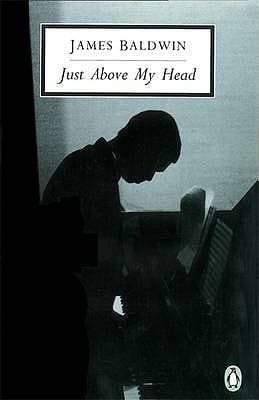
James Baldwin (1979)
Genre
Fiction
Reading Time
1200 min
Key Themes
See below
Sign in to track this book
From Harlem gospel hymns to global fame, the novel follows Arthur and Hall Montana, showing how the Civil Rights era reshapes their brotherhood, loves, and identities across continents.
The novel begins with the news of Arthur Montana's death in a London pub. Arthur, a famous soul singer, was a beloved figure. His older brother, Hall Montana, a jazz pianist and minister, receives the call and is filled with grief and reflection. Hall, who was always protective of Arthur, begins to recount their shared history, their Harlem childhood, and the relationships that shaped their lives. This opening sets the stage for a deep look into the Montana brothers' lives and their friends, triggered by Arthur's death.
Hall and Arthur Montana grow up in Harlem, deeply involved in the Black church. Their father is a strict minister, and their mother is a loving presence. The church is the center of their community, offering both comfort and strict rules. Hall, a piano prodigy, and Arthur, with his singing voice, develop their musical talents there. Their early experiences in the choir and church services shape their identities and their understanding of faith, race, and sexuality. This period also introduces their lifelong friends, Jimmy and Crunch, forming the core group.
As Hall and Arthur grow, their musical talents become clear. Hall's jazz piano skills develop, and Arthur's voice captivates listeners. They perform regularly in church, but their ambitions go beyond sacred music. Their friend Jimmy, also a singer, is part of this musical awakening. The boys dream of a different life, one that might take them out of Harlem. These early dreams are influenced by their racial and economic circumstances, and unspoken tensions and attractions within their group begin to appear.
Hall starts to notice things about Jimmy's private life. He discovers that Jimmy has been with men, a revelation that disturbs and confuses Hall, who was raised in a strict religious environment where homosexuality is condemned. This discovery forces Hall to confront his own prejudices and the complexities of human desire. Despite his initial discomfort, Hall's affection for Jimmy prevents him from condemning him, but it changes his understanding of the world and the people he loves, showing the hypocrisy and judgment that can exist even in close communities.
The Korean War affects the young men's lives. Crunch, one of their closest friends, is drafted and sent to fight. His combat experiences leave him deeply scarred. The war highlights racial inequalities in the military and in American society. While Crunch is on the front lines, Hall and Arthur live at home, dealing with the fear and uncertainty of the conflict. The war is a harsh awakening, forcing them to face the fragility of life and the realities of a world beyond Harlem.
Arthur Montana's talent brings him international fame as the 'Emperor of Soul.' His music connects with audiences worldwide, and he becomes a symbol of Black artistry and resilience. This period happens during the height of the Civil Rights Movement in the United States. Arthur, though a celebrity, stays connected to his roots and his people's struggles. His fame offers a platform, but also exposes him to pressures from both the white establishment and the Black community. Hall, now a minister, becomes more involved in the movement, offering guidance.
The novel looks into the romantic lives of its characters. Hall marries Ruth, and they build a life together, but their relationship is tested by his devotion to Arthur and his past. Arthur has many relationships, both with men and women, often marked by intensity and heartbreak. Jimmy's relationships, especially with other men, are central to his story, exploring themes of forbidden love and self-acceptance. These relationships are shown with honesty, revealing the emotional cost of societal judgment and the search for real connection in a world that often denies it to those who differ from the norm.
Following his father, Hall becomes a minister. However, his faith is not simple; it evolves, challenged by his experiences, his understanding of human nature, and the injustices he sees. He struggles with traditional interpretations of scripture, especially concerning sexuality, and seeks a more inclusive understanding of God's love. His ministry becomes a place for intellectual and spiritual exploration, where he tries to reconcile his beliefs with the realities of a complex world, trying to offer guidance and comfort to his congregation.
Paris becomes an important place for several characters, offering freedom from America's racial and social limits. Arthur spends time there, finding more acceptance and artistic freedom. Jimmy also finds a haven in Paris, where he can express his identity and pursue relationships more openly. The city represents self-discovery and an escape from past burdens. However, even in Paris, the characters cannot fully escape their American experiences, and the complexities of their identities continue to unfold.
Throughout their lives, the characters are affected by their past, especially unspoken truths and childhood traumas. Church rules, racial identity pressures, and hidden desires all contribute to a complex emotional state. Hall's thoughts constantly return to these early experiences, trying to understand how they shaped Arthur, Jimmy, Crunch, and himself. The novel uncovers these layers of memory, showing how early experiences, especially those related to sexuality and faith, continue to influence their adult lives and relationships, often causing pain and misunderstanding.
As the story continues, the characters, especially Hall, seek understanding and forgiveness. They deal with past betrayals, misunderstandings, and societal judgment. Hall's journey is about accepting Jimmy's sexuality, Arthur's choices, and his own changing beliefs. There are moments of deep connection and reconciliation, where characters bridge their differences, often through shared music, conversation, or simply being together. These moments highlight the lasting power of their bonds, even in the face of challenges, suggesting a path toward healing.
Arthur Montana's death prompts Hall and his remaining friends to reflect on his impact. His music, charisma, and struggles are central to their mourning and remembrance. The novel explores how Arthur's life, public and private, influenced those around him, and how his absence leaves a void. His legacy is not just his music, but also the complex relationships he built and the challenges he faced. Hall's narrative becomes an elegy, a tribute to his brother's life and the lasting power of their bond, even after death.
The Protagonist/Narrator
Hall evolves from a somewhat rigid, religiously bound young man to a more compassionate and understanding minister, grappling with his own prejudices to embrace a more expansive view of love and faith.
The Central Figure/Protagonist
Arthur rises from a talented church singer to a global superstar, navigating the complexities of fame and personal identity, ultimately finding both liberation and tragedy in his unconventional life.
The Supporting Character/Protagonist
Jimmy moves from a closeted young man burdened by societal shame to a more self-accepting individual who finds a degree of freedom and love, particularly in Paris.
The Supporting Character
Crunch's arc is marked by the trauma of war, transforming him from a youthful friend into a damaged, often angry, but ultimately resilient survivor.
The Supporting Character
Ruth maintains her steadfastness despite the emotional challenges of her marriage, asserting her own needs while remaining committed to Hall.
The Supporting Character/Mentioned
His influence remains strong throughout the novel, even in his absence, representing the foundational, yet sometimes limiting, aspects of their upbringing.
The Supporting Character/Mentioned
Her loving presence remains a guiding force and a source of comfort for her sons throughout their lives, even in memory.
The Supporting Character
Yves provides a stable and loving partnership for Jimmy, representing a destination in his search for acceptance and belonging.
The novel explores how racial, sexual, and religious identities shape the characters' lives, often causing conflicts. Growing up Black in Harlem, Hall and Arthur navigate the expectations and limits of a racist society. Jimmy's struggle with his homosexuality is central; he seeks acceptance in a world that often condemns him, finding freedom in Paris. Hall, as a minister, struggles with church doctrines versus his evolving understanding of human love and sin. These intersecting identities create a complex web of self-discovery and societal pressure, as seen when Hall initially struggles to accept Jimmy's sexuality despite their friendship.
“Perhaps home is not a place but simply an irrevocable condition.”
The bond between Hall and Arthur Montana is the emotional center of the novel. It is a relationship of deep love, strong protection, unspoken understanding, and occasional rivalry. Hall, as the older brother, feels responsible for Arthur, even as Arthur's fame and choices lead him down different paths. Their connection is almost telepathic, influencing each other's lives in deep ways, from their shared musical roots to their personal struggles. Arthur's death causes Hall to revisit their shared life, showing how connected their identities were, as seen in Hall's lifelong effort to understand Arthur.
“And the fact that I loved him was a fact more solid than any other fact I knew.”
Music is a vital force in the characters' lives. For Arthur, his voice is his destiny and his way to escape poverty and prejudice, becoming the 'Emperor of Soul.' For Hall, jazz piano is a spiritual practice, a way to process emotions and connect with something beyond words. The church music of their childhood provides their foundation, but they go beyond its limits. Music is a form of communication, comfort, protest, and a universal language that crosses racial and cultural divides, as shown by Arthur's international appeal and Hall's jazz improvisations.
“Music was not only a way of life for us, it was life itself.”
The entire novel is told through Hall Montana's memories, triggered by Arthur's death. This structure highlights the subjective nature of truth and how personal history is created. Hall puts together pieces of the past, trying to understand Arthur, himself, and their friends. His reflections are not linear; they move back and forth in time, showing how past events continue to shape the present. Remembering becomes a spiritual accounting, as Hall tries to reconcile different perspectives and uncover deeper meanings behind events, constantly re-evaluating what he thought he knew about his brother and his own life.
“Memory, like music, is a kind of grace.”
The characters' experiences are deeply informed by the historical context of their lives, from the effects of slavery and segregation to the direct impact of the Korean War on Crunch. The pain of racial injustice is always present, shaping their opportunities, self-perception, and relationships. Yet, the novel also shows the resilience of these characters and their community, especially through their faith, music, and lasting friendships. Hall's parents, for instance, carry the weight of their own past, which influences how they raise their children, creating a complex legacy of both pain and strength.
“The past is not dead. In fact, it's not even past.”
The story is told entirely from Hall Montana's perspective, looking back on his life and his brother's after Arthur's death.
This device allows for deep introspection and a complex exploration of memory and its reliability. Hall's voice is intimate and philosophical, guiding the reader through decades of personal and historical events. The retrospective nature means the narrator already knows the outcome (Arthur's death), which imbues the narrative with a sense of elegy and a constant search for meaning in past events. It also allows for Hall to offer mature reflections on youthful experiences, providing a layered understanding of character development and societal change.
The narrative frequently shifts between different periods in the characters' lives, from childhood to adulthood.
Baldwin employs a non-linear structure, jumping back and forth in time. This device mirrors the way memory functions, as Hall's reflections are not chronological but rather thematic and associative. It allows for immediate comparisons between past events and their present consequences, highlighting the continuity of character and the long-term impact of key experiences. This interweaving deepens the reader's understanding of how childhood traumas, early relationships, and societal pressures have shaped the characters over decades, emphasizing that the past is never truly past.
Music, particularly soul, jazz, and gospel, functions as a powerful metaphor for identity, expression, and liberation.
Music is more than just a plot element; it's a living force within the novel. Gospel music represents the characters' roots and the communal spiritual life of Harlem. Arthur's soul music becomes a vehicle for expressing Black experience and emotion on a global stage. Hall's jazz piano symbolizes improvisation, freedom, and a more complex, nuanced understanding of life. Music serves as a means of communication when words fail, a source of comfort in times of sorrow, and a powerful tool for self-discovery and resistance against oppression.
The Black church in Harlem serves as a central setting and symbolic representation of the community's joys, struggles, and moral strictures.
The church is where Hall and Arthur's musical talents are first nurtured, where they learn about faith and community, and where they first encounter the rigid moral codes that will shape their lives. It represents both a source of strength, spiritual guidance, and communal solidarity, but also a place of judgment and repression, particularly regarding sexuality. As a microcosm, it reflects the broader societal pressures and internal conflicts faced by the Black community, embodying both its enduring spirit and its internal contradictions.
“The price of the ticket is to be on the roller coaster, and the price of the ticket is to be in the world.”
— Reflecting on life's experiences and the cost of living fully.
“The world is not a safe place. But it is a beautiful place.”
— Exploring the duality of danger and beauty in the human condition.
“Love does not begin and end the way we seem to think it does. Love is a battle, love is a war; love is a growing up.”
— Arthur Montana's perspective on the complex, arduous nature of love.
“Perhaps home is not a place but simply an irrevocable condition.”
— Hall Montana pondering the abstract meaning of 'home' beyond physical location.
“To be a Negro in this country and to be relatively conscious is to be in a rage almost all the time.”
— A character expressing the constant anger and frustration of racial injustice.
“It is not the world that is too small, but we who are too large, and too hungry, for it.”
— A reflection on human ambition and desire in contrast to the world's offerings.
“People are trapped in history and history is trapped in them.”
— Discussing the inescapable influence of the past on individuals and society.
“The great force of history comes from the fact that we carry it within us, are unconsciously controlled by it in many ways, and history is literally present in all that we do.”
— Elaborating on the pervasive and often unconscious impact of historical forces.
“All you have to do is to look at people and see how they are suffering, and you will know that what you have to do is to love them.”
— A character's realization about the imperative of compassion in the face of widespread suffering.
“Life is a journey, and if you fall in love with the journey, you will be in love forever.”
— A philosophical take on finding joy and fulfillment in the process of living.
“The root of the matter is that the world is a dangerous place, and we are children trying to find our way home.”
— A poignant metaphor for human vulnerability and the search for belonging in a perilous world.
“The moment we cease to be children, we are already dead.”
— Emphasizing the importance of maintaining a sense of wonder and openness throughout life.
“What is important is the love, the connection, the communion, the healing.”
— Highlighting the essential elements for human well-being and interaction.
“It is not possible to be an artist and not to be a revolutionary.”
— Arthur Montana's view on the inherent subversive and transformative nature of art.
Ready to see how well you understood this book? Take our interactive quiz with 10 questions.
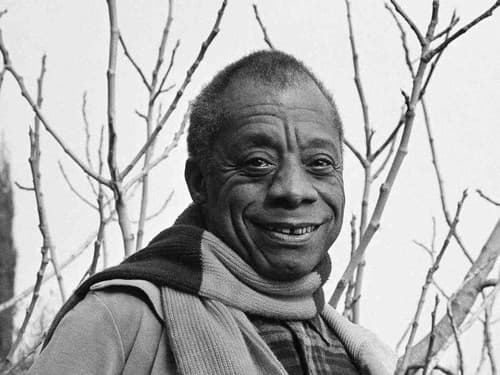
James Arthur Baldwin was an American writer. He garnered acclaim for his work across several forms, including essays, novels, plays, and poems. His first novel, Go Tell It on the Mountain, was published in 1953; decades later, Time magazine included the novel on its list of the 100 best English-language novels released from 1923 to 2005. His first essay collection, Notes of a Native Son, was published in 1955.

Ashley Antoinette
4.6

Mark McDonald
4.4
Luo Guanzhong
4.4

Mia McKenzie
4.3

Dorothy Parker
4.3

Joaquim Maria Machado de Assis
4.3

James Thurber
4.2

Terry Kay
4.2