“A mugger and a junkie are the same thing, the only difference is the junkie makes a choice.”
— Reflecting on the nature of addiction and crime.

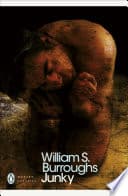
William S. Burroughs (2012)
Genre
Fiction
Reading Time
240 min
Key Themes
See below
Sign in to track this book
A young man's descent into heroin addiction in post-WWII New York City and Mexico City shows the truth of the junkie's life, from scrounging for a fix to fleeting highs.
The novel introduces William Lee, who is already deep into heroin addiction. He describes his daily routine of getting drugs in New York City, especially the Lower East Side, and the constant effort to maintain his habit. Lee details injecting, the immediate rush, and the quick need for more. He interacts with other addicts, pushers, and shady characters, navigating a hidden world driven by the next fix. His early experiences show his detached observation of his own decline and the poor lives around him. This sets the bleak tone of his existence. He works odd jobs, often as a hotel porter, to pay for his addiction, always looking for new connections and avoiding police.
Lee's addiction often leads to trouble with the law. He tells of several arrests for possession and vagrancy. He describes the process of being booked, held in jail, and appearing in court. He talks about the casual harshness of some police officers and the uncaring bureaucracy of the legal system. These experiences are not shown as chances for reform. They are temporary problems that stop his drug use. Lee learns to deal with the system, often pleading guilty to smaller charges or pretending to cooperate to get lighter sentences or avoid worse outcomes. His experiences show a deep distrust of authority and a practical acceptance of his criminal status.
Lee forms different relationships, mostly brief or for business, within the junkie subculture. He has a significant relationship with Vicki, another addict. They share a difficult and codependent life. Their interactions are often fueled by drugs, marked by arguments, and a mutual understanding of their shared situation. He also deals with other junkies like Herman, a small-time dealer, and Mary, another user. These relationships often involve distrust, manipulation, and the constant threat of betrayal. However, they also give a fragile sense of community and shared experience in an otherwise lonely world. Lee observes the different types of addicts and how they survive.
Lee tries to detox periodically, in jail, at home, or by himself. He describes the pain of withdrawal—the sweats, cramps, nausea, and intense cravings. These attempts rarely last long. The drug's pull is always too strong. He thinks about how useless these efforts are, knowing that his environment and psychological dependence make lasting sobriety almost impossible. These episodes show addiction's cyclical nature and how hard it is to escape it, even when he wants to. He notes the physical and mental decay that comes with long-term use and withdrawal.
As his addiction gets worse and its cost rises, Lee moves from just using to actively dealing. He starts selling small amounts of heroin and other drugs to support his own habit. He learns the details of the black market. This involves connecting with bigger suppliers, managing risks, and balancing profit and personal use. His dealing further puts him into the criminal underworld. It exposes him to more dangerous people and situations. He says his actions are necessary for survival, blurring the lines between user and supplier.
Lee moves south, eventually settling in New Orleans, seeking a change from the New York drug scene. However, he quickly finds that the drug problem is just as widespread, though with different local details. He continues his addiction, getting drugs and interacting with local junkies and pushers. The new setting does little to change his situation. The same struggles with withdrawal, the law, and the constant search for a fix continue. He observes the unique traits of the Southern drug culture, including different drugs and distribution methods. But he ultimately finds himself in a familiar cycle.
Beyond heroin, Lee tries many other drugs, including morphine, cocaine, marijuana, and various sedatives. He often combines them to get different effects or manage withdrawal symptoms. He describes each substance's distinct effects and his changing preferences. The story also touches on Lee's sexuality, detailing his experiences with both men and women in the drug subculture. These encounters are often for business, driven by mutual need, or happen in drug-induced states. He approaches these experiences with the same detached, observational quality as his drug use, seeing them as further explorations of human experience.
Lee reflects on the appeal of the junkie lifestyle. Despite the dirt, danger, and degradation, he describes a certain 'coolness' or mystery with it. It gives a sense of belonging to an exclusive, forbidden group. He details the rituals, language, and shared understanding that connect addicts, creating a strange sense of community. This attraction is not just about the drug itself. It is also about the identity it gives and the escape it offers from conventional society. He notes how addiction simplifies life, reducing all desires to the single, overwhelming need for a fix. This focus can become a strange kind of freedom.
As his addiction progresses, Lee's search for drugs becomes more desperate. It is less about pleasure and more about preventing withdrawal. He seeks an 'ultimate kick' or a different kind of experience. He tells of increasingly risky efforts to get drugs. This includes traveling to Mexico for more potent or unusual substances, or to escape US law. This travel shows a deeper psychological journey into his addiction. The lines between survival, pleasure, and self-destruction become blurred. The story suggests a growing feeling of being at the end of the line, with fewer choices and a deepening despair beneath his detached exterior.
Towards the end of the story, Lee, while still addicted, starts to think about a different future. This might involve a more serious attempt at sobriety or a complete break from his current life. He considers going to Mexico, not just for drugs, but possibly for a more permanent escape or a chance to rethink things. The ending is not about definite recovery. It is a continuation of his journey, leaving the reader with the idea that his struggles are ongoing. It suggests he knows his situation and has a new desire for change, even if the way forward is unclear and hard.
The Protagonist
Lee descends deeper into addiction, moving from user to dealer, but maintains a consistent, observational stance, ending with a potential, though uncertain, desire for change.
The Supporting
Vicki remains deeply entrenched in her addiction, serving as a mirror to Lee's own struggles and the grim reality of the junkie life.
The Supporting
Herman remains a consistent, if minor, fixture in Lee's drug-addled world, representing the pervasive nature of the subculture.
The Supporting
Mary's character remains static, serving as a background figure who reinforces the omnipresence of addiction in Lee's life.
The Antagonist
The police remain an unwavering, oppressive force throughout Lee's journey, consistently pursuing and punishing addicts.
The Supporting
The subculture remains a constant, shaping environment for Lee, illustrating both its destructive power and its strange allure.
The Mentioned
Gaines appears briefly, serving as a snapshot of another individual caught in the cycle of addiction.
The Mentioned
The landlady remains an unchanging, peripheral figure, representing the 'normal' world from which Lee is alienated.
The main theme of 'Junky' is how drug addiction takes over everything. Burroughs details the physical and psychological parts of dependence, withdrawal, and the constant search for the next fix. The book shows how addiction takes away people's control. It makes their lives about one thing. It shows how the drug controls daily routines, relationships, and moral choices. It turns the addict into a 'junky' whose identity is defined by their habit. Lee's detached narration shows heroin's hidden power. It becomes not just a substance but a way of life, a 'job' from which there is no escape.
“A junky is a man who uses junk. But who is a junky? A junky is a man who knows junk.”
The novel shows a deep feeling of being alone, both from regular society and within the junkie community. William Lee, even though he is with other addicts, keeps a detached, almost scientific view of his own life and those around him. Junkies are shown as 'outsiders.' They live outside normal morality and law, creating their own rules and realities. This isolation brings both suffering and a strange kind of freedom. It lets Lee observe the world without being fully part of it. The constant fear of the law makes them even more isolated, confirming their status as outcasts.
“The junky is a special animal, a separate species. He is a creature of the night, existing outside the laws of man and God.”
Burroughs clearly shows the hidden criminal world that supports drug addiction. This theme explores the illegal networks of pushers, users, and various low-level criminals who live on society's edges. The book details the constant game with law enforcement, the dangers of betrayal, and the harsh realities of survival in a world where trust is rare. It criticizes the societal structures that create and keep this underworld. It suggests that punishment only pushes the problem further into the shadows. This creates a subculture that is both dangerous and strangely self-sufficient. This world has its own rules, different from the 'straight' world.
“The junky's world is a vast network of connections, a secret society, with its own rules, its own language, its own currency.”
'Junky' explores how addiction shapes and changes identity. For William Lee, his identity is tied to being a 'junky.' He watches his own self-destruction with a cool, intellectual curiosity. It is almost as if he is a scientist studying his own decline. The constant search for drugs overshadows all other parts of his personality and goals. While there are times he thinks about wanting to be clean, the story mostly focuses on accepting and even embracing this drug-defined identity. It shows addiction's strong psychological hold, which makes self-destruction a chosen path rather than an accident.
“I was a junky. I had gone to the end of the line. I was a junky and I was trying to kick.”
The novel questions the effectiveness and morality of law enforcement and the legal system's approach to drug addiction. Burroughs shows the police as often brutal and ineffective. Their methods do little to stop addiction but much to dehumanize addicts and keep a criminal underworld going. The legal system is shown as a bureaucratic maze. It offers little real help. Instead, it cycles people through jails and courts. This theme shows a deep distrust of authority. It argues that society's current response to drug use is flawed. It often makes the problem worse instead of solving it.
“The law is for the rich and the straight; the junky is always outside the law.”
Lee's objective, clinical voice despite his subjective experience
William Lee narrates his experiences in a remarkably detached, almost journalistic style, even when describing his own suffering and degradation. This device creates a sense of objective observation, allowing Burroughs to present the raw realities of addiction without overt moralizing or sentimentality. It also highlights Lee's intellectual and analytical nature, even as his life spirals into chaos, making him a unique and compelling guide through the underworld. This detachment can be seen as a coping mechanism, but also as a fundamental aspect of Burroughs' authorial voice, which often seeks to dissect rather than simply experience.
A series of vignettes rather than a linear plot
The novel is structured as a series of loosely connected vignettes and anecdotes rather than a traditional linear plot with a clear climax and resolution. This episodic approach mirrors the cyclical and repetitive nature of addiction, where days blur into a constant search for drugs, interrupted by arrests or brief detox attempts. It emphasizes the mundane, repetitive reality of a junkie's life, devoid of grand narratives, and allows Burroughs to explore various facets of the drug subculture without being constrained by a conventional story arc, reflecting the non-linear experience of time under the influence.
Use of specific language of the drug subculture
Burroughs employs the authentic slang and jargon of the 1940s and 50s drug subculture ('junk,' 'fix,' 'score,' 'kick,' 'mainline,' etc.). This device immerses the reader directly into the world of the junkie, lending credibility and realism to the narrative. It also highlights the insularity of the drug community, which has its own language and codes, further emphasizing its 'otherness' from mainstream society. The precise use of this vocabulary is not merely decorative but functions to define the characters and their reality, making the experience visceral and immediate for the reader.
A thinly veiled account of Burroughs' own experiences
While presented as fiction, 'Junky' is a thinly veiled autobiographical account of William S. Burroughs' early years as a heroin addict. The protagonist, William Lee, is a clear stand-in for the author. This device lends a powerful sense of authenticity and authority to the narrative, as the details and insights come from direct, lived experience. It allows Burroughs to explore the psychological and sociological aspects of addiction with an unparalleled degree of realism and personal understanding, blurring the lines between author, narrator, and subject, making the text feel like a confession or a field report.
“A mugger and a junkie are the same thing, the only difference is the junkie makes a choice.”
— Reflecting on the nature of addiction and crime.
“Junk is not a kick. It is a way of life.”
— Describing the all-encompassing nature of heroin addiction.
“The best way to escape from a problem is to solve it.”
— A moment of practical, if cynical, reflection on dealing with difficulties.
“You can't sell junk if you're not on junk. It's a closed circuit.”
— Explaining the insular world of drug dealing and use.
“My first experience with junk was in New York, and it was a revelation.”
— Recalling the initial impact of heroin use.
“I was looking for some kind of absolute experience, and I found it in junk.”
— Expressing the motivation behind his drug use.
“The junk sickness is the only sickness you can't cure with money.”
— Highlighting the unique and pervasive suffering of withdrawal.
“Marijuana is a rather harmless drug, but it leads to other things.”
— Discussing the gateway drug theory from his perspective.
“The mark of a true junky is that he never gives up.”
— Observing the relentless pursuit of drugs by addicts.
“I never had any illusions about junk. I knew what it was.”
— Asserting a clear-eyed understanding of his addiction.
“The junky is a free man, in a way, because he has nothing to lose.”
— A controversial take on the paradoxical freedom of an addict.
“Every junky is a dealer, and every dealer is a junky.”
— Emphasizing the blurred lines between user and seller in the drug world.
“The world is a vast conspiracy to make you feel bad.”
— A cynical worldview often expressed by the narrator.
“To be a junky is to be a doctor, a nurse, a chemist, and a pharmacist, all rolled into one.”
— Illustrating the self-sufficiency and resourcefulness required for an addict.
Ready to see how well you understood this book? Take our interactive quiz with 10 questions.
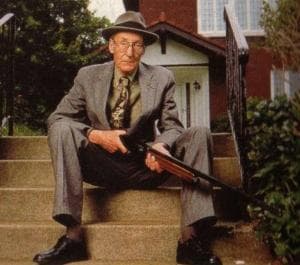
William Seward Burroughs II was an American writer and visual artist, widely considered a primary figure of the Beat Generation and a major postmodern author who influenced popular culture and literature. Burroughs wrote eighteen novels and novellas, six collections of short stories and four collections of essays, and five books have been published of his interviews and correspondences; he was initially briefly known by the pen name William Lee. He also collaborated on projects and recordings with numerous performers and musicians, made many appearances in films, and created and exhibited thousands of visual artworks, including his celebrated "Shotgun Art".
Ashley Antoinette
4.6

Mark McDonald
4.4
Luo Guanzhong
4.4
Mia McKenzie
4.3
Dorothy Parker
4.3
Joaquim Maria Machado de Assis
4.3
James Thurber
4.2

Terry Kay
4.2