BookBrief
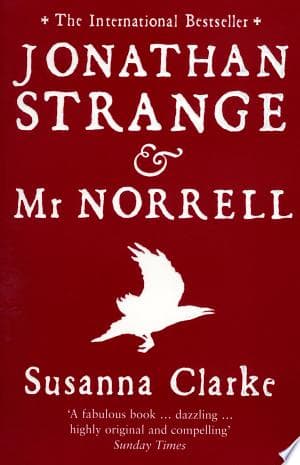
Jonathan Strange and Mr Norrell cover
Archivist's Choice

Jonathan Strange and Mr Norrell

Susanna Clarke (2009)

Genre

Fiction

Reading Time

25-35 hours

Key Themes

See below

Track Your Reading

Sign in to track this book

In an alternate 19th-century England where magic is a forgotten art, two rival magicians, one reclusive and traditional, the other charismatic and daring, bring back ancient powers, inadvertently plunging their nation into a dangerous struggle with dark fae and forgotten enchantments.

Synopsis

In 19th-century England, where magic is mostly academic, Mr. Norrell emerges as the only practical magician. He reintroduces magic to the public, helping the British government in the Napoleonic Wars and even resurrecting Lady Pole. However, his cautious methods are soon challenged by Jonathan Strange, a charismatic and naturally gifted amateur. Strange's daring approach clashes with Norrell's traditionalism, leading to a bitter rivalry. Both men explore ancient, dangerous magic, especially that connected to the legendary Raven King and the manipulative faerie known as the Gentleman with the Thistle-down Hair, who controls Lady Pole and Stephen Black. Their escalating magical conflict threatens their lives and reality, ending in a curse that traps them in an invisible city. The Raven King's return, partly due to Stephen Black, breaks the faerie's power and frees the magicians, leaving the future of English magic transformed.
Reading time
25-35 hours
Difficulty
Hard
Pacing
Slow
Mood
Atmospheric, Witty, Scholarly, Darkly Magical, Introspective
✓ Read this if...
You enjoy richly detailed historical fantasy, complex characters, and a slow-burn narrative with a deep dive into the nature of magic and its return to a rational world.
✗ Skip this if...
You prefer fast-paced plots, simple magic systems, or don't have the patience for a very long book with extensive historical and magical world-building.

Plot Summary

The Rise of Mr Norrell

In 1806, English magic is a subject of academic study, not practice. Societies of theoretical magicians, like the York Society, debate practical magic's existence. Mr. Gilbert Norrell, a reclusive magician from Hurtfew Abbey, performs actual magic, making statues in York Minster speak. He announces his plan to restore English magic, believing only he has the necessary knowledge and caution. Norrell then goes to London, offering his services to the government in the war against Napoleon, stressing secrecy and his unique position as the only practicing magician.

Norrell's Interventions and Lady Pole's Resurrection

In London, Mr. Norrell demonstrates his power by creating phantom ships to harass the French navy and by moving an entire road. His most significant act, however, involves resurrecting Lady Pole, Sir Walter Pole's fiancée, who had died suddenly. Norrell performs this with a mysterious faerie, later revealed as the gentleman with the thistle-down hair, who demands a price. Lady Pole returns to life, but she is changed, speaking strangely and seeming melancholic, suggesting the faerie took part of her soul.

The Emergence of Jonathan Strange

Jonathan Strange, a wealthy amateur from Shropshire, initially has no interest in magic. However, a street magician's prophecy to his servant, John Childermass, and then to Strange himself, reveals he will be a great magician. Strange's fiancée, Arabella, encourages him. He studies magic alone, quickly showing an intuitive and powerful grasp of the art, far beyond others' academic understanding. Strange's approach to magic is more adventurous and less rigid than Norrell's, focusing on the wilder, ancient aspects, especially those of the Raven King.

The Two Magicians Meet

Mr. Norrell, learning of Strange's talent, sends Childermass to invite Strange to London. Strange agrees, and the two magicians meet, forming an uneasy alliance. Norrell, cautious, plans to mentor Strange, teaching him only what Norrell considers safe. However, Strange's natural brilliance and independent spirit lead him to question Norrell's restrictive views, especially Norrell's suppression of knowledge about the legendary Raven King. Their collaboration has mutual respect but growing philosophical disagreement, setting the stage for their eventual split.

Strange's War Service and Growing Independent Study

Jonathan Strange volunteers as a military magician in the Peninsular War, using his magic to create roads, transport troops, and make a forest attack the French. His battlefield experiences show him war's brutal reality and magic's darker, destructive potential. Away from Norrell, Strange explores forbidden texts and experiments, especially those related to the Raven King, whose magic is said to be wilder and more powerful. He begins to use a more daring, less controlled form of magic, diverging further from Norrell's conservative approach.

The Faerie's Influence and Lady Pole's Plight

The gentleman with the thistle-down hair, the faerie who helped Norrell with Lady Pole's resurrection, continues to meddle. He holds Lady Pole captive in an illusion, forcing her to dance endlessly at his faerie ball, even as her physical body in England becomes distressed and withdrawn. He also takes an interest in Stephen Black, Sir Walter Pole's black butler, promising him a kingdom. The faerie's manipulative presence and the suffering he causes highlight the dangers of dealing with ancient, amoral magic and the hidden costs of Norrell's initial intervention.

The Rift Between Strange and Norrell

The philosophical differences between Jonathan Strange and Mr. Norrell grow into open conflict. Strange advocates for a return to the wild, ancient magic of the Raven King, believing it the true source of English magic, while Norrell denounces it as dangerous and chaotic. Norrell tries to discredit Strange and restrict his access to magical texts, fearing Strange's recklessness. Their disagreements become public, dividing the magical community. The final break happens when Strange publishes a book on the Raven King, directly challenging Norrell's authority and his careful narrative of magic.

Arabella's Disappearance and Strange's Desperation

Tragedy strikes when Arabella, Jonathan Strange's wife, falls ill and disappears, seemingly taken by the gentleman with the thistle-down hair. Devastated, Strange believes Arabella is trapped in the faerie realm. He dedicates himself to finding a way to rescue her, using increasingly dangerous and morally ambiguous magical practices, including necromancy and dark arts. His desperation leads him to use the wild magic he had only studied, pushing him further into the unknown and closer to the Raven King's dangerous power.

The Curse of the Invisible Cities

In his frantic attempts to find Arabella, Jonathan Strange tries to summon a powerful spirit, but instead inadvertently traps himself and Norrell within an 'Invisible City' – a magical curse that makes them visible only to each other, isolating them from the rest of the world. This curse shows their escalating magical conflict and their dabbling with forces beyond their understanding. They become linked, forced to confront each other while cut off from everyone else, trapped in a shared magical prison that reflects their intertwined destinies.

Stephen Black's Ascendancy and the Faerie's Downfall

Stephen Black, through his association with the gentleman with the thistle-down hair, learns the faerie's true nature and cruelty. Empowered by the faerie's promises and his own understanding of faerie magic, Stephen eventually turns against his tormentor. He plans to trap and destroy the gentleman with the thistle-down hair, freeing Lady Pole and other victims. Stephen's journey from subservient butler to a figure of power and vengeance offers a counter-narrative to the magicians' struggles, showing the agency of those often overlooked.

The Raven King's Return and the Breaking of the Spell

As the magical conflict intensifies, the spirit of the Raven King, the legendary king of English magic, begins to stir. His presence is felt through various magical events and prophecies. Ultimately, Strange and Norrell's combined efforts, inadvertently helped by the faerie's downfall and Stephen Black's actions, break the Invisible City curse. The Raven King's return signals a new era of English magic, one that includes both ancient, wild power and a more structured, cautious approach, suggesting a possible blend of the two magicians' philosophies.

Aftermath and Uncertain Futures

With the curse broken and the Raven King's magic re-established, the world changes. Lady Pole and Arabella are freed from the faerie's influence, though their experiences leave lasting scars. Jonathan Strange and Mr. Norrell, now visible again, are forever changed by their ordeal and their confrontation with the Raven King. Their future, and the future of English magic, remains unclear. The novel ends with a sense of unresolved potential, hinting at the vast, untamed power unleashed and the ongoing journey of discovery for both magicians, who, despite their differences, are now linked to England's revitalized magical landscape.

Principal Figures

Mr. Gilbert Norrell

The Protagonist

Norrell begins as the sole magician, fiercely controlling the narrative of magic, but is forced to confront his limitations and the necessity of wilder magic, ultimately becoming a part of the very forces he sought to suppress.

Jonathan Strange

The Protagonist

Strange evolves from a hesitant novice to a powerful, independent magician who embraces the forbidden magic of the Raven King, driven by love and a quest for true magical understanding, even at great personal cost.

Arabella Strange

The Supporting

Arabella transitions from a supportive wife to a victim of faerie malice, enduring psychological torment before being rescued, forever changed by her ordeal.

John Childermass

The Supporting

Childermass remains Norrell's steadfast servant, but his evolving understanding of true magic and his subtle manipulations contribute to the larger magical narrative, making him more than just a subordinate.

The Gentleman with the Thistle-down Hair

The Antagonist

The gentleman with the thistle-down hair begins as a seemingly benevolent but demanding entity, revealing his true cruel nature as he torments his victims, and ultimately faces an unexpected downfall at the hands of Stephen Black.

Lady Pole

The Supporting

Lady Pole is resurrected into a state of torment and madness, gradually deteriorating until she is freed from the faerie's spell, left with the lingering trauma of her experience.

Stephen Black

The Supporting

Stephen transforms from a subservient butler to a key player in the faerie's downfall, asserting his own power and destiny, ultimately becoming the Raven King of Lost-hope.

Vinculus

The Supporting

Vinculus serves as a mysterious prophet, delivering crucial prophecies and guiding Strange towards the Raven King's magic, ultimately fulfilling his role as a messenger of ancient power.

The Raven King

The Mentioned

The Raven King's influence grows throughout the novel, moving from a forgotten legend to a palpable, returning force that reshapes the magical landscape of England.

Themes & Insights

The Nature of English Magic

The novel explores magic's many sides, contrasting Mr. Norrell's cautious, academic, and controlled approach with Jonathan Strange's intuitive, wild, and ancient understanding. Norrell believes magic should be orderly, serve the state, and avoid the Raven King's 'dangerous' influence. Strange, conversely, seeks to revive the raw, powerful, and sometimes terrifying magic of the Raven King, believing it to be the true heart of English magic. This core disagreement drives much of the plot, showing how magic can be both a tool for order and a force of chaos, reflecting England's own history. The novel suggests that true English magic includes both aspects.

For English magic to be restored, England must remember what it has forgotten.

Jonathan Strange

Power and Control

Power and control appear in many ways throughout the story. Mr. Norrell is obsessed with controlling magic, hoarding books, and dictating how it should be practiced, fearing its potential for chaos. He seeks to control magic's very story. Jonathan Strange, while powerful, struggles with controlling his own abilities and their consequences. The gentleman with the thistle-down hair shows pure, amoral power and control over others, manipulating humans for his amusement. The novel examines power's corrupting influence, its responsibilities, and the dangers of trying to fully control forces beyond human understanding.

He knew that magic was not a game. It was a terrible, powerful force, and it must be handled with the utmost caution.

Narrator about Mr. Norrell

The Price of Magic

The novel consistently shows that magic, while powerful, always has a price. Lady Pole's resurrection by Norrell, for instance, leads to her torment by the faerie. Strange's desperate search for Arabella drives him to increasingly dark and self-destructive magical practices, ending in the 'Invisible Cities' curse. The gentleman with the thistle-down hair's actions always demand a cost, often human suffering or servitude. This theme highlights magic's ethical dilemmas, suggesting that even seemingly good acts can have unforeseen and devastating consequences, emphasizing the old saying that 'magic must always be paid for.'

All magic is a bargain. You pay for what you get.

Vinculus

Loss and Grief

Loss and grief are central to the story's emotional core, especially through Jonathan Strange's journey. His deep love for Arabella makes her abduction by the faerie an unbearable loss, driving him to increasingly desperate and dangerous magical acts. This grief fuels his quest and pushes him beyond conventional magic, forcing him to confront the magical world's darkest aspects. Lady Pole's existence is a constant state of loss — loss of self, sanity, and freedom. The novel explores how individuals cope with immense sorrow, and how it can both destroy and motivate, shaping their choices and destinies in a magical world.

What is the good of magic, if it cannot mend a broken heart?

Jonathan Strange

Identity and Otherness

The novel explores identity through characters like Stephen Black, who struggles with his place as a black butler in Regency England, and whose identity is complicated by the faerie's promises. Lady Pole loses her identity through magical torment, becoming a shadow of her former self. The magicians themselves, Norrell and Strange, grapple with their identities as practitioners of a forgotten art, defining themselves against each other and against the Raven King's historical legacy. The faerie, as an 'other,' highlights the alien and amoral nature of non-human beings, forcing humans to confront their own definitions of self and morality when faced with such difference. It questions who truly belongs in England's magical landscape.

There are no ordinary people. Everyone is extraordinary in some way.

Arabella Strange

Plot Devices & Literary Techniques

The Raven King's Prophecy

A series of ancient prophecies foretelling the return of English magic and two great magicians.

The Raven King's prophecy, delivered through figures like Vinculus and recorded in ancient texts, serves as a foundational plot device. It foretells the coming of two magicians who will restore English magic, acting as a destiny that both Norrell and Strange, in their own ways, strive to fulfill or defy. This prophecy creates dramatic irony, as the characters often act in ways that inadvertently bring about the very events they are trying to prevent or control. It also provides a sense of epic scale and historical inevitability, linking the present-day events to a grand, magical past.

The Gentleman with the Thistle-down Hair

A capricious faerie whose magical interventions drive much of the human suffering.

This faerie serves as a catalyst for many of the novel's tragic events and a representation of the amoral, dangerous side of magic. His initial 'help' in resurrecting Lady Pole, and his subsequent torment of her and abduction of Arabella, directly propels Jonathan Strange's desperate quest. The faerie's arbitrary cruelty and manipulation highlight the perils of dealing with ancient, non-human forces and underscore the 'price' of magic. He is a primary antagonist whose actions force the protagonists to confront the darker consequences of their magical pursuits and the limits of their control.

The Invisible Cities Curse

A magical curse that traps Strange and Norrell, making them visible only to each other.

The 'Invisible Cities' curse is a powerful plot device that symbolizes the inextricable link and mutual destruction of Strange and Norrell's magical rivalry. By rendering them invisible to everyone else but each other, it forces them into a direct, inescapable confrontation. This magical prison represents the culmination of their escalating conflict and their shared dabbling with dangerous magic. It also serves to isolate them, stripping away their external support and forcing them to rely on their own resources and, eventually, each other to break free, thus advancing their individual character arcs and their complex relationship.

The Lost Roads of England

Ancient magical roads, once part of the Raven King's domain, that Norrell manipulates.

The Lost Roads are ancient magical thoroughfares, remnants of the Raven King's era, which Mr. Norrell uses to demonstrate his power early in the novel by moving one to Scotland. This device highlights Norrell's ability to manipulate existing magic but also his preference for controlling and containing it. The roads serve as a physical manifestation of England's magical history and the Raven King's pervasive, though dormant, influence. Their existence hints at a larger, wilder magical landscape that Norrell tries to suppress, foreshadowing Strange's eventual embrace of that very magic.

Critical analysis

Notable Quotes

Mr Norrell was a practical magician, which is to say he was an educated, wealthy, and singular gentleman who had spent the greater part of his life in the pursuit of a single, rather obscure branch of knowledge, and who had become so accustomed to the loneliness and eccentricity of his chosen path that he had ceased to notice it.

Introducing Mr Norrell and his solitary nature.

A gentleman's library, they say, is a mirror of his soul. Mr Norrell's library was a very dark, very dusty mirror, in which one might glimpse the shadow of a very old, very particular soul indeed.

Describing Mr Norrell's extensive and ancient library.

The English are a nation of shopkeepers, and they are also a nation of magicians. Or rather, they were once, and they might be again.

Reflecting on England's magical past and potential future.

Magic, in England, was a thing like a long-neglected garden, overgrown with weeds and brambles, and here and there a few hardy, wild roses still pushing through.

Metaphor for the state of magic in England before its revival.

He knew that the world was full of magic, but he also knew that it was full of people who would never believe it, no matter how plainly it was shown to them.

Jonathan Strange's understanding of the world's skepticism.

The Raven King was not a man, not a god, not a devil. He was a force of nature, a principle, a fact, a truth.

Describing the enigmatic and powerful Raven King.

The trouble with magic was that it was a thing that happened to you, not a thing you did.

Jonathan Strange's early frustration with the passive nature of magic.

There is a great deal of difference between a man who knows a great deal about magic, and a man who can perform it.

Highlighting the distinction between theoretical and practical magic.

He had always been told that magic was a thing of the past, a childish fantasy. And now, here it was, in the present, doing real things.

Mr Norrell's early astonishment at the practical application of magic.

The greatest magicians, he had always maintained, were not those who could summon the most impressive spirits, but those who could best control the spirits they had already summoned.

Mr Norrell's philosophy on the true mark of a great magician.

It is not enough to be clever. You must also be wise.

A lesson learned by one of the characters about the limitations of mere intellect.

The fairies, it seemed, were not the pretty, harmless creatures of nursery rhymes, but something altogether older, wilder, and more dangerous.

The darker, more traditional portrayal of fairies in the novel.

The world was not a simple place, and magic was not a simple thing. It was full of shadows and echoes, of things half-seen and half-understood.

Reflecting on the complex and mysterious nature of magic and reality.

Some men are born to be great magicians; some acquire magic through study; and some have magic thrust upon them.

A playful adaptation of Shakespeare's line, applied to the varying paths to magic.

Quiz

Test Your Knowledge

Ready to see how well you understood this book? Take our interactive quiz with 10 questions.

10
Questions
~5
Minutes
?
Best Score

Key Questions (FAQ)

The novel explores an alternate 19th-century England where magic once existed but has largely vanished, becoming a subject of academic study rather than practice. It chronicles the re-emergence of practical magic through two distinct magicians, the reclusive Mr Norrell and the dashing Jonathan Strange, and their complex, often adversarial, relationship as they bring magic back into the world.

About the author

Susanna Clarke

Susanna Mary Clarke is an English author known for her debut novel Jonathan Strange & Mr Norrell (2004), a Hugo Award-winning alternative history. Clarke began Jonathan Strange in 1993 and worked on it during her spare time. For the next decade, she published short stories from the Strange universe, but it was not until 2003 that Bloomsbury bought her manuscript and began work on its publication. The novel became a best-seller.