“For the sin that I committed was the sin of my whole life – the sin of wanting more and ever more, but never enough.”
— Borkman reflecting on his past ambitions and the crime that led to his downfall.


Henrik Ibsen (1896)
Genre
Fiction
Reading Time
120 min
Key Themes
See below
Sign in to track this book
A disgraced banker, imprisoned by his own ambition and the icy grip of societal judgment, paces his upstairs prison, dreaming of a financial comeback while the women in his life battle over the shattered remnants of their shared past and the fate of their son.
The play opens in the drawing-room of the Borkman mansion, a once-grand but now dilapidated estate. Mrs. Gunhild Borkman, consumed by bitterness and a desire for social rehabilitation, discusses with her maid, Frida Foldal, the upcoming visit of her son, Erhart. Mrs. Borkman reveals her disdain for her estranged twin sister, Ella Rentheim, who has provided for Erhart's education and well-being since Borkman's disgrace. Mrs. Borkman is obsessed with the idea that Erhart will one day redeem the family name and restore their former glory, a burden she has placed entirely on his shoulders. She resents the financial assistance from Ella, viewing it as a constant reminder of their fallen status and a threat to her own influence over Erhart.
Ella Rentheim, Mrs. Borkman's twin sister, arrives unexpectedly. She informs Mrs. Borkman that she is gravely ill and has come to demand Erhart's full attention and companionship, wishing to make him her heir. This declaration sparks a fierce argument between the two sisters. Ella reveals the depth of her sacrifice for the Borkman family: she gave up her love for John Gabriel Borkman to allow him to pursue his ambitions, which included marrying Gunhild for her family's connections and fortune. She accuses Gunhild of trapping Borkman and destroying their lives. Mrs. Borkman, in turn, accuses Ella of trying to steal her son and undermine her authority, escalating the long-standing family feud.
Upstairs, in a locked room, John Gabriel Borkman paces endlessly, a ritual he has maintained for eight years since his release from prison. He is a ruined man, a former bank director who embezzled funds and served a sentence for fraud. Despite his disgrace, he clings to a grandiose self-perception, believing himself a misunderstood genius whose financial schemes would have revolutionized the country if not for his downfall. He despises his wife, Gunhild, for her inability to understand his vision and for her constant complaints. He also resents Ella for her perceived betrayal. He is visited by Vilhelm Foldal, an old friend and a struggling poet, who shares Borkman's delusions of unappreciated genius, offering him a fleeting connection in his self-imposed exile.
Ella Rentheim goes upstairs to confront John Gabriel Borkman. She demands an explanation for his betrayal, specifically why he chose to marry Gunhild over her, despite her deep love for him and her willingness to support his ambitions. Borkman, still believing himself to be a victim of circumstance, attempts to justify his actions, claiming that his marriage to Gunhild was a strategic move necessary for his financial empire. He reveals his belief that he sacrificed his personal happiness for the greater good of his grand industrial vision. Ella, however, sees through his self-serving justifications, calling him out on his emotional coldness and his destruction of her life and their shared love. She declares her intention to take Erhart from him, deepening his despair.
Erhart Borkman finally arrives at the mansion. He is a young man torn between the suffocating expectations of his mother, Gunhild, and the manipulative affection of his aunt, Ella. He is also eager to escape the oppressive atmosphere of his family home. He announces his intention to leave with Mrs. Fanny Wilton, an older, sophisticated woman who has captivated him. Erhart makes it clear that he will not be the instrument of his family's redemption. He expresses a desire to live for himself, to experience joy and freedom, rather than being burdened by the past and the unfulfilled ambitions of his parents. This declaration shatters the hopes of both Gunhild and Ella, who had each envisioned a future for him intertwined with their own desires.
Despite the desperate pleas and emotional manipulation from both Gunhild and Ella, Erhart remains resolute in his decision to leave. He departs with Mrs. Fanny Wilton and, surprisingly, Frida Foldal, who has also been drawn to Mrs. Wilton's more liberated lifestyle. Erhart's departure signifies a definitive break from the suffocating past and the crushing expectations of his family. His refusal to become a pawn in their schemes leaves both his mother and aunt devastated, as their hopes for his future redemption and companionship are irrevocably dashed. This scene shows the generational conflict and Erhart's assertion of individuality against the backdrop of his family's tragic history.
After Erhart's departure, John Gabriel Borkman, spurred by a desperate longing for his former power and a belief that he can still rise again, decides to venture outside for the first time in eight years. He is convinced that the world is waiting for his return, for the genius he believes he still possesses. He strides out into the cold winter night, accompanied by Ella, who tries to reason with him. He speaks of the 'millions' he once commanded and the 'mines' he saw as living beings, personifying his lost industrial dreams. He believes his time has come to reclaim his place, but this grand delusion is about to collide with a harsh and unforgiving reality.
As Borkman and Ella reach a viewpoint overlooking the valley, Borkman delivers a passionate, almost manic monologue about his vision for the future and the untapped potential of the earth. He speaks of the 'mine spirit' calling to him, yearning for release. Suddenly, he feels a 'cold hand' grip his heart — a symbolic manifestation of the forces he tried to control, or perhaps the psychological toll of his long confinement and delusion. He collapses, dying in the snow, his dreams of redemption and industrial conquest extinguished in the bitter cold. Ella is by his side, witnessing his final moments, a poignant end to their intertwined and tragic lives.
Gunhild Borkman, having followed them out, discovers John Gabriel's lifeless body. The sight of his death, combined with the earlier departure of Erhart, finally breaks through her hardened exterior. Standing over the body of the man who ruined both their lives, Gunhild and Ella Rentheim are left with nothing but their shared sorrow and the wreckage of their past. In this moment of loss, their lifelong animosity momentarily subsides. They acknowledge that they are united by the dead man, who, in his ambition, destroyed not only himself but also the women who loved him. A fragile, unspoken truce forms between them, born of shared tragedy and the finality of death.
In the aftermath of Borkman's death, Gunhild and Ella reflect on the waste of their lives. Gunhild laments the years spent waiting for a redemption that never came, while Ella mourns the love she sacrificed and the emptiness that filled her existence. They realize that Borkman’s immense ambition, his obsession with power and wealth, consumed not only him but also everyone around him. His 'cold hand' reached out and stifled the warmth and joy in their lives. The sisters are left with the crushing weight of a past they cannot change, and a future devoid of the hopes they once held for Erhart or for themselves. The play concludes with the sisters standing together, bound by their shared sorrow and the tragic legacy of John Gabriel Borkman.
The Protagonist/Antagonist
From delusional grandeur in isolation, he attempts a final, desperate reclamation of his power, only to die in the cold, a broken man.
The Supporting
Starts consumed by bitterness and a singular focus on Erhart, but ultimately faces the futility of her efforts and a grudging reconciliation with Ella.
The Supporting
Seeks to reclaim Erhart and confront Borkman, ultimately finding a fragile peace with her sister in shared loss.
The Supporting
Starts as a pawn in his family's emotional games, but asserts his independence and leaves to pursue his own happiness.
The Supporting
Introduced as a catalyst for Erhart's departure, successfully leading him away from his family's influence.
The Supporting
Remains largely static, a loyal but ultimately ineffective friend to Borkman.
The Supporting
Starts as a quiet servant, then leaves with Erhart and Mrs. Wilton, seeking a new life.
John Gabriel Borkman's ambition for power and wealth is the central destructive force in the play. His belief that he could sacrifice love and personal relationships for his grand industrial vision ultimately leads to his downfall, imprisonment, and the emotional ruin of his family. He personifies the mines and the 'millions' as living entities, showing how his pursuit of material greatness consumed his humanity. This theme is evident in his betrayal of Ella, his coldness towards Gunhild, and his inability to connect with Erhart, all sacrificed for his unfulfilled dreams.
““I had to choose. I had to choose between my love for you and my calling. And I chose my calling.””
The Borkman mansion itself is a symbol of a past that refuses to die, and the characters are all prisoners of their history and unfulfilled desires. Borkman lives in a delusional past, reliving his glory days. Gunhild is consumed by past disgrace and the dream of restoring family honor. Ella mourns the love and life she lost due to Borkman's betrayal. Erhart is the only one who actively tries to escape this burden, highlighting the suffocating effect of living in the shadow of past events and the failure to achieve one's dreams. The play shows how clinging to the past prevents any possibility of present happiness or future growth.
““We are tied together by the dead man. And by the dead life he lived in us.””
A core conflict in the play is the struggle between personal love and the demands of duty, social standing, or ambition. Borkman explicitly chose his 'calling' over his love for Ella, rationalizing it as a necessary sacrifice for a greater purpose. Gunhild's 'duty' to restore the family name overshadows any genuine maternal love for Erhart, making her possessive and demanding. Erhart's decision to leave with Mrs. Wilton is a rejection of the 'duty' his mother and aunt impose on him, in favor of personal happiness and freedom. This theme explores the devastating consequences when human connection is sacrificed for external goals.
““I must get out of all this! I must live my own life! I must be happy!””
Isolation, both physical and psychological, is a pervasive theme. John Gabriel Borkman lives in self-imposed exile upstairs, retreating into his delusions of grandeur. Gunhild lives downstairs, equally isolated by her bitterness and pride. The two sisters, Gunhild and Ella, are estranged, creating emotional isolation within the family. Borkman's delusions about his genius and the world awaiting his return are reinforced by his solitude and the sympathetic ear of Foldal. This isolation prevents the characters from confronting reality, fostering their individual obsessions and ultimately leading to their tragic fates.
““I pace up and down here, as if I were in a vault, with all the millions locked in there.””
The play portrays the limited roles and suffering of women in a patriarchal society. Both Gunhild and Ella's lives are defined and ruined by Borkman's actions and ambitions. Gunhild is trapped in a marriage of convenience, her identity tied to her husband's social standing. Ella sacrifices her love and happiness, then spends her life in emotional desolation. Their rivalry over Erhart further underscores their dependent status, as he becomes their only hope for meaning. Their lives show the impact of male ambition on female autonomy and well-being.
““We have been two wounded creatures, lying here and licking our wounds.””
The dilapidated mansion represents the family's fallen status and psychological state.
The Borkman mansion, once grand but now in disrepair, serves as a powerful symbol. The upstairs room where John Gabriel paces symbolizes his self-imposed isolation and his delusional world, cut off from reality. The downstairs drawing-room, where Gunhild resides, represents her bitterness and her clinging to past social pretensions. The overall decay of the house reflects the moral and emotional ruin of the family, a physical manifestation of their spiritual bankruptcy and the weight of their tragic history. It is a prison for its inhabitants, trapping them in their past.
A recurring image representing death, emotional coldness, and the destructive forces of ambition.
The 'cold hand' appears throughout the play, both literally and figuratively. Ella describes Borkman's emotional coldness and the way his ambition stifled their love as a 'cold hand' on her heart. In the climax, Borkman himself feels a 'cold hand' grip his heart as he collapses and dies in the snow. This motif symbolizes not only physical death but also the emotional barrenness that Borkman inflicted on himself and others, the chilling consequences of his ambition, and the ultimate, unforgiving grip of fate or nature on human grandiosity.
Key events and characters are often discussed before they appear, building tension and expectation.
Ibsen frequently uses offstage action and delays to heighten dramatic tension. John Gabriel Borkman is discussed extensively by Gunhild and Ella before his actual appearance, building a formidable image of him. Similarly, Erhart's arrival is anticipated, and his character is revealed through others' descriptions before he steps onto the stage. This technique allows the audience to form strong impressions and expectations, which are then either confirmed or subverted when the characters finally appear, creating a sense of foreboding and psychological depth.
Symbolizes Borkman's unfulfilled ambitions, perceived power, and the destructive pursuit of wealth.
The mine and gold are central to Borkman's identity and his downfall. For him, the mines are living beings, waiting to be liberated by his genius, symbolizing his grand vision for industrial power. He speaks of the 'millions' he once controlled and the 'treasures' he sought. This motif represents not just wealth, but also the raw, untamed power of industry and capital. It embodies his destructive ambition, as his obsession with these 'riches' led him to betray love, commit fraud, and ultimately destroy his own life and the lives of those around him, becoming a 'mine spirit' himself.
“For the sin that I committed was the sin of my whole life – the sin of wanting more and ever more, but never enough.”
— Borkman reflecting on his past ambitions and the crime that led to his downfall.
“Oh, you women! You women! You are the ruin of us!”
— Borkman's bitter outburst directed at Gunhild and Ella, blaming them for his misfortunes.
“The great, cold, glittering eyes of the world stared at me...”
— Borkman describing his feeling of being exposed and judged after his arrest.
“But the strangest thing of all is that people don't seem to understand that it's the spirit that gives life to the body, and not the body to the spirit.”
— Ella Rentheim discussing her belief in the power of the spirit over material things.
“It is not the crime itself that makes the man, but what he makes of the crime.”
— Borkman attempting to rationalize his actions and his identity.
“We have waited for you, John Gabriel, all these long, long years.”
— Gunhild Borkman's chilling greeting to her husband after his release from prison, highlighting the enduring bitterness.
“I lay my hand on the ice-cold forehead of the dead, and I feel the pulse of life beating for me.”
— Borkman's final, delusional moment, imagining his connection to the mineral kingdom.
“The past is dead. The future is dead. There is only the present.”
— Erhart Borkman expressing his desire to escape the burdens of his family's past and live in the moment.
“You killed the love in me, John Gabriel.”
— Ella Rentheim confronting Borkman about his betrayal and the emotional death he inflicted upon her.
“I have been a prisoner too, for eight long years. A prisoner in this house.”
— Gunhild Borkman lamenting her own suffering and confinement in the shadow of her husband's crime.
“We are like two wounded deer, driven from the herd, each seeking its own lonely death.”
— Ella Rentheim describing the shared tragedy and isolation of herself and Gunhild.
“It is the sound of the hammers that keeps me alive.”
— Borkman, in his isolation, finding solace and purpose in the imaginary sounds of industry.
“There is a kind of cold, metallic feeling about you, John Gabriel.”
— Ella Rentheim observing Borkman's detached and unfeeling nature.
“I am a miner. I have been digging for gold all my life.”
— Borkman's self-perception as a figure dedicated to extracting wealth and power.
Ready to see how well you understood this book? Take our interactive quiz with 10 questions.
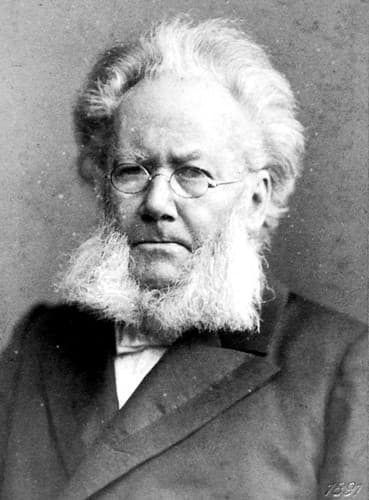
Henrik Johan Ibsen was a Norwegian playwright and theatre director. As one of the founders of modernism in theatre, Ibsen is often referred to as "the father of realism" and one of the most influential playwrights of his time. His major works include Brand, Peer Gynt, An Enemy of the People, Emperor and Galilean, A Doll's House, Hedda Gabler, Ghosts, The Wild Duck, When We Dead Awaken, Rosmersholm, and The Master Builder. Ibsen is the most frequently performed dramatist in the world after Shakespeare, and A Doll's House was the world's most performed play in 2006.

Ashley Antoinette
4.6

Mark McDonald
4.4
Luo Guanzhong
4.4

Mia McKenzie
4.3
Dorothy Parker
4.3

Joaquim Maria Machado de Assis
4.3

James Thurber
4.2

Terry Kay
4.2