“His soul had approached that region where dwell the vast hosts of the dead.”
— From 'The Dead', Gabriel Conroy's epiphany at the end of the story.

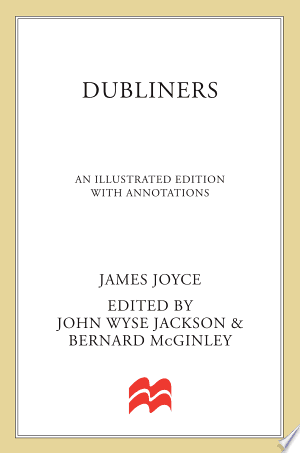
James Joyce (1993)
Genre
Fiction
Reading Time
Variable (each story is relatively short, but the collection demands thoughtful engagement)
Key Themes
See below
Sign in to track this book
Fifteen linked stories show turn-of-the-century Dublin through lives marked by desire, deceit, and despair, ending with the reflective 'The Dead.'
The narrator, a young boy, learns of Father Flynn's death. The old, paralyzed priest had been a significant, unsettling person in his life. The boy remembers the priest's odd habits, his 'simoniac' smile, and his interest in theology and Latin. He visits the priest's house with his aunt, where they talk with Nannie and Eliza, Father Flynn's sisters. Eliza reveals that Father Flynn had mental breakdowns, dropping a chalice during mass and laughing to himself in the confessional. The boy feels a mix of relief, fear, and a strange freedom after the priest's death, haunted by the priest's smile and the sisters' quiet revelations, which suggest a deeper, unspoken corruption.
Two schoolboys, the narrator and Mahony, skip school to go to the Pigeon House, a power station on Dublin Bay. Their initial excitement fades as Mahony gets distracted by cats and wanders off. The narrator meets an older, well-dressed man who talks to him. The man's conversation becomes unsettling, showing an interest in punishing boys, self-harm, and a strange, perverse interest in young boys' relationships. The narrator becomes increasingly uncomfortable. When Mahony returns, they leave the man, disturbed by the encounter and the man's hidden perversions.
A young boy, in love with Mangan's sister, promises to buy her a gift from Araby, an exotic market. His infatuation fills his ordinary life with wonder. He struggles to get money from his uncle, who comes home late and drunk. When he finally reaches Araby, it is late, many stalls are closed, and the place is not the magical dream he imagined. He overhears a mundane conversation between a young woman and two English gentlemen, which shatters his romantic ideas. He realizes his quest was pointless and his own vanity, standing alone in the dark, filled with anguish and self-reproach.
Eveline, a young woman, sits by her window, thinking about her life in Dublin and a chance to escape with Frank, a sailor who wants to take her to Buenos Aires. She reviews her hard life: an abusive father, caring for her younger siblings after her mother's death, and her dull job. She remembers Frank's charm and their happy courtship. However, a promise she made to her dying mother to keep the family together, along with her deep fear of the unknown and the familiar comfort of her routine, stops her. At the last moment, on the quay with Frank, she cannot board the ship, remaining frozen and unresponsive, unable to take her chance at freedom.
Jimmy Doyle, a young Dubliner from a new money family, races through Ireland with his wealthy European friends: Villona, a Hungarian nobleman; Rivière, a Frenchman; and Charles Séguin, a wealthy Englishman. After the race, they celebrate in a lavish restaurant and later play cards on Séguin's yacht. Jimmy, eager to impress and fit into their sophisticated world, gambles carelessly and loses a lot of money. The story shows Jimmy's superficiality, his desire for social acceptance, and his awareness of his more provincial background. He tries to keep up with his more established and rich companions, ultimately feeling the sting of his financial loss and perhaps his own inadequacy.
Lenehan and Corley, two poor Dublin 'gentlemen' who live by their wits, walk through the city discussing women and their latest plans. Corley tells of his plan to use a servant girl he is seeing, hoping she will give him money or a meal. Lenehan, at first doubtful, waits for Corley while he meets the girl. When Corley returns, he proudly shows a small gold coin the girl gave him, a sign of their successful, though morally questionable, exploitation. The story reveals the parasitic nature of their lives and the desperation that drives them, highlighting the bleakness and moral squalor beneath the city's surface.
Mrs. Mooney, a strong woman who runs a boarding house, decides it is time to marry off her daughter, Polly. Polly has been having an affair with Mr. Doran, a respectable clerk who is a lodger. Mrs. Mooney, knowing about the affair, lets it continue until Mr. Doran feels he must propose. She arranges a confrontation, calling Mr. Doran to her sitting-room to discuss the 'situation.' Mr. Doran, full of guilt and fear of social ruin, reluctantly agrees to marry Polly, giving in to Mrs. Mooney's calculated pressure and his own sense of duty and shame.
Little Chandler, a timid aspiring poet, meets his old friend Ignatius Gallaher, who has become a successful journalist in London. Gallaher, confident and worldly, boasts of his travels and experiences, while Chandler feels more and more inadequate and stuck in his ordinary life as a clerk, married with a child. Chandler envies Gallaher's freedom and success, regretting his own unfulfilled writing dreams. He returns home feeling bitter towards his wife, Annie, and his crying child, whom he harshly scolds, only to be immediately filled with remorse and self-pity, recognizing his own smallness and failure.
Farrington, a clerk, has a frustrating and humiliating day at work, hounded by his demanding boss, Mr. Alleyne, for not finishing a task. He tries repeatedly to get a drink, only to be caught and scolded. His anger builds throughout the day. After work, he drinks with friends, growing more frustrated when he cannot find a woman or win an arm-wrestling match. He returns home drunk and furious, taking out his pent-up rage on his young son, Tom, beating him for not making his supper, showing his own powerlessness and displaced aggression.
Maria, a small, kind, unmarried laundress, prepares to visit Joe Donnelly's family, a man she nursed as a child. It is Halloween, and she brings cakes for the children. On the tram, a drunken gentleman treats her kindly. At Joe's house, a warm family celebration takes place. During a game of 'snap-apple,' Maria is blindfolded and accidentally picks a piece of clay, symbolizing death or a monastic life, instead of a ring (marriage) or water (travel). The family quickly covers up the mistake. Maria, unaware, sings a song but leaves out a verse, highlighting her innocence and the subtle, unspoken sadness of her unfulfilled life.
Mr. James Duffy, a solitary and precise bank clerk, lives a life of strict routine and intellectual isolation. He forms an unusual platonic friendship with Mrs. Sinico, a married woman who shares his intellectual interests. Their bond grows, but when Mrs. Sinico, feeling a deeper emotional connection, touches his hand, Mr. Duffy pulls back, fearing intimacy and commitment. He ends the relationship, retreating further into his solitude. Four years later, he reads in a newspaper that Mrs. Sinico has died of heart failure, made worse by alcohol. He realizes that by rejecting her, he condemned her to loneliness and, in doing so, condemned himself to an even greater, irreparable isolation, feeling a deep sense of regret and the cold emptiness of his own existence.
A group of political campaigners gathers in a dimly lit committee room on Ivy Day, the anniversary of Charles Stewart Parnell's death. They discuss the upcoming municipal elections, their small pay, and Parnell's controversial past. The room feels stagnant and decaying, mirroring Irish politics. The characters, including Joe Hynes, a poet, and Mr. Crofton, a conservative, show their cynicism, opportunism, and lack of real political belief. Hynes recites a poem praising Parnell, briefly bringing forth a sense of national pride and loss, but the moment is quickly overshadowed by the men's petty concerns and personal complaints, showing the corruption and moral inaction within Dublin's political world.
Mrs. Kearney, a very ambitious and socially aware woman, carefully plans her daughter Kathleen's singing career, aiming to raise their family's social standing. Kathleen is set to perform at a series of concerts organized by the Eire Abu Society, a new nationalist group. However, the concerts are poorly managed, and payments are delayed. Mrs. Kearney, focused on proper behavior and her daughter's status, insists on full payment for Kathleen's appearances. Her constant demands and self-important manner cause conflict and embarrassment, leading to a public argument. Ultimately, Kathleen is fired, and Mrs. Kearney's attempts at social climbing end in humiliation and failure.
Mr. Tom Kernan, a Protestant and heavy drinker, falls down stairs in a pub, biting off part of his tongue. His friends, led by the religious Mr. Power, see this as a chance for his spiritual 'reformation' and decide to convince him to attend a Catholic retreat. They visit him at home, where his wife, a Catholic, is happy with their efforts. The men discuss religious matters and the importance of faith, though their understanding is often superficial and self-serving. They succeed in convincing Kernan to attend the retreat, but the story quietly questions the sincerity of their faith and the true potential for Kernan's change, suggesting their efforts are more about social conformity than real spiritual awakening.
Gabriel Conroy attends his aunts' annual Christmas party, a lively event with music, food, and talk. He navigates various social interactions, from a superior exchange with Miss Ivors about his Irish identity to a dance with a charming young woman. Throughout the evening, Gabriel feels a mix of intellectual superiority and social awkwardness. Later, in their hotel room, his wife Gretta is deeply moved by a song, 'The Lass of Aughrim,' which reminds her of a young man named Michael Furey who loved her and died for her when she was young. Gabriel, at first jealous, has a profound realization. He sees the shallowness of his own love and life compared to Michael's passionate devotion, confronting his own death and the vast, unifying power of death and human connection, as snow falls silently over all of Ireland.
The Protagonist
Gabriel undergoes a profound epiphany, realizing the superficiality of his own life and love compared to the passionate, enduring love of a deceased young man.
The Protagonist
Eveline remains paralyzed, ultimately unable to choose freedom over the familiar constraints of her life in Dublin.
The Supporting/Symbolic
His death sets the stage for the story, revealing the lingering impact of his 'paralysis' and spiritual decay on the young narrator.
The Protagonist
Chandler's encounter with Gallaher intensifies his feelings of inadequacy, leading to a moment of bitter self-realization and displaced anger.
The Protagonist
Maria's story is largely static, highlighting her enduring innocence and the quiet pathos of her unfulfilled life, subtly underscored by a symbolic moment of misfortune.
The Protagonist
Duffy's deliberate isolation leads him to reject true human connection, culminating in a devastating realization of his profound and irreparable loneliness.
The Protagonist
Corley's character is static, serving as a representation of moral decay and exploitation, achieving a minor 'triumph' through his deceit.
The Supporting/Antagonist
Mrs. Mooney successfully executes her plan to secure a marriage for her daughter, demonstrating her powerful, if morally ambiguous, agency.
The Mentioned/Symbolic
His story, revealed through Gretta, acts as the catalyst for Gabriel's profound self-realization, long after his own death.
The main idea of *Dubliners*, paralysis, shows as a spiritual, emotional, and physical inability to act, escape, or change. Characters are often stuck by their situations, social rules, fear, or their own psychological limits. Father Flynn's physical paralysis in 'The Sisters' sets the mood, while Eveline's inability to board the ship in 'Eveline' is a clear example of emotional paralysis. Mr. Duffy's self-chosen isolation in 'A Painful Case' leads to deep spiritual paralysis, leaving him utterly alone. This theme highlights Dublin as a stagnant city that stifles its residents.
“His soul had been a long time dead.”
Many characters want to escape Dublin's ordinary, oppressive, or morally decaying environment, but these attempts always fail. Eveline's chance to leave with Frank is stopped by her own fear and sense of duty. The boy in 'Araby' seeks an exotic escape through the market, only to find it a mundane and disappointing experience. Little Chandler dreams of a literary escape in 'A Little Cloud' but remains stuck in his mediocre life. These failures emphasize the widespread paralysis and the difficulty of breaking free from the city's hold, suggesting that escape is either impossible or leads to more disappointment.
“Her eyes had been dimmed by tears and she saw the seamen's caps and tried to hear him calling her name. But the white face of the quay wall still confronted her and the white face of him still stared into her eyes.”
Joyce uses 'epiphany'—a sudden spiritual insight or revelation—often leading to disappointment. Characters experience moments of deep understanding, but these rarely lead to positive change. Instead, they often show how bleak their situation is or their own moral flaws. The boy in 'Araby' has an epiphany about how pointless his quest was. Gabriel Conroy's revelation in 'The Dead' about Michael Furey's love and his own shallow life is perhaps the most important, though it leaves him with a deep sense of loss and insignificance. These epiphanies show the characters' entrapment and the widespread gloom.
“He saw himself as a ludicrous figure, an anguished animal, a worthless thing, a mere speck in the universe.”
Joyce shows Dublin as a city in decline, suffering from moral, spiritual, and political decay. This idea is clear in the petty corruption of the political campaigners in 'Ivy Day in the Committee Room,' the exploitation in 'Two Gallants,' and the general sense of stagnation and unfulfilled potential that fills many characters' lives. The church, once a pillar of society, is also shown to be tainted, as suggested by Father Flynn's disturbed state. This decay is not just external but internal, infecting the souls of the Dubliners and adding to their paralysis.
“Ireland, they say, is the sow that eats her farrow.”
The early stories, especially 'The Sisters,' 'An Encounter,' and 'Araby,' focus on young boys dealing with the loss of innocence and the harsh realities of the adult world. The narrator in 'The Sisters' learns about Father Flynn's ambiguous corruption, while the boys in 'An Encounter' face a disturbing perversion. The boy in 'Araby' loses his romantic ideas about love and exoticism. These experiences mark a shift from naive idealism to a growing awareness of the world's complexities and often unpleasant truths, highlighting the vulnerability of youth in a decaying environment.
“Gazing up into the darkness I saw myself as a creature driven and derided by vanity; and my eyes burned with anguish and anger.”
A sudden, profound moment of realization for a character.
Joyce's concept of epiphany is central to *Dubliners*. It refers to a sudden spiritual manifestation, whether in a trivial gesture, word, or scene, through which the meaning of an event or character's life is suddenly illuminated. These moments are often fleeting and do not necessarily lead to positive change, but rather to a deeper understanding, often of a character's own paralysis or disillusionment. Examples include the boy's realization at the end of 'Araby' and Gabriel Conroy's profound insight into his own life and mortality at the conclusion of 'The Dead'.
Objects, colors, or weather representing deeper meanings.
*Dubliners* is rich in symbolism, often used to reinforce the themes of paralysis and decay. The white face of the quay in 'Eveline' symbolizes her entrapment. The snow falling 'all over Ireland' in 'The Dead' represents both a unifying force of mortality and a chilling blanket over life. Father Flynn's chalice, his paralysis, and his 'simoniac' smile are symbols of moral and spiritual decay. These symbols subtly enhance the stories' atmosphere and thematic depth, often leaving the reader with a sense of unease or melancholy.
Narrative technique blending narrator's and character's voices.
Joyce frequently employs free indirect discourse, allowing the narrator's voice to blend seamlessly with a character's thoughts and feelings without explicit markers like 'he thought' or 'she felt.' This technique gives the reader intimate access to the characters' inner lives and perspectives, blurring the line between objective narration and subjective experience. It contributes to the psychological depth of the stories, allowing the reader to experience the characters' frustrations, hopes, and disillusionments more directly, as seen in the thoughts of Little Chandler in 'A Little Cloud' or Eveline's internal monologue.
Recurring images and descriptions that evoke a sense of lifelessness.
Throughout *Dubliners*, Joyce uses recurring motifs to emphasize the theme of paralysis and the moral decay of the city. These include descriptions of dusty rooms, dim lighting, stagnant water, and characters who are physically or emotionally inert. The smell of decay pervades Father Flynn's room in 'The Sisters,' and the 'dead' atmosphere of the committee room in 'Ivy Day' mirrors the political stagnation. These repeated images create a pervasive atmosphere of gloom and hopelessness, reinforcing the idea that Dublin is a place where life struggles to thrive.
“His soul had approached that region where dwell the vast hosts of the dead.”
— From 'The Dead', Gabriel Conroy's epiphany at the end of the story.
“She stood up in a sudden impulse of terror. A cry nearer than any she had heard yet nearly escaped her lips. She addressed her prayer to the Blessed Virgin.”
— From 'Eveline', as Eveline contemplates leaving Dublin.
“One by one they were all becoming shades. Better pass away in the full glory of some passion, than fade and wither dismally with age.”
— From 'The Dead', Gabriel Conroy's thoughts about his aunt and her past.
“He waited, listening, for a moment. This veronica of the great world was a smudge of ashtray or a stray hair.”
— From 'Araby', the boy's disillusionment at the bazaar.
“He had a slight flush on his cheek and he looked with vague wonder at the two figures in front of him and at the unfurnished room.”
— From 'The Sisters', the boy's reaction to Father Flynn's death.
“Every night as I gazed up at the window I said softly to myself the word paralysis.”
— From 'The Sisters', the narrator's reflection on Father Flynn's condition.
“His heart was full of a vague unrest. He knew nothing of the world. He knew nothing of his own heart.”
— From 'An Encounter', the boy's feelings during his day out.
“His soul swooned slowly as he heard the snow falling faintly through the universe and faintly falling, like the descent of their last end, upon all the living and the dead.”
— From 'The Dead', the final lines of the story, Gabriel's profound realization.
“The air of the room chilled his blood.”
— From 'A Little Cloud', Chandler's feelings about his life and his friend's success.
“He thought of the dark, uncomely houses of the street, of the dark, uncomely lives which were being led in them.”
— From 'Counterparts', Farrington's perspective on his life and surroundings.
“She had to struggle with a sense of inarticulate resistance.”
— From 'A Mother', Mrs. Kearney's frustration with the concert organizers.
“The grey warm air hung heavy in the room, and the clock ticked on the mantelpiece with a solemn monotony.”
— From 'Grace', the atmosphere during the men's discussion.
“No, there was no hope for him: he was a prisoner for life.”
— From 'After the Race', Jimmy Doyle's realization about his financial situation.
“He saw himself as a trivial object, a mere speck in the immensity of the world.”
— From 'A Painful Case', Mr. Duffy's isolated existence.
Ready to see how well you understood this book? Take our interactive quiz with 10 questions.
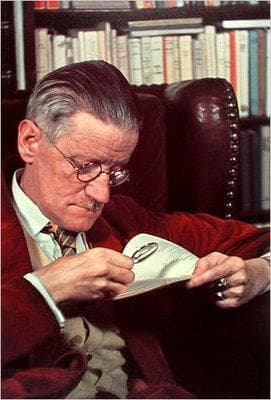
James Augustine Aloysius Joyce was an Irish novelist, poet, and literary critic. He contributed to the modernist avant-garde movement and is regarded as one of the most influential and important writers of the 20th century. Joyce's novel Ulysses (1922) is a landmark in which the episodes of Homer's Odyssey are paralleled in a variety of literary styles, particularly stream of consciousness. Other well-known works are the short-story collection Dubliners (1914), and the novels A Portrait of the Artist as a Young Man (1916) and Finnegans Wake (1939). His other writings include three books of poetry, a play, letters, and occasional journalism.

Ashley Antoinette
4.6

Mark McDonald
4.4
Luo Guanzhong
4.4
Mia McKenzie
4.3
Dorothy Parker
4.3
Joaquim Maria Machado de Assis
4.3
James Thurber
4.2

Terry Kay
4.2