“She was no longer young, but she was still beautiful. Her body was full and ripe, her skin smooth and dark, her eyes bright and mischievous.”
— Description of Jagua Nana's enduring allure despite her age.

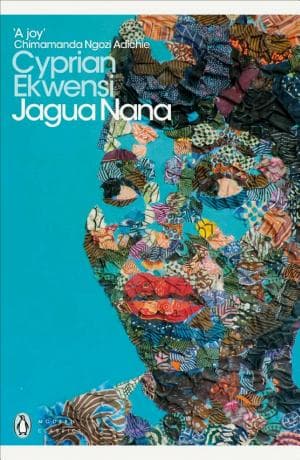
Cyprian Ekwensi (2018)
Genre
Fiction
Reading Time
300 min
Key Themes
See below
Sign in to track this book
In 1960s Lagos, Jagua Nana, an older woman with a strong personality, deals with a life of pleasure, shady politics, and personal drama, making her own way in a city of hustlers.
Jagua Nana, a well-known courtesan in Lagos, appears in the busy Tropicana nightclub. Despite her age, her beauty and energy draw everyone, especially her current lover, Freddie. Freddie is a young, ambitious schoolteacher from a good family. Their relationship is strong but not typical. Jagua, though independent, cares deeply for Freddie and hopes for a stable future with him. However, Freddie's family dislikes Jagua's job and influence, causing tension. Their nights are full of dancing, drinking, and the appeal of Lagos nightlife, a world where Jagua is in charge.
Freddie wants to leave teaching and study law in England. Jagua sees this as a way to a proper, stable future for them. She eagerly supports his goal, using her earnings, often from rich clients like Chief Ofubara, to pay for Freddie's schooling. This shows Jagua's strong commitment to Freddie; she gives up her financial freedom and current comforts for his dream. She imagines joining him in England after he settles, a hope that shows her desire for a normal life beyond the Tropicana.
Freddie leaves for England, with Jagua staying in Lagos. At first, they talk often and lovingly; Freddie expresses thanks and love. Jagua, encouraged by his letters, keeps working hard, saving money, and looking forward to seeing him again. But as time passes, Freddie's letters become less frequent and more formal. The emotional warmth fades, and Jagua starts to feel a growing sense of worry and abandonment. This slow cooling of their relationship hints at a painful betrayal, leaving Jagua to face her lonely life.
Years later, Freddie returns to Lagos as a lawyer with status. Jagua, full of hope, expects their reunion and their dreams to come true. But her hopes are broken when she learns Freddie is engaged to Nancy, a woman from a respected, rich family. Freddie, now focused on his social standing and political goals, publicly denies his past with Jagua. This rejection deeply hurts Jagua, who sacrificed so much for him. She is left heartbroken and disappointed by his lack of gratitude and his ambition.
Freddie's betrayal devastates Jagua, and she vows revenge. She uses her influence and connections in Lagos's underground and social circles to harm Freddie's growing political career. She sides with his political rivals, especially Uncle Taiwo, a clever and tricky politician. Jagua acts out of hurt, anger, and a wish to get back her dignity. During this time, she is deep in the unclear world of Nigerian politics, where power, money, and influence constantly change. Her own cleverness becomes a strong weapon.
Jagua's involvement with Uncle Taiwo and the political world turns bad when she sees him murdered during a political gathering. This event shows the extreme violence in Lagos politics. Jagua is deeply shaken, realizing how risky her situation is and the dangers around her. The incident makes her face the harsh facts of the world she has entered, causing her to rethink her choices and want to escape the cycle of revenge and danger.
After the difficult events in Lagos, Jagua decides to leave the city and return to her village, Ogabu. This move shows a desire for peace and a simpler life away from Lagos's chaos and betrayals. She hopes to reconnect with her past and find a sense of belonging. Her return gets mixed reactions from villagers; some remember her past badly, others with interest. She tries to make peace with her family, especially her brother, and deal with the village rules and traditions she had left behind.
In Ogabu, Jagua tries to start a new life by working in the palm oil trade. This business is hard, as she handles the difficulties of village money and competition. She meets new people, including traders and local figures, who test her strength and business sense. This time marks a big change in Jagua's life, as she moves from city pleasure to country business. Her work in the palm oil trade shows she can adapt and is determined to make her own way, even in a very different place.
Despite initial problems, Jagua finds some stability and happiness in Ogabu. She marries a younger man from the village, which further confirms her commitment to her new life. Most importantly, Jagua has a child, fulfilling her long-held dream of motherhood. This brings her great joy and a deep sense of purpose, marking a final, successful step in her journey to a meaningful life. Motherhood gives her a sense of purpose and belonging that Lagos's short-term pleasures could not.
Many years later, a young man comes to Ogabu looking for Jagua Nana. He says he is Freddie's son, from Freddie's marriage to Nancy. The young man, having heard stories about Jagua, comes to understand the woman who was so important in his father's past. This visit gives Jagua a sense of closure. It allows her to think about her difficult past with Freddie, the things she gave up, and the journey that led her to her current happiness. The meeting shows her final win over past heartbreaks and her success in creating a new, good life.
The Protagonist
From a flamboyant Lagos courtesan seeking love and revenge, Jagua transforms into a fulfilled mother and successful businesswoman in her rural hometown.
The Supporting/Antagonist
Starts as a passionate, indebted lover, but evolves into a calculating, socially ambitious lawyer who rejects his past.
The Supporting
Remains a consistent, albeit transactional, figure in Jagua's Lagos life, representing a source of support.
The Supporting
Remains a static symbol of societal expectation, representing Freddie's desired respectability.
The Supporting
Introduced as a political ally for Jagua, his violent end serves as a catalyst for her change of path.
The Supporting
Remains a static character, primarily showcasing the dangers of Jagua's public life.
The Supporting
Serves as a source of worldly wisdom and a cautionary example for Jagua in Lagos.
The Mentioned/Supporting
Appears at the end, providing a symbolic closure to Jagua's past with Freddie.
Jagua Nana's whole journey is a search for deeper happiness beyond Lagos nightlife. At first, she thinks this happiness is with Freddie and a normal life, giving her money for his education. His betrayal makes her think again, leading her to seek revenge and then to her village, Ogabu. There, she finds her true self not in men or status, but in business, marriage, and most of all, motherhood, which gives her the purpose she always wanted. Her change shows that happiness can be found in unexpected places, often after letting go of what society expects.
“She was Jagua Nana, and she had to live her life.”
Betrayal is a main theme, mostly through Freddie's actions. Jagua's strong support and money sacrifices for Freddie's education are met with his cold rejection when he returns. He chooses social status and political goals over their past. This betrayal breaks Jagua's dreams and leaves her deeply disappointed with love and the promises of a normal future. It is a key moment that forces her to face the harsh truths of ambition and self-interest, pushing her towards revenge before she seeks a more real life away from the city's bad influences.
“Love was a thing of the moment, a thing to be paid for, or abandoned.”
The novel clearly contrasts Lagos's lively, but morally unclear, city life with Ogabu's traditional, community-focused village life. Lagos, with its Tropicana nightclub, political games, and focus on money, shows a world of pleasure, ambition, and possible corruption, where Jagua does well but finds no lasting happiness. Ogabu, on the other hand, means tradition, community, and a slower life, where Jagua eventually finds stability, respect, and motherhood. Her move from city to village shows a search for what is real and a criticism of how shallow modern city life is. It suggests true contentment might be in simpler, more basic roots.
“Lagos was a city of money, and money was a god.”
Jagua Nana's story looks at the complex role of women in 1960s Nigerian society, especially those who do not follow normal rules. As a courtesan, Jagua lives in a world that both wants and judges her. She shows her independence and control through her choices, her money skills, and her strength. But she also faces social disapproval, weakness, and a constant struggle for respect. Her eventual path to happiness through business, marriage, and motherhood in Ogabu, rather than through her Lagos life or a man's status, suggests another way for women to be strong and find self-worth and happiness outside of strict social rules.
“A woman must make her own way in this world, or she will be nothing.”
Hints and clues about future events, particularly Freddie's betrayal.
The novel uses subtle foreshadowing to prepare the reader for Freddie's eventual betrayal. Jagua's friends and older mentors often warn her about the fickle nature of men and the dangers of investing too much in transient relationships, especially with younger, ambitious men. Freddie's initial discomfort with Jagua's profession and his family's disapproval also hint at the eventual clash between his aspirations and their unconventional relationship. These early warnings create a sense of unease and make Freddie's eventual abandonment feel inevitable rather than sudden, reinforcing the novel's themes of disillusionment and the harsh realities of ambition.
The nightclub represents the allure, danger, and transient nature of Lagos life.
The Tropicana nightclub serves as a powerful symbol throughout the novel. It embodies the vibrant, hedonistic, and ultimately transient nature of Lagos nightlife and Jagua's early life. It is a place of excitement, music, and fleeting pleasures, where Jagua holds court and feels most alive. However, it also symbolizes the moral ambiguity, superficiality, and potential dangers that lurk beneath the glamour. The Tropicana is where Jagua finds love and heartbreak, joy and despair, reflecting the dual nature of her existence in the city and serving as a microcosm of the larger urban environment.
Jagua's physical and emotional movement from city to village as a search for identity.
The journey motif is central to Jagua Nana's narrative, representing her physical and emotional quest for fulfillment and identity. Her initial journey from her village to Lagos signifies her embrace of modernity and independence. Her subsequent return to Ogabu after Freddie's betrayal is a metaphorical journey of self-discovery and reconciliation with her roots. This movement between urban and rural settings highlights the contrast between two distinct ways of life and reflects Jagua's internal transformation from a woman seeking external validation to one finding inner peace and purpose. The journey is both literal and symbolic of her evolution.
The reader's awareness of Freddie's probable betrayal while Jagua remains hopeful.
Dramatic irony is employed effectively, particularly concerning Jagua's relationship with Freddie. The reader, often privy to the societal pressures and Freddie's underlying ambition, can anticipate his eventual betrayal and abandonment of Jagua, even as Jagua herself remains hopeful and makes significant sacrifices for him. This creates a sense of pathos and heightens the tragedy of her situation, as the audience watches her invest in a future that they know is likely doomed. It underscores the theme of disillusionment and allows the reader to empathize deeply with Jagua's vulnerability and eventual heartbreak.
“She was no longer young, but she was still beautiful. Her body was full and ripe, her skin smooth and dark, her eyes bright and mischievous.”
— Description of Jagua Nana's enduring allure despite her age.
“Money was good, but love was better. And a girl could not live on love alone.”
— Jagua's pragmatic view on relationships and financial security.
“The city was a monster that swallowed up the young and the innocent and spat them out, broken and disillusioned.”
— A reflection on the harsh realities and destructive nature of Lagos.
“She had always known that her beauty was a weapon, and she used it with the skill of a seasoned warrior.”
— Jagua's awareness and strategic use of her physical attractiveness.
“A woman's place was in her husband's house, but Jagua Nana had no husband.”
— Highlighting Jagua's unconventional life contrasting with societal expectations.
“The night was alive with the sound of music, laughter, and the promise of forbidden pleasures.”
— Depicting the vibrant and often morally ambiguous nightlife of Lagos.
“Every man wanted to possess her, but no man could ever truly own her.”
— Describing Jagua's elusive nature and her resistance to being controlled.
“She knew the price of everything and the value of nothing.”
— A critical observation of Jagua's materialistic worldview.
“In the city, every day was a struggle for survival, a battle of wits and will.”
— Emphasizing the constant challenges faced by residents in a bustling metropolis.
“The past was a ghost that haunted her, a reminder of what she had lost and what she could never regain.”
— Jagua's internal conflict and regret over past choices.
“Love was a dangerous game, and she had played it too many times, always losing in the end.”
— Jagua's cynical view on love born from repeated heartbreak.
“He wanted to save her, but she did not want to be saved. She wanted to live her life on her own terms, even if it meant risking everything.”
— Jagua's fierce independence and rejection of others' attempts to change her.
“The village was a world away from the city, a place of peace and simplicity, but also of boredom and stagnation.”
— Contrasting the village and city, highlighting their respective pros and cons for Jagua.
“She was a woman of the city, born and bred in its chaos and its glitter, and she could never truly leave it behind.”
— Jagua's intrinsic connection to Lagos and her inability to fully escape its influence.
Ready to see how well you understood this book? Take our interactive quiz with 10 questions.
Cyprian Ekwensi was a Nigerian novelist and journalist. He is best known for his novels 'Jagua Nana,' 'Jagua Nana's Daughter,' and 'People of the City,' which explored urban life and social issues in post-colonial Nigeria. Ekwensi's vibrant prose and realistic portrayals of Nigerian society made him a significant figure in African literature.

Ashley Antoinette
4.6

Mark McDonald
4.4
Luo Guanzhong
4.4

Mia McKenzie
4.3

Dorothy Parker
4.3

Joaquim Maria Machado de Assis
4.3

James Thurber
4.2

Terry Kay
4.2