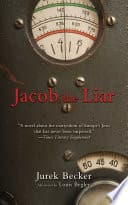
“And there was the radio, standing there like a mute witness to the war, a silent oracle, able to speak only when a hand would switch it on. But whose hand?”
— Jacob is contemplating the forbidden radio in the station master's office.

Jurek Becker (1996)
Genre
Fiction
Reading Time
240 min
Key Themes
See below
Sign in to track this book
In a Nazi ghetto, a whispered lie about a hidden radio sparks hope and defiance, forcing one man to choose between truth and the power of fabricated freedom.
Jacob Heym, a Jewish prisoner in a Nazi-occupied ghetto, is called to the German commandant's office for breaking curfew. While waiting, he overhears a radio broadcast reporting that Soviet forces are a few hundred kilometers from Bezanika. This news is forbidden, and owning a radio means death. When a guard questions Jacob about his delay, he quickly invents a lie: he heard the news from his own secret radio. This spontaneous story, meant to protect himself, unexpectedly brings hope to the despairing ghetto residents.
Word of Jacob's 'secret radio' spreads through the ghetto, first as a whisper. Prisoners, desperate for positive news, cling to this rumor, hoping the war might end. Jacob finds himself surrounded by friends and acquaintances, all asking for updates. Realizing the impact of his lie, he feels he must continue it, inventing daily reports of Soviet advances and Allied victories. This charade brings a glimmer of hope to the bleak ghetto, but it also creates a heavy psychological burden for Jacob, who constantly fears exposure and the consequences for himself and others.
Jacob takes in Lina, a young girl whose parents were taken away. Lina, innocent and curious, becomes attached to Jacob and his 'radio.' To shield her from the brutal truth of their confinement, Jacob invents elaborate stories about her parents, claiming they are on a secret mission and will return. He uses his 'radio' as the source for these comforting fictions, making up news about their well-being and the war's progress, all to maintain Lina's hope and protect her fragile spirit. This dual deception shows Jacob's deep compassion and his desperate attempt to preserve Lina's childhood.
Mischa, a former boxer and Jacob's friend, grows suspicious of Jacob's sudden access to news. Driven by his own need for hope, Mischa tries to 'borrow' Jacob's radio, offering to trade his meager rations. Jacob, unable to produce a non-existent radio, confesses to Mischa that the radio is a lie. However, he quickly repeats the truth of the initial news—that the Soviets are advancing—and explains his reason for inventing the radio: to prevent despair. Mischa, though shocked, understands Jacob's intentions and helps maintain the illusion for the ghetto's morale.
Kowalski, a fellow prisoner, reaches a breaking point and tries to hang himself. Just as he is about to die, Jacob, passing by, calls out with a new 'report' from his radio—a very optimistic one about the Allied forces. The news, even as a lie, gives Kowalski a sudden flicker of hope, enough to make him reconsider and struggle to free himself. He is saved, not by physical help, but by the psychological impact of Jacob's fabricated good news. This incident affects Jacob deeply, strengthening his resolve to continue his dangerous charade, understanding hope's life-saving potential in their terrible circumstances.
Dr. Kirschbaum, a respected ghetto physician, becomes aware of Jacob's 'radio' and the hope it brings. He observes the positive impact on the prisoners' health and morale, noting fewer despair-induced illnesses. However, he also struggles with the ethical problem of a lie, no matter how well-intentioned, especially one that could be exposed with devastating results. He understands that if the truth were revealed, the resulting despair could be even worse. Dr. Kirschbaum becomes a quiet confidante to Jacob, offering unspoken support but also representing the moral complexities of Jacob's actions.
A German officer, bothered by the unusual cheerfulness among the ghetto prisoners, suspects a source of forbidden news. Jacob is called for questioning. The officer, a cruel and clever man, tries to trick Jacob into revealing his radio. Jacob, under great pressure, sticks to his fabricated story, inventing details about the radio's hidden location and its makeshift construction. He manages to convince the officer, or at least avoid direct accusation, through quick wit and the officer's own assumptions about Jewish resourcefulness. This close call further shows the extreme danger Jacob constantly faces.
Lina falls seriously ill, her small body succumbing to the ghetto's harsh conditions. Jacob, heartbroken and desperate to give her peace, tells her a final, elaborate story. He describes her parents returning, disguised as clowns, coming to take her to a beautiful, safe place where they will all be together again. He uses his 'radio' as the source for this news, weaving a tale of fantastical escape and reunion. This last, poignant lie is Jacob's ultimate act of love and protection, a final attempt to offer comfort and hope to the dying child, even as his own world crumbles.
The inevitable happens: the ghetto is emptied. All remaining prisoners, including Jacob, are rounded up and forced onto trains for deportation to an extermination camp. The narrator describes the scene with despair and a lingering sense of the hope Jacob had managed to sustain. Jacob, among the anonymous masses, continues to tell his stories, even on the train, whispering words of impending liberation to those around him. His ultimate fate is somewhat unclear, with the narrator presenting two possible endings: one where he is shot for trying to escape, and another where he dies unnoticed on the train, still whispering hope.
Throughout the story, the unnamed narrator often interrupts, offering personal thoughts, doubts, and alternative scenarios. In the final sections, the narrator discusses the limits of memory, the desire for a more heroic ending, and the impact of Jacob's lies. The narrator reveals that the story comes from a memory, perhaps a legend, from his own childhood in the ghetto. He stresses that Jacob's lies, though unable to prevent the tragedy, still gave meaning, dignity, and moments of joy to people facing terrible horror. The narrator suggests that telling the story itself continues Jacob's legacy of providing hope.
The Protagonist
From an ordinary man driven by fear to a reluctant hero burdened by the responsibility of sustaining hope, Jacob learns the immense power and moral complexity of his actions.
The Supporting
Lina remains largely innocent and hopeful due to Jacob's protection, showcasing the power of stories to shield a child's spirit.
The Supporting
From a skeptical friend, Mischa evolves into a loyal confidante and active participant in sustaining the ghetto's hope.
The Supporting
Initially overwhelmed by despair, Kowalski's life is unexpectedly renewed by the hope Jacob's lies provide.
The Supporting
Dr. Kirschbaum struggles with the ethics of deception but ultimately acknowledges the profound, life-affirming power of hope, even when based on a lie.
The Mentioned
The narrator's understanding of Jacob's story deepens throughout, culminating in an appreciation for the enduring power of hope and narrative.
The Supporting
Schtamm's initial skepticism gradually softens as the collective hope in the ghetto grows, though he remains a voice of caution.
The Supporting
Roman's initial desperation to access the 'radio' evolves into a grudging acceptance of Jacob's role as the sole news-bearer.
This theme explores how hope, even when based on deception, can sustain life in the face of despair. Jacob's lies about the radio, though untrue, give the ghetto residents a reason to live, a belief that liberation is near. This hope prevents suicides, improves morale, and gives people strength to endure suffering. The novel suggests that in extreme situations, the 'truth' of their impending doom is less important than the human spirit's need for optimism. The lies become a way to survive psychologically.
“And Jacob, the simple café owner, the simple man with the simple lie, became a hero. He became the sun, the moon, and the stars for them, because he brought them hope.”
The novel shows storytelling not just as entertainment but as a key way to survive psychologically and preserve humanity. Jacob's fabricated news reports and his elaborate stories for Lina are acts of creation that fight the destructive reality of the ghetto. These stories provide a sense of control, purpose, and a connection to a world beyond their immediate suffering. The narrator's own comments throughout the book reinforce this, as he struggles to tell Jacob's story, acknowledging its power and its role in keeping Jacob's legacy alive. Storytelling becomes resistance against forgetting and despair.
“A man needs to know there's something waiting for him, that his end isn't just the end.”
Jacob, an ordinary man, is given an extraordinary role, along with a heavy burden of responsibility. He constantly fears exposure and the devastating consequences his lies could have if revealed. The weight of sustaining the ghetto's hope falls squarely on him, forcing him to invent daily news, manage expectations, and protect his secret. This theme explores the moral complexities of leadership, especially when it involves deception. Jacob's personal suffering and isolation grow as he becomes the sole keeper of the 'truth' and the fragile hope he has created.
“It was no longer just his lie; it was their life.”
The narrator's frequent interruptions and his admission of struggling with the details of Jacob's story highlight memory's fallibility and truth's subjective nature, especially in historical trauma. The narrator offers alternative endings and expresses his desire for a more heroic outcome, showing how stories change and are shaped by the teller and the audience's needs. The novel suggests that an event's 'truth' might not be a factual account, but rather its emotional and psychological impact, and the meaning it holds for those who remember it.
“I often ask myself if it really happened exactly this way. But what difference does it make? The important thing is that it could have happened.”
A narrator who frequently interjects, questioning the story's facts and offering alternative versions.
The unnamed narrator constantly breaks the fourth wall, directly addressing the reader and admitting to his own uncertainties, biases, and the challenges of recounting the story. He offers different possible endings for Jacob and openly discusses his motivations for telling the tale. This device creates a sense of meta-fiction, reminding the reader that they are engaging with a constructed narrative. It also serves to highlight the themes of memory, the subjective nature of truth, and the power of storytelling itself, making the reader question what is 'real' within the context of the story and encouraging deeper reflection on the historical events it represents.
The audience is aware of Jacob's deception, while most characters are not.
Dramatic irony is prevalent throughout the novel as the reader is made aware early on that Jacob's 'radio' is a fabrication, while the other ghetto inhabitants (with the exception of Mischa and later, perhaps, Dr. Kirschbaum) believe it to be real. This creates tension and suspense, as the reader constantly fears Jacob's exposure and the devastating consequences that would follow. It also allows the reader to appreciate the profound impact of Jacob's lies from an informed perspective, understanding the contrast between the characters' hopeful reactions and the underlying reality of their dire situation. This device emphasizes the power of the lie to create a temporary, life-saving illusion.
Subtle hints and the pervasive atmosphere of doom that suggest the ghetto's inevitable liquidation.
Despite the temporary hope Jacob instills, the narrative is laced with subtle foreshadowing of the ghetto's ultimate liquidation. The constant threat of German patrols, the dwindling resources, the disappearances of characters, and the narrator's occasional melancholic remarks all hint at the grim fate awaiting the prisoners. This foreshadowing creates a tragic undertone, making the reader acutely aware that Jacob's efforts, while profoundly impactful, cannot ultimately alter the historical outcome. It enhances the pathos of the story, highlighting the fragility of the hope Jacob provides against the backdrop of an inescapable historical tragedy.
The non-existent radio symbolizes hope, information, and a connection to the outside world.
The 'radio' is not a physical object, but a powerful symbol. It represents the desperate human need for hope, information, and a connection to a world beyond their confinement. For the ghetto inhabitants, it is a lifeline, a tangible (though imaginary) link to liberation and the end of their suffering. Its non-existence underscores that hope can be conjured from nothing, and that belief itself can be a powerful force. The radio also symbolizes the power of narrative and the human capacity to create meaning and resilience even in the most dehumanizing circumstances. It is a beacon in the darkness, regardless of its material reality.
“And there was the radio, standing there like a mute witness to the war, a silent oracle, able to speak only when a hand would switch it on. But whose hand?”
— Jacob is contemplating the forbidden radio in the station master's office.
“A man needs hope, even if it's a lie. Maybe especially if it's a lie.”
— Jacob reflects on the necessity of his fabricated news bulletins.
“If you tell a lie long enough, it becomes the truth for those who hear it.”
— Jacob observes the impact of his stories on the ghetto inhabitants.
“The greatest weapon against fear is a good story.”
— Jacob understands the power of his narratives to combat despair.
“Sometimes it's better not to know everything, especially if knowing makes you powerless.”
— Jacob considers the burden of true information versus the comfort of his lies.
“In the end, what matters is not what happened, but what people believe happened.”
— The narrator comments on the subjective nature of truth in the ghetto.
“A secret is only a secret as long as no one knows it. Once one person knows, it's a burden.”
— Jacob reflects on the weight of carrying his secret about the radio.
“Even in the darkest times, a small spark of joy can ignite a whole forest of hope.”
— Jacob observes the effect of his positive, albeit false, news on the ghetto residents.
“He didn't lie to deceive them, but to save them from despair.”
— The narrator explains Jacob's motivation for his actions.
“The memory of freedom is a dangerous thing when you are not free.”
— Jacob thinks about the past and the current confinement.
“Life is a stage, and we are all actors, some playing our parts better than others.”
— Jacob considers his role in creating a narrative for the ghetto.
“What is courage if not the ability to pretend you're not afraid?”
— Jacob reflects on his own bravery and the bravery of others.
“They had taken everything from us, but they couldn't take our dreams, not if we kept them alive ourselves.”
— The ghetto residents cling to hope and imagination.
“A hero is just someone who doesn't give up, even when it makes no sense.”
— Jacob is seen as a hero by the others, even as he doubts himself.
Ready to see how well you understood this book? Take our interactive quiz with 10 questions.
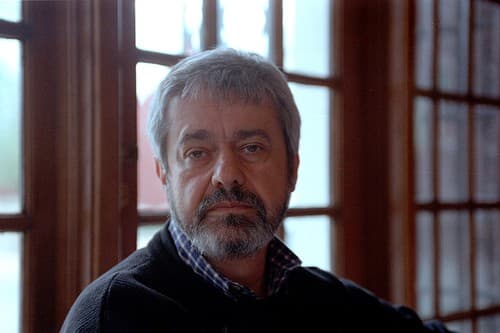
Jurek Becker was a Polish-born German writer, screenwriter and East German dissident. His most famous novel is Jacob the Liar, which has been made into two films. He lived in Łódź during World War II for about two years and survived the Holocaust.

Ashley Antoinette
4.6

Mark McDonald
4.4
Luo Guanzhong
4.4

Mia McKenzie
4.3
Dorothy Parker
4.3

Joaquim Maria Machado de Assis
4.3
James Thurber
4.2

Terry Kay
4.2