“The lights went out, and stayed out. That was the first thing.”
— The initial realization of the widespread power outage.

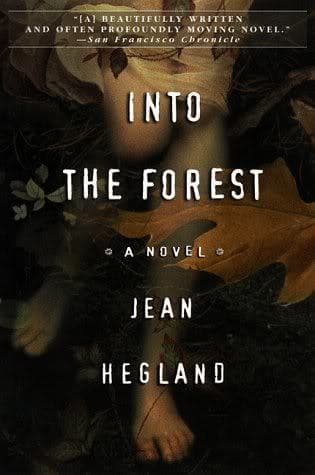
Jean Hegland (1996)
Genre
Science Fiction / Young Adult
Reading Time
243 min
Key Themes
See below
Sign in to track this book
Two sisters in a remote Northern California forest must abandon their modern lives and confront the brutal realities of survival as civilization subtly unravels around them.
Nell, the younger sister, narrates the initial signs of societal collapse from their isolated Northern California home. News reports become increasingly vague, speaking of war overseas and political instability, but no clear disaster is ever articulated. The most immediate impact is the intermittent, then permanent, loss of electricity. This is followed by a severe gas shortage, rendering their car useless. Their father, Robert, attempts to keep a semblance of normalcy, making trips to town for supplies, but these trips become more difficult and less fruitful. The family relies on their dwindling resources, including a large supply of books and a generator. The sisters, especially Nell, spend their time on their respective passions: Nell reading and Eva dancing.
As the situation worsens, their father, Robert, cuts down trees for firewood and attempts to grow a garden, but his efforts are limited. One day, while using the chainsaw, he suffers a severe accident, severing his leg. Nell and Eva try desperately to save him, applying makeshift bandages and attempting to get help, but with no power, no phone, and no transportation, their options are nonexistent. Robert succumbs to his injuries, leaving the teenage sisters completely alone in their remote house. His death is a significant turning point, forcing Nell and Eva to confront the stark reality of their isolation and the permanence of their new, harsh existence. They bury him in the forest, deepening their connection to the land.
Following their father's death, Nell and Eva must quickly learn to survive without adult guidance. They rely on the remaining canned goods and stored supplies, meticulously rationing everything. The generator, once a lifeline, becomes a burden to fuel, eventually falling into disuse. They learn to chop firewood, forage for edible plants, and hunt small animals, though these skills come slowly and with difficulty. Eva, initially more focused on her dancing, struggles more with the practicalities of survival, while Nell, with her analytical mind, takes on the role of planner and record-keeper. Their existence becomes a constant battle against hunger, cold, and the encroaching wilderness, pushing their physical and mental limits.
Months into their isolation, a man named Eli comes to their house. He claims to be a friend of their father, offering help and companionship. Despite Nell's apprehension, Eva is drawn to his promise of connection and normalcy. However, Eli's true intentions are sinister. He rapes Eva, leaving her deeply traumatized and pregnant. Nell, though not physically harmed, is devastated by the violation of their sanctuary and her sister's suffering. They manage to drive Eli away, but the incident shatters their sense of security and forces them to confront the dangers of the outside world and the vulnerability of their isolated existence. Eva retreats further into herself, her dancing becoming less frequent.
Eva's pregnancy becomes a central focus for both sisters. Nell takes on the role of protector and caregiver, researching childbirth in their remaining books and trying to prepare for the baby's arrival. The pregnancy forces them to confront complex emotions: Eva's trauma, Nell's anger and fear, and the implications of bringing a new life into their desolate world. Their relationship, once marked by distinct roles, begins to shift. Eva, despite her trauma, finds a new purpose in the impending motherhood, while Nell grapples with the responsibility and the loss of their former lives. The baby represents both a horrifying reminder of their assault and a potential source of hope for the future.
As Eva's due date approaches, Nell meticulously prepares for the birth, gathering what medical supplies they have and studying their inherited books on midwifery. The labor is long and difficult, and Nell is the sole attendant, relying on her limited knowledge and innate resilience. Eva gives birth to a healthy baby boy, whom they name after their father, Robert. The birth is a moment of intense relief and a new layer of responsibility. The presence of the baby transforms their home and their daily routines. He is a symbol of both their shared ordeal and their enduring capacity for life and connection amidst the desolation.
Over time, the house itself begins to reflect the decay of the outside world. The roof leaks, windows break, and the wood structure slowly succumbs to the elements and neglect. Without electricity or running water, the modern conveniences become relics. Nell and Eva scavenge materials from the house to repair what they can, but ultimately, they realize its limitations. They learn to use their father's tools, cultivate a small garden, and become expert foragers. This period highlights their growing self-sufficiency and their deepening understanding of the natural world. They become less dependent on the vestiges of their old life and more attuned to the rhythms of the forest.
One cold winter night, a fire breaks out in their house, likely due to a faulty chimney or ember. Nell and Eva, with baby Robert, manage to escape with only a few essential belongings. The fire consumes their home, destroying the last physical link to their past and their parents. This catastrophic event, while devastating, also marks a turning point. It forces them to completely sever ties with their former life and fully embrace their new existence in the wilderness. With no house left, they decide to move into a small, pre-built shelter in the deeper woods that their father had constructed years ago, a place he called 'the shack'.
Relocating to the small shack in the deeper forest, Nell and Eva adapt to an even more primitive lifestyle. The shack is basic but offers better protection from the elements than their burned-out home. They continue to hone their survival skills, becoming adept at hunting, foraging, and preserving food. Baby Robert thrives in this environment, growing into a healthy child. Their days are dictated by the sun and the seasons, their focus entirely on sustenance and shelter. This period emphasizes their deep connection to nature and their complete detachment from the remnants of the old world. Their roles as sisters and mothers solidify, and they find a quiet resilience in their self-made existence.
Years pass, and Nell, still the narrator, reflects on their journey. She and Eva have fully integrated into their forest life, their connection to the land deep and unwavering. They are no longer waiting for the old world to return; they have forged a new one. Baby Robert is growing, learning the ways of the forest from his mother and aunt. Nell contemplates the cyclical nature of life, the resilience of humanity, and the deep bond she shares with her sister. The story ends not with a return to civilization, but with an acceptance of their chosen, wild existence, suggesting a future where they continue to thrive in harmony with the natural world, having redefined what it means to survive and live.
The Protagonist
Nell transforms from a sheltered, bookish teenager into a capable survivor and a profound observer of human nature and the wilderness. She learns to trust her instincts and adapt to a world without the conveniences she once knew.
The Protagonist
Eva evolves from a graceful, somewhat naive dancer to a resilient mother and a deeply connected inhabitant of the forest, finding her strength and purpose through profound adversity.
The Supporting
His arc is brief but impactful; he symbolizes the initial, futile attempts to resist the inevitable collapse, and his death catalyzes his daughters' full immersion into survival.
The Antagonist
Eli serves as a catalyst for Eva's trauma and subsequent transformation, embodying the external threat to the sisters' survival and innocence.
The Supporting
As a baby, his arc is one of growth and a symbol of new beginnings, representing the possibility of a future generation thriving in the wild.
The Mentioned
The forest remains constant, but the sisters' relationship with it evolves from distant appreciation to complete integration and reliance, transforming from a boundary to their sanctuary.
The central theme is the sisters' relentless struggle to survive in a world stripped of modern conveniences. They transition from a comfortable existence to a primitive, self-sufficient life. This theme is evident in their painstaking efforts to learn foraging, hunting, gardening, and basic repairs, as seen when Nell studies medical books to prepare for Eva's childbirth, or when they chop wood daily to stay warm. Their ability to adapt their skills and mindset to their harsh new reality is key to their endurance, culminating in their decision to abandon the decaying house for the simplicity of the shack.
“We had no choice but to live. We ate what we could find, we made what we could not buy, and we learned to be silent, to listen.”
The novel explores the fragility of modern society and what happens when its infrastructure disappears. The initial, vague news reports of war and political upheaval, followed by the complete loss of electricity and gas, illustrate a gradual but total societal breakdown. The sisters' isolated home becomes a microcosm of this collapse, as their generator fails, their car becomes useless, and their house slowly deteriorates. This theme highlights how dependent humanity is on complex systems and how quickly those systems can unravel, forcing individuals back to a more fundamental, often brutal, existence, as seen when Eli appears, embodying the loss of social order and safety.
“The world outside was a rumor, a memory, and then nothing at all. We were the last two people, and then three, in a forest that had swallowed everything else.”
The bond between Nell and Eva is the emotional core of the novel. Initially, their personalities are distinct – Nell intellectual, Eva artistic – but their shared ordeal forges an unbreakable interdependence. They rely on each other for emotional support, physical labor, and shared decision-making. This theme is powerfully shown in Nell's unwavering care for Eva during her pregnancy and childbirth, and Eva's trust in Nell's practical skills. Their relationship evolves from sibling rivalry to a deep partnership, essential for their survival and their ability to navigate trauma, demonstrating how human connection is vital even in extreme isolation.
“We were two halves of a whole, each incomplete without the other, bound by blood and by the silent, terrifying knowledge of what we had become.”
The novel charts a deep shift in the sisters' relationship with the natural world. Initially, the forest is a distant backdrop to their modern lives. As society collapses, they are forced to engage with it directly, learning to forage, hunt, and live in harmony with its rhythms. This theme is evident in their eventual move into the simple shack, fully embracing a life dictated by seasons and natural resources. Their journey is one of shedding artificial constructs and re-establishing a primal connection to the land, realizing that true survival means integrating with, rather than dominating, nature. The forest becomes both their provider and their ultimate sanctuary.
“We learned to read the forest as others once read books, to hear its whispers, to taste its offerings, to understand its unforgiving laws.”
Nell and Eva are teenagers at the outset, and the societal collapse forces them into a premature and brutal adulthood. They lose their innocence not only through the harsh realities of survival but also through traumatic events like their father's death and Eva's assault. This theme is evident in their transformation from carefree girls to resilient women capable of handling childbirth, death, and extreme isolation. The loss of their childhood and the world they knew leads to a personal growth, as they discover inner strengths and capacities they never knew they possessed, ultimately finding a new definition of self and purpose.
“We were no longer girls waiting for the world to fix itself. We were women, and the world was ours to remake, or to simply endure.”
The story is told entirely from Nell's perspective, offering intimate access to her thoughts.
Nell's first-person narration provides a deeply personal and introspective account of the events. This device allows the reader to experience the gradual societal collapse and the subsequent struggles through her intellectual and emotional lens. Her reflections on books, philosophy, and the changing world provide depth and context to their physical survival. It also emphasizes her role as the observer and chronicler of their new history, making the reader privy to her fears, hopes, and evolving understanding of their predicament.
The remote Northern California forest amplifies the sisters' isolation and dependence on nature.
The remote location of the sisters' home, 'over 30 miles from the nearest town,' is a crucial plot device. It immediately establishes their vulnerability and removes any easy escape or external help once society collapses. This isolation forces them to rely entirely on their own resources and each other. The forest itself becomes an active character, providing both challenges and sustenance, and its omnipresence underscores the theme of humanity's relationship with nature. The eventual move deeper into the forest, to the shack, further cements this isolation and self-sufficiency.
The absence of a clear inciting disaster emphasizes the insidious nature of societal breakdown.
The novel's choice not to specify a single catastrophic event for society's collapse is a powerful device. Instead, it depicts a slow, insidious unraveling marked by vague news, power outages, and resource scarcity. This mirrors real-world anxieties about complex systems failing and makes the scenario feel more plausible and unsettling. It forces the characters, and the reader, to grapple with uncertainty and the chilling realization that the 'end of the world' might not be a sudden bang, but a slow, quiet fade, making their struggle to adapt all the more immediate and desperate.
Nell's books and Eva's dance represent their connection to the past and their evolving identities.
Nell's extensive collection of books and Eva's passion for dance serve as powerful symbols. Initially, they represent their distinct personalities and their connection to the intellectual and artistic aspects of the old world. As supplies dwindle, the books become practical guides for survival (e.g., medical texts) and sources of reflection, while dance becomes a raw, primal expression of emotion and connection to the body and earth. They evolve from hobbies into essential tools for understanding their new reality and maintaining their humanity, symbolizing the enduring power of culture and self-expression even in the most dire circumstances.
“The lights went out, and stayed out. That was the first thing.”
— The initial realization of the widespread power outage.
“We were so accustomed to the hum, we didn't even notice it until it was gone.”
— Reflecting on the pervasive presence of electricity before the Grid went down.
“We had always assumed that if there was a problem, someone would fix it. Someone always had.”
— The sisters' initial naive belief in external rescue.
“The forest was no longer a place we visited; it was a place we lived.”
— Describing their forced adaptation to a more primitive existence.
“It was as if the world had simply exhaled, and everything that was not essential had been blown away.”
— A poetic description of the post-collapse world and its stripped-down reality.
“We learned to read the forest, not just for its beauty, but for its bounty.”
— Highlighting their shift from aesthetic appreciation to practical resourcefulness.
“Memory was a luxury we could no longer afford, not if we wanted to survive.”
— Nell's internal struggle with clinging to past comforts and the need to move forward.
“The silence was the hardest part, the absence of all those familiar background noises that had always been there.”
— Emphasizing the profound impact of the loss of technology and human activity.
“We were not just two girls in a house; we were two people in a world that had forgotten how to be gentle.”
— Reflecting on their vulnerability in the harsh new reality.
“The greatest freedom, we discovered, was the freedom from expectation.”
— Finding a strange liberation in the absence of societal pressures and future plans.
“Every day was a negotiation with the earth, a conversation with the trees.”
— Describing their intimate and essential relationship with their natural environment.
“We were the last ones, perhaps, but that didn't mean we were less.”
— A defiant statement of their continued worth and existence despite isolation.
“Life had become a series of small, hard victories.”
— Summarizing the daily struggle and the nature of their achievements.
“The future was not something to be planned for, but something to be lived through.”
— Their shift from long-term planning to immediate, day-to-day survival.
Ready to see how well you understood this book? Take our interactive quiz with 10 questions.

Biography coming soon.