“And the country, for all its beauty, has its own special kind of desolation, its own way of making you feel small and forgotten.”
— Reflecting on the rural landscape and its emotional impact.

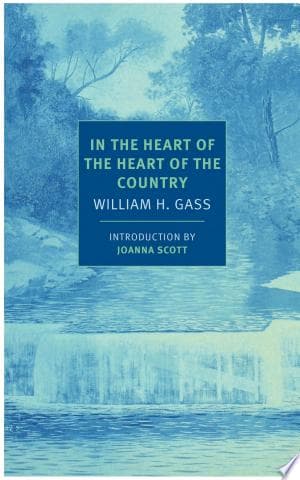
William H. Gass (1975)
Genre
Fiction
Reading Time
300 min (approx.)
Key Themes
See below
Sign in to track this book
Gass explores the ordinary and the unsettling in the American Midwest, turning everyday lives into a vivid, disturbing blend of language and longing.
The story begins with a nameless young boy, "the Pederson kid," running through a harsh, snow-covered rural area. He is fleeing after likely killing his parents, though the act is only hinted at through his broken, guilty thoughts. He carries a rifle and a little food, his mind a mix of fear, cold, and a desperate need for warmth and safety. He finds a frozen stream, an empty house, and the quiet of the winter night. His journey is marked by growing desperation and the threat of being found or dying from the cold. His inner thoughts reveal deep loneliness and a troubled past.
This section, which names the collection, is a series of broken, stream-of-consciousness observations from an unnamed poet living in a small, isolated Indiana town. He thinks about the everyday details of life — his neighbors, the weather, buildings, local gossip — mixing these with philosophical ideas about language, memory, desire, and reality. The poet's relationship with his wife, Martha, appears often, shown with affection, frustration, and intellectual distance. The story is non-linear, moving between current experiences, past memories, and abstract ideas, creating a rich picture of a mind dealing with its surroundings and its own existence.
This story gives a clear, direct picture of Mrs. Mean, an elderly woman living a life of quiet despair and physical decline. The story focuses on the small details of her daily life, her failing body, her strained relationship with her husband, and her inner thoughts, which are often bitter. Gass uses strong, almost disturbing, images to describe her physical problems and her messy home. Her isolation and the slow loss of her dignity are central themes. The story looks at the harsh realities of aging and the often-hidden suffering that can come with it, showing a life without joy or real connection.
The narrator of 'Icicles' is a man consumed by suspicion and jealousy about his wife, whom he believes is having an affair. His inner thoughts are a frantic, spiraling dive into paranoia. He watches her every move, looking for clues and imagining scenarios. The "icicles" in the title represent the cold, fragile state of his marriage and his own weakening mind. He moves between rage, despair, and a desperate need for certainty, his thoughts becoming more broken and obsessive. The story explores the destructive power of suspicion and the subjective nature of truth in a failing relationship.
This story follows a suburban housewife who finds a collection of dead insects, carefully arranged, in the attic of her new home. At first disgusted, she slowly becomes fascinated by them, seeing in their preserved forms a reflection of life, death, and order. She starts spending her days studying them, creating detailed backstories and philosophical ideas for each one. Her husband and children mostly ignore her private obsession, which becomes a way for her to escape her everyday life and face bigger questions about meaning and decay. The insects become a strange source of intellectual interest and a mirror for her own inner world.
This story explores the complex relationship between a young boy and an older man, possibly his father or a mentor, in a rural setting. The boy deals with his growing identity, watching the man's quiet strength and the harshness of farm life. The story looks at lost innocence, the passing down of knowledge and values, and the silent expectations placed on the boy to fit traditional male roles. The interactions often have little dialogue but are rich in unspoken meaning, showing the emotional distance and underlying bonds between them. The boy's inner world is a mix of curiosity, fear, and a new understanding of his place.
This piece, often seen as a mix of essay and fiction, features a narrator who deeply observes and thinks about the lives of cows. He explores their calm existence, their seemingly simple needs, and the sharp difference between their world and the complexities of human thought. The narrator projects human emotions and philosophical ideas onto the cows, using them to examine themes of awareness, suffering, purpose, and being. It is a thoughtful, almost spiritual, look at animals and what they show about humanity, blurring the lines between objective observation and personal interpretation.
'The Tunnel' follows William Frederick Kohler, a history professor at a Midwestern university, who is supposedly writing a major work on Nazism. Instead, he is consumed by a secret, large project: digging a tunnel in his basement. This physical act mirrors his internal digging into his own past, his failures, his worries, and his involvement in a morally flawed world. His inner thoughts are dense, broken, and filled with intellectual references, self-criticism, and a deep sense of disgust with himself and humanity. His marriage is failing, his academic life is a pretense, and the tunnel symbolizes his retreat from reality and his fall into a personal hell.
This story shows a seemingly ordinary Sunday morning drive taken by a family. The story focuses on the inner thoughts and observations of the father, who is sharply aware of how boring their lives are and the unspoken tensions within his family. He watches his wife and children, thinking about their individual lives and the collective emptiness he feels. The drive itself, through unremarkable suburban areas, becomes a symbol for the repetitive, unfulfilling nature of their lives. Gass uses precise, vivid language to show the father's psychological state, highlighting disillusionment, the search for meaning in the mundane, and the quiet despair that can exist under a normal surface.
This narrative looks into the psychological complexities of a three-person relationship involving two men and one woman. The story is told through changing viewpoints and broken dialogues, exploring the power dynamics, jealousies, and intellectual games between the characters. Desire, artistic expression, and the search for real connection are central themes, often shown through the metaphor of music. The characters engage in intellectual arguments and emotional manipulation. Their interactions reveal the fragile lines between love, obsession, and control. The story is dense and challenging, reflecting the complicated and often conflicting nature of human relationships.
This novella-length piece is a highly experimental, metafictional work presented as the "lonesome wife" of Willie Masters. It is a dense, self-referential text that blurs the lines between narrator, character, and author. The "wife" (who is also the text itself) directly talks to the reader, discussing language, reading, writing, and pornography. She examines her own existence as a literary construct, exploring desire, emptiness, and the limits and possibilities of words. The story uses varied fonts, visual elements, and philosophical side notes to create a challenging and layered experience, questioning the very nature of fiction.
This piece takes the form of a pseudo-official report on the "State of Iowa," but quickly turns into a very personal, satirical, and philosophical reflection on the American Midwest. The narrator uses the framework of a sociological study to explore identity, geography, boredom, and the perceived emptiness of rural life. Gass uses his typical dense writing and intellectual playfulness to dissect cultural stereotypes and the human condition. It is less a conventional story and more an essay that uses the "state report" as a starting point for broader thoughts on language, perception, and how reality is built.
The Protagonist
His arc is one of physical and psychological deterioration, moving from a desperate flight towards an uncertain, likely tragic, end.
The Protagonist/Narrator
His arc is less about external change and more about a continuous, internal process of observation, reflection, and the struggle to articulate profound truths.
The Protagonist
Her arc is one of relentless physical and emotional decline, leading to a profound state of decay and resignation.
The Protagonist
His arc is a descent into increasing mental instability, marked by growing paranoia and the disintegration of his relationship.
The Protagonist
Her arc moves from suburban banality to a profound, if morbid, intellectual awakening and a re-evaluation of life and death.
The Protagonist
Kohler's arc is a deliberate and agonizing descent into a self-made hell, characterized by increasing isolation and intellectual and moral decay.
The Protagonist/Narrator
Her arc is an ongoing, self-reflexive process of deconstruction and reconstruction, constantly defining and redefining her own existence as a literary work.
Gass often explores the deep isolation his characters feel, often within their own minds, even when others are around. This theme appears in 'The Pederson Kid,' where the boy's flight through the snow highlights his complete solitude and inner struggle. Mrs. Mean is physically and emotionally isolated, her decline a private pain. The poet in 'In the Heart of the Heart of the Country' observes his surroundings but remains intellectually separate, his true life happening in his thoughts. Kohler in 'The Tunnel' retreats into his basement and his own guilty mind, building a physical barrier against the world. This isolation is often a source of suffering but also, at times, a space for intense intellectual or personal discovery.
“For the most part, solitude is a place, and not a state of soul at all. It is a place, and I am in it.”
Gass is deeply interested in how language shapes and twists our view of reality, and how reality itself is often a personal creation. This is most openly explored in 'Willie Masters' Lonesome Wife,' where the text itself is a character, dissecting its own existence and the limits and potential of words to convey truth or desire. The poet in 'In the Heart of the Heart of the Country' constantly tries to find the exact words to capture his observations and philosophical insights. Kohler in 'The Tunnel' uses language as a weapon, a shield, and a tool for self-deception, showing its power to both reveal and hide. Gass often shows that reality is not fixed, but rather something changed and created through language and mental processes.
“I am a text. I am a thing of words. I am a book you hold.”
A common theme throughout the collection is decay, both physical and moral. 'Mrs. Mean' offers a clear, almost scientific, look at physical decline and the indignities of aging, with vivid descriptions of her failing body and messy surroundings. In 'The Tunnel,' William Frederick Kohler's physical act of digging a tunnel mirrors his moral and psychological decay, as his life falls apart amid guilt and self-loathing. 'Order of Insects' shows a woman's fascination with preserved death, reflecting on the stopped state of decay. This theme highlights life's fragility, the certainty of deterioration, and often, the related moral compromises or spiritual emptiness.
“I am growing old and it is a disgusting process. The skin sags. The bones ache. The mind forgets.”
Gass consistently turns the ordinary details of everyday life into chances for deep philosophical and metaphysical thought. In 'In the Heart of the Heart of the Country,' the poet's observations of small-town life, local gossip, and weather become starting points for thoughts on existence, time, and consciousness. The housewife in 'Order of Insects' finds a world of meaning in dead bugs, turning a domestic find into an exploration of existence. Even the 'Sunday Morning Drive' becomes a way to examine unspoken tensions and existential boredom within a family. Gass shows that the deepest questions about life, death, and meaning can be found not in grand acts, but in the overlooked parts of normal experience.
“The cows are philosophical animals. They know the secrets of the grass.”
Many of Gass's characters are highly intellectual, and their sharp awareness often causes suffering and separation. The poet in 'In the Heart of the Heart of the Country' is constantly analyzing, reflecting, and trying to express himself, a process that can be both enriching and isolating. William Frederick Kohler in 'The Tunnel' is a history professor whose vast knowledge and intelligence are twisted into tools for self-punishment and justifying his own moral failures. The narrator of 'Icicles' is trapped by his own obsessive thoughts, his intellect fueling his paranoia instead of giving clarity. For Gass, consciousness is a double-edged sword, capable of deep insight but also leading to intense inner conflict and a separation from simpler ways of being.
“My mind is a cage of words, and I am the bird inside, beating my wings against the bars.”
Narrative technique mimicking the unfiltered flow of a character's thoughts.
Gass extensively employs stream of consciousness, particularly in 'In the Heart of the Heart of the Country,' 'Icicles,' and 'The Tunnel.' This technique allows the reader direct access to the characters' fragmented thoughts, memories, philosophical musings, and sensory perceptions, often without traditional punctuation or logical transitions. It creates an intimate, immersive, and often disorienting experience, reflecting the chaotic and non-linear nature of human thought. This device blurs the line between internal monologue and external reality, making the characters' subjective experiences the primary focus of the narrative.
Fiction that self-consciously draws attention to its own status as an artifact.
Metafiction is a prominent device, most notably in 'Willie Masters' Lonesome Wife,' where the text itself is personified as a character that discusses its own construction, its relationship to the reader, and the nature of language and narrative. This device serves to deconstruct the traditional boundaries between author, reader, and text, inviting the reader to critically examine the conventions of storytelling. It questions the illusion of reality in fiction and highlights the artificiality of literary creation, making the act of reading and writing part of the story's subject matter.
A narrator whose credibility has been seriously compromised.
Gass frequently uses unreliable narrators, challenging the reader to discern truth from subjective bias, delusion, or self-deception. The narrator in 'Icicles,' consumed by paranoia, presents a distorted view of his wife's actions and his own sanity. William Frederick Kohler in 'The Tunnel' offers a highly intellectualized, often contradictory, and self-serving account of his life and motivations. This device forces the reader into an active role of interpretation and judgment, highlighting the subjective nature of perception and the difficulty of accessing objective truth, especially when filtered through a damaged or biased consciousness.
The use of objects or ideas to represent deeper meanings.
Gass's prose is rich with symbolism and metaphor, imbuing ordinary objects or concepts with profound significance. The 'icicles' in the story of the same name symbolize the cold, brittle state of a failing marriage and the narrator's fragile mind. The 'tunnel' in Kohler's basement is a powerful metaphor for his psychological excavation of his past, his retreat from the world, and his descent into self-loathing. The meticulously arranged 'insects' in 'Order of Insects' become symbols of order, death, and the woman's internal search for meaning. These literary devices deepen the thematic resonance of the stories, allowing for multiple layers of interpretation.
“And the country, for all its beauty, has its own special kind of desolation, its own way of making you feel small and forgotten.”
— Reflecting on the rural landscape and its emotional impact.
“Words, words, words. They are the only things that last, the only things that can transcend the flesh.”
— A meditation on the power and permanence of language.
“The past is never dead. It's not even past.”
— A character grappling with the persistent influence of past events.
“We are all dying, you know. It's just a matter of how slowly.”
— A stark observation about mortality and the human condition.
“There is no escape from the self, only a deeper immersion.”
— Exploring the inescapable nature of one's own identity and consciousness.
“Love is a kind of attention, and attention is a kind of love.”
— A poetic definition of love focusing on the act of observation and care.
“To be a writer is to be a failure in the eyes of the world, and a success only in one's own private hell.”
— A cynical view on the struggles and motivations of a writer.
“The world is full of things that disappear, and we are the witnesses to their vanishing.”
— A reflection on impermanence and the role of human observation.
“Memory is a kind of editing, a selection of what to keep and what to discard.”
— Considering the subjective and reconstructive nature of memory.
“The quiet desperation of ordinary lives, that's what interests me.”
— A narrator expressing an interest in the inner turmoil of everyday people.
“Beauty, after all, is just a promise of happiness.”
— A philosophical take on the fleeting and often unfulfilled nature of beauty.
“We live in a language, not in a world.”
— Emphasizing the constructed reality of human experience through language.
“The weight of all that is unsaid, the burden of silence.”
— Highlighting the emotional impact of unspoken thoughts and feelings.
“What is real? Whatever gives us pain.”
— A character's cynical definition of reality based on suffering.
Ready to see how well you understood this book? Take our interactive quiz with 10 questions.

William Howard Gass was an American novelist, short story writer, essayist, critic, and philosophy professor. He wrote three novels, three collections of short stories, a collection of novellas, and seven volumes of essays, three of which won National Book Critics Circle Award prizes and one of which, A Temple of Texts (2006), won the Truman Capote Award for Literary Criticism. His 1995 novel The Tunnel received the American Book Award. His 2013 novel Middle C won the 2015 William Dean Howells Medal.

Ashley Antoinette
4.6

Mark McDonald
4.4
Luo Guanzhong
4.4

Mia McKenzie
4.3
Dorothy Parker
4.3

Joaquim Maria Machado de Assis
4.3
James Thurber
4.2
Terry Kay
4.2