BookBrief
In a Glass Darkly cover
Archivist's Choice

In a Glass Darkly

Sheridan Le Fanu, Joseph Sheridan Le Fanu (2022)

Genre

Fiction

Reading Time

398 min

Key Themes

See below

Track Your Reading

Sign in to track this book

Occult detective Dr. Hesselius investigates cases of spectral monkeys, vengeful doppelgängers, and a seductive lesbian vampire preying on Victorian victims.

Synopsis

Dr. Martin Hesselius, an occult detective, shares five unsettling tales of psychological torment and supernatural encounters in his posthumous papers. In "Green Tea," Reverend Mr. Jennings is haunted by an invisible monkey that slowly drives him mad. "The Familiar" shows Captain Barton relentlessly stalked by a sinister dwarf, a result of a past wrong. "Mr. Justice Harbottle" follows a cruel judge as he faces spectral punishment and a terrifying doppelgänger. "The Room in the Dragon Volant" puts a young baronet into a dangerous plot involving premature burial. Finally, "Carmilla" introduces Laura to the enigmatic Carmilla, whose arrival coincides with a mysterious illness affecting young women, revealing a dark, vampiric secret.
Reading time
398 min
Difficulty
Medium
Pacing
Moderate
Mood
Atmospheric, Suspenseful, Dark, Unsettling
✓ Read this if...
You enjoy classic Gothic horror, psychological suspense, and early supernatural detective stories, particularly if you're interested in the precursors to modern vampire lore.
✗ Skip this if...
You prefer fast-paced horror, are easily disturbed by themes of psychological breakdown, or dislike episodic collections of stories.

Plot Summary

Green Tea: The Clergyman's Affliction

Reverend Jennings, a studious clergyman, seeks help from Dr. Martin Hesselius, an occult detective. Jennings confesses he has been tormented for months by a small, black, spectral monkey with fiery red eyes, visible only to him. The creature appeared after he began studying ancient religious texts and has since become a constant, malicious presence, whispering blasphemies and trying to invade his thoughts. Dr. Hesselius corresponds with his Dutch colleague, Dr. Van Loo, detailing Jennings's increasing distress. The monkey's presence is linked to Jennings's over-stimulation of his 'interior vision' through excessive study, leading to a breakdown of the protective 'fluid' that separates the spiritual and material worlds. The creature's methods are purely psychological, aiming to drive Jennings to madness.

Green Tea: The Escalation of Torment

As Dr. Hesselius observes, Reverend Jennings's condition worsens quickly. The spectral monkey's whispers become more constant and horrifying, urging him to violence and self-harm. Jennings describes the monkey's eyes burning into his soul, and he feels its presence even when not seeing it. The creature's influence makes him feel constantly watched and judged, destroying his sanity and ability to perform his duties. He becomes more isolated, fearing that revealing his torment will lead to him being declared insane. Dr. Hesselius, through his letters, theorizes that the monkey is a malicious spirit, a 'demon' drawn to Jennings's over-strained spiritual perception, aiming to possess or destroy his mind. The clergyman's life becomes a torment, consumed by terror and the constant fight against the unseen entity.

The Familiar: Captain Barton's Unsettling Encounter

Captain Barton, a retired sea captain in Dublin, finds his peaceful life disturbed by unsettling encounters. He repeatedly sees a grotesque dwarf, described as having a 'squat, broad figure' and a 'malignant leer,' who seems to be following him. The dwarf appears in unexpected places—on the street, outside his home, even on his staircase—always with a look of intense, malicious recognition. Barton is deeply disturbed, feeling an inexplicable dread and a chilling familiarity with the creature. He tries to dismiss it as a trick of the mind or a coincidence, but the dwarf's persistence and the growing intensity of its gaze make him profoundly uneasy. The encounters begin to affect his sleep and well-being, casting a dark shadow over his life.

The Familiar: The Shadow of the Past

As the dwarf's stalking grows, Captain Barton begins to remember a dark episode from his past: the cruel persecution and death of a young midshipman named Sullivan, whom Barton had tormented years ago. The dwarf's features, especially its menacing eyes, begin to match his distorted memories of Sullivan. Barton realizes with growing horror that the dwarf is not just a random stalker but a supernatural manifestation of his past victim, returned for revenge. The dwarf's appearances become more intrusive, reaching into his private rooms and even his bed. Barton's attempts to escape or confront the entity fail, as it seems unaffected by physical barriers. His mental state quickly declines under the relentless, spectral persecution.

Mr. Justice Harbottle: The Cruel Judge

Mr. Justice Harbottle, a notoriously cruel judge in the Court of Common Pleas during the mid-18th century, is known for his relentless pursuit of convictions and his pleasure in sentencing accused individuals to death, often on flimsy evidence. His chambers reflect his profession and his dark character. One night, after presiding over a particularly gruesome case, Harbottle begins to experience strange phenomena. He hears unsettling noises, feels unseen presences, and is plagued by a growing dread. His servants dismiss these as mere disturbances, but Harbottle, a man of logic, finds himself increasingly unnerved by the inexplicable events in his home.

Mr. Justice Harbottle: The Doppelgänger's Judgment

The supernatural attacks on Mr. Justice Harbottle intensify. He sees spectral figures, hears ominous warnings, and his physical health begins to decline. The climax of his torment happens in a vivid, horrifying dream. Harbottle finds himself in a spectral courtroom, facing a grotesque doppelgänger of himself, acting as the judge. This spectral double, mirroring his own cruel manner, relentlessly condemns him for his past injustices and the lives he unjustly took. The dream trial is filled with the spectral forms of his victims, acting as witnesses against him. Harbottle is sentenced to death by his own spectral likeness, experiencing the terror and helplessness he inflicted on countless others. He awakens from the dream utterly shattered, his mind broken, and dies shortly after, found in a state of extreme terror.

The Room in the Dragon Volant: The Baronet's Peril

Richard Beckett, a young English baronet traveling through France, finds himself caught in a dangerous mystery. He is captivated by the beautiful Countess de St. Alyre, whom he meets at an inn called the 'Dragon Volant.' The Countess, seemingly in distress, appeals to his chivalry. Richard, smitten, agrees to help her. He becomes involved in a confusing and dangerous situation with her supposed husband, a menacing old general, and a mysterious room within the inn. He is drugged, his possessions are stolen, and he is tricked into events that suggest a sinister plot. The story details his growing confusion and the increasing sense of danger as he tries to understand the true nature of the Countess and her companions.

The Room in the Dragon Volant: The Premature Burial Plot

Richard Beckett's situation worsens as he realizes he is the target of a sophisticated criminal enterprise. The Countess, far from being a damsel in distress, is the mastermind behind a scheme to drug him, fake his death, and bury him alive to gain control of his fortune. The 'Dragon Volant' inn is a front for their operations, and the mysterious room is designed to facilitate their gruesome acts. Richard, through luck and his own cleverness, manages to avoid being fully drugged and, during a staged funeral, realizes he is about to be prematurely buried. He struggles desperately within the coffin, attracting attention and narrowly escaping the fate meant for him. The plot unravels, exposing the Countess and her accomplices as ruthless murderers and swindlers.

Carmilla: Laura's Isolated Life

Laura, the narrator, describes her isolated childhood in a remote castle in Styria, Austria, with her English father and a few staff. She had no companions her own age. She remembers a strange dream from infancy where a beautiful lady entered her room, bit her neck, and vanished. This dream has haunted her. One day, her father receives a letter from General Spielsdorf, announcing the sudden death of his niece, Bertha Rheinfeldt, under strange circumstances, and the General's subsequent departure. This news strengthens Laura's sense of foreboding and the eerie atmosphere around her secluded life, hinting at supernatural dangers in Styria.

Carmilla: The Arrival of Carmilla

While Laura and her father await a visit from a distant relative, a carriage accident happens near their castle. The occupant, a beautiful and seemingly unconscious young woman named Carmilla, is brought into their home. Carmilla's mother, a mysterious noblewoman, explains she must continue her journey urgently and entrusts Carmilla to Laura's father for three months. Carmilla is strikingly beautiful, with an ethereal charm, and she and Laura develop an immediate, intense bond, almost romantic. However, Carmilla shows strange habits: she sleeps late, is secretive about her past, and experiences periods of languor. Her presence brings a new, unsettling energy to the quiet castle, and Laura finds herself both drawn to and slightly unnerved by her new companion.

Carmilla: The Mysterious Illness and Growing Suspicions

Soon after Carmilla's arrival, Laura begins to suffer from a mysterious wasting illness, marked by fatigue, vivid nightmares, and a painful, itching sensation on her neck. Doctors are baffled, calling it a nervous condition. Meanwhile, Carmilla's strange habits intensify. She avoids religious services, dislikes crosses, and is prone to sleepwalking or nocturnal wanderings. Laura's father, growing suspicious, notices Carmilla's striking resemblance to a portrait of a long-dead ancestress of the Karnstein family, Mircalla. General Spielsdorf returns, distraught, confirming that his niece Bertha died from a similar illness, and he reveals his belief that a vampire was responsible. He then recounts his own terrifying encounter with a female vampire.

Carmilla: The Hunt for the Vampire

Laura's father, now convinced of the supernatural threat, joins General Spielsdorf and the vampire hunter, Baron Vordenburg. Baron Vordenburg, an expert in local folklore and vampirism, reveals the history of the Karnstein family and their ancestral tomb, where the vampire Mircalla, also known as Carmilla, is believed to rest. The group tracks Carmilla to the ruins of the Karnstein castle and, following ancient rituals, locates her tomb. They find Carmilla's body remarkably preserved, with fresh blood on her lips, confirming her vampiric nature. Following Vordenburg's instructions, they drive a stake through her heart, decapitate her, and burn her remains, finally freeing Laura from her torment and ending Carmilla's terror. Laura is left with the lasting psychological scars of her encounter.

Principal Figures

Dr. Martin Hesselius

The Supporting

His character remains consistent as a detached, analytical observer, whose theories explain the supernatural afflictions without undergoing personal transformation.

Reverend Mr. Jennings

The Protagonist

Jennings descends from a studious, if isolated, clergyman into a state of profound psychological torment and eventual madness, culminating in his death.

Captain Barton

The Protagonist

Barton transforms from a man attempting to forget his past into a tormented soul relentlessly pursued by the spectral manifestation of his victim, leading to his demise.

Mr. Justice Harbottle

The Protagonist/Antagonist

Harbottle's journey is a descent from a position of unchallengeable power and cruelty to a victim of supernatural terror, culminating in his own judgment and death.

Richard Beckett

The Protagonist

Beckett transforms from a romantic, somewhat gullible traveler into a resourceful survivor who narrowly escapes a horrific fate, gaining a grim understanding of human depravity.

Countess de St. Alyre

The Antagonist

Her character remains consistently manipulative and villainous, operating as a fixed point of malevolence.

Laura

The Protagonist

Laura transitions from an innocent and lonely young woman to a victim of vampiric seduction and illness, and finally to a survivor haunted by her traumatic experience.

Carmilla / Mircalla, Countess Karnstein

The Antagonist

Carmilla's character is largely static, representing an ancient evil that continues its predatory cycle until it is finally destroyed.

General Spielsdorf

The Supporting

Spielsdorf's arc is one of grief and vengeance, culminating in his successful hunt for the vampire responsible for his niece's death.

Themes & Insights

The Permeability of the Veil Between Worlds

Many of Le Fanu's tales explore the idea that the boundary between the material and spiritual realms is not as solid as commonly perceived. Characters like Reverend Jennings, through intense study, or Justice Harbottle, through his accumulated evil, inadvertently open themselves to supernatural forces. This theme suggests that certain actions or states of mind can thin the 'veil,' allowing malevolent entities to appear and interact with the living world. Dr. Hesselius's theories in 'Green Tea' explicitly discuss the 'fluid' that protects against such incursions, and its breakdown. This permeability is the root cause of the terror in several stories.

''There is a boundary line to science. I have been so unhappy as to transgress it.''

Reverend Jennings in 'Green Tea'

Karmic Retribution and Guilt

A significant theme in the collection is that past wrongs, especially those involving cruelty or injustice, inevitably return to haunt the perpetrator. Captain Barton in 'The Familiar' is relentlessly pursued by the spectral form of a midshipman he tormented, while Mr. Justice Harbottle faces a spectral trial and condemnation by his own doppelgänger, representing the spirits of those he unjustly sentenced. This theme suggests a moral universe where evil deeds are punished, and the torment often mirrors the original crime, making the punishment particularly fitting and horrifying. The characters' guilt often causes their supernatural suffering.

''The law is made for the protection of the innocent, not for the shelter of the guilty.''

Mr. Justice Harbottle (ironically, as he becomes the guilty)

The Seductive Nature of Evil

This theme is most clear in 'Carmilla,' where the vampire's allure is as powerful as her predatory nature. Carmilla is not just a monster but a beautiful, captivating figure who draws Laura into an intense, almost romantic, relationship before revealing her true, deadly intent. This suggests that evil can often appear attractive, making it more insidious and harder to resist. The seduction is both emotional and physical, blurring the lines between affection and predation, adding a layer of psychological complexity to the horror.

''She caressed me languidly with her cheek upon my face, and her small red lips close to my ear.''

Laura in 'Carmilla'

Psychological Horror and Madness

Le Fanu uses psychological horror, often making the supernatural torment indistinguishable from a descent into madness. The spectral monkey in 'Green Tea' primarily assaults Reverend Jennings's mind, whispering blasphemies and driving him to paranoia and eventually suicide. The constant, unseen persecution in 'The Familiar' and the dream trial in 'Mr. Justice Harbottle' also target the victims' mental state, eroding their sanity. The horror is often internalized, making the characters question their own perceptions and sanity, increasing the terror. This focus on the mind's vulnerability to unseen forces is a key part of Le Fanu's style.

''He was under the impression that he was always under the eye of this creature.''

Dr. Hesselius describing Reverend Jennings in 'Green Tea'

The Fragility of Rationality

Le Fanu consistently shows how easily human reason and scientific understanding can be shattered by truly inexplicable encounters. Characters who pride themselves on their logic, like Justice Harbottle, or their intellectual prowess, like Reverend Jennings, find themselves utterly helpless and terrified when faced with phenomena that defy rational explanation. Dr. Hesselius, while offering a different kind of 'science,' still operates outside conventional medical understanding. This theme highlights the limits of human knowledge when faced with the vast, often malevolent, forces of the supernatural, leading to a deep sense of existential dread.

''I am a man of the world, and have no faith in hobgoblins.''

Mr. Justice Harbottle, shortly before his torment begins

Plot Devices & Literary Techniques

The Unreliable Narrator / Limited Perspective

The stories are often told from a single, often biased or traumatized, point of view.

This device is prominent in 'Green Tea' and 'Carmilla'. In 'Green Tea,' the narrative is filtered through Dr. Hesselius's interpretation of Reverend Jennings's increasingly disturbed accounts, and through Jennings's own fragmented confessions. In 'Carmilla,' Laura's first-person narration is colored by her initial infatuation and subsequent trauma. This limited perspective enhances the psychological horror, making the reader question the reality of the events and immersing them in the character's subjective terror. The reader experiences the events as the characters do, often in a state of confusion and dread.

The Occult Detective / Investigator

A learned figure who attempts to rationalize or explain supernatural phenomena.

Dr. Martin Hesselius serves as this device, particularly in 'Green Tea' and as the overarching framework for the collection. He provides an intellectual and pseudo-scientific lens through which to view the supernatural. His theories, while unconventional, attempt to impose order and understanding on chaotic and terrifying events. This device lends an air of credibility to the fantastical elements, suggesting that these phenomena, while beyond common understanding, are still subject to certain 'laws' and can be analyzed, albeit by a specialized expert. His presence adds a layer of intellectual engagement to the horror.

The Doppelgänger / Spectral Double

A ghostly or mirrored version of a character, often symbolizing guilt or impending doom.

This device is most powerfully used in 'Mr. Justice Harbottle,' where the judge is tormented and ultimately condemned by a spectral doppelgänger of himself. This double is not just a visual apparition but an embodiment of Harbottle's own cruelty and the justice he denied others. The doppelgänger serves as a mirror reflecting the character's inner corruption and as an agent of retribution, making the punishment intensely personal and psychologically devastating. It externalizes inner guilt and foreshadows the character's inevitable downfall.

The Slow Burn / Gradual Escalation of Terror

Horror is built through subtle, increasing manifestations rather than sudden shocks.

Le Fanu rarely relies on jump scares. Instead, he meticulously builds atmosphere and dread through a gradual escalation of supernatural occurrences. In 'Green Tea,' the monkey's presence slowly intensifies from a fleeting glimpse to a constant, tormenting whisper. In 'The Familiar,' the dwarf's appearances become more frequent and intrusive. This slow burn allows the psychological impact to deepen, drawing the reader into the characters' escalating terror and making the eventual climax all the more impactful. It creates a sustained sense of unease rather than momentary fright.

The Unseen or Partially Seen Entity

The horror often comes from creatures that are not fully visible or understood.

The spectral monkey in 'Green Tea' is visible only to Jennings, making his torment isolating and questioning his sanity. The dwarf in 'The Familiar' is tangible but its true nature and origins are initially mysterious. This device exploits the fear of the unknown and the power of suggestion. What is unseen or only partially glimpsed can often be more terrifying than what is fully revealed, as it allows the reader's imagination to fill in the horrifying blanks. This ambiguity contributes significantly to the psychological impact of the stories.

Critical analysis

Notable Quotes

The only way to get rid of a temptation is to yield to it. Resist it, and your soul grows sick with longing for the things it has forbidden to itself, with desire for what its unlawful laws have made unlawful.

From 'Carmilla', a statement made by Laura's governess, reflecting a certain philosophy.

A vampire is a being who has died, and yet continues to live by preying upon the living.

From 'Carmilla', a direct explanation of the nature of a vampire.

Sometimes a man dreams a dream that is too big for him.

From 'The Familiar', reflecting on the protagonist's growing sense of dread.

There are more things in heaven and earth, Horatio, Than are dreamt of in your philosophy.

Quoted in 'The Familiar' (originally from Hamlet), emphasizing the limits of human understanding.

I knew by instinct that I was in the presence of something that was not of this world.

From 'Green Tea', the Reverend Jennings's initial encounter with the spectral monkey.

The horror of the situation was, that I could not get rid of it. It was always there.

From 'Green Tea', describing the Reverend Jennings's torment by the spectral monkey.

It is not always the great crimes that weigh heaviest on the conscience.

A general reflection on guilt and conscience, applicable across the stories.

The sleep of a man pursued by an evil spirit is not refreshing.

From 'The Familiar', describing Captain Barton's restless nights.

There are no such things as ghosts, but there are fears.

A thematic statement present in the collection, exploring the psychological aspect of horror.

She was beautiful, but there was a languor in her beauty that was almost funereal.

From 'Carmilla', describing Carmilla's captivating yet unsettling appearance.

A secret shared is a secret no longer.

A recurring idea about the burden and danger of secrets, especially in 'Mr. Justice Harbottle'.

The eye of the mind sees more than the eye of the body.

From 'Green Tea', touching upon the internal, subjective nature of the Reverend's visions.

The darkness was not merely absence of light; it was a palpable presence.

A descriptive phrase often used to evoke atmosphere, particularly in 'The Room in the Dragon Volant'.

There are depths in the human heart which no plumb-line can sound.

A general observation on human nature and its mysteries, relevant to several characters' hidden motives.

For some reason, the place seemed to hold its breath.

An atmospheric description, often used to build suspense and a sense of foreboding.

Quiz

Test Your Knowledge

Ready to see how well you understood this book? Take our interactive quiz with 10 questions.

10
Questions
~5
Minutes
?
Best Score

Key Questions (FAQ)

'In a Glass Darkly' is presented as a selection from the posthumous papers of Dr. Martin Hesselius, an occult detective who investigates supernatural phenomena with a scientific, almost psychological, approach. Each of the five tales explores encounters with the uncanny, often featuring protagonists tormented by unseen forces, linked by Hesselius's unique perspective on the intersection of mind and spirit.

About the authors

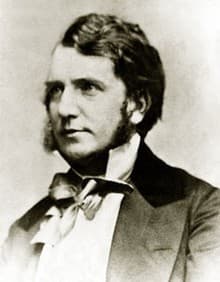
Sheridan Le Fanu

Joseph Thomas Sheridan Le Fanu was an Irish writer of Gothic tales, mystery novels, and horror fiction. He was a leading ghost story writer of his time, central to the development of the genre in the Victorian era. M. R. James described Le Fanu as "absolutely in the first rank as a writer of ghost stories". Three of his best-known works are the locked-room mystery Uncle Silas, the lesbian vampire novella Carmilla, and the historical novel The House by the Churchyard.

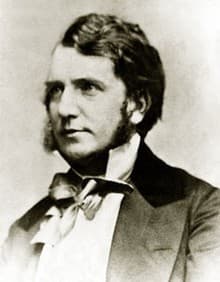
Joseph Sheridan Le Fanu

Joseph Thomas Sheridan Le Fanu was an Irish writer of Gothic tales, mystery novels, and horror fiction. He was a leading ghost story writer of his time, central to the development of the genre in the Victorian era. M. R. James described Le Fanu as "absolutely in the first rank as a writer of ghost stories". Three of his best-known works are the locked-room mystery Uncle Silas, the lesbian vampire novella Carmilla, and the historical novel The House by the Churchyard.