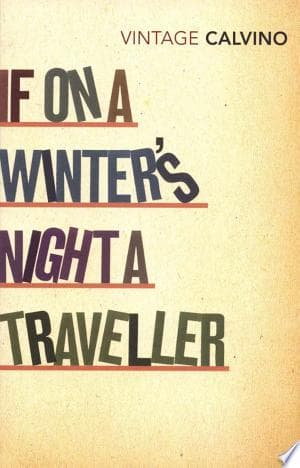
“You are about to begin reading Italo Calvino's new novel, If on a winter's night a traveller.”
— The very opening line of the novel, directly addressing the reader.

Italo Calvino (2010)
Genre
Fiction
Reading Time
360 min
Key Themes
See below
Sign in to track this book
You, the reader, embark on a meta-fictional search for the true beginning of ten different novels, each a fragment of a story interrupted, in a playful look at reading itself.
The novel opens by speaking directly to 'You', the Reader, guiding you through the steps of getting ready to read a new book. You buy 'If on a Winter's Night a Traveller' by Italo Calvino, get comfortable, and start reading the first chapter. The story places you in a train station, introducing Giselda, a woman waiting for her train, watched by a man who might be her lover or just another passenger. The mood is one of waiting and a little sadness. But as the story begins to unfold, the text suddenly stops, showing a printer's error where pages repeat, making it impossible to continue.
Frustrated by the faulty copy, You go back to the bookstore to exchange it. The bookseller, somewhat uninterested, gives you a replacement. However, when you get home and start reading again, you find the new book, though titled 'If on a Winter's Night a Traveller', is a completely different story. This new narrative, 'Outside the Town of Malbork' by Tazio Bazakbal, begins with a character, Marana, in a mysterious, foggy place. While at the bookstore, You also meet Ludmilla, another reader who is also trying to find the correct continuation of 'If on a Winter's Night a Traveller', sharing your problem and confusion.
Your shared search with Ludmilla for the true 'If on a Winter's Night a Traveller' leads you both through a confusing series of unfinished novels. Each book you get, thinking it is the continuation, turns out to be a different work by a different fictional author. These include 'Outside the Town of Malbork' by Tazio Bazakbal, 'Leaning from the Steep Slope' by Ukko Ahti, 'Without Fear of Wind or Vertigo' by Vorts Viljandi, and 'Looks Down in the Gathering Shadow' by Cavedweller. Each fragment is a distinct genre and style, from detective fiction to philosophical thoughts, leaving you always at the start of a new, interesting plot.
As you and Ludmilla continue your search, you begin to suspect a larger plan. You meet various people in the literary world, such as Professor Uzzi-Tuzii, an academic focused on text analysis, and Silas Flannery, a private and worried writer who struggles to start his own novels. It becomes clear that the seemingly random appearance of different books is not by chance. There is a complex network of connections between the fictional authors, publishers, and even government agencies, all controlling the literary market, creating false author names, and producing books that are purposely left unfinished or mislabeled.
Throughout the confusing journey through broken narratives, the relationship between You, the Reader, and Ludmilla, the Other Reader, grows a lot. Their initial shared frustration over the books turns into a deeper connection, marked by curiosity, mutual help, and growing romantic interest. They become partners in solving the literary mystery, spending time together discussing the books, sharing ideas, and navigating the strange world of authors and publishers. Ludmilla is the ideal reading partner, someone who understands and shares the Reader's passion and confusion.
Your search leads you to various unusual people in the literary world. You visit the troubled writer Silas Flannery, who admits his struggles with writer's block and his ways of creating, including using a tape recorder to catch random thoughts. You also meet Ermes Marana, a mysterious figure who seems to be behind the spread of many of the false or incomplete books, possibly as a literary saboteur or a revolutionary trying to break down traditional publishing. These meetings offer glimpses into the complex and often strange processes of writing, publishing, and reading, further blurring the lines between fiction and reality.
The literary journey introduces you to books that challenge what a novel is. You encounter works like 'In a Network of Lines that Intersect' by Anatoly Anatolin, which is structured like a complex diagram, and 'In a Network of Lines that Intersect' again, but by a different author, Bertrand Vandervelde, which focuses on the act of reading itself. These fragments are not just unfinished but often experiment with form and content, making them hard to follow in a traditional way. They reflect on storytelling, the author's purpose, and the reader's role in finding meaning, pushing the limits of what a book can be.
Beyond the literal search for a complete book, You and Ludmilla are involved in a deeper search for meaning and connection. Each unfinished story, despite its sudden end, offers a look into different worlds, ideas, and human experiences. The constant stopping forces you to face the act of reading itself, the desire for an end, and the imaginative process of filling in the gaps. The shared experience of this literary journey also strengthens the bond between You and Ludmilla, suggesting that perhaps the true 'story' is not in any single book, but in the shared journey and the human connection made through it.
Towards the end of your journey, You and Ludmilla find yourselves in a library, meeting a group of other readers, each with a distinct way of approaching literature. There is the 'reader who skips pages', the 'reader who reads only the end', the 'reader who reads for the plot', the 'reader who reads for the style', and so on. This gathering shows the many ways people interact with books and the personal nature of reading. It highlights that there is not one 'right' way to read, and that each reader brings their own views and desires to the text, making reading a very personal and varied act.
After navigating the complex world of unfinished books and literary conspiracies, the story ends with a personal resolution for You, the Reader. You marry Ludmilla, making firm the emotional connection that grew throughout your shared literary quest. The final chapter brings You back to the familiar act of preparing to read a new book, but this time, it is with Ludmilla. The very last line of the novel states that You are about to begin reading 'If on a Winter's Night a Traveller' by Italo Calvino, creating a repeating structure and suggesting that the journey of reading, like life, is continuous and always renewing, with new stories always waiting to be found.
The Protagonist
The Reader evolves from a frustrated consumer of books to an active participant in a literary quest, ultimately finding personal connection and acceptance of the reading process itself.
The Supporting
Ludmilla transforms from a fellow frustrated reader into the Reader's intellectual and emotional partner, culminating in marriage.
The Supporting
Flannery's arc is less about development and more about revealing the internal struggles of an author, demonstrating the cyclical nature of inspiration and despair.
The Antagonist/Supporting
Marana remains largely enigmatic, his true motives and ultimate fate never fully revealed, serving primarily as a catalyst for the Reader's journey.
The Supporting
Uzzi-Tuzii's arc is static, serving as an expository figure who provides intellectual frameworks for the literary mystery.
The Supporting
Lotaria remains consistent in her critical, academic perspective, serving as a foil to other characters' reading styles.
The Mentioned
N/A, as Cavedweller is a fictional author within the nested narratives and does not have a personal arc.
The Mentioned
N/A, as Bazakbal is a fictional author within the nested narratives and does not have a personal arc.
The novel speaks directly to 'You', the Reader, making the act of reading the main subject. It explores the reader's desires, frustrations, and active part in finding meaning. Each unfinished story forces you to face your expectations for plot, character, and closure. The various 'Other Readers' met near the end, each with their own reading habits, further show how personal and diverse engaging with a text is. Calvino argues that the reader is not a passive receiver but an active co-creator of the literary experience, constantly filling in gaps and forming interpretations. This is clear in the Reader's longing for the continuation of 'If on a Winter's Night a Traveller'.
“You are about to begin reading Italo Calvino's new novel, If on a Winter's Night a Traveller. Relax. Concentrate. Dispel every other thought. Let the world around you fade.”
Calvino examines the very mechanics of storytelling. By presenting ten distinct, unfinished first chapters, he shows a wide range of genres, styles, and narrative techniques. The constant stopping highlights how artificial plot is and how arbitrary beginnings and endings are. The novel questions what makes a 'complete' story and explores the appeal of story hooks. The characters, especially Silas Flannery, reveal the writer's struggle with creation, emphasizing that stories are built, not just found. The lack of an end for any of the embedded novels suggests that the journey of a story, rather than its end, is important. Each fragment, like 'Outside the Town of Malbork', offers a glimpse into a possible story world, only to be taken away.
“I am a man who writes, or rather, who tries to write, and I have found that my true vocation is to begin books over and over again.”
The novel is a strong example of intertextuality, not just by referencing other fictional works, but by being them. Each of the ten embedded novels is a copy of a different literary genre and style, from detective fiction ('In a Network of Lines that Intersect') to existential philosophy ('Leaning from the Steep Slope') to erotic romance ('Without Fear of Wind or Vertigo'). This constant changing shows Calvino's wide knowledge of literary forms and his ability to imitate them. The novel celebrates the wide world of literature while also taking it apart, suggesting that all stories are, in some way, echoes or variations of previous ones. The entire book is a conversation with the history of fiction.
“Every new book you read can be a different book for you, depending on who you are.”
Beyond the literal search for a complete book, the novel explores a deeper human desire for meaning, order, and connection. The Reader's constant pursuit of the 'true' novel reflects a universal search for understanding in a broken world. The growing relationship between You and Ludmilla becomes a central 'plot' that provides emotional and intellectual satisfaction, contrasting with the unresolved literary fragments. Their shared journey and eventual marriage suggest that real human connection can provide a kind of closure and meaning that individual stories often cannot. The shared act of discussing and interpreting the books becomes a way to build this bond, as seen in their frequent talks about the confusing texts.
“Reading is always this: there is a book that you are reading, and there is the book that you would like to be reading.”
Calvino constantly blurs the lines between the 'real' world of the Reader and the fictional worlds within the books. The meta-narrative structure, where the Reader is a character, challenges the reader to question the boundaries of the text. Characters like Ermes Marana and Silas Flannery, who exist in the 'real' world of the Reader but also affect the creation and spread of the fictional books, further complicate this difference. The novel suggests that reality itself is a construction, and that our view of it is shaped by the stories we take in. The very idea of the book – a book that is ten other books – is an illusion that the reader must navigate.
“The world is a network of lines that intersect: if you want to understand anything, you must follow one of these lines, but you never know which one is the right one.”
A narrative technique where the story self-consciously refers to itself as a fictional construct.
Metafiction is the cornerstone of 'If on a Winter's Night a Traveller'. The novel constantly reminds the reader that it is a book, directly addressing 'You' as the protagonist, and discussing the process of reading and writing. This device blurs the line between the reader and the character, inviting active participation in the story's construction. The embedded, unfinished novels serve as examples of different narrative possibilities, making the reader aware of the choices involved in storytelling. This self-awareness challenges the reader's suspension of disbelief, forcing them to reflect on the nature of fiction itself.
The use of 'You' as the primary pronoun, directly addressing the reader.
The entire framing narrative is written in the second person, making 'You', the actual reader of Calvino's book, the protagonist. This unique narrative voice creates an immediate and immersive experience, drawing the reader directly into the story's events and internal monologues. It personalizes the literary quest, making the reader's frustrations and desires mirror those of the character 'You'. This device is crucial for the novel's thematic exploration of the reader's role, as it literally places the reader within the text and makes them the central figure of the meta-narrative.
A story within a story, where a main narrative frames several shorter, independent tales.
Calvino employs a complex frame story structure. The overarching narrative of 'You', the Reader, and Ludmilla searching for a complete book serves as the frame. Within this frame, ten distinct, unfinished first chapters of entirely different novels are nested. Each embedded novel, such as 'Outside the Town of Malbork' or 'Leaning from the Steep Slope', is a complete story fragment in itself, offering a glimpse into a different genre and world. This structure allows Calvino to explore a vast array of literary styles and themes, while the frame narrative provides a continuous thread of the Reader's personal journey and quest for narrative coherence.
Imitation of literary styles or genres, often with a celebratory or ironic tone.
Each of the ten embedded novels is a masterful pastiche, imitating the style and conventions of different literary genres. From the existential mystery of 'Outside the Town of Malbork' to the spy thriller elements of 'In a Network of Lines that Intersect', Calvino demonstrates his versatility and knowledge of literary forms. While some imitations verge on parody, they primarily serve to celebrate the diversity of storytelling. This device allows the novel to explore the vastness of literature within a single text, showcasing how different narrative modes evoke different emotions and intellectual responses from the reader, and questioning the boundaries between genres.
The fragmented and often contradictory nature of the internal narratives creates an unreliable literary landscape.
While the main 'You' narrative is relatively straightforward, the various embedded novels often present ambiguous situations, shifting perspectives, and unresolved mysteries, making them 'unreliable' in their ability to deliver a coherent plot. The constant interruption also renders each narrative unreliable in terms of completion. The information presented about the fictional authors and their motives (e.g., Ermes Marana's conspiracy) is also often speculative and never fully confirmed. This unreliability forces the Reader to actively interpret and fill in the gaps, highlighting the subjective nature of truth in storytelling and the reader's role in constructing meaning.
“You are about to begin reading Italo Calvino's new novel, If on a winter's night a traveller.”
— The very opening line of the novel, directly addressing the reader.
“The world is an endless maze, and the books are the threads that guide us through it.”
— A reflection on the role of literature in understanding life.
“The act of reading is a lonely one, but in that solitude, we find ourselves connected to all who have read before us and all who will read after.”
— Meditating on the solitary yet communal nature of reading.
“Every book is a world, and every page a journey. To read is to travel without moving.”
— A poetic description of the immersive experience of reading.
“Reading is not just deciphering words; it is entering into a dialogue with the author, with the story, and with oneself.”
— Exploring the active and reflective process of reading.
“You, Reader, are the protagonist of this book.”
— Another direct address to the reader, emphasizing their central role.
“The book you are holding wants to be read. It is waiting for you.”
— Personifying the book and its desire to engage with the reader.
“There are books you finish and books that finish you.”
— A pithy observation on the profound impact certain books can have.
“Reading is always this: there is a threshold that separates the person who reads from the person who writes, and that threshold is the book.”
— Defining the boundary and connection between author and reader.
“The reader's task is to make sense of the fragments, to piece together the narrative from the scattered clues.”
— Reflecting on the active role of the reader in constructing meaning.
“Each time you begin reading a book, you are taking on a new life.”
— Highlighting the transformative potential of starting a new book.
“The meaning of a book is not in its words but in the space between them, in the silence that the reader fills.”
— Suggesting that true meaning lies in the reader's engagement and interpretation.
“To read is to leave yourself behind and become another.”
— A concise statement about the escapist and empathetic power of reading.
“A book is a mirror: if an ape looks in, no apostle can look out.”
— A more cynical view, implying that the reader's own nature influences their perception of the book.
“The universe is a library, and its books are waiting to be read.”
— A grand metaphor equating the universe to a collection of stories and knowledge.
Ready to see how well you understood this book? Take our interactive quiz with 10 questions.
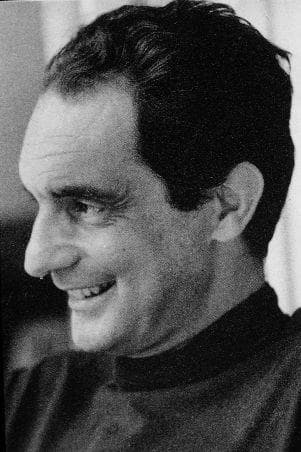
Italo Calvino was an Italian writer and journalist. His best known works include the Our Ancestors trilogy (1952–1959), the Cosmicomics collection of short stories (1965), and the novels Invisible Cities (1972) and If on a winter's night a traveler (1979).

Ashley Antoinette
4.6

Mark McDonald
4.4
Luo Guanzhong
4.4
Mia McKenzie
4.3
Dorothy Parker
4.3
Joaquim Maria Machado de Assis
4.3
James Thurber
4.2
Terry Kay
4.2