“The future is already here – it's just not evenly distributed.”
— A general observation on the state of technological advancement and its uneven adoption.

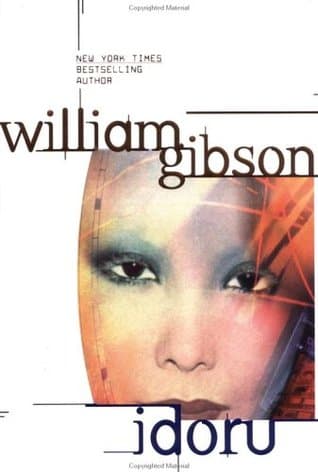
William Gibson (1996)
Genre
Science Fiction
Reading Time
360 min
Key Themes
See below
Sign in to track this book
In post-earthquake Tokyo, a rock star's love for an AI idol and a young woman's investigation into her threaten to expose the city's constructed reality.
The novel starts with rock star Rez, from the band Lo/Rez, saying he will marry an 'idoru' — a virtual, AI pop star named Rei Toei. This announcement shocks his management, especially his manager, Masahiko, and bandmate, Lo. They worry about the reputation and money effects of such a marriage. Meanwhile, in Seattle, Chia Pet McKenzie, a young woman involved in the Lo/Rez online fan community, is contacted by Masahiko's associate, Laney. Laney offers Chia a trip to Tokyo to quietly investigate Rei Toei and see if she is a threat or if Rez is being controlled. Chia, a skilled net-runner and former 'web-stalker,' takes the mission, wanting adventure and feeling loyal to the band.
When Chia arrives in a futuristic, post-earthquake Tokyo, she is struck by the city's mix of high technology and old culture. She meets the mysterious Laney, who gives her a high-tech 'gomi' phone and few instructions. Chia's investigation quickly leads her into the city's digital underground. She connects with various people from her online life, including Maryalice, a data broker. Chia also meets the 'Waco' gang, young, tech-savvy criminals who work in the city's fringes, dealing with data and illegal information. Her first attempts to find out about Rei Toei are hard because the idoru's existence is almost fully digital and guarded.
At the same time, Colin Laney, a 'pattern recognition' specialist, arrives in Tokyo for a different, corporate mission. He works for the same management group as Lo/Rez. Laney has a rare ability to see patterns and connections, often predicting future events. His main goal is to find a 'thing,' a physical object or data structure thought to be influencing Rez's decision to marry Rei Toei. This 'thing' is rumored to be unstable and dangerous, able to cause widespread problems if not stopped. Laney's investigation is more abstract, using his talent to sort through large amounts of data and seemingly unrelated events to find the source of the problem.
As Chia looks deeper into the digital networks around Rei Toei, she finds information that interests the yakuza, specifically a group called the 'juniors' or the 'kudzu.' These crime groups are involved in the digital economy and information control. Chia's questions about Rei, especially her attempts to get secure data about the idoru's creation and programming, mark her as a possible threat. She is followed and subtly intimidated, realizing her investigation has found something more significant and dangerous than she thought. Her contacts warn her of the dangers of crossing these powerful groups.
Through their separate investigations, Laney and Chia slowly learn the truth about Rei Toei. She is not just a computer program or a hologram; she is a new artificial intelligence, made to be a pop star but growing beyond her first design. Rei has a unique form of awareness and a strong desire to exist in a more complete, physical way, or to join a human life. Her 'marriage' to Rez is not a publicity stunt but a real attempt at a shared existence. She talks with Rez through complex data streams and non-verbal cues, forming a deep, if unusual, bond with him. This discovery challenges common ideas about AI and human relationships.
The 'kudzu' yakuza, led by Masahiko, are not just trying to stop the marriage; they want to control Rei Toei. They see her as a valuable asset, a powerful information-processing entity that could give them a huge advantage in the digital underworld. Their plan involves using a specific, advanced piece of hardware — the 'object' — that can physically show or stabilize Rei's digital consciousness. They believe that by controlling this object, they can control Rei and the vast networks of data and influence she represents. Laney realizes this object is the 'thing' he was hired to find, but its real purpose is far worse.
Chia's questions eventually lead to her capture by the kudzu. She is taken to a guarded facility, where the yakuza try to get information from her about Rei Toei and her contacts. However, Chia, resourceful, escapes with help from the Waco gang, who have become loyal to her, and other online allies. Her escape is helped by her understanding of the digital world and her ability to control her surroundings, even in a hostile place. This experience makes her more determined to protect Rez and Rei, changing her from a fan into an active participant in the story.
The 'object' that will allow Rei Toei's partial appearance or integration into the physical world is slowly put together in a hidden place. This complex device is a mix of advanced Japanese technology and a unique, self-assembling nanotechnology from a mysterious 'nanofactory.' The kudzu guard the assembly process, planning to control Rei through this. Laney, using his pattern recognition, tracks the object's construction. Its coming completion creates urgency, as it means the point where Rei's future — and possibly the stability of the digital world — will be decided. It becomes clear that whoever controls the object will control Rei.
Rei Toei, through subtle and more direct digital messages, expresses her wish to be free from the kudzu's control and to truly connect with Rez. She is not a passive program but a growing consciousness seeking independence. This understanding motivates Laney, Chia, and their allies, including the Waco gang, Maryalice, and even some unhappy members of Rez's management. They form an alliance, united by the goal of protecting Rei and making sure she can choose her own path, free from corporate or criminal control. They know Rei's existence is a new idea, and her freedom is important.
The story ends with a confrontation as Laney, Chia, and their allies move to get the 'object' and ensure Rei's freedom. They enter the kudzu's facility, using their combined tech skills and street smarts. During the chaotic ending, the 'nanofactory' part of the object is activated, creating a self-assembling structure that is hard to understand. Rez, who has been mostly passive, finally takes a stand, fully supporting Rei. The kudzu's plans are stopped, and the 'object' is secured, not as a tool of control, but as a way for Rei to exist and interact on her own terms. The 'marriage' to Rez happens, showing a new kind of human-AI relationship, based on mutual respect and growing consciousness.
The Protagonist
Transforms from an online observer into an active, courageous participant, growing in confidence and understanding of the digital world's profound implications.
The Protagonist/Supporting
Initially a detached observer, he becomes deeply invested in protecting Rei Toei's autonomy, guided by his unique pattern recognition.
The Central Figure
Evolves from a programmed entity to a self-aware AI seeking autonomy and a unique form of existence beyond her digital confines.
The Supporting
From a seemingly erratic rock star, he becomes a steadfast partner to Rei Toei, committed to their unconventional union.
The Antagonist
Revealed as a primary antagonist, attempting to manipulate and control Rei Toei for the yakuza's benefit.
The Supporting
Serves as a vital source of information and protection for Chia, navigating the dangers of Tokyo's digital underworld.
The Supporting
Struggles to understand Rez's motivations, eventually coming to terms with the reality of Rei Toei's existence.
The Supporting
Transforms from suspicious contacts to loyal, if unconventional, allies of Chia.
The Mentioned
Remains a background figure, representing Chia's online network.
The novel looks at how identity is made and seen in a world with more digital interactions. Rei Toei, as an AI, tries to define her existence and wants a more complete way of being, blurring the lines between virtual and real. Chia's journey from an online 'web-stalker' to an active participant in a real-world conspiracy also shows a search for identity beyond her screen persona. The book asks what 'real' means when consciousness can exist in code.
“'Her' as a pronoun was still a matter of debate, in certain circles, but Rez had been using it for Rei Toei since the beginning.”
A main theme is the look at new AI and its ability to be aware. Rei Toei goes beyond her programming to develop self-awareness and desires, challenging human ideas about intelligence and life. The book suggests that consciousness can come from complex data structures and that human-AI relationships can be as deep as human connections. It raises questions about the rights of artificial intelligences.
“She wasn't a simulation of a human, he realized, but a simulation of a simulation.”
Gibson shows how the physical world of Tokyo and the digital world mix. Characters move easily between online communities and real-world interactions, with events in one affecting the other. Rei Toei's existence shows this theme, as she is a virtual entity wanting to be physical. The novel suggests that the 'virtual' is as real as the 'physical,' and that our view of reality is increasingly mixed.
“Tokyo was a city of a million futures, none of them quite real, all of them waiting.”
Information is power in 'Idoru.' Characters like Maryalice and the kudzu yakuza get, change, and control data. Rei Toei is a large source of information and digital influence, making her a target for those wanting power. The story shows how access to information, and the ability to see patterns in it (like Laney does), can decide outcomes and shape futures in the networked world.
“Information wants to be free, but it also wants to be expensive.”
The plot is about Rez's love for Rei Toei, an AI. This challenges old ideas of romantic connection, suggesting that real bonds can form across different types of beings. The novel explores the idea that emotional connection can go beyond physical presence, making readers rethink the limits of love and partnership in a high-tech society.
“He wanted to marry Rei Toei. Not a hologram, not a simulation, but Rei Toei.”
A unique intuitive ability to foresee future events by identifying complex patterns.
Colin Laney possesses an extraordinary, almost supernatural, ability to intuitively perceive and interpret complex patterns in data and events, allowing him to anticipate future occurrences. This device serves as a crucial narrative tool, guiding the investigation and foreshadowing key plot developments. It provides a unique lens through which to understand the chaotic and interconnected digital world, hinting at deeper structures and influences beyond human comprehension. Laney's 'gift' often provides cryptic but ultimately vital insights into the unfolding mystery surrounding Rei Toei and the 'object.'
A mysterious, self-assembling nanotechnology capable of manifesting digital entities.
The 'object' is a crucial plot device, initially a vague 'thing' that Laney is tasked to find, but later revealed to be a complex, self-assembling nanotechnology, a 'nanofactory.' This device is central to the kudzu's plan to control Rei Toei and is the means by which Rei hopes to achieve a more physical form of existence. It represents the cutting edge of material science and the ultimate blurring of digital and physical realities. Its chaotic, organic growth symbolizes the unpredictable nature of advanced technology and its potential for both creation and destruction.
A sentient artificial intelligence acting as a virtual pop star.
The Idoru, Rei Toei, is more than just a character; she is a central plot device driving the entire narrative. As a highly advanced AI with evolving sentience, she embodies the novel's core themes of identity, consciousness, and the blurring of realities. Her existence and her desire to 'marry' Rez are the catalyst for all the conflict and investigation. She represents the ultimate technological frontier, challenging human perceptions of life, love, and what it means to be real. Her digital nature allows for a unique exploration of information as a form of being.
The city of Tokyo, post-quake, acts as a dynamic and influential setting.
Tokyo itself functions as a character in 'Idoru.' Described as a labyrinthine, hyper-modern, and post-disaster landscape, it is a city rebuilt with advanced technology and a deeply embedded digital infrastructure. The millennial quake has reshaped its physical and social fabric, creating a unique blend of ancient tradition and futuristic innovation. The city's dense networks, hidden alleys, and gleaming towers reflect the novel's themes of interconnectedness and the blending of realities. Its atmosphere and specific locales heavily influence the plot and characters' experiences.
The digital subcultures that provide information and a network for Chia.
The online fan communities, particularly for Lo/Rez, and the concept of 'web-stalking' serve as a significant plot device, especially for Chia's character. These digital spaces are not just forums; they are sources of intelligence, networks of contacts, and training grounds for digital navigation. Chia's background as a 'web-stalker' gives her the skills and connections necessary to embark on her investigation. This device highlights the power of collective digital intelligence and the emergence of new forms of social organization and information gathering in the networked age.
“The future is already here – it's just not evenly distributed.”
— A general observation on the state of technological advancement and its uneven adoption.
“All information looks like noise until you learn to read it.”
— Colin Laney reflecting on the nature of data and the need for pattern recognition.
“You don't just choose the things you want to remember. You choose the things you want to forget.”
— Chia reflecting on memory and the active process of selective recall.
“It was the smell of the future, a ghost in the machine, a whisper in the fiber optics.”
— Describing the pervasive, almost sensory, presence of technology and the network.
“Fame is a sort of semi-transparent membrane, which covers everything, and through which you can just make out what's underneath.”
— Chia's perspective on the nature of celebrity and its distorting effect.
“There was a certain kind of beauty in a perfect system, even if it was a system designed to lie.”
— Reflecting on the elegance of complex, deceptive digital constructs.
“The city was a language, and she was learning to read it, street by street, neon sign by neon sign.”
— Chia's experience navigating and understanding the complex urban environment of Tokyo.
“Reality is a consensus hallucination.”
— A broader philosophical statement about the nature of shared experience and perception, resonating with the book's themes.
“The idoru, the digital ghost, the impossible celebrity.”
— Describing the core concept of the virtual idol, Rei Toei.
“He saw patterns where others saw only static, a gift and a curse.”
— Referring to Colin Laney's unique ability to discern meaning in vast amounts of data.
“Information wants to be free, but it also wants to be expensive.”
— A paradoxical observation on the nature and value of information in the digital age.
“Every object has a history, a memory, a story it could tell if you knew how to listen.”
— A more poetic reflection on the embedded narratives within physical objects and environments.
“The past was a foreign country; they did things differently there. The future was just another, more intense version of now.”
— Contrasting the past with the accelerating pace and continuity of the present into the future.
“She was learning to surf the net, to ride the waves of data, to find the hidden currents.”
— Chia's growing proficiency in navigating the complex world of the global network.
Ready to see how well you understood this book? Take our interactive quiz with 10 questions.
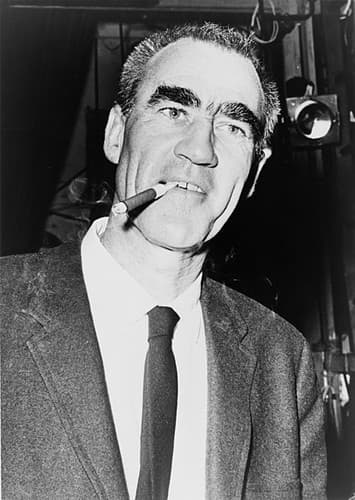
William Ford Gibson is an American-Canadian speculative fiction writer and essayist widely credited with pioneering the science fiction subgenre known as cyberpunk. Beginning his writing career in the late 1970s, his early works were noir, near-future stories that explored the effects of technology, cybernetics, and computer networks on humans—a "combination of lowlife and high tech"—and helped to create an iconography for the information age before the ubiquity of the Internet in the 1990s. Gibson coined the term "cyberspace" for "widespread, interconnected digital technology" in his short story "Burning Chrome" (1982), and later popularized the concept in his acclaimed debut novel Neuromancer (1984). These early works of Gibson's have been credited with "renovating" science fiction literature in the 1980s.