BookBrief
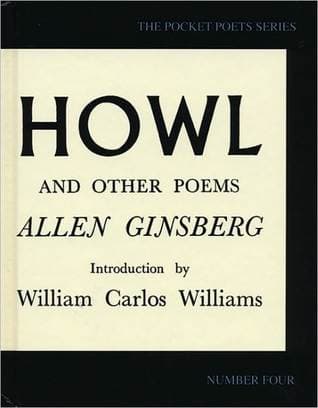
Howl and Other Poems cover
Archivist's Choice

Howl and Other Poems

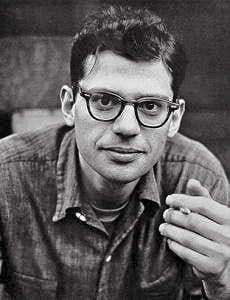
Allen Ginsberg (1956)

Genre

Fiction

Reading Time

60 min

Key Themes

See below

Track Your Reading

Sign in to track this book

Ginsberg's electrifying collection is a raw, impassioned scream against the conformity and destruction of his generation, a jazz-infused lament for the 'best minds' driven to madness.

Synopsis

Allen Ginsberg's "Howl and Other Poems" is a collection that is a cry from the heart of the Beat Generation. The titular poem, "Howl," unfolds in three parts, painting a vivid and often disturbing portrait of a generation driven to madness and rebellion by societal pressures. Part I introduces "the best minds of my generation destroyed by madness," detailing their unconventional lives, drug use, sexual exploration, and spiritual quests, all in defiance of mainstream conformity. Part II shifts focus to "Moloch," a terrifying, dehumanizing force representing industrial capitalism, war, and the oppressive aspects of modern society that crush the human spirit. Part III is a personal address to Carl Solomon, a fellow poet and friend whom Ginsberg met in a mental institution, expressing solidarity, shared suffering, and a vision of redemption through empathy and connection. The collection also includes other poems like "A Supermarket in California," where Ginsberg communes with Walt Whitman, and "Sunflower Sutra," which finds beauty and spiritual significance in unexpected places. All of these contribute to a critique of American society and an urgent call for spiritual awakening and freedom.
Reading time
60 min
Difficulty
Medium
Pacing
Fast
Mood
Raw, Urgent, Provocative, Melancholy, Rebellious, Visionary
✓ Read this if...
You are interested in the Beat Generation, experimental poetry, social commentary, or a raw, unfiltered exploration of madness, rebellion, and spiritual longing.
✗ Skip this if...
You prefer traditional poetic forms, find explicit language or themes of drug use and mental illness uncomfortable, or are looking for a light, easy read.

Plot Summary

Part I: The Madness of a Generation

The first section of 'Howl' immediately plunges into a raw, catalog-style lament for the 'best minds of my generation' destroyed by madness, starvation, and societal pressures. Ginsberg details the lives of these individuals, his friends and peers, who rebelled against conformity. He describes their experiences with poverty, drug use (especially benzedrine and marijuana), mental institutions, sexual experimentation (both heterosexual and homosexual), and their fervent pursuit of spiritual and artistic enlightenment. He paints vivid, often disturbing, pictures of their descent into various forms of 'madness' as a direct result of their nonconformist choices and the oppressive societal structures they encountered. The language is intense, featuring long, breathless lines and a relentless stream of imagery, establishing the poem's revolutionary tone and subject matter.

Part I: Rebellions and Visions

Ginsberg continues to elaborate on the 'angelheaded hipsters' of his generation, emphasizing their search for spiritual and intellectual truth outside of mainstream society. He depicts them as figures who rejected consumerism, materialism, and traditional morality, instead seeking meaning in jazz clubs, late-night conversations, and hallucinogenic experiences. Specific imagery includes characters burning their money, hitchhiking across the country, and engaging in fervent intellectual discussions about art, poetry, and philosophy. The section highlights their attempts to break free from societal constraints, even if it led them to destitution, imprisonment, or mental breakdown. Ginsberg portrays their actions as a desperate, yet ultimately noble, quest for authenticity and a higher consciousness in a world he perceives as spiritually barren.

Part I: Despair and Revelation

As Part I progresses, the tragic consequences of the characters' rebellion become more apparent. Ginsberg describes their experiences in mental institutions, their arrests, and their public shaming, often linking these misfortunes directly to their refusal to conform. He evokes images of electroshock therapy, the isolation of asylums, and the despair of those who have lost their way. However, amidst this suffering, there is also a sense of revelation and a defiant spirit. The 'best minds' are presented not as victims, but as prophets and martyrs, whose suffering illuminates the hypocrisies and injustices of the dominant culture. The section culminates in a powerful, almost apocalyptic vision of these individuals as seekers of ultimate truth, even at the cost of their sanity.

Part II: Moloch, The Destroyer

Part II of 'Howl' shifts focus from the victims to the perceived oppressor, personified as 'Moloch.' Ginsberg unleashes a furious denunciation of this monstrous entity, which he defines as the destructive forces of industrialism, capitalism, conformity, and war. Moloch is depicted as a dehumanizing, soul-crushing machine that devours creativity, individuality, and spiritual essence. The poem's repetitive structure, 'Moloch! Moloch! Moloch!', emphasizes the relentless and pervasive nature of this force. Ginsberg connects Moloch to specific societal ills: the military-industrial complex, the media, advertising, and the general mechanization of human life. He blames Moloch for the 'madness' described in Part I, seeing it as the ultimate cause of the generation's despair and destruction.

Part II: The Dehumanizing Power of Moloch

Ginsberg continues his indictment of Moloch, detailing how this entity strips humanity of its dignity and purpose. He describes its impact on urban landscapes, the soullessness of modern work, and the pervasive sense of alienation it creates. Moloch is presented as an abstract, yet utterly tangible, force that turns individuals into cogs in a machine, suppressing their natural desires for beauty, love, and spiritual connection. The imagery is stark and industrial, portraying a world consumed by concrete, steel, and a relentless pursuit of material gain. This section solidifies Ginsberg's critique of post-war American society, arguing that its values are inherently destructive to the human spirit and directly responsible for the suffering of his generation.

Part III: To Carl Solomon, My Brother

Part III is a direct address to Carl Solomon, a fellow patient Ginsberg met at Rockland State Hospital (referred to as a 'madhouse'). The tone shifts to one of empathy and solidarity, as Ginsberg acknowledges their shared experience of institutionalization and perceived madness. The section is characterized by a series of repetitive 'I'm with you in Rockland' lines, creating a powerful sense of connection and shared suffering. Ginsberg celebrates Solomon's unconventional spirit and acknowledges the validity of his pain, seeing it not as a personal failing but as a reaction to a sick society. He offers a vision of hope and resilience, suggesting that their shared 'madness' is a form of heightened perception, a way of seeing the truth that others ignore.

Part III: Shared Suffering and Vision

In the final section of 'Howl,' Ginsberg continues to affirm his connection with Carl Solomon, suggesting that within the confines of the asylum, they find a shared understanding and a unique perspective on the world. He describes their conversations, their shared hallucinations, and their mutual recognition of the societal forces that led them there. The 'madhouse' becomes a crucible for a new kind of vision, where traditional notions of sanity are inverted. Ginsberg's repeated declarations of 'I'm with you in Rockland' become a mantra of solidarity, transforming the asylum from a place of despair into a sanctuary of shared truth. The poem concludes with a powerful, if ambiguous, sense of hope that their shared experience might lead to a broader awakening.

A Supermarket in California

'A Supermarket in California' sees Ginsberg wandering through a supermarket at night, feeling alienated and lost in the consumerist landscape. He imagines encountering Walt Whitman, his poetic predecessor, among the aisles. This encounter is both humorous and poignant, as Ginsberg questions Whitman about the nature of America and the future of poetry. He sees Whitman, the poet of democratic vistas, in a modern, commercial setting, prompting reflections on the changes in American society and the role of the poet. The poem explores themes of loneliness, the search for connection, and the legacy of American poetry, as Ginsberg seeks guidance from his spiritual father in a world that seems to have lost its way.

Sunflower Sutra

'Sunflower Sutra' describes Ginsberg and Jack Kerouac discovering a grimy, oil-stained sunflower by a railroad yard. Initially seeing it as a symbol of urban decay and neglect, Ginsberg experiences a realization as he contemplates its inherent beauty and spiritual resilience. He sees the sunflower, despite its degradation, as still possessing its 'ancient golden dusty face' and an enduring connection to the sun and nature. This observation leads to an epiphany about the inherent worth and spiritual purity of all beings, regardless of their external circumstances or the grime of civilization. The poem becomes a meditation on finding transcendence and beauty in the most unexpected and seemingly debased places.

America

'America' is a direct and often humorous address to the nation, where Ginsberg expresses a complex mix of frustration, affection, and disillusionment. He critiques America's political policies, its consumerism, its homophobia, and its Cold War paranoia. The poem is characterized by a conversational, almost rambling tone, as Ginsberg lists his grievances and personal desires. He asks America to stop its wars, to free the political prisoners, and to allow him to pursue his own desires, even if they are unconventional. Despite the harsh critique, there is an underlying current of love for his country and a desire for it to live up to its democratic ideals, even if he feels alienated by its current state.

Principal Figures

Allen Ginsberg (Narrator)

The Protagonist

Ginsberg moves from a lamenting observer of his generation's destruction to a defiant voice of solidarity and a seeker of spiritual truth amidst decay.

The 'Best Minds' of My Generation

The Collective Protagonist/Subject

They are shown undergoing a tragic descent into 'madness' and suffering, yet also achieving moments of profound insight and defiant resilience.

Carl Solomon

The Supporting

Solomon's arc is implicitly one of finding solidarity and validation through Ginsberg's address, transforming from a victim of the system to a symbol of defiant perception.

Moloch

The Antagonist

Moloch remains a static, destructive force throughout the poem, its power and pervasiveness consistently highlighted.

Walt Whitman

The Mentioned/Symbolic

Whitman's presence serves to highlight Ginsberg's own poetic journey and his connection to a literary tradition, rather than undergoing an arc himself.

Jack Kerouac

The Supporting/Mentioned

Kerouac's brief appearance serves to ground the scene in a specific Beat context, without a personal arc.

Themes & Insights

Rebellion Against Conformity

The central theme of 'Howl' is the defiant rejection of post-war American societal norms. Ginsberg celebrates the 'best minds' who refused to conform to materialism, corporate culture, and conventional morality. Their rebellion manifests in drug use, sexual experimentation, artistic pursuits, and a general embrace of outsider status. This theme is evident throughout Part I, where characters 'burned their money in wastebaskets and came on shrieking,' and 'who broke their backs for Moloch.' The poem argues that this rebellion, though often leading to suffering, is a necessary act of spiritual and intellectual survival against a repressive society.

who bared their brains to Heaven under the El and saw Mohammedan angels staggering on tenement roofs illuminated, / who passed through universities with radiant cool eyes hallucinating Arkansas and Blake-light tragedy among the scholars of war,

Allen Ginsberg, 'Howl' Part I

The Destructive Nature of Modern Society (Moloch)

Ginsberg's work critiques the dehumanizing aspects of modern industrial society, personified as 'Moloch.' This theme explores how unchecked capitalism, technological advancement, conformity, and militarism crush individuality and spiritual life. Part II of 'Howl' is entirely dedicated to this theme, describing Moloch as 'whose mind is pure machinery! Moloch whose blood is running money!' This destructive force is blamed for the 'madness' and suffering of the generation, turning vibrant individuals into cogs in a machine. The theme suggests that society itself is sick, leading to the alienation and breakdown of its most sensitive members.

Moloch whose mind is pure machinery! Moloch whose blood is running money! Moloch whose fingers are ten armies! Moloch whose breast is a cannibal dynamo! Moloch whose ear is a smoking tomb!

Allen Ginsberg, 'Howl' Part II

Spiritual Quest and Transcendence

Despite the despair and suffering depicted, a powerful undercurrent of spiritual seeking runs through the collection. Ginsberg's characters, and Ginsberg himself, are on a quest for transcendence, often through unconventional means like drugs, mysticism, and intense artistic experience. This is evident in 'Howl's' 'angelheaded hipsters' seeking 'ancient heavenly connection to the starry dynamo in the machinery of night.' Even in 'Sunflower Sutra,' the discovery of beauty in a discarded, grimy flower becomes a moment of spiritual revelation, affirming the inherent worth of all things. The poems suggest that true spirituality can be found outside established religions, in moments of heightened perception and connection to the raw essence of life.

we're not what we seem, but we're what we are, and that's holy.

Allen Ginsberg, 'Sunflower Sutra'

Solidarity and Empathy for the Marginalized

A sense of empathy and solidarity with those cast out by society is a dominant theme. Ginsberg consistently champions the marginalized—the mentally ill, the poor, the homosexual, the drug user—seeing their suffering as a consequence of societal oppression rather than personal failing. Part III of 'Howl,' with its repeated 'I'm with you in Rockland,' directly addresses Carl Solomon, a fellow patient in a mental institution, affirming their shared humanity and vision. This theme extends to 'America,' where Ginsberg identifies with the 'communists and nuts' and challenges the nation to embrace its outcasts, advocating for compassion and understanding.

I'm with you in Rockland / where you scream in a straightjacket that you're gonna smash the universe to establish / everlasting union of souls between us

Allen Ginsberg, 'Howl' Part III

Plot Devices & Literary Techniques

Catalog (Anaphora and Enumeration)

Long, descriptive lists used to build intensity and convey vastness.

Ginsberg extensively uses cataloging, particularly in 'Howl,' to create a sense of overwhelming detail and emotional intensity. This often involves anaphora, the repetition of a word or phrase at the beginning of successive clauses, such as the repeated 'who' in Part I of 'Howl' or 'Moloch' in Part II. This device allows Ginsberg to pile up images, experiences, and critiques, creating a cumulative effect that mirrors the chaotic and abundant nature of the lives he describes and the oppressive forces he condemns. It contributes to the poem's breathless, incantatory rhythm and its powerful, almost overwhelming, emotional impact.

Prophetic Voice

The poet assumes the role of an oracle, delivering warnings and visions.

Ginsberg adopts a prophetic, almost biblical, tone throughout the collection, particularly in 'Howl.' He acts as a seer, lamenting the destruction of his generation, denouncing societal evils (Moloch), and offering a vision of alternative truths. This voice is characterized by its moral authority, its passion, and its willingness to challenge established norms. The long lines and incantatory rhythm contribute to this prophetic quality, as if the poet is channeling a higher truth. This device elevates the personal experiences within the poems to universal statements about humanity and society, giving the work a powerful sense of urgency and significance.

Stream of Consciousness

Unfiltered flow of thoughts, observations, and feelings.

Ginsberg employs elements of stream of consciousness, particularly in the longer poems like 'Howl' and 'America.' The poems often feel like an unfiltered outpouring of the narrator's mind, moving fluidly between observations, memories, critiques, and emotional outbursts without strict logical transitions. This reflects the Beat emphasis on spontaneity and raw expression. The long lines and lack of traditional poetic structure contribute to this sense of an unedited mental landscape, drawing the reader directly into the poet's subjective experience and thought process, mimicking the flow of human thought and speech.

Direct Address

The poet directly speaks to characters, concepts, or the nation.

Ginsberg frequently uses direct address to engage with his subjects, creating intimacy, confrontation, or solidarity. In Part III of 'Howl,' he directly addresses Carl Solomon ('I'm with you in Rockland'), fostering a powerful sense of shared experience and empathy. In 'America,' he directly confronts the nation itself ('America I've given you all and now I'm nothing'), creating a dialogue that is both accusatory and deeply personal. This device makes the poems feel immediate and conversational, breaking the fourth wall and inviting the reader into a direct engagement with the poet's concerns and emotions.

Critical analysis

Notable Quotes

I saw the best minds of my generation destroyed by madness, starving hysterical naked, dragging themselves through the negro streets at dawn looking for an angry fix.

The opening lines of 'Howl', setting the tone for the poem's critique of society.

who poverty and tatters and hollow-eyed and high sat up smoking in the supernatural darkness of cold-water flats floating across the tops of cities contemplating jazz.

Describing the living conditions and intellectual pursuits of the 'best minds' in 'Howl'.

Moloch! Solitude! Filth! Ugliness! Ashcans and unobtainable dollars! Children screaming under the stairways! Boys sobbing in armies! Old men weeping in the parks!

The famous 'Moloch' section of 'Howl', personifying the destructive forces of industrial society.

Moloch whose mind is pure machinery! Moloch whose blood is running money! Moloch whose fingers are ten armies! Moloch whose breast is a cannibal dynamo! Moloch whose ear is a smoking tomb!

Further personification of Moloch, emphasizing its mechanical and destructive nature in 'Howl'.

with dreams, with drugs, with waking nightmares, alcohol and cock and endless balls, incomparable elations of the mind, and endless visions of America with and without love.

Portraying the experiences and altered states of consciousness of the generation in 'Howl'.

Holy! Holy! Holy! Holy! Holy! The soul is an arena of love!

From 'Footnote to Howl', a declaration of spiritual awakening and affirmation of life.

Holy the sea holy the desert holy the railroad holy the locomotive holy the visions holy the hallucinations holy the miracles of the flesh!

A litany of sacred things in 'Footnote to Howl', celebrating the mundane and the extraordinary.

Holy Peter holy Allen holy Solomon holy Lucien holy Kerouac holy Huncke holy Burroughs holy Cassady holy the unknown buggered and suffering beggars holy the beautiful unknown.

Listing friends and figures of the Beat Generation as sacred in 'Footnote to Howl'.

America I've given you all and now I'm nothing.

The opening line of 'America', expressing a sense of exhaustion and disillusionment with the nation.

America when will you be angelic?

A direct question to the nation in 'America', asking for a more enlightened and compassionate future.

I'm sick of your insane demands.

A line from 'America', expressing frustration with societal pressures and expectations.

What sphinx of cement and aluminum bashed open their skulls and ate up their brains and imagination?

Another question from 'Howl', echoing the Moloch theme and questioning the forces that destroyed the 'best minds'.

who broke their backs lifting Moloch to Heaven!

From 'Howl', suggesting the immense effort and suffering involved in upholding the destructive forces of society.

The poem is a confession of my life and times, a testament to the generation that went mad.

While not a direct quote from a poem, this reflects Ginsberg's own perspective on 'Howl' and its purpose.

I'm with you in Rockland / where you're madder than I am.

From 'Howl', Part III, addressing Carl Solomon in a mental institution, a poignant statement of shared experience and solidarity.

Quiz

Test Your Knowledge

Ready to see how well you understood this book? Take our interactive quiz with 10 questions.

10
Questions
~5
Minutes
?
Best Score

Key Questions (FAQ)

'Howl' is a powerful indictment of the destructive forces of conformity, materialism, and societal oppression that Ginsberg believed crushed the best minds of his generation. It celebrates non-conformity, artistic expression, and spiritual seeking in the face of a decaying industrial society, particularly 'Moloch' representing capitalism and war.

About the author

Allen Ginsberg

Irwin Allen Ginsberg was an American poet and writer. As a student at Columbia University in the 1940s, he began friendships with William S. Burroughs and Jack Kerouac, forming the core of the Beat Generation. He vigorously opposed militarism, economic materialism, and sexual repression, and he embodied various aspects of this counterculture with his views on drugs, sex, multiculturalism, hostility to bureaucracy, and openness to Eastern religions.