BookBrief
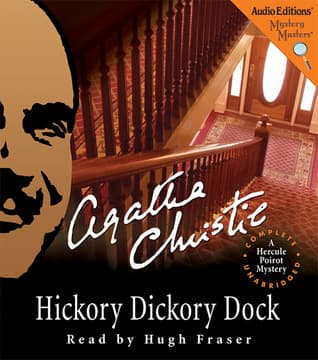
Hickory Dickory Dock cover
Archivist's Choice

Hickory Dickory Dock

Agatha Christie (1955)

Genre

Mystery

Reading Time

180 min

Key Themes

See below

Track Your Reading

Sign in to track this book

Hercule Poirot investigates strange thefts at a student hostel, where a diamond ring in soup and cut rucksacks point to a complex plot beyond simple kleptomania, and a widespread fear suggests a killer lives among the eccentric residents.

Synopsis

Hercule Poirot investigates a strange case at a student hostel where odd thefts have begun. He initially dismisses the petty crimes but becomes interested by the illogical list of stolen and damaged items and the residents' clear fear. The thefts lead to murder, with Celia Austin as the first victim. Poirot connects the stolen items to nursery rhymes, realizing the acts are not random. A missing nursery rhyme book becomes a key clue, and a second murder, Mrs. Nicoletis, complicates the case. Poirot uncovers a sophisticated smuggling operation hidden by student life and small crimes. He carefully connects the clues, revealing the mastermind behind the thefts and murders, their motive, and their accomplices. Ultimately, Poirot exposes the conspiracy, bringing the criminals to justice and restoring calm to the hostel.
Reading time
180 min
Difficulty
Medium
Pacing
Moderate
Mood
Intriguing, Puzzling, Classic
✓ Read this if...
You enjoy classic Golden Age mysteries with intricate plots, a quirky setting, and Hercule Poirot's brilliant deductions.
✗ Skip this if...
You prefer modern, fast-paced thrillers or mysteries without a strong focus on intellectual puzzle-solving.

Plot Summary

The Peculiar Kleptomania Outbreak

Mrs. Hubbard, the warden of a student hostel called Hickory Road, asks Hercule Poirot about a series of strange thefts and vandalism among her residents. Poirot initially dismisses these as petty crimes, but he becomes interested in the illogical list of stolen items: a stethoscope, flannel trousers, a box of chocolates, a cut rucksack, and a diamond ring found in soup. He senses a darker purpose than simple student pranks. The atmosphere at the hostel is tense, with students showing fear rather than just annoyance, suggesting the thefts are a cover or a distraction from something more serious.

Poirot's Investigation Begins

Poirot, with Miss Lemon, begins his investigation at Hickory Road. He interviews the residents, a diverse group of international students including Nigel Chapman, Sally Finch, Colin McNabb, and Akibombo. He quickly notices their individual habits, goals, and hidden worries. The students are generally unhelpful and secretive, each seemingly hiding something. Poirot focuses on the random nature of the stolen items, believing them to be clues in a larger, still unknown, puzzle. He also notes the general mess and lack of order within the hostel, which Mrs. Hubbard struggles to manage.

The First Murder: Celia Austin

The seemingly harmless thefts quickly escalate when Celia Austin, a resident, is found dead in her bed from a morphine overdose. Her death first appears to be a suicide, but Poirot immediately suspects murder. Celia had admitted to some of the earlier petty thefts, saying they were a cry for attention. Her death confirms Poirot's belief that the thefts were a smokescreen. The diamond ring, one of the stolen items later returned, becomes important, as it belonged to Celia, who had reported it stolen.

The Nursery Rhyme Connection

As Poirot examines the seemingly random items, he suddenly realizes something: the stolen objects match lines from the nursery rhyme 'Hickory Dickory Dock'. The clock (Hickory Road's name), the mouse (a small figurine), the bell (a stolen handbell), and so on. This discovery changes the investigation, providing a structure for the seemingly arbitrary thefts. He now believes the thief, and likely the murderer, is carefully following this pattern, using the rhyme as a twisted guide for their actions, possibly to mock investigators or as a reminder for a larger plan.

The Missing Rhyme Book

Poirot discovers that Celia Austin had a children's book of nursery rhymes, which has now vanished. He deduces that this book contains the specific version of 'Hickory Dickory Dock' the culprit uses as their guide. The book's disappearance is a major setback, preventing Poirot from fully understanding the killer's next moves or the complete list of items they plan to target. He suspects the murderer either stole or destroyed it to hide their method, further complicating the already complex puzzle and showing the killer's cleverness.

The Second Murder: Mrs. Nicoletis

The investigation takes another dark turn with the murder of Mrs. Nicoletis, an elderly resident who often spoke randomly about various things. She is found dead, also appearing to be from natural causes, but Poirot again suspects foul play. It becomes clear that the killer is removing anyone who might accidentally discover their secret or provide a key clue. Mrs. Nicoletis's death further strengthens the idea that the thefts were merely a cover for a much more serious criminal operation, and that the risks are incredibly high for the perpetrator.

The Smuggling Operation

Through careful investigation and observation of the residents, Poirot uncovers a sophisticated diamond smuggling operation running out of Hickory Road. The seemingly random stolen items, especially the diamond ring and a specific edition of a children's rhyme book, are connected to this illegal trade. The book, in particular, contains a hidden code or message essential to the operation. The petty thefts were staged to create confusion, diverting attention from the real criminal activity and allowing the smugglers to operate unnoticed.

The True Identity of the Mastermind

Poirot gathers all the suspects in the common room for his big reveal. He explains how the nursery rhyme was a memory aid for the smuggling operation and to confuse the police. He then names Nigel Chapman as the mastermind behind the diamond smuggling. Nigel, an outwardly charming and smart young man, had used the hostel as a base for his illegal activities, employing Celia Austin and others, who were either unaware pawns or forced participants. Celia's death was a desperate act to silence her after she became a problem or threatened to expose him.

The Motive and the Accomplices

Nigel's motive is pure greed, along with a desire for excitement and to prove his intelligence. This desire for wealth led him to plan elaborate schemes, manipulate those around him, and commit murder without remorse. Celia Austin and Mrs. Nicoletis became disposable obstacles in his pursuit of riches. The diamond ring, originally Celia's, was a crucial part of the smuggling puzzle. Valerie Hobhouse, another resident, was Nigel's accomplice, devoted to him and willing to take part in his plans. She helped him with the thefts and disposing of evidence, acting as his loyal, though misguided, partner in crime.

Justice is Served

With Poirot's detailed explanation, Nigel Chapman and Valerie Hobhouse are exposed and arrested. The full extent of their criminal enterprise, including the murders of Celia Austin and Mrs. Nicoletis, is revealed. The remaining students and Mrs. Hubbard are left to deal with the shocking truths. The hostel, once a place of study and youthful friendship, is forever marked by the crimes committed within its walls. Poirot, having again solved a complex and unique case, leaves, allowing the police to handle the formal procedures and the hostel to slowly recover from the ordeal.

Principal Figures

Hercule Poirot

The Protagonist

Poirot's character remains consistent, serving as the unwavering force of logic and order who restores balance to a chaotic situation.

Mrs. Hubbard

The Supporting

She begins as bewildered and ends up relieved but shaken, having learned the harsh realities of human deception.

Nigel Chapman

The Antagonist

Nigel transitions from a seemingly innocuous student to the revealed, cold-blooded criminal mastermind, his true nature exposed.

Valerie Hobhouse

The Supporting

Valerie's arc reveals the destructive power of blind love, leading her from an ordinary student to a criminal accomplice.

Celia Austin

The Supporting/Victim

Her brief arc highlights her vulnerability and her role as a pawn who becomes a victim when she knows too much.

Mrs. Nicoletis

The Supporting/Victim

Her arc serves to show the killer's escalating desperation, as she is silenced for potentially knowing too much.

Sally Finch

The Supporting

Sally remains a consistent, observant presence, reacting to the escalating events with her characteristic American pragmatism.

Colin McNabb

The Supporting

Colin's arc reflects the anxiety and fear that permeates the innocent residents of the hostel.

Themes & Insights

Appearance vs. Reality

This theme is central to the entire story. The seemingly minor thefts act as a carefully built cover for a much more serious criminal operation—diamond smuggling and murder. Characters like Nigel Chapman present a charming and intelligent appearance, completely hiding his ruthless and calculating nature. The whole idea of the nursery rhyme thefts is a deliberate misdirection, making the crimes seem whimsical and illogical, when they are actually part of a carefully planned scheme. Poirot consistently looks past appearances to uncover the dark truth, as seen when he immediately dismisses suicide for Celia's death.

''The trouble with you, Mrs. Hubbard, is that you are too ready to believe what you see, and not ready enough to believe what you don't see.'

Hercule Poirot

The Corrupting Power of Greed

Greed is the main reason for Nigel Chapman's actions. He is not driven by emotion or revenge, but by the desire for illegal wealth from diamond smuggling. This greed leads him to plan complex schemes, manipulate those around him, and ultimately commit murder without apparent regret. Celia Austin and Mrs. Nicoletis become expendable obstacles in his search for riches. The diamond ring, a symbol of wealth, is a recurring object that highlights the core of the criminal enterprise, showing how the pursuit of material gain can lead to moral decay and violence within the seemingly harmless setting of a student hostel.

''Money... it is the root of much evil, is it not?''

Hercule Poirot

Order and Disorder

This theme is a constant undercurrent, especially through Poirot's view. The initial state of Hickory Road hostel is somewhat messy, with Mrs. Hubbard struggling to control her diverse student population and their minor rule-breaking. The thefts introduce a deeper level of disarray, but it is a false, organized disorder designed to hide true criminal order. Poirot, with his need for logic and patterns, tries to bring order to this chaos, turning the illogical list of stolen items into a coherent pattern based on the nursery rhyme. His investigation is a process of restoring intellectual and moral order to a situation intentionally made confusing.

''There must be order and method. Without them, there is chaos.'

Hercule Poirot

The Deceptiveness of the Ordinary

The novel skillfully uses the ordinary setting of a student hostel to conceal extraordinary crimes. The residents appear to be typical students, focused on their studies and daily lives, but beneath this normal facade lies a complex web of smuggling and murder. Ordinary objects like a children's rhyme book, a stethoscope, or flannel trousers gain hidden meaning, becoming clues to a much larger, darker plot. This theme shows how evil can hide in the most unexpected places and among the most seemingly harmless people, challenging the reader's assumptions about normalcy.

''It is always the simple things that are the most baffling.'

Hercule Poirot

Plot Devices & Literary Techniques

Red Herring

Misleading clues or suspects designed to divert attention from the real culprit.

The entire kleptomania outbreak serves as a massive red herring. The initial focus on petty thefts and the suggestion of a troubled student (Celia Austin) as the culprit for these minor crimes is a deliberate misdirection. This device effectively distracts both the characters and the reader from the true nature of the criminal activity – a sophisticated diamond smuggling operation and subsequent murders. Other minor characters or their suspicious behaviors also act as red herrings, leading Poirot and the reader down various investigative paths before the true mastermind is revealed.

The Nursery Rhyme as a Cipher

Using a children's rhyme to organize and conceal criminal activity.

The 'Hickory Dickory Dock' nursery rhyme is a pivotal plot device. It is initially introduced as the namesake of the hostel, but Poirot later realizes it is being used as a mnemonic or a coded blueprint for the stolen items. This device provides a seemingly nonsensical pattern that, once deciphered, reveals the meticulous planning of the criminal. It adds a layer of intellectual challenge and macabre whimsy to the crimes, while also acting as a key to understanding the killer's method and predicting their next moves, particularly when the specific rhyme book goes missing.

The Closed Circle Mystery

A limited number of suspects confined to a specific location.

Hickory Dickory Dock primarily functions as a closed circle mystery, with the crimes occurring within the confines of the Hickory Road student hostel. This limits the pool of suspects to the residents, staff, and a few close associates of the hostel. This device heightens the tension and suspicion among the characters, as everyone is potentially a murderer or an accomplice. It allows Poirot to meticulously examine the interactions, alibis, and motivations of a contained group, making the unraveling of the complex plot more focused and intense.

Dramatic Irony

The audience or a character knows something that another character does not.

Dramatic irony is employed subtly throughout the novel, particularly concerning Nigel Chapman. The reader is initially led to believe he is just another student, while his true, sinister nature as the mastermind is slowly revealed. This creates tension as the reader might pick up on subtle cues or Poirot's observations that suggest something is amiss with Nigel, even while other characters trust him. The most significant instance is the initial view of the 'kleptomania' as mere student pranks, when the audience, through Poirot's growing suspicion, understands there is a deeper, murderous plot at play.

Critical analysis

Notable Quotes

Crime is terribly revealing. Try and make a man confess and you learn nothing. But let him write a book, or paint a picture, or commit a crime, and in each case he cannot help but incriminate himself.

Chief Inspector Hardcastle reflects on the nature of criminal behavior.

It's odd, isn't it, how the most trivial things can sometimes be the most important?

Hercule Poirot ponders the significance of seemingly minor details in the case.

One does not have to be a murderer to understand murder. One has only to be human.

Poirot discusses the universal aspects of human motivation.

The human mind is a strange and convoluted thing, full of dark corners and unexpected twists.

Poirot contemplates the complexities of the human psyche while investigating.

Order and method, my friend, are the twin pillars of success.

Poirot emphasizes his investigative philosophy to a colleague.

It is always the simple things that trip us up.

A character reflects on how obvious clues can be overlooked.

People are very good at deceiving themselves, even better than they are at deceiving others.

Poirot observes a common human failing during his investigation.

Every lock has a key, if you only know where to look.

Poirot expresses his confidence in finding a solution to the mystery.

The truth, my friend, is often far stranger than fiction.

Poirot comments on the unusual circumstances of the case.

One must not jump to conclusions, however tempting it may be.

Poirot advises caution in forming theories.

Money is a powerful motive, my friend. It drives men to do many things, both good and evil.

Poirot discusses the role of financial gain in the crime.

The past is never truly gone. It always leaves its echoes.

A character considers the lingering effects of past events on the present.

Even the cleverest of criminals makes a mistake somewhere. It is my job to find it.

Poirot states his determination to uncover the killer's error.

Quiz

Test Your Knowledge

Ready to see how well you understood this book? Take our interactive quiz with 10 questions.

10
Questions
~5
Minutes
?
Best Score

Key Questions (FAQ)

Hercule Poirot is initially intrigued by a seemingly random outbreak of petty theft and vandalism at a student hostel located on Hickory Road. The stolen items range from mundane objects like old flannel trousers and a box of chocolates to more unusual things such as a stethoscope, a slashed rucksack, and a diamond ring discovered in soup, making the pattern of thefts illogical and highly perplexing.

About the author

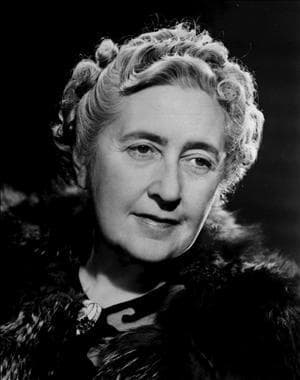
Agatha Christie

Dame Agatha Mary Clarissa Christie, Lady Mallowan, was an English writer known for her 66 detective novels and 14 short story collections, particularly those revolving around fictional detectives Hercule Poirot and Miss Marple. She also wrote the world's longest-running play, the murder mystery The Mousetrap, which has been performed in the West End since 1952. A writer during the "Golden Age of Detective Fiction", Christie has been called the "Queen of Crime". She also wrote six novels under the pseudonym Mary Westmacott. In 1971, she was made a Dame (DBE) by Queen Elizabeth II for her contributions to literature. Guinness World Records lists Christie as the best-selling fiction writer of all time, her novels having sold more than two billion copies.