“But it is all so ridiculous! To be without a penny! To have to live on one’s wits!”
— Hedda complaining about her financial situation to Tesman.

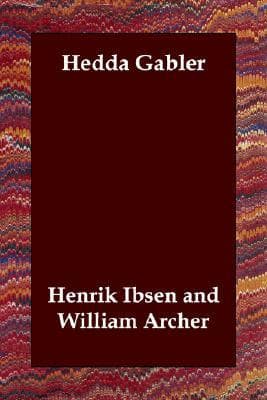
Sign in to track this book
Trapped in a suffocating marriage, Hedda Gabler manipulates those around her with destructive elegance, seeking beauty and influence, but ultimately becoming entangled in her own web.
The play opens in George Tesman and Hedda Gabler's new villa. Miss Juliana Tesman, George's aunt, visits, expressing joy at George's academic success and marriage. Hedda, however, is unimpressed and distant, complaining about the house's expense and her boredom. She dismisses Aunt Juliana's comments and shows little interest in domestic matters or her husband's career. George, a kind but naive scholar, does not notice Hedda's unhappiness, focusing on his potential professorship and old slippers. Hedda's restlessness and dissatisfaction with her marriage are clear from the start.
Thea Elvsted, a former schoolmate of Hedda's, arrives seeking George's help. She is timid and anxious, having left her husband to follow Eilert Lövborg to the city. Lövborg, a brilliant but troubled writer, was once involved with Hedda and has a history with George, who helped him during a period of addiction. Thea reveals she supported Lövborg, helping him overcome alcoholism and complete a manuscript. Hedda, at first dismissive, becomes interested in Thea's story and Lövborg, seeing a chance to manipulate the situation and feel some excitement and control.
Eilert Lövborg arrives, now seemingly reformed and sober, and presents his new manuscript, which he sees as his life's work. It is more advanced than anything George Tesman has written. This creates professional tension, as Lövborg is a rival for the professorship George wants. Hedda, watching Lövborg, begins to subtly influence him, recalling their past and questioning his relationship with Thea. Lövborg confides in Hedda, revealing the depth of his work with Thea, which sparks Hedda's jealousy and a desire to break their bond.
During a party at George's house, Hedda deliberately tempts Lövborg into drinking, despite his efforts to stay sober and Thea's pleas. She uses her charm and veiled challenges to weaken his resolve. Lövborg, affected by her manipulation and his own issues, gets drunk and leaves the party with Judge Brack. Thea is upset, sensing disaster. Hedda watches with a detached, almost cruel amusement, seeing her plan to disrupt Lövborg's stability succeed.
Lövborg returns to the Tesman house in despair, having lost his manuscript during his drunken night. He believes he destroyed it and feels defeated, thinking he betrayed Thea and his own potential. George, who found the manuscript without realizing what it was, hands it to Hedda. Instead of returning it or telling Lövborg, Hedda hides it. She sees this as a chance to gain great power over Lövborg and Thea, strengthening her control over their lives. George, still naive, does not know the full extent of Hedda's cunning.
Hedda confronts a despondent Lövborg, who admits his shame and belief that his life is ruined. Instead of offering comfort, Hedda gives him one of her father's pistols and urges him to commit suicide, specifically to do it 'beautifully' and 'with vine leaves in his hair,' romanticizing the act. She sees this as a way for him to escape his failure and regain some tragic grandeur. Lövborg, driven to desperation by Hedda's manipulation and his own despair, takes the pistol and leaves, intending to follow her macabre suggestion.
After Lövborg leaves, Hedda, alone, takes his manuscript and burns it page by page in the fireplace. She says she is 'burning their child' – referring to the intellectual product of Lövborg and Thea, a symbol of their creative and emotional connection. This act shows her envy, her desire for destruction, and her desperate attempt to control the lives around her. She feels a perverse power and satisfaction in destroying the result of their shared effort, further separating Thea and Lövborg.
Judge Brack returns with shocking news: Eilert Lövborg is dead. However, his death was not the romantic suicide Hedda imagined. Brack reveals that Lövborg was found shot in a brothel, the bullet having passed through his gut, a messy and undignified end. Furthermore, Brack recognizes the pistol as one belonging to Hedda's father, which he knows she had. This discovery immediately puts Hedda in a difficult position, as Brack now has information that could lead to scandal and a legal investigation, giving him power over her.
Upset by Lövborg's death and the loss of his manuscript, Thea reveals she still has all of his notes, which she carefully kept. George, seeing the value of the work and wanting to restore Lövborg's legacy, offers to help Thea reconstruct the manuscript. They begin working together, finding purpose and a shared connection in the task. Hedda, watching them, realizes she failed to destroy Lövborg's legacy and that George and Thea have found a new, meaningful bond that excludes her, leaving her isolated and powerless.
Judge Brack confronts Hedda, explaining he knows the pistol used in Lövborg's death belongs to her. He makes it clear that if this information becomes public, it would lead to scandal and a potential charge of complicity, giving him control over her reputation and her life. Hedda, who always wanted freedom and control, is horrified by this loss of autonomy. She realizes her destructive actions trapped her, leaving her no escape from Brack's influence or the dull, conventional life she dislikes. The thought of being at Brack's mercy is unbearable.
Overwhelmed by her situation – the loss of control, the messy reality of Lövborg's death, the growing bond between George and Thea, and Judge Brack's blackmail – Hedda goes to her inner room. After playing a short, defiant dance on the piano, she shoots herself in the head with her remaining pistol. The shot brings George, Thea, and Brack rushing in. Brack exclaims, 'But good God! People don't do such things!' Her suicide is a final, desperate act of rebellion against a life she found intolerable and a world that would not fit her romantic, destructive ideals, choosing ultimate control in death.
The Protagonist
Hedda's arc is one of increasing entrapment and self-destruction. She attempts to exert control over others' lives, only to find herself more constrained, ultimately choosing suicide as her final act of defiance.
The Supporting
George remains largely static, characterized by his academic focus and naivety. He ends the play finding purpose in reconstructing Lövborg's manuscript with Thea, still largely unaware of the full extent of Hedda's actions.
The Supporting
Lövborg attempts redemption but is ultimately drawn back into his destructive patterns by Hedda's manipulation, culminating in his undignified death.
The Supporting
Thea initially appears fragile and dependent but demonstrates resilience and intellectual strength, ultimately finding purpose and a new partnership with George Tesman.
The Antagonist
Brack's character remains consistent as a cynical observer and manipulator, his role shifting to antagonist as he gains power over Hedda, ultimately contributing to her despair.
The Supporting
Miss Tesman remains a static character, consistently embodying warmth and traditional values, serving as a foil to Hedda's modern, rebellious spirit.
The Mentioned
Berte is a static background character, serving to highlight Hedda's class prejudices and dissatisfaction with her domestic life.
The play explores how societal expectations, especially for women in the late 19th century, can limit individual freedom and cause deep unhappiness. Hedda, an aristocratic woman, is confined to a domestic life she hates, expected to be a wife and mother, roles she rejects. Her inability to find a fulfilling outlet for her intelligence and ambition within these limits drives her destructive behavior. She longs for 'vine leaves' – symbols of artistic freedom and recognition – but is instead forced into the 'parlor.' Her fear of scandal and her reliance on a financially secure but uninspiring marriage show the limited choices for women of her class. This theme is clear in her complaints about her new house, her boredom with domestic life, and her manipulation of others as a substitute for direct action.
“Oh, these everlasting duties and responsibilities! That is what kills all the joy of life.”
Hedda primarily interacts by exerting power and manipulating those around her. Lacking direct influence in her own life, she tries to control the destinies of others, especially Eilert Lövborg and Thea Elvsted. Her manipulation ranges from subtle suggestions, like encouraging Lövborg to drink, to direct actions, such as giving him a pistol and urging a 'beautiful death.' This theme shows her desperate need for control and her desire to shape human destiny, even if it means destruction. Her burning of Lövborg's manuscript, which she calls 'burning their child,' is a strong symbol of this destructive power over creation and relationships.
“I want for once in my life to have power to mould a human destiny.”
A constant sense of boredom and unhappiness drives many of Hedda's actions. She finds her marriage, her new home, and the conventional life expected of her dull and meaningless. This deep boredom, combined with her restless spirit and aristocratic upbringing, leads her to seek excitement through destructive means. She wants beauty, intensity, and purpose, but cannot find them in her mundane life. Her repeated complaints about the cost of the villa, her lack of interest in her husband's career, and her constant search for 'diversion' all highlight this central theme, ending in her self-destruction as an escape from an intolerable life.
“I've no doubt it's very charming out there. But I should find it so dreadfully dull.”
The play constantly contrasts Hedda's romanticized, often destructive, ideals with life's harsh realities. She dreams of a 'beautiful death' for Lövborg, imagining him with 'vine leaves in his hair,' only for him to die a messy death in a brothel. Her aristocratic background and aesthetic tastes clash with the mundane and often crude aspects of existence. This theme explores the tragic gap between her grand aspirations and the inescapable ordinariness and ugliness of the real world. Her inability to reconcile her idealized visions with reality ultimately leads to her despair and suicide, as she cannot bear the ignoble truth of her circumstances or Lövborg's end.
“Oh, it wasn't beautiful. He wasn't wearing vine-leaves in his hair.”
Symbols of Hedda's past, power, and destructive tendencies.
The pistols, inherited from Hedda's deceased father, General Gabler, serve as potent symbols throughout the play. They represent Hedda's aristocratic background, her masculine assertiveness, and her latent capacity for violence and destruction. They are a tangible link to a past where she felt more powerful and free. Hedda uses them to threaten, to play, and ultimately, to end her own life. The pistol given to Lövborg directly leads to his death, and its recognition by Judge Brack becomes the instrument of Hedda's blackmail, making them central to the plot's tragic climax.
Represents creativity, intellectual achievement, and the bond between Lövborg and Thea.
Lövborg's manuscript is more than just a book; it symbolizes his redemption, his intellectual genius, and the collaborative, nurturing relationship he shares with Thea Elvsted. For Hedda, its existence is a threat and an object of envy, representing the 'child' that she and Lövborg never had, and the bond she cannot share with anyone. Her act of burning it is a symbolic destruction of their 'child' and a desperate attempt to erase their shared creation and connection, highlighting her destructive jealousy and desire for control over their lives and legacies.
A gilded cage representing the societal expectations and financial burdens of her marriage.
The lavish villa, purchased by George Tesman to please Hedda, functions as a 'gilded cage.' It is beautiful and expensive, fulfilling the superficial requirements of her social standing, yet it simultaneously symbolizes her entrapment within a conventional, domestic life she despises. Hedda constantly complains about its cost and her boredom within its walls, seeing it as a burden rather than a home. It is the setting for all the play's action, physically confining Hedda and reflecting her internal state of being trapped by her circumstances and societal expectations.
Symbol of romanticized artistic freedom, beauty, and tragic grandeur.
The 'vine leaves' are a recurring motif, representing Hedda's romanticized ideal of beauty, artistic inspiration, and a heroic, tragic death. She imagines Eilert Lövborg returning 'with vine-leaves in his hair,' a classical image of a triumphant or divinely inspired artist. This ideal contrasts sharply with the sordid reality of Lövborg's actual death. The vine leaves symbolize the aesthetic and noble qualities Hedda craves but cannot achieve or impart, highlighting her detachment from reality and her desire to impose a beautiful, dramatic narrative onto life, even if it's destructive.
“But it is all so ridiculous! To be without a penny! To have to live on one’s wits!”
— Hedda complaining about her financial situation to Tesman.
“I will burn your hair off, Miss Tesman! I will burn it, I tell you!”
— Hedda threatening Miss Tesman (Aunt Julle) in a fit of pique.
“Oh, what a liberation to know that he is dead.”
— Hedda's reaction to learning about Lövborg's death.
“I shall have one thing at least to amuse myself with.”
— Hedda referring to the pistols she inherited from her father.
“To shoot oneself in the temple, that is not a beautiful death.”
— Hedda discussing the manner of Lövborg's death with Brack.
“I have no gift for anything but boring myself to death.”
— Hedda expressing her profound ennui to Brack.
“People do not do such things!”
— Brack's final line after Hedda shoots herself.
“And the manuscript... it's gone! He tore it up!”
— Tesman's distress over the loss of Lövborg's manuscript.
“I want to have power to mould a human destiny.”
— Hedda confiding in Lövborg about her desire for influence.
“Oh, if you only knew how terribly I have tried to be good!”
— Hedda's desperate confession to Lövborg before giving him the pistol.
“He said I was a coward. He said I was afraid to live my own life.”
— Hedda recalling Lövborg's words about her.
“There are times when one has to do things that are—that are not exactly beautiful.”
— Hedda's justification for her actions to Brack.
“I'm not going to sit here and be a laughing-stock for the whole town!”
— Hedda's concern for her reputation and social standing.
“Fancy that, Hedda! To think of it! To be able to devote one's life to a great cause!”
— Tesman's naive excitement about his academic work.
Ready to see how well you understood this book? Take our interactive quiz with 10 questions.
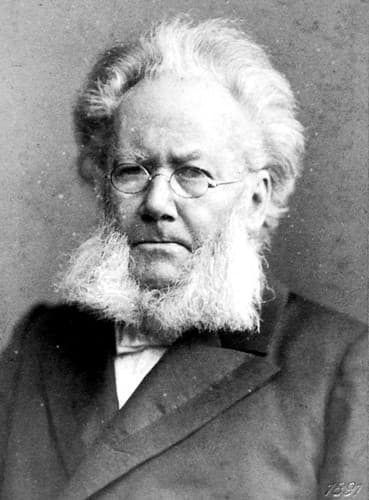
Henrik Johan Ibsen was a Norwegian playwright and theatre director. As one of the founders of modernism in theatre, Ibsen is often referred to as "the father of realism" and one of the most influential playwrights of his time. His major works include Brand, Peer Gynt, An Enemy of the People, Emperor and Galilean, A Doll's House, Hedda Gabler, Ghosts, The Wild Duck, When We Dead Awaken, Rosmersholm, and The Master Builder. Ibsen is the most frequently performed dramatist in the world after Shakespeare, and A Doll's House was the world's most performed play in 2006.

Ashley Antoinette
4.6

Mark McDonald
4.4
Luo Guanzhong
4.4
Mia McKenzie
4.3
Dorothy Parker
4.3
Joaquim Maria Machado de Assis
4.3
James Thurber
4.2
Terry Kay
4.2