“I'm a fairly good cook, and I'm a fairly good person. But I'm not a fairly good cook because I'm a fairly good person. I'm a fairly good person because I'm a fairly good cook.”
— Rachel's musings on her identity and cooking prowess.

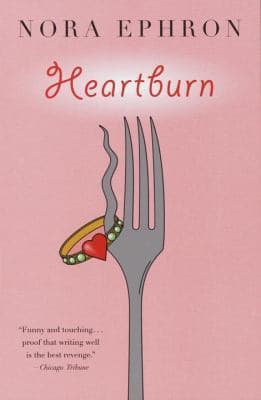
Sign in to track this book
A pregnant cookbook author navigates the hilarious and heartbreaking wreckage of her perfect marriage crumbling due to her husband's affair, all while sharing recipes and plotting comical revenge.
Rachel Samstat, a cookbook writer, is seven months pregnant with her second child when her seemingly perfect life with her journalist husband, Mark Feldman, falls apart. At a dinner party in Washington D.C., a mutual friend, Arthur, tells Rachel that Mark is having an affair with Thelma Rice, a political consultant. The news affects Rachel strongly, leaving her in shock and disbelief. She tries to deny it, rationalizing Mark's recent odd behavior, but the truth is clear. This revelation ends her marriage and causes emotional turmoil as she deals with betrayal and the upcoming birth of her child.
After the initial shock, Rachel confronts Mark about the affair. Mark, surprised, denies it at first but then admits to his relationship with Thelma. The conversation is painful and filled with accusations and justifications. Despite the betrayal, Rachel, still in love and heavily pregnant, tries to reconcile with Mark for their family. They go to therapy, and Mark promises to end the affair. For a short time, they try to fix things, even going on a second honeymoon to Antigua. However, Rachel remains suspicious and hurt, and the tension makes true reconciliation difficult.
Rachel and Mark attempt a 'second honeymoon' in Antigua, hoping to reconnect and move past the affair. Rachel wants it to work, believing that a new setting and time together might heal their wounds. However, the trip is full of unspoken tension and Rachel's constant suspicion. She watches Mark's behavior, looking for signs of his continued infidelity. The tropical setting and romantic gestures cannot hide the deep mistrust. Rachel's thoughts show her struggle to forgive and forget, as she constantly replays the betrayal. The vacation ultimately shows the damage to their marriage rather than fixing it.
Back in Washington D.C., Rachel's worst fears are confirmed when she finds that Mark has not ended his affair with Thelma Rice. She finds evidence, possibly a clue left by Mark or Thelma, confirming their continued relationship. This discovery destroys any hope Rachel had for reconciliation and pushes her past her limit. Feeling humiliated and betrayed, Rachel decides she cannot continue living with Mark. She packs her bags and, with her young son Sam and her unborn child, leaves their home. This starts the formal separation and the painful process of rebuilding her life without him.
After leaving Mark, Rachel moves back to New York City, seeking comfort and support from her friends and family. This move shows her attempt to regain independence and start anew. Soon after settling in, Rachel gives birth to her second daughter, Annie. The birth is an important moment, bringing new life and a renewed sense of purpose amid her personal difficulties. Despite the emotional pain of her divorce, Rachel finds strength and joy in her children, focusing on being a mother and beginning to navigate single parenthood and her career in a new environment.
In New York, Rachel goes to therapy, group sessions, and often meets with her close friends. Her friends, like Arthur and Julie, offer support, listening to her talk about Mark's betrayal and giving their own thoughts. Food, her professional passion, also becomes a way to cope. She continues to write cookbooks and finds comfort and expression in cooking, often adding recipes to her story to process her emotions and connect with her identity beyond her failed marriage. These activities help her slowly put her life back together.
While Rachel is trying to build her new life in New York, her apartment is burglarized. The thieves steal several pieces of jewelry, including a valuable necklace Mark gave her. This incident, while upsetting, brings Mark back into her life. He comes to New York to check on her and their children, showing concern that momentarily confuses Rachel. His presence brings up old feelings and unresolved emotions, showing the complexities of their relationship despite the separation. The robbery causes another, brief, meeting between them.
One of the most memorable and satisfying moments happens when Rachel, full of rage and humiliation, takes action. During a public event in Washington D.C., she sees Thelma Rice. In a spontaneous act of revenge and defiance, Rachel shoves a key lime pie into Thelma's face. This dramatic, public display of anger gives Rachel a temporary release. It is a moment of taking back control after her betrayal. While it is a short victory, it shows her refusal to be a passive victim and her desperate need to express her deep hurt and anger.
Despite Rachel's public revenge and her decision to leave him, Mark continues to try and win her back. He visits her in New York, says he loves her, and expresses regret for his actions. These attempts often include promises of change and a desire to rebuild their family. However, Rachel, having been hurt twice, is now cautious and cynical. She sees through his pleas, recognizing them as a pattern rather than genuine remorse. Her emotional wounds are too deep, and her trust is too broken to consider another reconciliation, strengthening her resolve to move forward independently.
By the end of the novel, Rachel has embraced her independence and the challenges of single motherhood. She continues her work as a cookbook writer, finding satisfaction in her career and her children. While the pain of Mark's betrayal still exists, she has moved past the initial shock and despair. She thinks about love, marriage, and betrayal with new clarity and a wry sense of humor. The book ends not with a happy ending or a new romance, but with Rachel standing on her own, resilient and witty, ready to face an uncertain but self-determined future, having learned important lessons about herself and the world.
The Protagonist
Rachel transforms from a heartbroken, desperate wife to a resilient, independent single mother who finds strength in her children, friends, and career, albeit with lingering emotional scars.
The Antagonist/Supporting
Mark remains largely static in his character, repeatedly failing to commit to his marriage or truly understand the depth of his betrayal, ultimately losing his family.
The Supporting
Thelma's character remains a static symbol of betrayal, serving primarily as a plot device to propel Rachel's emotional journey.
The Supporting
Arthur remains a steadfast and supportive friend, a constant source of comfort for Rachel.
The Supporting
Julie consistently offers unwavering support to Rachel, embodying the strength of female friendship.
The Supporting
Sam remains a child throughout the narrative, serving as a motivation for Rachel's resilience.
The Supporting
Annie is born into the narrative, representing hope and a new chapter for Rachel.
The Supporting
George serves as a constant, professional presence in Rachel's healing journey.
The main theme is the deep betrayal Rachel experiences because of Mark's affair. This betrayal is not just sexual; it is a shattering of trust and their shared life and future. Rachel's thoughts constantly revisit the moment of discovery and her marriage's collapse, exploring how infidelity affects the victim. The affair with Thelma Rice starts the entire story, driving Rachel's emotional journey from heartbreak to a painful, but ultimately empowering, independence.
“Because if you can't be happy with a handsome, charming, successful man who loves you, then what kind of person are you? And if he doesn't love you, what kind of person are you then?”
Rachel's journey is about finding herself again outside her marriage. At first, her identity is closely tied to being Mark's wife and a mother. The divorce forces her to understand who she is as an individual, a single woman, and a professional. Her move to New York, her continued work as a cookbook writer, and her interactions with friends all help her rebuild her sense of self. This theme explores how a crisis can lead to a deeper understanding of one's own resilience and abilities beyond the expectations of a 'perfect' life.
“I can't believe I'm doing this, I thought. I can't believe I'm leaving my husband, seven months pregnant. But it wasn't a choice anymore.”
Food and cooking are not just Rachel's job but a constant idea throughout the novel. They are a metaphor for love, comfort, and control. Recipes are included in the story, often showing Rachel's emotional state or providing stability amid chaos. Cooking is a creative outlet, a source of comfort, and a way for Rachel to express herself and care for her family. It shows her ability to create and sustain, even when her personal life is falling apart, highlighting the connection between food, memory, and emotion.
“I love to cook. I love to eat. I love to feed people. It's the most primal way I know to express love.”
Despite the painful subject, the novel is full of Nora Ephron's humor. Rachel uses humor, often self-deprecating or sarcastic, to deal with her grief, anger, and humiliation. This theme shows how laughter can be a strong tool for survival, helping people process trauma and keep perspective. The comedic parts prevent the story from becoming too sad, showing Rachel's resilience and her ability to find absurdity even in heartbreaking situations, making the story relatable and engaging.
“Sometimes I think that all I want is to be a happy woman, but then I remember that all I really want is to be a happy woman with a really good story to tell.”
The novel examines the idea of the 'perfect marriage' and shows how fragile it is. Rachel initially believes she has an ideal life with Mark, only for it to be destroyed by his affair. This theme explores how appearances can be misleading and how problems can grow beneath a surface of domestic happiness. It questions the expectations placed on marriage and family, revealing the complexities and vulnerabilities in long-term relationships. The story shows the painful gap between idealized love and the messy reality of human mistakes.
“I thought we had a perfect marriage. I really did. I thought it was the kind of marriage everyone envied.”
Rachel's direct, witty, and often stream-of-consciousness narration.
The entire novel is told from Rachel Samstat's highly personal, first-person perspective. This allows readers direct access to her unfiltered thoughts, anxieties, and cutting observations, creating an intimate and immediate connection. Her narration is characterized by its witty, often sarcastic tone, frequent asides, and self-deprecating humor. This device not only reveals her emotional state but also shapes the reader's perception of other characters and events, making her subjective experience the central focus of the story.
Actual recipes integrated into the narrative.
Throughout the book, Rachel intersperses full recipes for various dishes, from pot roast to key lime pie. This unique device serves multiple functions: it reinforces Rachel's identity as a cookbook writer, provides a sense of her professional life, and often subtly reflects her emotional state or the context of the story. For example, a recipe for a comforting dish might appear during a moment of distress. It grounds the abstract emotional turmoil in concrete, domestic reality and adds a distinctive, charmingly quirky element to the narrative.
A series of vignettes and anecdotes rather than a continuous, linear plot.
Instead of a strictly linear, continuous plot, "Heartburn" is structured as a series of interconnected vignettes, anecdotes, and reflections. Rachel recounts specific events, conversations, and emotional moments, often jumping between past and present as she processes her divorce. This episodic nature mirrors the fragmented experience of grief and memory, allowing the narrative to explore various facets of her emotional journey without being bound by a rigid timeline. It gives the story a conversational, almost memoir-like feel.
Rachel's recurring, specific, and often exaggerated description of her rival.
Rachel consistently describes Thelma Rice with the same memorable, slightly exaggerated physical characteristics: 'a neck as long as an arm and a nose as long as a thumb.' This recurring description serves as a powerful symbol of Rachel's fixation, anger, and dehumanization of her rival. It's a comedic yet bitter motif that highlights Rachel's inability to see Thelma as a fully formed person, instead reducing her to a caricature of the 'other woman.' This device illustrates Rachel's coping mechanism of externalizing and simplifying her pain.
“I'm a fairly good cook, and I'm a fairly good person. But I'm not a fairly good cook because I'm a fairly good person. I'm a fairly good person because I'm a fairly good cook.”
— Rachel's musings on her identity and cooking prowess.
“If I had to live my life over again, I would make the same mistakes, only sooner.”
— Rachel reflecting on past choices and her tendency to repeat patterns.
“You can't be friends with someone you're having an affair with. It's like trying to be friends with a shark.”
— Rachel's cynical view on the impossibility of maintaining friendship in an adulterous relationship.
“I can't believe I'm still talking about this. I'm like a broken record, only the record is broken and I'm still talking.”
— Rachel's exasperation with her own repetitive thoughts and conversations about her husband's infidelity.
“The story of my life is that I married a man who had more affairs than I had hot dinners.”
— Rachel's concise and bitter summary of her marital woes.
“I don't understand why people want to get married. It's like voluntarily entering a boxing ring.”
— Rachel's jaded perspective on marriage, post-affair.
“He was a good guy, but he was a terrible husband. It's a subtle distinction, but an important one.”
— Rachel trying to categorize her husband's character amidst her pain.
“I'm not saying I'm perfect, but I'm not saying I'm not perfect either. I'm just saying I'm me.”
— Rachel's declaration of self-acceptance and individuality.
“When you're a food writer, you're always thinking about food. It's like a curse, but a delicious one.”
— Rachel's humorous take on her profession and its constant demands.
“Everything is copy.”
— A famous line summarizing the writer's tendency to draw material from their own life experiences, often painful ones.
“I could cry, but I won't. I'll just bake a pie.”
— Rachel's coping mechanism for dealing with emotional pain, turning to cooking.
“Food is not just fuel. Food is about love, and it's about life.”
— Rachel expressing her deep philosophy about the significance of food beyond mere sustenance.
“I was a good wife. I was a good mother. I was a good cook. What else was there?”
— Rachel questioning her worth and identity after her husband's affair, feeling these roles are no longer enough.
“The only thing I ever learned from my mother was that you can never be too rich or too thin.”
— Rachel's sarcastic recounting of her mother's life advice, highlighting societal pressures.
Ready to see how well you understood this book? Take our interactive quiz with 10 questions.

Biography coming soon.

Ashley Antoinette
4.6

Mark McDonald
4.4
Luo Guanzhong
4.4
Mia McKenzie
4.3

Dorothy Parker
4.3

Joaquim Maria Machado de Assis
4.3

James Thurber
4.2

Terry Kay
4.2