“The way to get a woman to love you is to make her laugh.”
— Captain Shotover's cynical advice to Ellie Dunn.

George Bernard Shaw (1919)
Genre
Fiction
Reading Time
160 min
Key Themes
See below
Sign in to track this book
In a house like a ship without a rudder, George Bernard Shaw examines a cast of British society, revealing their true, often bankrupt, selves as global chaos nears.
Ellie Dunn arrives at Heartbreak House, the unconventional home of Captain Shotover, an elderly former sea captain and inventor. She is visiting Hesione Hushabye, Shotover’s daughter, who invited her to end her engagement to Alfred Mangan, a rich industrialist. Ellie immediately notices the house's strange atmosphere and its residents. She meets Hesione, a charming but manipulative host, and her husband Hector, a handsome adventurer who tells dramatic stories. Ellie tells Hesione that she feels she is selling herself for money by marrying Mangan, as she loves a mysterious, older man she believes is Captain Shotover. However, Hesione reveals that the man Ellie loves is actually Hector, who has been playfully deceiving her.
Ellie confronts Hector about his deception, expressing her hurt and confusion. Hector apologizes but reveals the superficiality and boredom that often drive his actions and those of the other residents. Hesione, seeing the conversation, tries to comfort Ellie and further persuade her not to marry Mangan, whom she considers crude. Shotover, meanwhile, is mostly distant, often speaking in cryptic phrases about navigation and the soul. Lady Utterword, Shotover's other daughter and Hesione’s sister, arrives, further complicating the social dynamics. Lady Utterword is more conventional but equally self-absorbed, and she immediately clashes with Hesione.
Alfred Mangan, Ellie’s fiancé, arrives with Randall Utterword, Lady Utterword’s brother-in-law, who is in love with her. Mangan is shown as a rude, self-made man, seemingly unaware of the emotional complexities around him. Hesione immediately starts to annoy Mangan, pointing out his perceived vulgarity and lack of spirit. Lady Utterword, however, shows an unexpected liking for Mangan, finding him refreshingly direct compared to her family's intellectual posing. The interactions show a widespread sense of boredom among the characters, who seem to enjoy dramatic confrontations and superficial flirtations to escape their underlying lack of purpose.
The dinner party becomes a place for rambling, often conflicting, philosophical discussions. The characters debate love, the corrupting effect of money, and the perceived decline of English society. Captain Shotover interrupts with his usual statements, suggesting that the English upper class is drifting aimlessly, like a ship without a captain. Hesione and Hector continue their complex, flirtatious relationship with Ellie, while Lady Utterword and Mangan have their own, more practical, exchanges. The conversation reveals a deep dissatisfaction and a lack of real connection among the characters, despite their intense interactions.
Despite the household's attempts to stop her, Ellie announces her intention to marry Mangan, stating that she will marry for money since love has proven to be an illusion. She plans to make Mangan a 'figurehead' while she controls his wealth. However, Mazzini Dunn, Ellie's father and a former political idealist, arrives with a shocking revelation. Mazzini, a seemingly gentle man, reveals that Mangan is not the powerful industrialist he appears to be. Mangan is merely a front for a group of financiers, and his personal wealth is small. Mazzini, despite his appearance, is the true mind behind Mangan's businesses.
The revelation about Mangan's true financial situation completely shatters his image as a 'Napoleon of industry.' He is exposed as an empty figure, without real power or intelligence, just a puppet for others. Ellie's plan to marry him for his money falls apart, and Mangan himself is left humiliated and confused. The other characters, who had initially dismissed Mazzini as an ineffective idealist, are forced to rethink their perceptions. This incident shows the play's theme of reality versus appearance, as many characters turn out to be very different from their first impressions.
After Mangan's exposure, Captain Shotover takes the lead, giving a series of profound and often cynical statements. He speaks of the need for 'seventh-degree brainpower' to navigate life and the dangers of a society that has lost its way. He laments the lack of true leadership and the widespread idleness and luxury among the upper classes, comparing them to a ship without a captain, drifting towards destruction. Shotover's words highlight the pervasive sense of aimlessness and the lack of a unifying purpose that affects the characters and, by extension, society.
As night falls, an air raid siren suddenly blares, signaling an impending attack. The characters are initially startled and confused, but their reactions vary greatly. Some express fear, while others, particularly Hesione and Lady Utterword, are almost excited by the idea of danger, seeing it as an exciting distraction from their boring lives. The siren serves as a sharp reminder of the outside world and the larger forces at play, contrasting with the isolated, self-absorbed world of Heartbreak House. It introduces a real threat, forcing the characters to confront their own mortality and the fragility of their existence.
During the air raid, a bomb hits Heartbreak House. Mangan, who had sought refuge in a gravel pit with a burglar named Billy Dunn, is killed along with the burglar. The remaining characters, emerging from the chaos, are surprisingly unharmed and, in some cases, even energized by the experience. Hesione and Lady Utterword express a strange excitement, almost wanting more such events. Ellie, having lost her intended, finds a new sense of clarity and purpose, aligning herself with Shotover's desire for a more meaningful existence. The bombing acts as a destructive event, clearing away some of the superficiality and forcing a re-evaluation of values.
As dawn breaks, the characters assess the damage and consider their future. While Mangan and the burglar are dead, the house, though damaged, still stands. Shotover, despite the destruction, remains firm in his call for wisdom and purpose. Ellie, having seen the fragility of life and the uselessness of her previous materialistic pursuits, seems to adopt Shotover's philosophy, seeking a deeper existence. However, Hesione and Lady Utterword, though briefly shaken, quickly return to their usual mix of boredom and superficiality, expressing a desire for future air raids. The ending is unclear, suggesting both the chance for change and the lasting power of human indifference.
The Protagonist/Symbolic Figure
Shotover remains largely static in his wisdom, acting as a prophet whose warnings are largely unheeded until the very end, where his vision seems partially vindicated by the bombing.
The Supporting/Symbolic Figure
Hesione remains largely unchanged, her charm and manipulation enduring even through the crisis, suggesting the resilience of apathy.
The Supporting/Symbolic Figure
Hector's arc shows a slight shift from playful deception to a more somber awareness of the house's and his own lack of direction, though he doesn't fully escape it.
The Protagonist
Ellie undergoes a significant transformation, moving from romantic idealism and pragmatic materialism to a deeper understanding of purpose and a desire for 'seventh-degree brainpower'.
The Antagonist/Symbolic Figure
Mangan's arc is one of complete unraveling, from a seemingly powerful industrialist to a powerless, humiliated figurehead, ending in his death.
The Supporting/Symbolic Figure
Lady Utterword remains largely static, her conventionality and self-absorption enduring despite the dramatic events, highlighting the stubbornness of superficiality.
The Supporting/Symbolic Figure
Randall's character remains consistent, serving as a foil to the more dynamic characters and highlighting the persistence of unrequited love and ineffectualness.
The Supporting/Symbolic Figure
Mazzini's arc is one of revelation, moving from a seemingly minor character to the unmasker of Mangan's deception, highlighting the theme of reality versus appearance.
A central theme of 'Heartbreak House' is the widespread indifference and lack of purpose among the English upper class, leading to a society without direction. The characters, despite their wit and charm, are mostly idle, seeking excitement in romantic affairs, philosophical discussions, and dramatic confrontations rather than meaningful action. Captain Shotover constantly laments this idleness, comparing the house and its residents to a ship without a pilot. Hesione and Hector, for example, thrive on emotional drama and deception to relieve their boredom, while Lady Utterword focuses on superficial social concerns. The bombing, which some characters find exciting, shows their deep detachment from reality and a desire for outside forces to give their lives meaning.
“We are useless, dangerous, and ought to be abolished.”
Shaw explores the difference between how things appear and how they truly are. Many characters are revealed to be very different from their first impressions. Alfred Mangan, initially presented as a powerful industrialist, is exposed as a mere figurehead, financially dependent and intellectually weak, managed by the unassuming Mazzini Dunn. Hector Hushabye, the dashing adventurer, is revealed to be a playful deceiver with no true adventures. This theme highlights the superficiality of the society depicted, where status and wealth are often built on illusions, and true competence or character is often overlooked. Ellie's journey is largely about uncovering these deceptions.
“I tell you, the man has no money. He has no brains. He has no conscience. He has no character. He has no anything but a sort of animal instinct to grab and hold.”
The play is an allegory for the perceived decline of English society in the early 20th century, particularly the upper class. Captain Shotover's statements about needing 'seventh-degree brainpower' and his warnings about drifting aimlessly criticize a leadership class that has lost its direction and moral compass. The characters' self-absorption, their inability to connect genuinely, and their reliance on outside stimuli (like the air raid) to feel alive, all point to a deep societal sickness. The house itself, 'Heartbreak House,' symbolizes this decaying social order, beautiful yet fundamentally unsound and vulnerable to destruction.
“Navigation. Learn it and live; or leave it and be damned.”
Beneath the witty conversations and social drama, many characters are searching for meaning in their lives. Ellie Dunn explicitly struggles with whether to marry for love or money, eventually seeking a deeper purpose by aligning herself with Shotover's philosophy. Shotover himself constantly urges others to find 'seventh-degree brainpower' and a sense of direction. Even Hesione and Hector, in their endless flirtations and games, may be trying to fill a void of meaning. The air raid, while terrifying, also brings a strange excitement, as if the threat of destruction provides a momentary, though dangerous, sense of purpose and aliveness.
“I am not in love with him: I dont care for him; but I cant get away from him. I have to marry him. There is no other way to get money.”
The physical setting symbolizes the state of English society.
Heartbreak House itself is a central metaphorical device. Designed like a ship, it represents England (or perhaps the upper class) adrift, lacking a capable pilot. The house is full of eccentric, idle, and often self-destructive individuals, mirroring the perceived state of society. Its eventual partial destruction by a bomb further emphasizes the fragility and vulnerability of this social structure. The 'heartbreak' refers to the emotional and spiritual emptiness within its walls, a consequence of the inhabitants' purposelessness and disillusionment.
Characters' true natures and circumstances are gradually revealed, often contradicting initial perceptions.
Shaw frequently employs dramatic irony and revelation to expose the true nature of his characters and the superficiality of their world. The most prominent example is Alfred Mangan, whose perceived power and wealth are entirely stripped away, revealing him to be a powerless figurehead. Similarly, Hector Hushabye's adventurous past is largely fabrication, and Mazzini Dunn, initially underestimated, proves to be the true intellectual force. This device consistently challenges the audience's and characters' assumptions, reinforcing the theme of reality versus appearance and highlighting the deceptive nature of social facades.
An external, catastrophic event that forces a confrontation with reality.
The air raid serves as a powerful external plot device that shatters the insular world of Heartbreak House. It introduces a tangible threat of destruction, forcing the characters to confront mortality and the fragility of their existence. While it brings death and destruction, it also paradoxically invigorates some characters, providing a momentary sense of purpose and excitement that their idle lives lack. The air raid is a symbol of the larger, destructive forces (like war) that are looming over society, and how the 'heartbreak' within the house has left it unprepared.
The patriarch's enigmatic statements serve as prophetic warnings and philosophical commentary.
Captain Shotover's frequent, often seemingly nonsensical, pronouncements act as a form of Greek chorus or prophetic commentary. His words about navigation, 'seventh-degree brainpower,' and the dangers of idleness are not just character quirks but direct articulations of the play's central themes and Shaw's social critique. They serve to highlight the deeper issues at play, often contrasting sharply with the trivial concerns of the other characters, and foreshadow the eventual reckoning that the house and its inhabitants face.
“The way to get a woman to love you is to make her laugh.”
— Captain Shotover's cynical advice to Ellie Dunn.
“All we know is that we are going to be smashed to smithereens. Do you think we are any the less to be pitied because we are all in the same boat?”
— Hector Hushabye's reflection on the impending doom, amidst the air raid.
“I was brought up to be a lady; and a lady, I was taught, must never be anything but charming.”
— Lady Utterword explaining her upbringing and societal expectations.
“We are useless, dangerous, and ought to be abolished.”
— Captain Shotover's self-deprecating assessment of his social class.
“Youth is a wonderful thing. What a pity it is wasted on children.”
— Hesione Hushabye's playful lament about the nature of youth.
“The captain is an old man, and his business is to be wise, not to be happy.”
— Mazzini Dunn discussing Captain Shotover's role and character.
“It is not the men who are in the wrong, it is the system.”
— Ellie Dunn's early socialist perspective on societal problems.
“There are no good men, only good women.”
— Hesione Hushabye's generalized, cynical remark about men.
“The most important thing in life is to keep your heart open.”
— Ellie Dunn offering a piece of advice to herself and others.
“When you have nothing left but your wits, you must use them.”
— Captain Shotover's pragmatic philosophy on survival.
“I have been so unhappy all my life that I have learned to like it.”
— Lady Utterword's melancholic acceptance of her emotional state.
“The greatest joy in life is to be used for a purpose recognized by yourself as a mighty one.”
— A sentiment echoed by various characters, reflecting Shaw's own philosophy.
“The world is full of people who are trying to get something for nothing.”
— Boss Mangan's observation on human nature and economics.
“We are all in the same boat, and we are all going to the bottom.”
— Hector Hushabye's grim assessment of their collective fate.
Ready to see how well you understood this book? Take our interactive quiz with 10 questions.
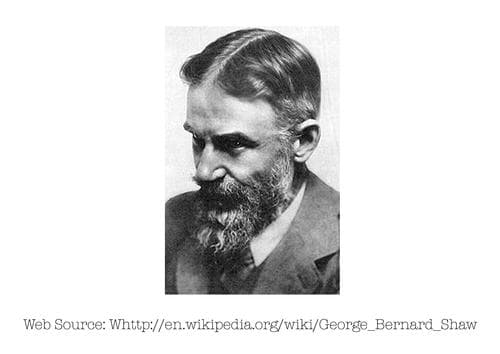
George Bernard Shaw, known at his insistence as Bernard Shaw, was an Irish playwright, critic, polemicist and political activist. His influence on Western theatre, culture and politics extended from the 1880s to his death and beyond. He wrote more than sixty plays, including major works such as Man and Superman (1902), Pygmalion (1913) and Saint Joan (1923). With a range incorporating both contemporary satire and historical allegory, Shaw became the leading dramatist of his generation, and in 1925 was awarded the Nobel Prize in Literature.

Ashley Antoinette
4.6

Mark McDonald
4.4
Luo Guanzhong
4.4

Mia McKenzie
4.3

Dorothy Parker
4.3

Joaquim Maria Machado de Assis
4.3

James Thurber
4.2

Terry Kay
4.2