“Everything in the world is an allegory.”
— The narrator's friend, the Rat, states this in a conversation about life and meaning.

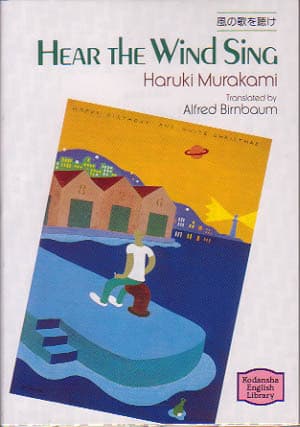
Haruki Murakami (1979)
Genre
Fiction
Reading Time
120 min
Key Themes
See below
Sign in to track this book
A nameless narrator drifts through a hazy summer, reflecting on lost love, friendship, and the elusive nature of memory in a seaside town.
The unnamed narrator, now 29, tells the story of the summer of 1970 when he was 21 and home from college in Tokyo. He spent his days in his hometown, going often to J's Bar, a quiet place run by a Chinese friend, J. He often goes there with his friend, 'The Rat,' a sad and philosophical aspiring writer. The narrator thinks about his past relationships, especially a girl he dated who died by suicide. This sad memory stays with him, and he often thinks about the four women he has slept with, each leaving a distinct impression, especially the one who died. He feels disconnected from his own life and experiences.
One hot August night, the narrator and The Rat are at J's Bar. The narrator sees a girl passed out in the bathroom, having apparently drunk too much. She has only nine fingers, her left pinky missing. Feeling responsible, the narrator carries her out of the bar and takes her back to his apartment, which is above a record shop. He lays her on his bed and falls asleep on the floor. When he wakes, she is gone, leaving a small note thanking him and providing her phone number. This strange meeting starts their unusual relationship.
The narrator calls the girl, whose name is not stated in the novel, and they start spending time together. She is a student from a nearby university and seems as aimless as he is. They talk about small things, listen to music, and sometimes sleep together, though their interactions are casual, almost detached. The missing pinky finger becomes a quiet point of interest for the narrator, symbolizing her uniqueness and perhaps a hidden weakness. Their conversations are often fragmented, touching on books, music, and the everyday aspects of their lives, without going too deep into their personal histories or emotions.
Throughout the summer, The Rat continues to go to J's Bar, often discussing his writing problems. He tries to write a novel but feels deeply inadequate and disappointed. He believes that true writing needs a certain kind of honesty and depth that he feels he lacks. He often expresses his frustration with the world and his inability to connect with it meaningfully. His conversations with the narrator are full of existential thoughts and a pervasive sadness, hinting at a deeper dissatisfaction with his own life and its direction, despite his privileged background.
The narrator often revisits memories of the four women he has been intimate with. The most prominent is the girl who died by suicide, a memory that continues to haunt him. He remembers her unique scent, her intellectual curiosity, and the circumstances of her death, which he feels he never fully understood. He also remembers a girl he dated briefly in high school, a passionate older woman, and a girl he met in college. These memories are presented as fragments, contributing to his detached view of relationships and his difficulty forming deep connections now. He seems to search for meaning in these past encounters, yet remains unclear about his own feelings.
The three main characters—the narrator, The Rat, and the girl with nine fingers—sometimes interact as a trio, mainly at J's Bar. Their conversations often wander, touching on music, books, and the general boredom of their lives. The girl, despite her quiet manner, offers a different perspective, sometimes challenging the Rat's cynicism or the narrator's detachment. These interactions show their shared sense of alienation and their struggle to find meaning in their small town. J, the bar owner, often observes them silently, sometimes offering a cryptic comment or a word of wisdom, acting as a grounding presence in their otherwise adrift lives.
As the summer of 1970 begins to end, the narrator prepares to return to college in Tokyo. He feels a quiet sadness about leaving his hometown and his friends, though he doesn't show it openly. His relationship with the girl with nine fingers remains undefined, a casual companionship that doesn't ask for commitment. The Rat continues to struggle with his writing, his future uncertain. There is a sense of coming separation and the realization that this particular summer, with its blend of aimlessness and subtle connections, is ending, leaving a lingering sense of unfulfilled possibility.
Before leaving for Tokyo, the narrator has a final, quiet meeting with the girl with nine fingers. There is no dramatic farewell, just a simple acknowledgment of their time together. She gives him a small, almost insignificant gift, and they share a moment of unspoken understanding. Their parting is as understated as their entire relationship, reflecting the novel's overall tone of quiet resignation and detached affection. The narrator doesn't promise to return, nor does she ask him to. Their connection, while meaningful in its own way, is accepted as temporary, a fleeting encounter in the vastness of their lives.
In one of their last conversations, The Rat tells the narrator his deep sense of isolation and his inability to write. He admits that he feels trapped by his family's wealth and expectations, and that his writing is his only attempt to find meaning, yet it constantly escapes him. He speaks of a deep sadness that he cannot shake, a feeling of being an outsider even among his own friends. This confession reveals a deeper layer to The Rat's melancholic persona, highlighting his inner conflict and his longing for authenticity in a world he sees as superficial and unfeeling.
The narrator finally leaves his hometown, taking with him the subtle memories of the summer of 1970. He thinks about his friendships, his brief romance with the girl with nine fingers, and the haunting presence of his past. The story ends with him looking back on this period with a mix of nostalgia and a lingering sense of incompleteness. He acknowledges that while nothing truly 'happened' in a dramatic sense, the summer was a period of quiet introspection and subtle change, shaping his understanding of himself and the world around him. The experiences, though seemingly mundane, leave a lasting mark on his consciousness.
The Protagonist
The narrator begins in a state of detachment and ends with a subtle, unarticulated understanding of the lingering impact of his past and the transient nature of human connection.
The Supporting
The Rat remains largely static, his struggles with writing and existential angst persisting, symbolizing the ongoing search for meaning.
The Supporting
Her arc is subtle, she provides a catalyst for the narrator's reflections on connection but remains largely a mystery herself.
The Supporting
J remains a static, wise, and observant figure, providing a stable backdrop for the protagonists' development.
The Mentioned
Her impact is felt through the narrator's ongoing internal struggle and memory, rather than an active arc.
The novel explores a pervasive sense of alienation and detachment among its characters, particularly the narrator and The Rat. They observe life from a distance, struggling to form deep connections or find meaning. The narrator's thoughts on his past lovers, especially the one who died by suicide, highlight his emotional distance. The Rat's struggles with writing and his feeling of being an outsider further emphasize this theme, as seen in his confession about his inability to connect with the world and his own emotions. Even their casual relationships, like the narrator's with the girl with nine fingers, lack deep emotional investment.
““There are only so many things you can do with a person, and I had done them all. After that, we were strangers again.””
A central theme is the characters' struggle to find meaning and purpose. The Rat's desperate attempts to write a novel, coupled with his constant feeling of inadequacy, show this search. He believes that true writing needs an honesty and depth he feels he lacks, reflecting a broader existential crisis. The narrator, too, drifts through his summer, observing and thinking but rarely acting with clear purpose. Their conversations are full of philosophical thoughts, but concrete answers or a sense of direction remain elusive, suggesting that meaning is not easily found or defined, and perhaps can only be glimpsed in transient moments.
““I've always been afraid of the world. Not of people, but of the world itself.””
Memory and nostalgia are important elements, as the narrator often recounts past events and relationships, particularly his college days and the girl who died by suicide. The entire narrative is framed as a recollection from nine years later, filled with a wistful longing for a past that, while seemingly uneventful, holds significant emotional weight. The narrator's fragmented memories of his four past lovers illustrate how past experiences continue to shape his present perspective, even if he remains detached. This constant looking back suggests that the past is not merely gone, but a living, influencing force.
““It's not that I don't remember, it's that I don't remember what I want to remember.””
Murakami takes the seemingly mundane aspects of daily life—drinking beer, listening to music, casual conversations—and makes them into profound moments of introspection. The novel emphasizes that important experiences do not always involve dramatic events, but can be found in quiet, everyday interactions and observations. The casual encounters at J's Bar, the narrator's aimless drives, and his understated relationship with the girl with nine fingers are all presented with a subtle importance, suggesting that life's true essence often lies in these unremarkable moments, which, when reflected upon, reveal deeper truths about human existence.
““Little by little, the world was changing. And little by little, I was changing with it.””
The story is told by an unnamed narrator reflecting on events from nine years prior.
The novel is narrated in the first person by an unnamed protagonist, looking back at the summer of 1970 from a distance of nine years. This retrospective viewpoint allows for a layer of contemplation and philosophical insight that wouldn't be possible in a real-time narrative. The narrator's older self can reflect on the significance of seemingly trivial events, imbuing them with a sense of melancholic nostalgia and a deeper understanding of their impact on his life. This narrative choice emphasizes themes of memory, the passage of time, and the elusive nature of meaning.
A distinctive physical trait of the girl, symbolizing uniqueness and unspoken history.
The girl with nine fingers' missing left pinky finger serves as a subtle, yet potent, symbol. It is never explained how she lost it, adding to her enigmatic quality. This physical anomaly sets her apart, making her unique and memorable to the narrator. It represents an unspoken past, a hidden vulnerability, or perhaps a scar that life leaves. It acts as a quiet point of fascination for the narrator, symbolizing the peculiar and often unexplained aspects of human existence and connection, reinforcing the theme that people carry their own untold stories.
A central gathering place that acts as a sanctuary and observation point.
J's Bar functions as the primary setting and a significant plot device. It is a quiet, unassuming establishment run by the taciturn J, serving as a sanctuary for the narrator and The Rat. It's a place where they can escape the mundane world, engage in philosophical discussions, and simply exist without judgment. The bar acts as a microcosm for their lives, a stable point around which their aimless wanderings revolve. Its unchanging nature provides a contrast to the characters' internal turmoil and the fleeting nature of their summer experiences, making it a space for both connection and quiet contemplation.
Most key characters lack proper names, emphasizing universality and detachment.
The deliberate choice to leave most key characters unnamed—the narrator ('Boku'), the girl with nine fingers, and even The Rat (a nickname)—serves to emphasize themes of universality and detachment. By not giving them specific names, Murakami allows them to represent broader archetypes of youth, alienation, and the search for meaning. This also contributes to the narrator's sense of emotional distance, as he views these individuals more as figures in his personal narrative rather than fully formed identities. It invites readers to project their own experiences onto the characters, highlighting the shared human condition.
“Everything in the world is an allegory.”
— The narrator's friend, the Rat, states this in a conversation about life and meaning.
“There's no such thing as perfect writing, just like there's no such thing as perfect despair.”
— The narrator reflects on his own writing and the impossibility of perfection.
“For a long time I had been thinking that maybe I should write a novel. But I was afraid. What if I wrote it and it turned out to be a pile of garbage?”
— The narrator's early thoughts about becoming a writer, expressing his anxieties.
“The world is full of things that can't be explained.”
— A general observation made by the narrator, touching on the mysterious nature of existence.
“What we see is only a fraction of what is. What we hear is only a fraction of what is. What we feel is only a fraction of what is.”
— The narrator muses on the limitations of human perception.
“When you're young, you think you're going to live forever. Then you get older, and you realize how short life is.”
— A melancholic reflection on the passage of time and mortality.
“The wind was singing a song that only I could hear.”
— The titular phrase, evoking a sense of personal connection to the natural world and introspection.
“Most people like to live in a world where things are simple and clear. I like to live in a world where things are complicated and ambiguous.”
— The narrator's preference for complexity over simplicity, setting him apart from others.
“Books are like friends. They're always there for you.”
— A simple yet profound statement about the comfort and companionship found in books.
“There are some things you can only learn by doing them.”
— A pragmatic observation about experience being the best teacher.
“The past is like a dream. You can remember it, but you can't go back to it.”
— A contemplation on the irreversible nature of time and memory.
“Sometimes you have to lose yourself to find yourself.”
— A paradoxical statement about the journey of self-discovery.
“Most things in the world are meaningless. But that doesn't mean you shouldn't try to find meaning in them.”
— A nuanced perspective on the search for meaning in an indifferent world.
“The world is a vast, complicated machine, and we are just tiny cogs in it.”
— A somewhat fatalistic view of humanity's place in the grand scheme of things.
Ready to see how well you understood this book? Take our interactive quiz with 10 questions.

Haruki Murakami is a Japanese writer. His novels, essays, and short stories have been bestsellers in Japan and internationally, with his work translated into 50 languages and having sold millions of copies outside Japan. He has received numerous awards for his work, including the Gunzo Prize for New Writers, the World Fantasy Award, the Frank O'Connor International Short Story Award, the Franz Kafka Prize, and the Jerusalem Prize.

Ashley Antoinette
4.6

Mark McDonald
4.4
Luo Guanzhong
4.4

Mia McKenzie
4.3

Dorothy Parker
4.3

Joaquim Maria Machado de Assis
4.3

James Thurber
4.2

Terry Kay
4.2